Cymbidiums are the winter-to-spring showstoppers every design lover dreams of: elegant, fountain-like foliage, long-lasting, often-fragrant blooms, and a cool, composed presence that thrives in bright, airy rooms. The secret to styling them beautifully is the same secret to growing them well—get the balance of light, temperature, moisture, and airflow right—then use pot proportions, color, and placement to compose irresistible vignettes that look intentional, not improvised.
Here’s how to design with Cymbidium orchids (Cymbidium spp.) so they perform like living sculpture—and perfume your space—without compromising their comfort.
Meet the plant: the poised cool grower
- Personality: evergreen, arching, strap-like leaves forming dense clumps; upright to arching spikes carry multiple waxy blooms that last for weeks.
- Size in pots: typically 40–90 cm (16–35 in) tall; clumps 30–60 cm (12–24 in) wide depending on cultivar and age.
- Bloom window: late winter to spring; many cultivars are pleasantly fragrant.
- Comfort zone: bright light to bright filtered sun; cool-to-mild temps around 10–25°C (50–77°F) with cool nights; steady moisture in an airy, bark-based orchid mix; high humidity with fresh air movement.
- Origin story: Himalayas, Southeast Asia, Australia, New Guinea—hence their love for cool nights and moving air.
Pot proportions that make Cymbidiums look custom-tailored
Cymbidiums read “architectural.” The right container reinforces that line and keeps roots happy.
The architecture of the pot
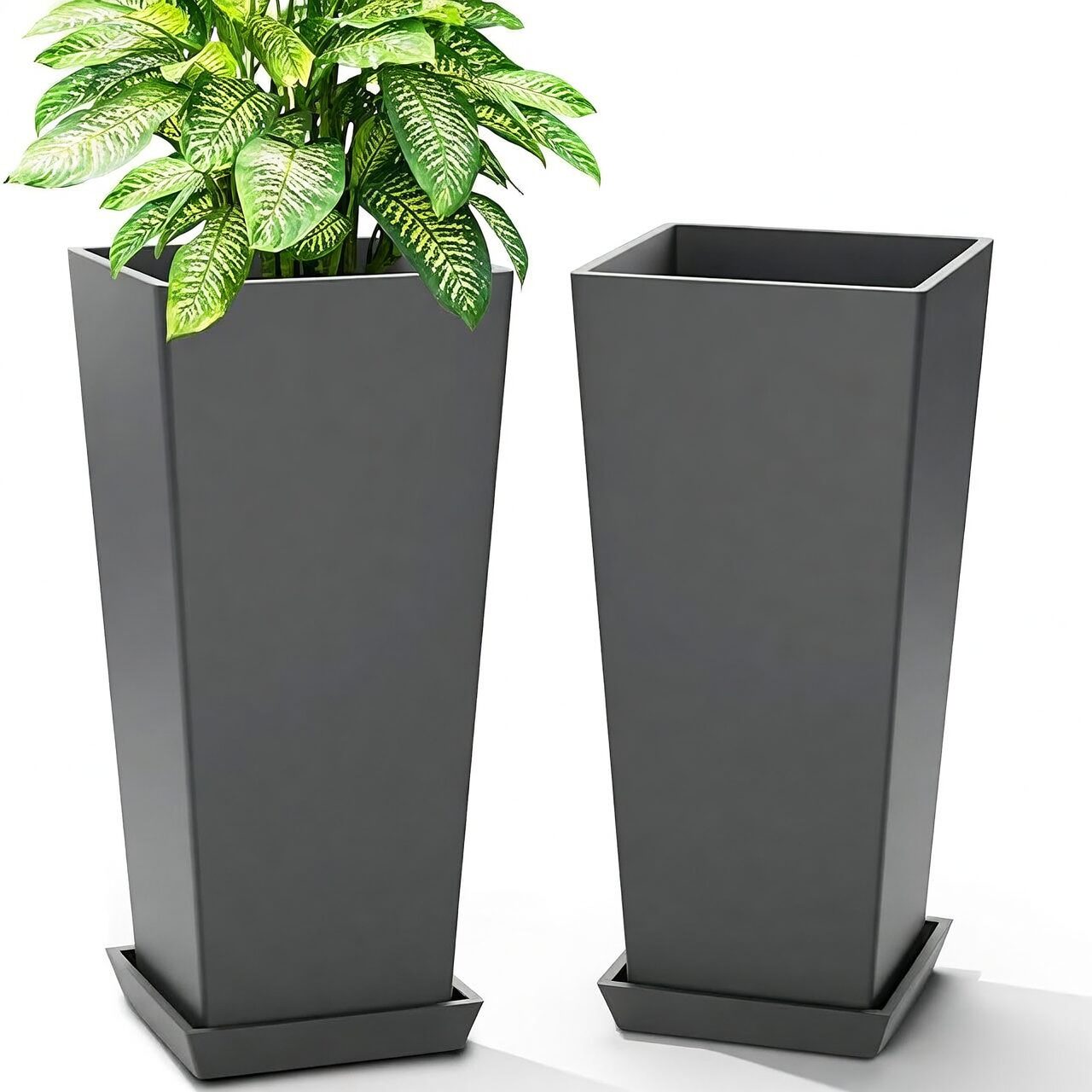
- Choose tall over squat. Many growers favor a tall orchid pot roughly 15 cm (6 in) wide and 20 cm (8 in) deep; this suits the root system and balances the plant’s vertical mass.
- Use the 1:2 guideline. For a composed silhouette, aim for a pot height about one-third to one-half the foliage height. A 25–30 cm (10–12 in) tall pot often looks right under 60–75 cm (24–30 in) plants.
- Don’t overpot. Move up only one size at repot time (commonly yearly, after flowering). Cymbidiums like snug, airy quarters, not a bathtub of mix.
- Weight matters. A heavy, stable base (stoneware, concrete composite, or weighted insert) counters top-heaviness once spikes open.
- Insist on real drainage. An inner nursery pot with multiple holes nested inside a decorative cachepot looks luxe and protects roots. Raise the inner pot on pot-feet so air can move underneath.
Materials and finishes
- Matte stoneware, charcoal porcelain, brushed metal, and celadon glazes pair beautifully with glossy leaves and waxy flowers.
- Avoid unvented planters. If your dream cachepot has no hole, keep the orchid in a perforated grow pot inside it and empty any drips—no standing water.
Top-dressing, the breathable way
- A light collar of living moss or decorative pebbles looks polished and hides media—but keep it airy. Leave a gap around the pseudobulbs and never bury the crown.
- Decorative stakes can guide arching spikes while echoing your room’s finishes (brushed brass, blackened steel, rattan).
Light, airflow, and humidity—styled, not improvised
Think like a lighting and HVAC designer with a green thumb.
Light that flatters and fuels
- Best seats: bright east-facing windows; south-facing is excellent with a sheer curtain. West windows may be too hot in summer.
- Summer edit: provide about 50–60% shade in heat; in autumn, shift to a brighter, breezier spot to encourage spike development.
- Signs you’re close: firm, medium to deep-green leaves and stout spikes. Too dark = limp, deep-green leaves with few flowers. Too intense = scorched tips.
Air movement that keeps leaves pristine
- Cymbidiums adore fresh air. Gentle, continuous airflow reduces fungal leaf spots and keeps fragrance moving.
- Design trick: elevate the pot on a stand or console so air can circulate all around; add a silent, low-profile fan across the room for a soft cross-breeze—not a blast aimed at blooms.
Humidity you can hide in plain sight
- Target roughly 70–80% if you can. If indoor air is dry, style in a shallow, beautiful pebble tray under the cachepot (water below pot base, never wicking up).
- Group with other humidity lovers (ferns, moss bowls) while leaving a few centimeters of breathing room around leaves.
- Lightly mist surrounding air/foliage 1–2 times daily in dry spells, but avoid water pooling in the crown—and always pair humidity with airflow.
Color palettes that sing with Cymbidium blooms
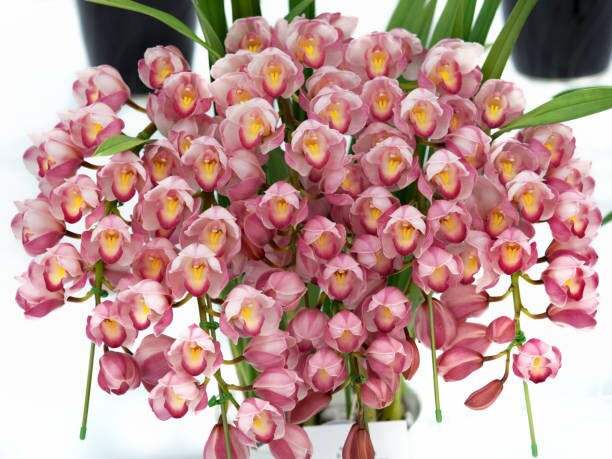
Cymbidiums span white, green, yellow, pink, red, brown, and patterned forms. Use pot and room palettes to amplify the effect.
- Green blooms + charcoal/bronze: deep charcoal pot, oxidized bronze accents, and a moss top-dress make lime or jade flowers look electric. Add smoked glass for sophisticated light play.
- White blooms + celadon/linen: pale celadon, raw porcelain, and bleached oak give a gallery feel. Layer in linen-textured lampshades and rippled glass.
- Yellow blooms + stone/black: matte limestone tones with blackened metal stakes pull lemon to saffron flowers into chic, modern territory.
- Pink blooms + blush/rosewood: soft blush or sand glazes, rosewood trays, and a whisper of brass warm the room without stealing the spotlight.
- Red to mahogany blooms + umber/aged brass: umber-glazed stoneware and antique brass mirror frames create a moody, jewel-box vignette.
Tip: If your plant is a patterned or bicolored hybrid, keep the container neutral and let the lips and throats of the flowers be the “print.”
Fragrance placement: let the scent find you
Many Cymbidiums have a light to notable perfume—make it meet you where you move.
- Put scent in the path of a breeze: near interior doorways, across from operable windows, or along a hallway with gentle airflow.
- Place at “nose level in motion”: around 90–120 cm (3–4 ft) high on a console or pedestal so you catch the perfume as you pass.
- Avoid heat vents and radiators: hot, dry air shortens bloom life and can cause bud drop.
- Where it shines:
- Entry console: a bright, airy foyer delivers a little luxury the moment you arrive.
- Dining sideboard: perfume lingers without sitting directly under the diners’ noses.
- Bright bath with an east window: humidity helps, light is kind; run the exhaust fan briefly after showers for balance.
- Bedroom with cool nights: excellent for flowering; keep it away from direct blasts of heated air.
Vignettes that respect the plant and wow the room
1) The foyer crescendo
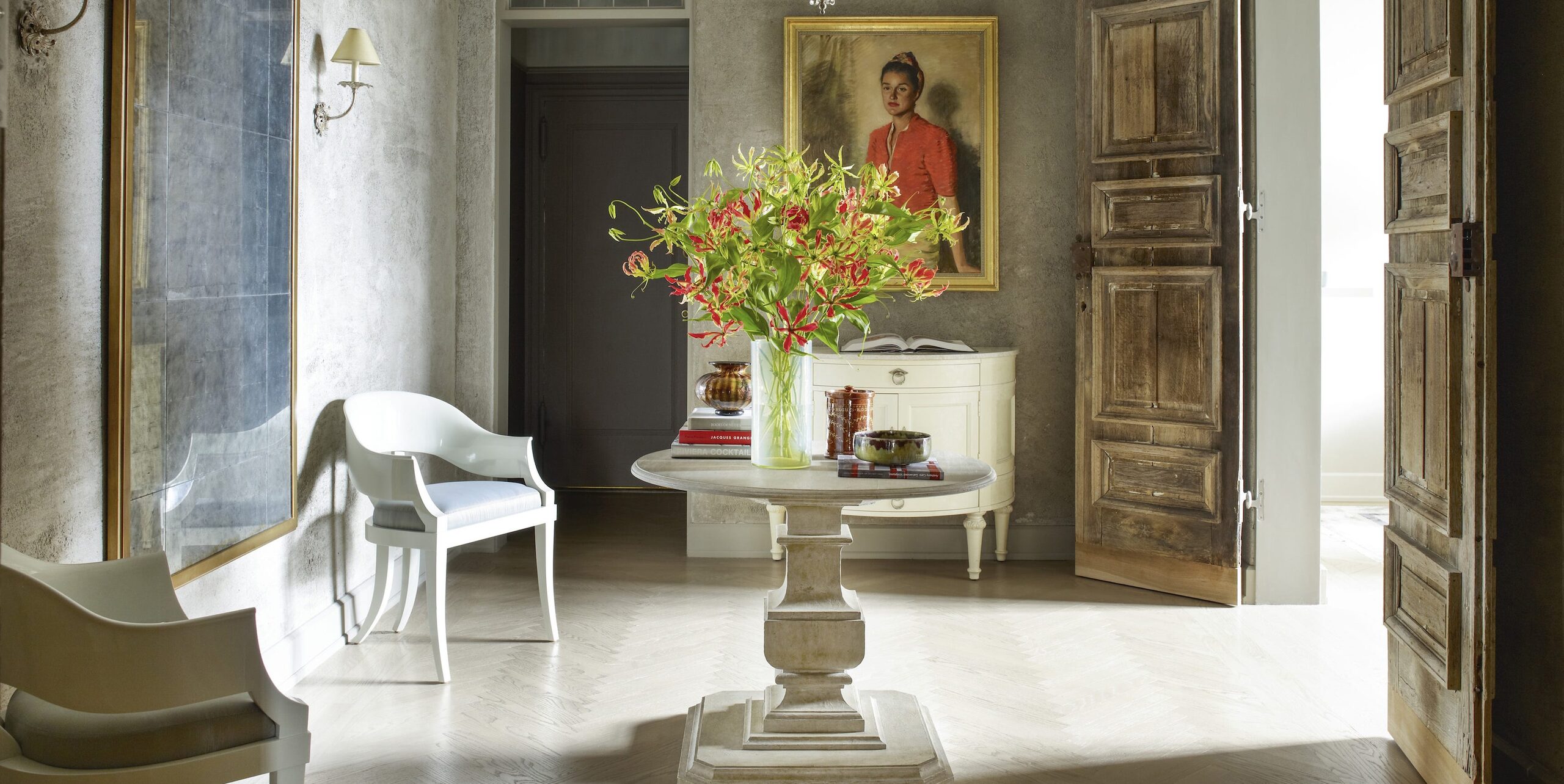
- Lime-green Cymbidium in a tall, matte charcoal pot on a slim oak console under an east-facing transom.
- Inner pot lifted on feet in a pebble-lined tray hidden inside the cachepot.
- A dimmable uplight behind a sheer screen creates drama without heat; a quiet fan across the room keeps air moving.
2) The spa-bright bath
- White-flowered Cymbidium in celadon stoneware on a window ledge or plant stand by a frosted east window.
- Companion: a low bowl of maidenhair fern on a separate stand for humidity layering—leave a few centimeters of space for airflow.
- After showers, crack the window or run the fan for a minute to prevent soggy leaves.
3) The dining-sideboard gallery
- Pink Cymbidium in a blush porcelain cylinder, nested inside a wider stone cachepot with a concealed pebble tray.
- Flank with smoked-glass candleholders (unscented—let the orchid be the perfume).
- Keep it offset from hot kitchen drafts; bright south light filtered by a sheer is ideal.
4) Winter garden window
- A trio of compact or miniature Cymbidiums in tonal containers (sand, stone, charcoal) on a bench in a bright, cool bay.
- Add a slim oscillating fan on low; rotate plants a quarter turn weekly to keep spikes symmetrical.
- In autumn, slide the bench closer to the brightest pane to support spike initiation.
5) Summer terrace retreat (mild climates)
- From late spring, shift outdoors to bright shade with roughly 50–60% shade and strong airflow.
- Style beneath a pergola with slatted light or under a shade sail; morning sun is welcome, mid-day scorch is not.
- Return to a brighter, well-ventilated indoor position in autumn to set spikes.
Living well with a design diva: micro-care that preserves the look
- Watering rhythm (airy, never soggy):
- Spring and autumn: about twice per week, keeping the mix evenly moist.
- Summer heat: water thoroughly in the morning—and again in the evening if the mix dries fast; maintain 50–60% shade and strong drainage.
- Winter: slightly moist, typically every 4–5 days; protect from cold drafts and soggy media.
- Feeding, light and easy:
- During active growth, feed weekly with a dilute orchid fertilizer.
- During spike and bud initiation, continue dilute feeding, adjusting to growth speed—often weekly if growth is active, sometimes reduced toward monthly if growth slows.
- Pause feeding in winter or whenever growth markedly slows.
- After flowering (often April): cut spent spikes promptly; prime time to repot or divide. Aim for a tall pot, fresh bark-based medium, and remove yellow leaves and dead roots with sterile tools.
- Media must be free-draining: bark mix with additions like a little sphagnum, charcoal, fern fiber, and porous minerals (perlite/zeolite). Regular potting soil is a no-go.
Buying and staging for success
- Choose a plant with several open flowers rather than mostly tight buds; buds can drop with sudden home-condition changes.
- Acclimate in bright, filtered light with cool nights (around 15°C/59°F is a sweet spot) and gentle airflow.
- Minimize moves once spikes are forming and opening; keep conditions steady.
Quick troubleshoot—without ruining the tableau
- Buds shriveling or dropping: usually heat or low humidity, or abrupt changes. Move to a bright, cooler, airy spot; raise ambient humidity and avoid hot vents.
- Leaf spots (anthracnose, rust, black spot): improve airflow, avoid water sitting on leaves/crown, remove affected tissue early.
- Pests (scale, whiteflies, aphids): isolate, then treat with horticultural oil or insecticidal soap; repeat to catch hatchlings. Wipe leaves with a soft cloth to keep that polished look.
Symbolism: why Cymbidiums feel so at home in refined spaces
Long cherished across Asia and embraced worldwide, Cymbidiums symbolize elegance, refinement, and good fortune. Their “flower language” likely arises from centuries of cultivation by scholars and collectors who prized their composed habit and winter-bright blooms—living emblems of grace amid austerity. Displayed thoughtfully, they still telegraph that quiet luxury.
Safety and peace of mind
Generally considered non-toxic to people and pets. Persistent chewers may still get a mild tummy upset, and those glorious spikes are easily snapped—so stage them just out of reach of curious paws and tail swishes.
The no-compromise comfort checklist
- Bright light to bright filtered sun; morning sun is welcome.
- Cool-to-mild temperatures: ideally 10–25°C (50–77°F); avoid hot, stuffy rooms; cool nights help flowering.
- Humidity around 70–80% with gentle airflow.
- Even moisture in a bark-based, very free-draining mix; never waterlogged.
- Outdoors only where frost-free (best year-round in USDA 10–12), otherwise treat as a bright, cool houseplant or conservatory star.
Design-first thinking doesn’t have to fight good horticulture. With a tall, well-proportioned pot, a flattering palette, and a placement that invites light, air, and a soft breeze, your Cymbidium becomes more than a plant—it’s a seasonal centerpiece that scents the room and raises the whole conversation.