

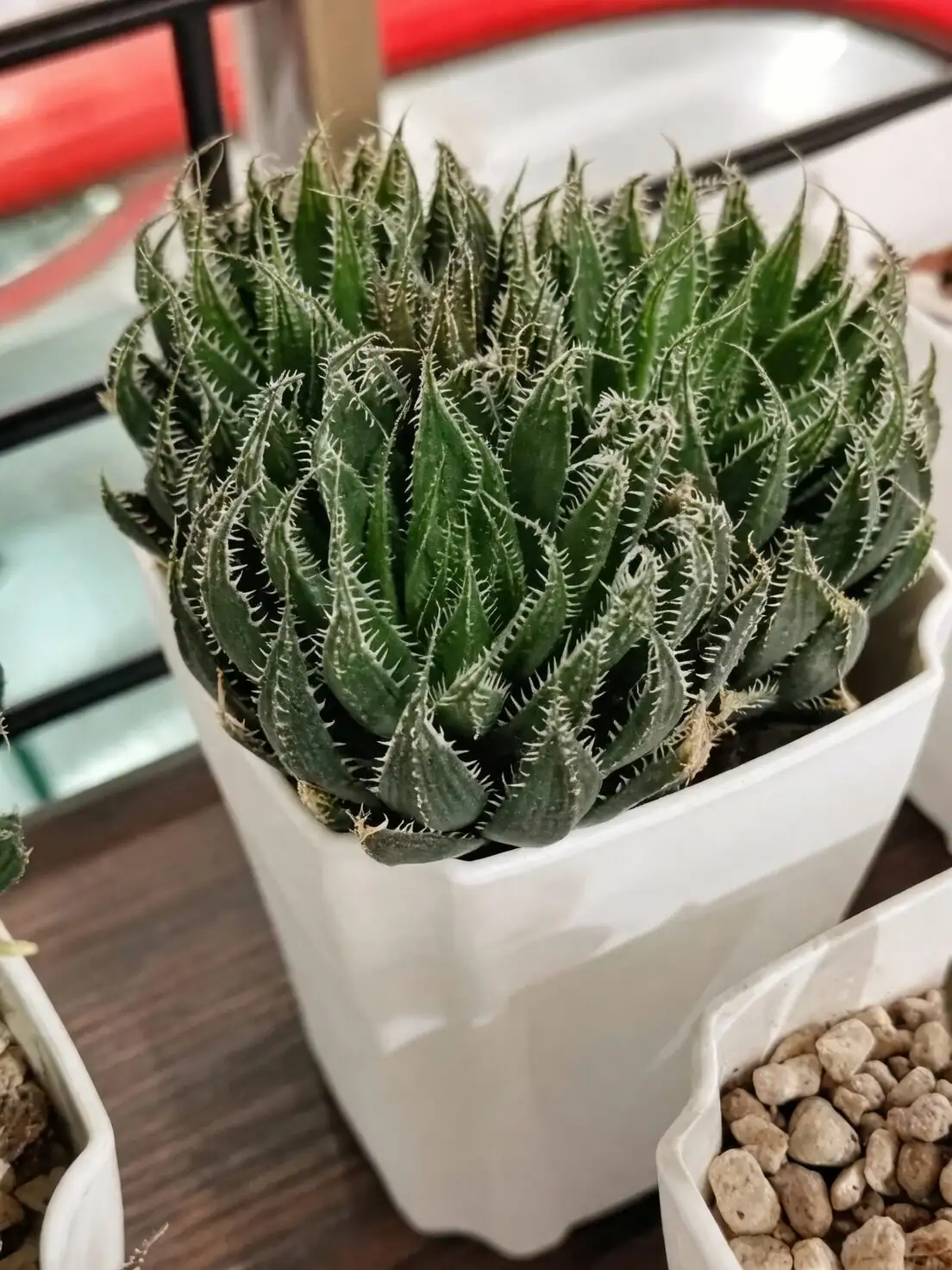
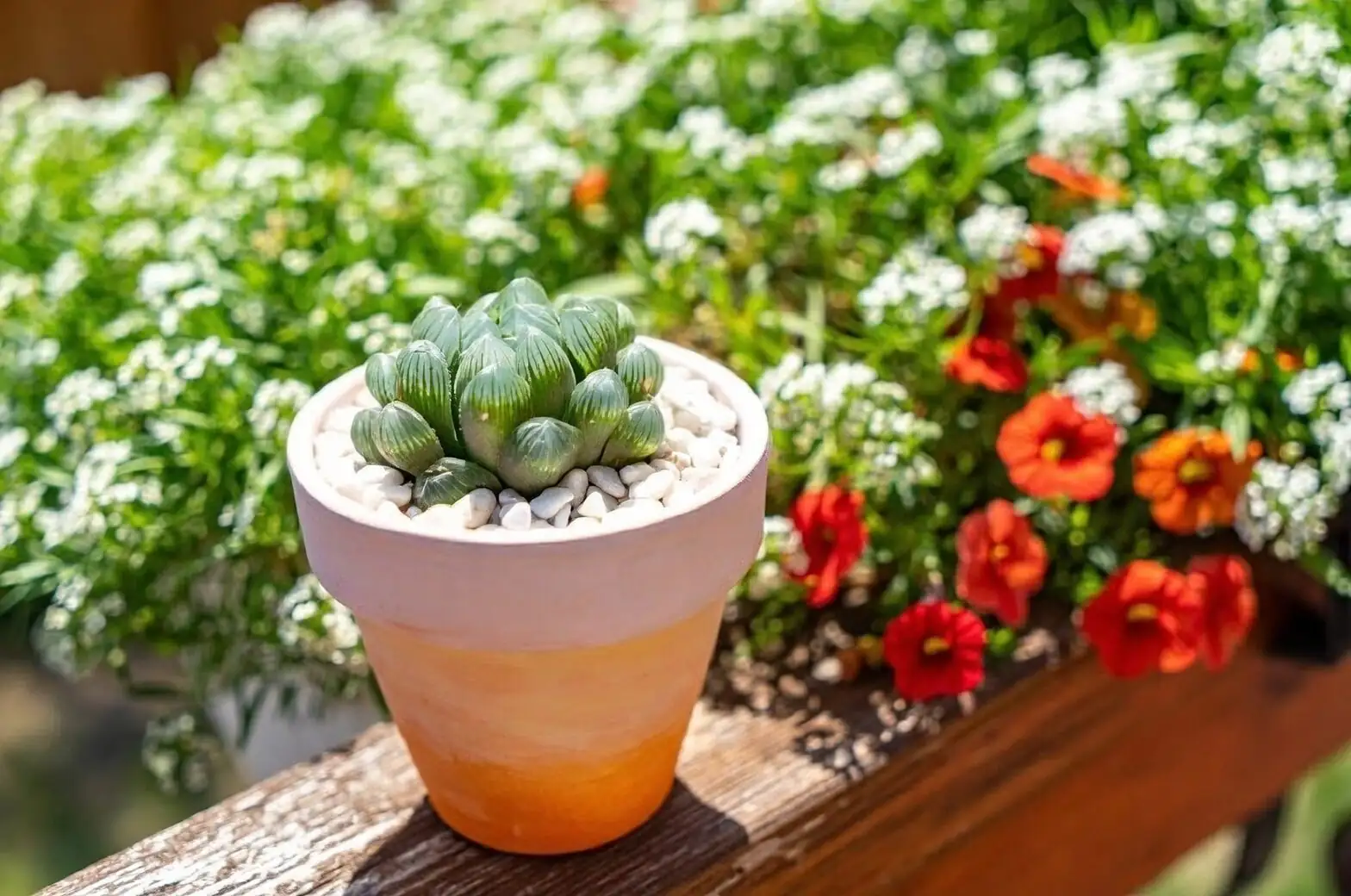
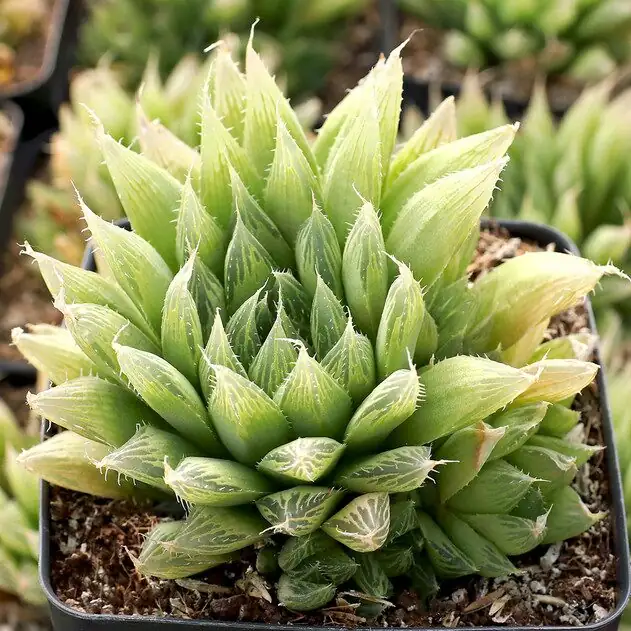
Meet Haworthia cooperi, the “crystal rosette” that thrives on moderation. Those plump, translucent leaf “windows” glow under bright, filtered light; the plant stays small, calm, and unbothered—perfect for desks and windowsills. Below is a season-by-season, printable care calendar tuned to its rhythm: spring growth, summer semi-dormancy, autumn reboot, and winter light-maxing. Tape it inside a cabinet or keep it by your potting bench—then let the plant do what it does best: quietly flourish.
H2: Quick Setup (One-Time)
- Light: Bright, filtered light to partial shade. East-facing window is ideal; a lightly shaded south window works too. Avoid harsh midday sun.
- Temperature: Best at 18–22°C (64–72°F). Keep above 5°C (41°F) in winter; protect from frost.
- Soil: Very free-draining, gritty succulent mix (cactus soil + pumice/coarse sand/grit). Avoid water-retentive mixes.
- Pot: Shallow pot with drainage; Haworthia cooperi has a relatively shallow root system. Mature clumps often suit a 12–15 cm (4.7–5.9 in) pot.
- Humidity & airflow: Dry to average indoor humidity. Prioritize airflow and never let water sit in the rosette/crown.
H2: How to Use This Calendar
- Water only after the mix has fully dried. Adjust cadence to your light, pot size, and temperature.
- Feed diluted fertilizer only in active growth (spring and autumn).
- In very hot weather, the plant may semi-rest; water less and keep it airy and shaded.
- When in doubt, it’s safer to underwater than overwater.
H2: The Seasonal Calendar
H3: Spring (March–May): Active Growth
Goal: Steady moisture cycles, bright filtered light, tidy roots, and a nutrient nudge.
- Light and Shade:
- Move to a bright, filtered position; morning sun with midday shade is perfect.
- Avoid scorch: if leaf tips pale or show brown patches, diffuse the light with sheer curtains.
- Watering Cadence:
- Typically about once a week in warm, bright indoor conditions—only after the mix has dried.
- Water thoroughly, letting excess drain. Never leave water in the saucer or rosette.
- Feeding:
- Feed once a month with a diluted balanced or low-nitrogen succulent/houseplant fertilizer.
- Keep fertilizer off leaf bases and don’t feed stressed plants.
- Repotting & Grooming:
- Repot if the clump has filled the pot; refresh into gritty mix and a pot with excellent drainage.
- Trim shriveled lower leaves; tidy old/hollow or overly long roots.
- Divide offsets now if desired; let cut surfaces dry before replanting.
- Airflow:
- Open a window occasionally or run a gentle fan to prevent stagnant, humid air around the rosette.
Month-by-Month
- March:
- [ ] Repot or divide offsets (optional)
- [ ] First monthly feed
- [ ] Resume weekly water-when-dry
- April:
- [ ] Check for flower stalks (modest blooms); trim if you want stronger foliage growth
- [ ] Second monthly feed
- May:
- [ ] Third monthly feed
- [ ] Confirm shade for brighter/warmer days to prevent scorch
H3: Summer (June–August): Semi-Dormancy in Heat
Goal: Keep it cool, shaded, airy, and on the dry side.
- Light and Shade:
- Provide dappled light or a 30–50% shade cloth on hot balconies.
- Avoid sealed terrariums or “bottle” conditions—overheating and rot risk rises sharply.
- Watering Cadence:
- Reduce significantly in hot spells. Allow the mix to go drier, often 10–21+ days between waterings (always check dryness).
- If leaves wrinkle slightly, water the next day—but confirm the core mix is dry first.
- Feeding:
- Pause feeding during heatwaves or if growth clearly slows.
- Airflow:
- Increase ventilation. Space plants so leaves don’t touch, and use a gentle fan if the air is still.
- Heat-Smart Tricks:
- Keep pots out of direct, baking sun. A double-pot “cachepot” setup can buffer root heat.
- Top-dress with mineral grit to keep leaf bases off damp media.
Month-by-Month
- June:
- [ ] Shift to brighter shade; boost airflow
- [ ] Stretch watering intervals; confirm dryness before every soak
- July:
- [ ] No fertilizer if growth is slow
- [ ] Watch for mealybugs in warm, still air; treat early
- August:
- [ ] Maintain shade and ventilation
- [ ] Prepare to gently increase watering as nights cool near month’s end
H3: Autumn (September–November): Reboot and Rebuild
Goal: Resume measured watering and monthly feeding as growth picks back up.
- Light and Shade:
- Keep bright, indirect light. As the sun softens, you can move a bit closer to the window.
- Watering Cadence:
- Return to water-when-dry cycles; often weekly again indoors as temperatures ease.
- Feeding:
- Monthly feeding resumes in early autumn; stop once days become short and cool.
- Airflow:
- Maintain gentle airflow, especially on damp or rainy days.
- Clean-Up:
- Remove any yellowed basal leaves; ensure no organic debris collects at the crown.
Month-by-Month
- September:
- [ ] Resume monthly feed
- [ ] Return to more regular watering when dry
- October:
- [ ] Second autumn feed
- [ ] Optimize light exposure as day length shortens
- November:
- [ ] Begin tapering water frequency as growth slows
- [ ] No more fertilizer as winter approaches
H3: Winter (December–February): Light-Maxing and Minimal Moisture
Goal: Keep it bright and on the dry side; protect from cold and damp.

- Light:
- Maximize light: bright east or lightly filtered south exposure.
- Rotate the pot periodically to maintain a compact rosette.
- Supplement with a small grow light if needed.
- Temperature:
- Keep above 5°C (41°F); protect from drafts and frosty windowsills.
- Watering Cadence:
- Very sparing—only after the mix is fully dry and with longer gaps between waterings.
- Water early in the day so surfaces dry before night.
- Feeding:
- No fertilizer in winter.
- Airflow:
- Gentle ventilation helps prevent rot, but avoid cold blasts.
Month-by-Month
- December:
- [ ] Maximize winter light
- [ ] Water sparingly (mix must be fully dry)
- January:
- [ ] Maintain warmth above 5°C (41°F)
- [ ] No feeding; check for pests on sheltered indoor plants
- February:
- [ ] Keep watering minimal; prep supplies for spring repotting next month
H2: Shade & Airflow Playbook (Year-Round)
- Where to place:
- Indoors: East window, or a bright south window with a sheer curtain.
- Outdoors (mild climates): Sheltered balcony with shade cloth and strong drainage.
- How to shade:
- Use sheer curtains indoors; outdoors, 30–50% shade cloth or bright dappled shade.
- Air moves, rot loses:
- Run a gentle fan or crack a window regularly.
- Avoid crowding plants; space prevents moisture pockets at leaf bases.
- Humidity tip:
- If air is extremely dry, lightly mist the air around (never into) the rosette, and ensure good airflow so moisture doesn’t linger.
H2: Watering Cadence Tune-Up
- Trust the mix, not the calendar:
- Wait for the potting mix to fully dry before watering—use a moisture meter, chopstick, or finger test.
- Pot and mix matter:
- Terra-cotta and gritty mixes dry faster; plastic and peat-heavy mixes stay wetter (avoid water-retentive soils).
- Technique:
- Soak thoroughly, drain completely. Never leave water in a saucer. Keep the crown dry.
H2: Troubleshooting by Season
- Spring/Autumn (active growth):
- Leaves elongate or lose “crystal” clarity: increase light (indirect) and keep to water-when-dry.
- Summer (heat rest):
- Yellowing or mushy bases: too much water + heat; reduce watering and increase airflow.
- Scorch marks: too much direct sun; add shade immediately.
- Winter:
- Shriveling with dry soil: it may be thirsty—water once, then wait for full dryness again.
- Shriveling despite moist soil: potential root rot—unpot, trim rot, let wounds callus, and repot into a dry, gritty mix.
H2: Pests, Safety, and Small Facts
- Pests & diseases:
- Overwatering invites root/crown rot. Mealybugs and whitefly may appear—treat with insecticidal soap or a labeled systemic, and remove affected tissue promptly.
- Toxicity:
- Generally considered non-toxic to humans and pets, though chewing may still cause mild stomach upset. Best kept out of curious mouths and paws.
- Size & habit:
- Typically ~10 cm (4 in) across; forms small clumps over time. Flowers are slender, pale, and modest in spring—foliage is the star.
H2: Symbolism and “Flower Language”
Haworthia cooperi is often linked with resilience and quiet determination—an apt symbol for a plant that shines with modest care, endures dry spells, and keeps its glow in gentle light. While it’s not steeped in traditional flower-language lore, enthusiasts celebrate its “window” leaves as a reminder that clarity and light often come through small, steady habits—like letting the soil dry, giving it filtered sun, and resisting the urge to fuss.
H2: One-Page Printable Checklist
- Spring (Mar–May)
- [ ] Water when dry (often ~weekly)
- [ ] Feed monthly (3× total)
- [ ] Repot/refresh soil; divide offsets
- [ ] Bright, filtered light; add midday shade
- [ ] Gentle airflow; remove old leaves/roots
- Summer (Jun–Aug)
- [ ] Provide shade (30–50%) and strong ventilation
- [ ] Stretch watering intervals; keep mix drier
- [ ] Skip fertilizer if growth slows
- [ ] Watch for mealybugs; avoid enclosed, humid setups
- Autumn (Sep–Nov)
- [ ] Water when dry (often weekly indoors)
- [ ] Feed monthly in Sep and Oct; stop by Nov
- [ ] Keep bright, indirect light; maximize as days shorten
- [ ] Maintain airflow; tidy basal leaves
- Winter (Dec–Feb)
- [ ] Maximize light; rotate pot
- [ ] Keep above 5°C (41°F)
- [ ] Water very sparingly; mornings only
- [ ] No fertilizer; check pests monthly
Follow this cadence and your Haworthia cooperi will repay you with a compact, jewel-like rosette that quietly sparkles through the seasons—no drama, just dependable beauty.