

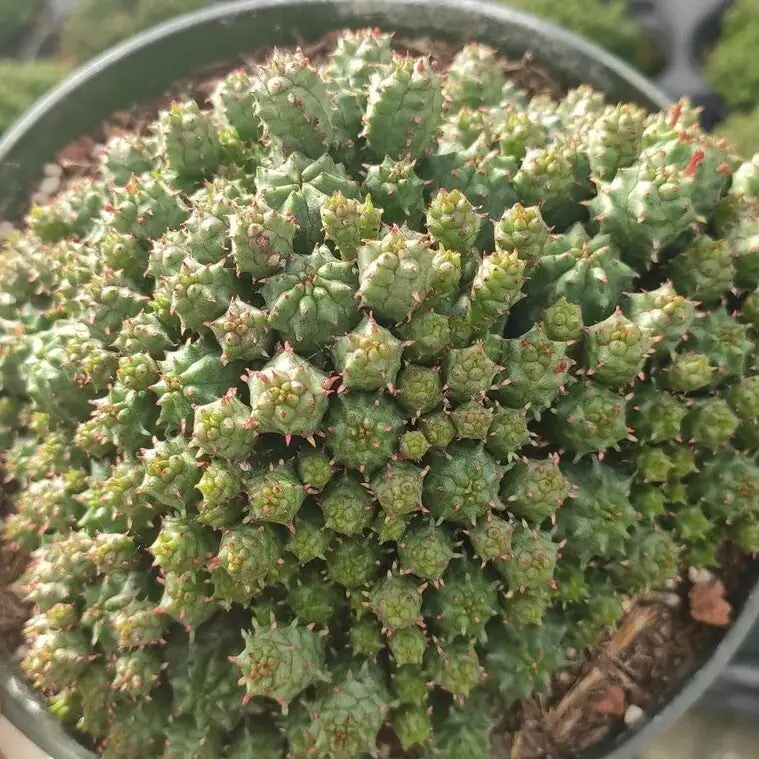
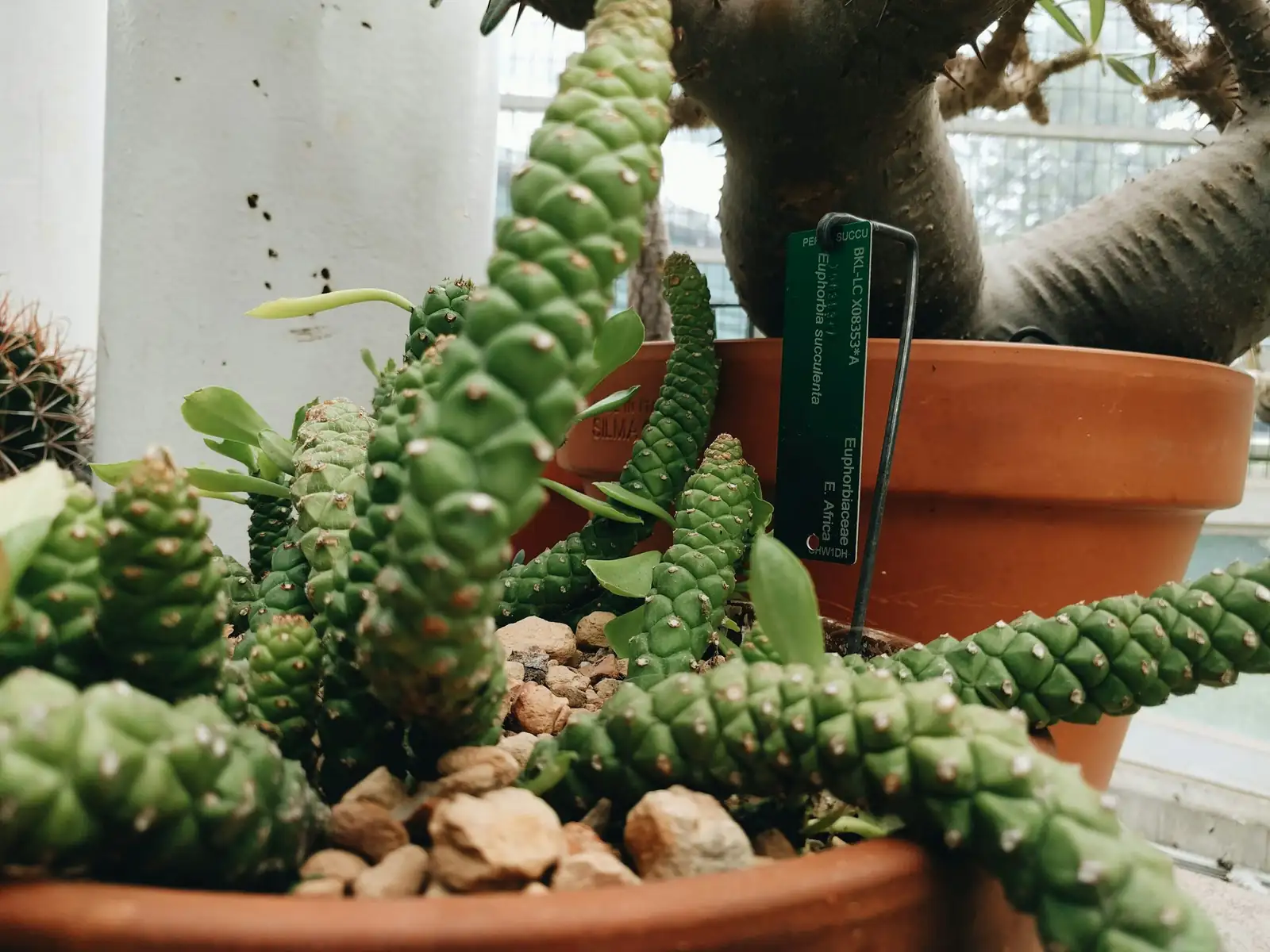
Red Coral Spurge (Euphorbia mammillaris) looks like a tiny fortress—ribbed gray‑green columns bristling with short red spines. That armored vibe is comforting when you’re staring down white fuzz (mealybugs), pinhead bumps (scale), or a suspiciously soft base (root rot). Take a breath. This is a no‑panic, step‑by‑step game plan tailored to this cactus‑like Euphorbia so you can diagnose fast, fix efficiently, and prevent a repeat.
Meet your plant (and why that matters for treatment)
- Identity: Euphorbia mammillaris, aka Red Coral Spurge, sometimes sold as Corn Cob Euphorbia or Indian Corn Cob Euphorbia.
- Habit: Compact, upright clumps of ribbed, leafless stems with short red to reddish‑brown “spines.” Often mistaken for a cactus but it’s a Euphorbia—meaning milky latex sap.
- Care baseline that prevents most problems:
- Light: Bright light to full sun—aim for 4–6+ hours daily; acclimate to strong sun.
- Water: Drench, then let the mix dry out completely before the next drink. Winter = very sparse.
- Soil: Very fast‑draining cactus/succulent mix boosted with mineral grit or pumice.
- Temperature: Warm (18–30°C / 64–86°F). Keep above 10°C (50°F).
- Biggest risk: Cold, wet soil leading to rot.
Knowing this helps: a plant kept bright, warm, and dry between waterings is far less attractive to pests and dramatically less prone to rot.
The 60‑second check: Is it mealybugs, scale, or rot?
- Mealybugs
- Look for white, cottony tufts tucked into ribs, branch junctions, and under the pot rim or in drainage holes.
- Sticky residue (honeydew) may appear on nearby surfaces.
- Scale
- Hard, pinhead‑sized bumps in tan/brown that don’t brush off like dust. Scraping pops them off.
- May also leave honeydew; ants sometimes visit.
- Root rot (or root mealybugs—see below)
- Base feels soft/mushy or blackened; stems may wrinkle or lean despite “wet” soil.
- Sour smell from soil; pot stays wet too long.
- If pests aren’t visible up top but plant declines, suspect the roots.
If you find both pests and soggy mix, treat pests first then address the watering/soil setup—these issues love to tag‑team.
Safety first with Euphorbia
- Wear gloves and eye protection. The milky sap is irritating and can seriously injure eyes.
- Work in good light and a ventilated space. Keep away from children and pets.
Mealybugs: calm, clinical elimination plan
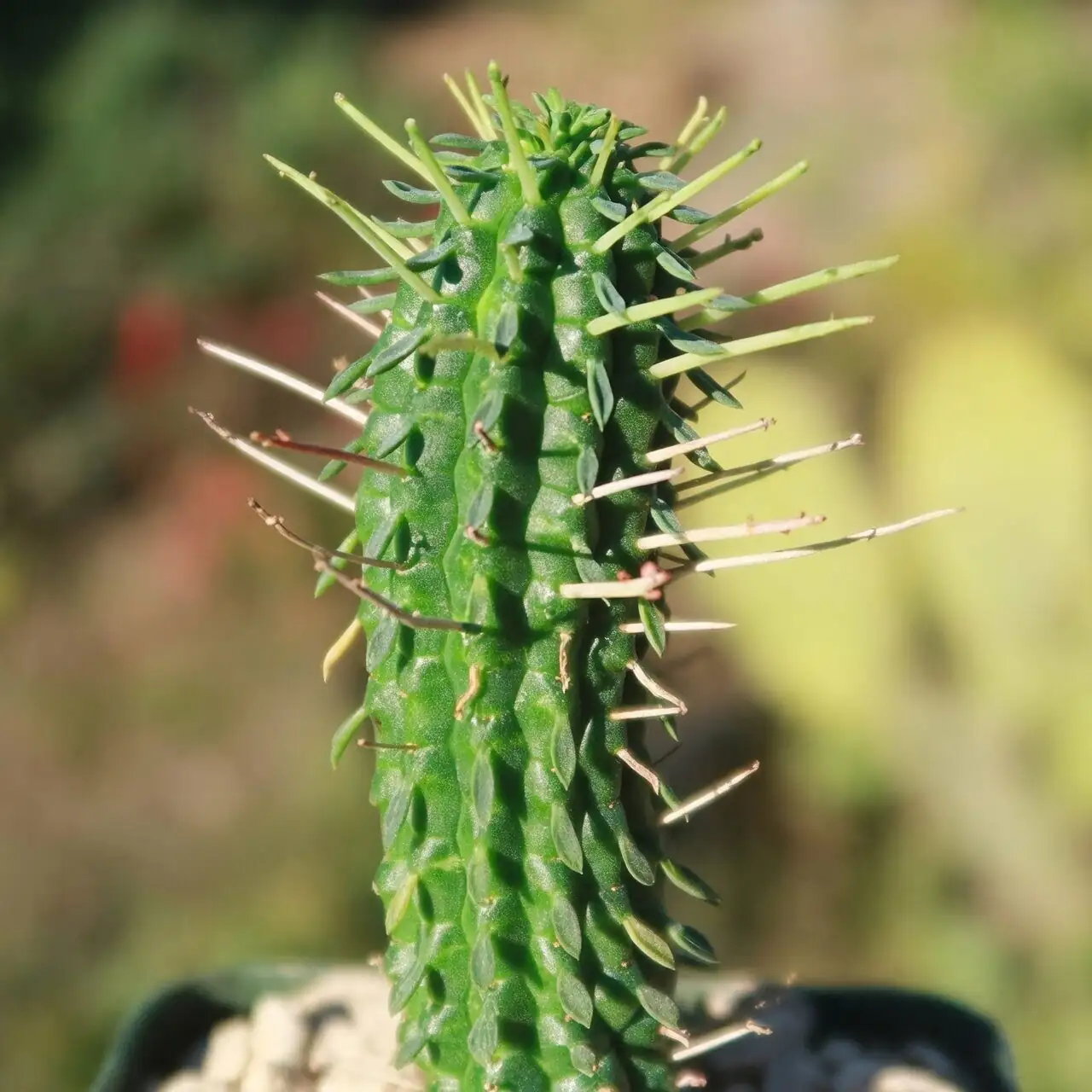
Where they hide on Red Coral Spurge
- Deep between ribs, where stems branch, and around those short spines.
- Under the pot rim, in drainage holes, and on the saucer.
- Root zone: root mealybugs leave cottony tufts in the soil and on roots; the plant may wilt or stall despite normal watering.
Step‑by‑step fix (top growth)
- Isolate the plant.
- Dry down: Let soil go fully dry before you start—mealybugs love damp stagnation.
- Spot kill
- Touch each mealybug with 70% isopropyl alcohol using cotton swabs. It dissolves the wax and kills on contact.
- For clusters in crevices, use a soft artist’s brush dipped in alcohol to work it in, then blot.
- For bigger outbreaks
- Lightly mist affected areas with a diluted isopropyl alcohol spray (10–25% alcohol in water) after a test patch; avoid soaking the plant. Do not spray in full sun or high heat.
- Alternatively, use a labeled horticultural soap. Thorough coverage is key, including ribs and creases. Spot‑test first.
- Clean the perimeter: Wipe the pot rim, drainage holes, and saucer with alcohol.
- Repeat on schedule: Re‑inspect and re‑treat weekly for 8–12 weeks. Eggs are protected; persistence breaks the cycle.
- Aftercare: Keep bright and warm with strong airflow. Water only when bone dry.
If you find root mealybugs
- Unpot gently. Tap or tease away dry soil.
- Rinse roots under a gentle stream to expose cottony clusters.
- Treat
- Swab or briefly dip roots in isopropyl alcohol, then rinse with water. Do not soak stems—avoid wounding.
- Trim any dead/mushy roots with sterile scissors.
- Let roots dry and callus for 24–48 hours in bright shade with airflow.
- Repot into fresh, sterile, gritty succulent mix and a clean pot with drainage. Discard old soil and sanitize tools and surfaces.
- Wait 5–7 days before the first light watering; then resume the “drench and fully dry” rhythm.
Pro tip: Mealybugs often rebound if light is weak or soil stays humid. Maximize sun (acclimate) and airflow.
Scale: the hard‑shell squatters
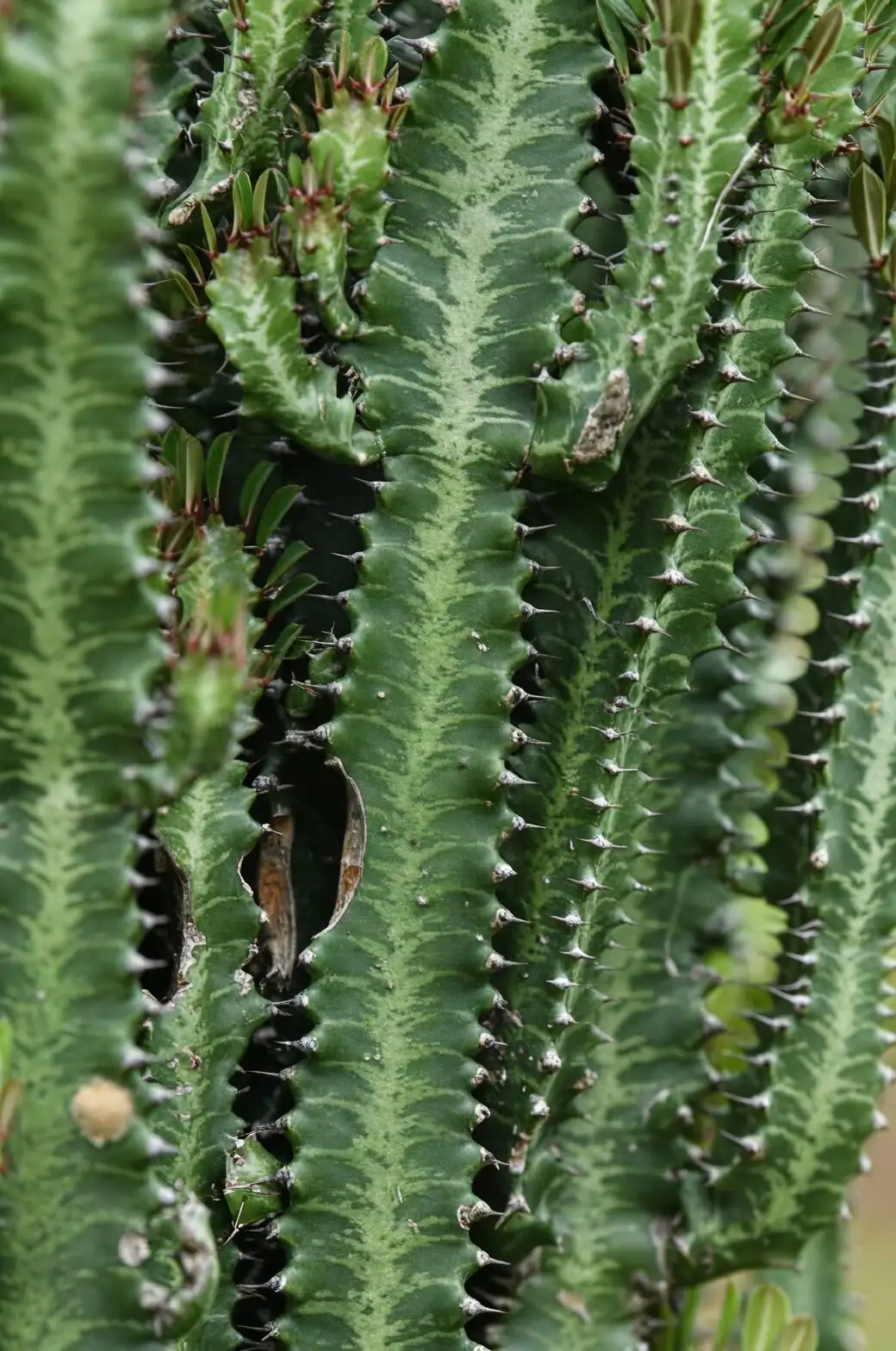
How to confirm scale
- Feel for fixed, crusty bumps that lift with a fingernail or dull blade.
- Look along ribs, around branching points, and the pot rim. Honeydew or sooty mold may follow.
Step‑by‑step fix
- Isolate and dry down.
- Manual lift: Gently pry off each scale with a fingernail, tweezers, or a cotton swab. Immediately dab the spot with 70% isopropyl alcohol to catch nymphs.
- Wash‑down option: Apply horticultural soap per label, ensuring full coverage of ribs and crevices. Rinse lightly after it dries if residue bothers you.
- Repeat every 7–10 days for 4–6 rounds to catch hatchlings.
- Avoid heavy oil sprays on this Euphorbia in strong sun or heat—test patches only if you choose to use them.
Root rot: stop the sinkhole before it spreads
Confirming rot vs. thirst
- Thirsty stems feel firm‑wrinkled and perk up after watering.
- Rotting bases feel soft/watery, may darken, and the plant wobbles. The soil often smells sour and stays wet.
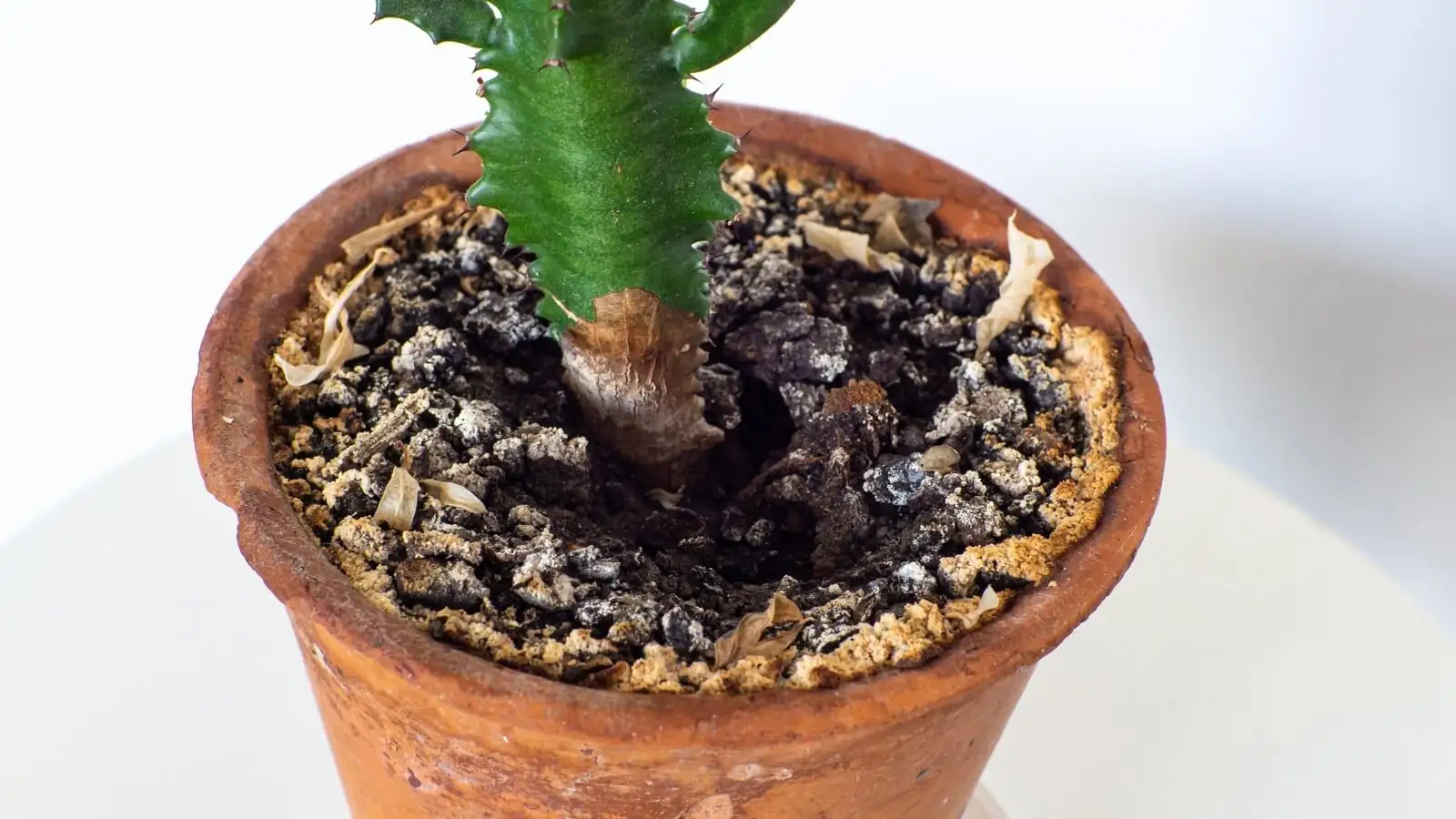
Rescue plan
- Unpot. Inspect roots: healthy = tan/white and firm; rot = brown/black, mushy, smelly.
- Prune rot. Sterilize shears; remove all mushy tissue back to firm, healthy material.
- Optional dust: Lightly dust cuts with sulfur. Air‑dry roots 24–72 hours (bigger wounds need longer) in bright shade with airflow.
- Repot
- Use a very fast‑draining mix (cactus soil + 30–60% pumice/perlite/grit).
- Clean pot with drainage. Upsize only one step if needed.
- Restart water carefully
- Wait 7–10 days post‑repot to water.
- Then water deeply and let the mix dry out completely before the next.
- If the base is too far gone
- Take healthy stem cuttings above the rot.
- Let cut ends callus for several days, then place in dry, gritty mix.
- Do not water until new roots form; then water sparingly.
Warmth speeds healing: keep 18–30°C (64–86°F). Protect from cold drafts. Bright light, but no harsh midday sun on fresh wounds.
Prevention that works for Red Coral Spurge
- Light and airflow
- 4–6+ hours of direct sun; acclimate to stronger sun.
- Space plants for breezes; run a fan in still rooms.
- Watering rhythm
- Spring–summer: Every 10–21 days typically—only when fully dry.
- Winter: Much less—about every 3–6 weeks, depending on light and warmth.
- Never leave the pot sitting in water.
- Soil and pot
- Gritty, fast‑draining mix with pumice or mineral grit.
- Pot with drainage; repot every 2–3 years or when rootbound.
- Temperature and humidity
- Warm and dry air preferred. Keep above 10°C (50°F).
- Hygiene and monitoring
- Quarantine new plants for two weeks; inspect weekly with a flashlight, including pot undersides and drainage holes.
- Wipe pots and shelves; sanitize tools.
- Check ribs and branch junctions—prime pest hideouts.
- Feeding
- Light cactus fertilizer at 1/4–1/2 strength every 4–6 weeks in spring–summer. Skip in winter.
Quick tools and “recipes”
- 70% isopropyl alcohol + cotton swabs: instant spot kill for mealybugs/scale.
- Dilute alcohol spray (10–25% in water): cautious, test‑patch whole‑plant coverage for heavier outbreaks; avoid heat/sun during application.
- Horticultural soap: label‑rate; repeat weekly.
- Kit to keep handy: soft artist’s brush, tweezers, nitrile gloves, eye protection, paper towels, spare pot, gritty mix (with pumice), and a magnifier.
FAQs you’ll likely have
- Will alcohol harm my Euphorbia?
- Spot‑treating with 70% is generally safe; avoid drenching and always test a small area first. Never spray in full sun or during heat.
- How long until mealybugs/scale are gone?
- Expect 8–12 weeks of weekly checks/touches to outpace eggs and overlapping generations.
- Why do pests keep coming back?
- Missed eggs and hidden clusters. Expand your search to pot rims, drainage holes, and neighboring plants; improve light and airflow.
- Is it a cactus?
- No—it’s a Euphorbia with milky sap and specialized cyathia “flowers.” Handle with care.
A tiny bit of plant personality (because you’ll win this)
Red Coral Spurge is often linked with resilience and protection—an apt symbol for a plant that thrives on bright light, lean soil, and your cool‑headed care. Its cactus‑like silhouette is a brilliant case of convergent evolution: nature’s way of solving the same problem twice. Give it sun, space, and a dry bed, and it will repay you with tidy, architectural poise—and a pest‑free glow.
You’ve got this. Diagnose clearly, treat methodically, and keep the environment on your side. The fortress will stand.