

Shopping for a Watermelon Peperomia (Peperomia argyreia) should feel like picking the best melon at the market—eye it, lift it, sniff it, and only take home the one that looks and feels just right. This compact, desk‑friendly beauty is all about those round, slightly succulent leaves in shimmering silver-green bands over deep green—like tiny watermelon rinds on red-tinged stems. Here’s your confident, no‑nonsense buyer’s checklist and the why behind each step, plus what to do once you get your new plant home.
The quick shopper’s checklist (don’t skip these!)
- Feel the leaves: firm and plump
- Healthy watermelon peperomia leaves are thick and slightly succulent. They should feel taut, not flimsy or limp. Soft, wilted, or wrinkly leaves can signal poor watering practices or root issues.
- Scan the striping: crisp, high contrast
- Look for sharp, silvery bands over deeper green veins. Faded, dull, or blotchy patterning can point to low light or stress. A little minor blemishing is okay; overall contrast should still “pop.”
- Inspect the bases: no mush, no blackened crowns
- Gently part the leaves at the soil line. The leaf bases and crown should be clean and firm—mushy tissue or dark rot at the base is a deal‑breaker.
- Do the sniff test: no sour or swampy smells
- A sour, swampy, or “fermented” scent from the potting mix screams waterlogging and potential root rot. Walk away.
- Flip the leaves: pest check under the canopy
- Look closely at undersides of leaves and along petioles:
- Mealybugs: cottony specks in nooks
- Scale: small, stuck‑on bumps
- Spider mites: stippling, fine webbing, dusty look
- Whitefly: tiny, fluttery insects and sticky residue
- A pristine plant now saves you weeks of cleanup later.
- Check for cold or sun damage
- Cold injury shows as water‑soaked, translucent patches that turn dark. Sun scorch looks bleached or crispy. Choose foliage that’s uniformly fresh and glossy.
- Size and stance: compact and sturdy
- Healthy plants are usually 6–12 inches tall and wide, with leaves held neatly on slender, often reddish petioles. The plant should feel anchored—not wobbly at the crown.
Red flags versus forgivable quirks
- Hard pass:
- Mushy or blackened leaf bases
- Sour-smelling, soggy soil
- Heavy pest presence (multiple types or widespread colonies)
- Collapsing crown or widespread yellowing
- Potentially okay (if the rest checks out):
- A few minor blemishes or a single damaged leaf
- Slightly faded striping that will rebound in brighter, indirect light
- A couple of spent flower spikes (they’re normal and subtle on this plant)
Why you shouldn’t up‑pot right away
Tempting as it is to give new roots “room to grow,” Watermelon Peperomia prefers being slightly pot‑bound. Upsizing too soon is one of the fastest ways to lose it.
- Bigger pot, bigger risk:
- Excess mix stays wet longer, starving fine roots of oxygen and inviting rot.
- In a large, cool, damp pot, the crown is especially vulnerable to mush.
- Prioritize the medium, not the size:
- If the store mix is compacted but the plant isn’t severely rootbound, wait to repot. When you do, refresh into a loose, fast‑draining blend (quality houseplant mix plus perlite and/or a bit of coarse sand) in a pot with drainage—only one size up.
- Signs it truly needs repotting now:
- Roots circling tightly, poking from drainage holes, or the plant drying too fast despite thorough watering
- Potting mix that stays wet for many days even in bright conditions (often means it’s broken down)—repot to a fresh, airy mix, not a much bigger container
Pro tip: Slip the nursery pot into a decorative cachepot for looks, then wait for active new growth before any size change.
Bring‑it‑home plan (first two weeks)

- Placement: bright, indirect light
- East windows are ideal; bright north is great; set back from strong south/west sun or use a sheer curtain. Avoid harsh direct rays that fade and scorch.
- Temperature and drafts
- Best at 59–75°F (15–24°C). Protect from cold drafts and hot glass in summer. Avoid temps below 50°F (10°C).
- Watering: light but thorough
- Water when the top portion of the mix dries, then drain well. Do not keep it constantly wet. In winter, water more sparingly.
- Hands off the fertilizer (for now)
- Wait until you see new growth before feeding. Then feed lightly during active growth—monthly at half strength is easy and safe.
- Quarantine and observe
- Keep new purchases a little apart from other plants for 2–3 weeks. Inspect leaf undersides every few days. Gentle airflow helps deter pests.
- Rotate for symmetry
- Give the pot a half turn weekly to keep that sculptural mound even.
Light, water, and routine care (snapshot)
- Light
- Bright, indirect light to partial shade. Too little light dulls striping; harsh direct sun scorches or fades leaves.
- Watering rhythm
- Spring–autumn: water when the surface dries (often about weekly, depending on light and temperature). Keep evenly moist, never soggy.
- Winter: water less (often about every 2 weeks), letting the mix dry a bit more between waterings.
- Feeding
- During active growth, feed monthly at half strength—or use a very diluted, more frequent plan in peak season. Ease off in winter.
- Humidity
- Comfortable in typical indoor humidity; a pebble tray or light misting helps in very dry air. Prioritize gentle airflow.
- Pruning and grooming
- Snip damaged/yellow leaves at the base. Thin crowded spots to keep the clump tidy. Healthy leaves make great cuttings.
Propagation: leaf‑cutting friendly
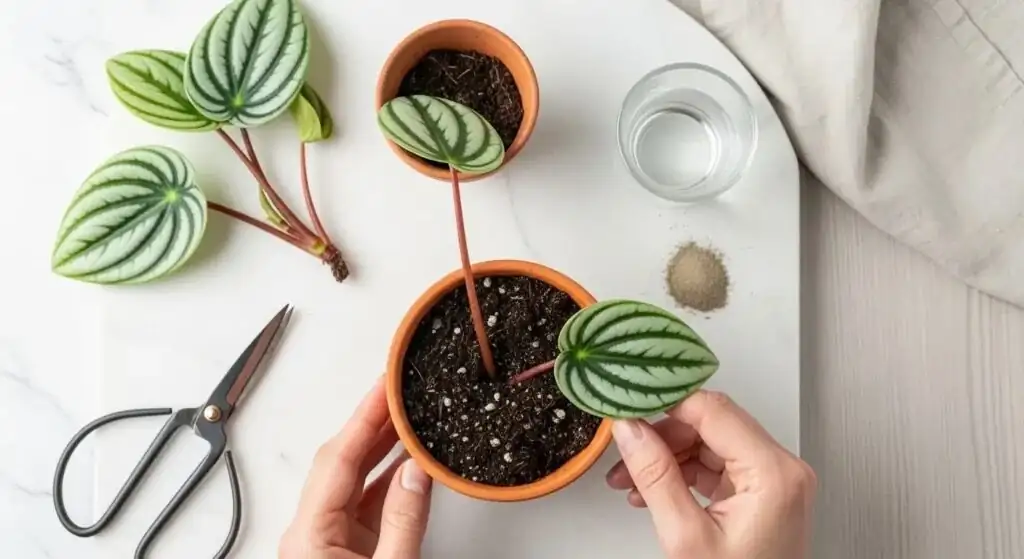
- Take a mature leaf with 0.5–1 inch (1–2 cm) of petiole in spring/summer.
- Insert the petiole and about one‑third of the leaf into a lightly moist, airy medium (perlite/sand mix works).
- Roots often appear in ~3–4 weeks; baby plantlets in ~4–6 weeks.
- Stem cuttings also root readily; divisions are possible at spring repotting.
Repotting schedule that works
- Likes life a bit snug: refresh/top‑dress yearly; repot fully every 2–3 years or when truly crowded. Move up just one size, focusing on drainage and an airy mix. Many plants are happy long‑term in 4–5 inch pots; larger, older clumps may use 5–6 inch pots depending on root mass.
Safety for homes with pets and kids
- Generally considered non‑toxic to cats, dogs, and people. Still, discourage nibbling—any plant material can cause mild tummy upset.
Quick ID and personality
- Names you’ll see: Watermelon Peperomia, Peperomia argyreia (also sold as Silver‑Leaf Peperomia or Watermelon Begonia)
- Family: Piperaceae (the pepper family)
- Native range: Northern South America, especially Brazil
- Habit: low, clump‑forming, compact, with slender often reddish petioles
- Flowers: thin, pale green‑cream “rat‑tail” spikes—interesting up close, but foliage is the star
Troubleshooting fast lane
- Yellowing, drooping petioles
- Most often overwatering or a mix that stays wet; improve drainage, let the top dry between waterings, and keep to bright, indirect light.
- Curling or drooping leaves without yellowing
- Often underwatering or very dry air; water thoroughly and boost humidity slightly.
- Faded striping
- Light is too low. Move to a brighter spot out of direct sun.
A note on symbolism (flower language)
While it doesn’t come with deep folklore, Watermelon Peperomia is widely associated with freshness and playfulness—its year‑round “mini watermelon” pattern reads as cheerful, modern, and uplifting. As a gift, it signals an easygoing wish for vibrancy and good vibes in the recipient’s space.
—
Take this checklist to the nursery and shop with confidence: firm, crisp leaves, clean crowns, no sour smells, and pest‑free undersides. Then let your new Watermelon Peperomia settle in—no immediate up‑potting—just bright, indirect light, a breathable mix, and measured watering. Do that, and those glossy, striped leaves will keep the conversation (and the compliments) flowing on your desk or windowsill.