

If your Dieffenbachia seguine (dumb cane) just flashed yellow leaves, lost its crisp variegation, stretched into a lanky tower, or started to smell a little… swampy—don’t panic. This tropical, cane-forming aroid is tough and forgiving. A few fast checks and targeted fixes usually turn things around within weeks.
Below is your rapid-response guide—what to look for first, how to treat common pests safely, how to improve humidity and airflow without inviting disease, and how to reset soggy soil before rot spreads.
First, know your plant’s sweet spot
- Light: Bright, indirect light is ideal. It tolerates shade, but leaf patterns fade in low light. Avoid harsh direct sun that can scorch.
- Temperature: Best at 65–75°F (18–24°C); keep it warm and draft-free. Avoid prolonged chills below ~54–59°F (12–15°C).
- Humidity: Enjoys 50%+; adapts to average homes with a little help.
- Watering: Evenly moist, never soggy. Water when the top 1–2 inches (2.5–5 cm) of mix is dry. Always empty saucers.
- Soil: Loose, airy, well-drained potting mix (peat/coco-based + perlite/bark is great).
- Safety: Toxic sap (calcium oxalate). Wear gloves to prune; keep away from pets and children.
Rapid diagnosis: yellow leaves, faded variegation, leggy canes, and rot
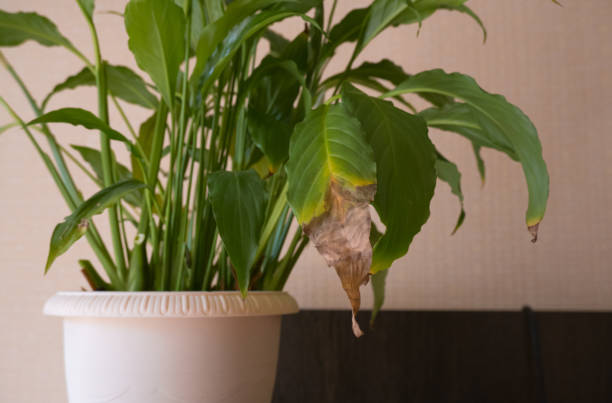
Yellow leaves
- Totally normal if:
- It’s a single, oldest lower leaf yellowing slowly while newer leaves look fine. Trim it off.
- Troubleshoot if multiple leaves yellow at once:
- Soggy soil or poor drainage: Soil stays wet for days, pot feels heavy, a musty smell. Action: Let the top layer dry, check drainage holes, and see “Emergency: reset soggy soil” below.
- Underwatering: Leaves droop, edges crisp, plant perks right after watering. Action: Water deeply until excess drains; don’t let it yo-yo bone-dry to drenched.
- Low light: Overall pale, weak new leaves. Action: Move to brighter, filtered light.
- Cold drafts: Sudden yellowing after an open window/AC blast. Action: Relocate; keep above ~60°F (15°C).
- Nutrient shortfall (over time): Pale new growth. Action: During spring–early fall, feed a balanced liquid fertilizer every 4–6 weeks at label rate (half-strength if sensitive). Pause in winter.
Faded variegation
- Likely cause: Not enough light. Variegation reads boldest in bright, indirect light.
- Fixes:
- Scoot closer to an east or bright north window, or set back from a south/west window with a sheer.
- Rotate the pot a quarter turn weekly so both sides color up evenly.
- Keep leaves dust-free so they can photosynthesize efficiently.
- Avoid direct sun that bleaches or scorches.
Leggy, top-heavy canes
- Likely cause: Shade and natural aging (dieffenbachia drops lower leaves over time).
- Fixes that rejuvenate:
- Increase light (brighter, indirect).
- Cut back leggy canes to just above a node using clean, sharp tools—this triggers new shoots from below. Wear gloves; sap can irritate.
- Propagate cane sections 4–5 inches (10–13 cm) long with at least one node; root warm and slightly humid.
- Air-layer tall canes if you want to keep height while encouraging new roots before cutting.
Rot (root or stem)
- Clues: Mushy, browning roots; foul smell; canes soft at the base; leaves yellowing from the bottom up while soil stays wet.
- Immediate action: See the emergency reset below. Rot advances quickly in cold, soggy conditions—warmth, airflow, and a well-drained mix are your allies.
Emergency: reset soggy soil safely (step-by-step)
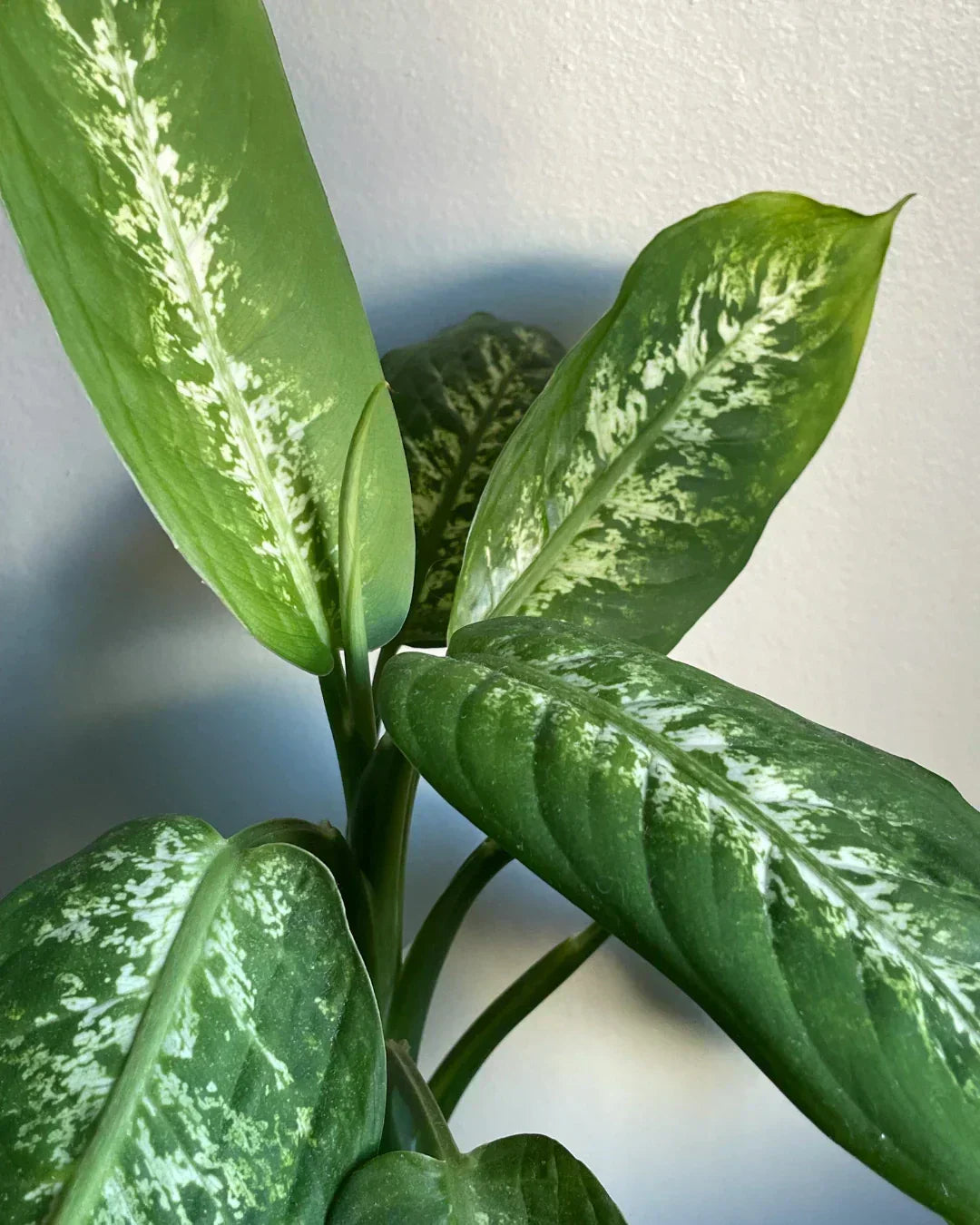
- Suit up and isolate: Wear gloves; move the plant to a sink or workspace. Toxic sap can irritate skin.
- Unpot gently: Slide the plant out. If the mix smells swampy, act promptly.
- Inspect roots:
- Healthy: Firm, white to tan.
- Rotted: Brown/black, mushy, foul-smelling.
- Rinse and trim:
- Rinse off clinging wet mix with lukewarm water.
- Sterilize pruners; remove all mushy roots and any soft cane tissue. Wipe blades between cuts.
- Air out briefly:
- Let roots and cut surfaces dry 30–60 minutes in bright shade with good airflow.
- Repot in fresh, airy mix:
- Use a pot with drainage, only 1–2 inches (2.5–5 cm) wider than the root mass.
- Mix idea: peat/coco + perlite/pine bark for extra porosity.
- Set to the same depth as before; don’t bury the cane base.
- Water lightly:
- Moisten just enough to settle the mix. Empty the saucer.
- Recovery conditions:
- Bright, indirect light; warm (ideally 70–75°F/21–24°C).
- Gentle airflow (small fan on low, not directly blasting leaves).
- Hold fertilizer for 3–4 weeks. Resume normal watering only when the top 1–2 inches are dry.
If the cane base is mushy above the soil line, take top cuttings from firm, healthy tissue and root those; discard the rotted base.
Pests: catch them early and win fast
Dieffenbachia can host sap-suckers, especially indoors in dry air. Check weekly—top and bottom of leaves, leaf axils, and along canes. Isolate infested plants.
General treatment rules
- First aid: Rinse the plant in a lukewarm shower or with a sprayer to knock down insects.
- Core treatments: Insecticidal soap or horticultural oil (including neem-style oils). Thorough coverage—leaf tops, undersides, stems, and crevices.
- Repeat: Reapply every 7 days for 3–4 cycles to catch new hatchlings.
- Timing: Treat in the morning; avoid hot, sunny windows right after spraying.
- Test spot: Try any product on one leaf and wait 24 hours to ensure no sensitivity.
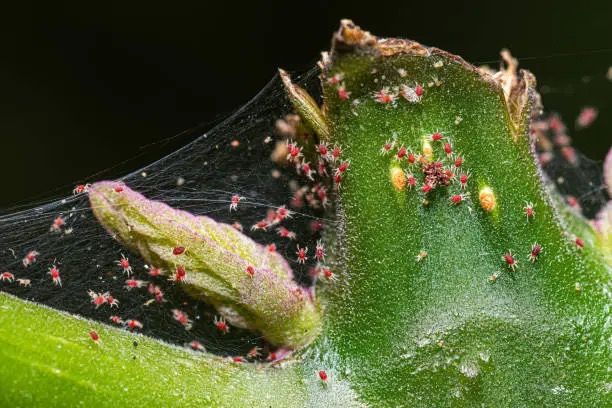
Spider mites (tiny “dust,” fine webbing, stippling)
- Early signs: Mottled, speckled leaves; fine webbing under leaves and in nodes; leaves feel “grainy.”
- Why they show up: Dry air and still conditions.
- What to do:
- Rinse thoroughly, especially undersides.
- Increase humidity (50%+), and add gentle airflow.
- Treat with insecticidal soap or horticultural oil; repeat as above.
Mealybugs (cottony clusters in nooks)
- Early signs: White fluff in leaf axils and along veins; sticky honeydew; leaves yellow and growth stalls.
- What to do:
- Dab visible clusters with alcohol on a cotton swab to remove, then follow with insecticidal soap or horticultural oil for hidden juveniles.
- Check weekly—mealybugs love to come back in crevices.
Scale insects (hard or soft “bumps” that don’t move)
- Early signs: Dome-like bumps along canes and leaf undersides; sticky honeydew; yellowing.
- What to do:
- Gently lift off adults with a fingernail or swab.
- Apply horticultural oil to smother crawlers and residuals; repeat several times.
Thrips (silvery scarring, deformed new leaves, black specks of frass)
- Early signs: Silvery or bronze streaks on foliage; distorted new growth; tiny fast-moving insects if you tap over white paper.
- What to do:
- Remove and bag the worst leaves.
- Use blue or yellow sticky cards to monitor adults.
- Treat with insecticidal soap or horticultural oil; repeat on schedule.
- Boost humidity and airflow—thrips prefer dry, stagnant air.
Aphids (clusters on tender tips, curling leaves, honeydew)
- Early signs: Crowds of green/black/brown aphids on new growth; sticky leaves; possible sooty mold.
- What to do:
- Rinse with a firm spray to dislodge.
- Follow with insecticidal soap or horticultural oil; repeat.
- Pinch back overly tender, crowded growth that attracts reinfestation.
Humidity and airflow: more comfort, fewer problems
- Aim for 50%+ humidity:
- Use a small humidifier, or set the pot on a pebble tray with water below the pot base.
- Group plants, but don’t crowd leaves edge-to-edge.
- Airflow that’s “gentle and constant”:
- A small fan on low nearby helps leaves dry after watering and discourages gray mold.
- Misting?
- Optional light morning mist in dry homes; ensure leaves dry by evening.
- Avoid nightly wet foliage and stagnant air, which favor leaf spots.
Watering rhythm that prevents both crisp tips and rot
- Check moisture with your finger; water when the top 1–2 inches are dry.
- Water thoroughly until it drains, then empty the saucer.
- In spring–summer, you may water weekly or twice weekly for big plants; in winter, much less. Keep lightly moist, never waterlogged.
- Use well-draining mix and a pot with drainage holes. Repot in spring every 1–3 years or when roots crowd.
Pruning and propagation to keep it full
- Prune yellowing leaves at the base.
- If it’s tall and bare, cut canes back to encourage new shoots.
- Propagate by cane cuttings or air-layering for a bushier, refreshed plant.
- Always wear gloves; sap can irritate.
Quick checkpoints when things go wrong
- Yellowing everywhere + wet mix: Overwatering—improve drainage, reset soil if needed.
- Faded, thin leaves + long internodes: Light too low—brighten and rotate.
- Sticky leaves or black soot: Honeydew from pests—inspect for aphids/scale/mealybugs.
- Fine webbing + dusty leaves: Spider mites—rinse, treat, raise humidity.
- Mushy cane base: Cut to healthy tissue and re-root; discard the rot.
A brief note on symbolism and “flower language”
Dieffenbachia is grown almost entirely for its dramatic foliage; blooms (a pale spathe and spadix) are uncommon indoors. In interiors, its lush leaves often symbolize prosperity and tropical abundance. In some Brazilian folk traditions it’s said to ward off negative energy—a cultural association rather than a botanical property. The infamous nickname “dumb cane” comes from the intense mouth and throat irritation that can temporarily impair speech if the plant is chewed. Treat these meanings as cultural stories: enjoy the greenery, respect the toxicity, and keep it out of reach.
Final reassurance
Native to the warm, humid understory of the tropical Americas, Dieffenbachia seguine is built for resilience. Give it bright, indirect light, steady moisture without sogginess, warmth, and a touch of humidity; catch pests early with a weekly check; and don’t hesitate to prune and refresh the mix. With those habits, color snaps back, canes fill out, and the plant returns to its bold, architectural best.