

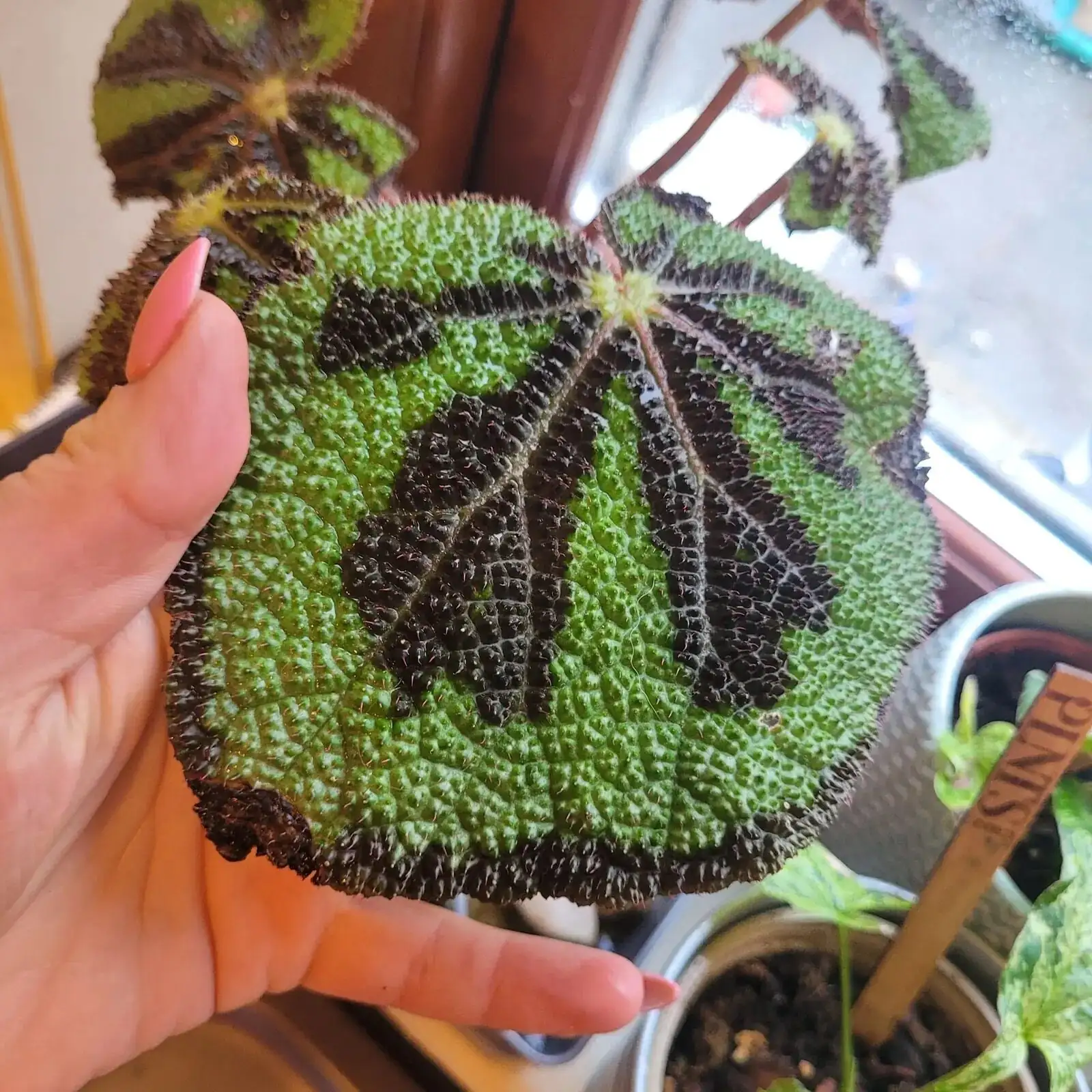
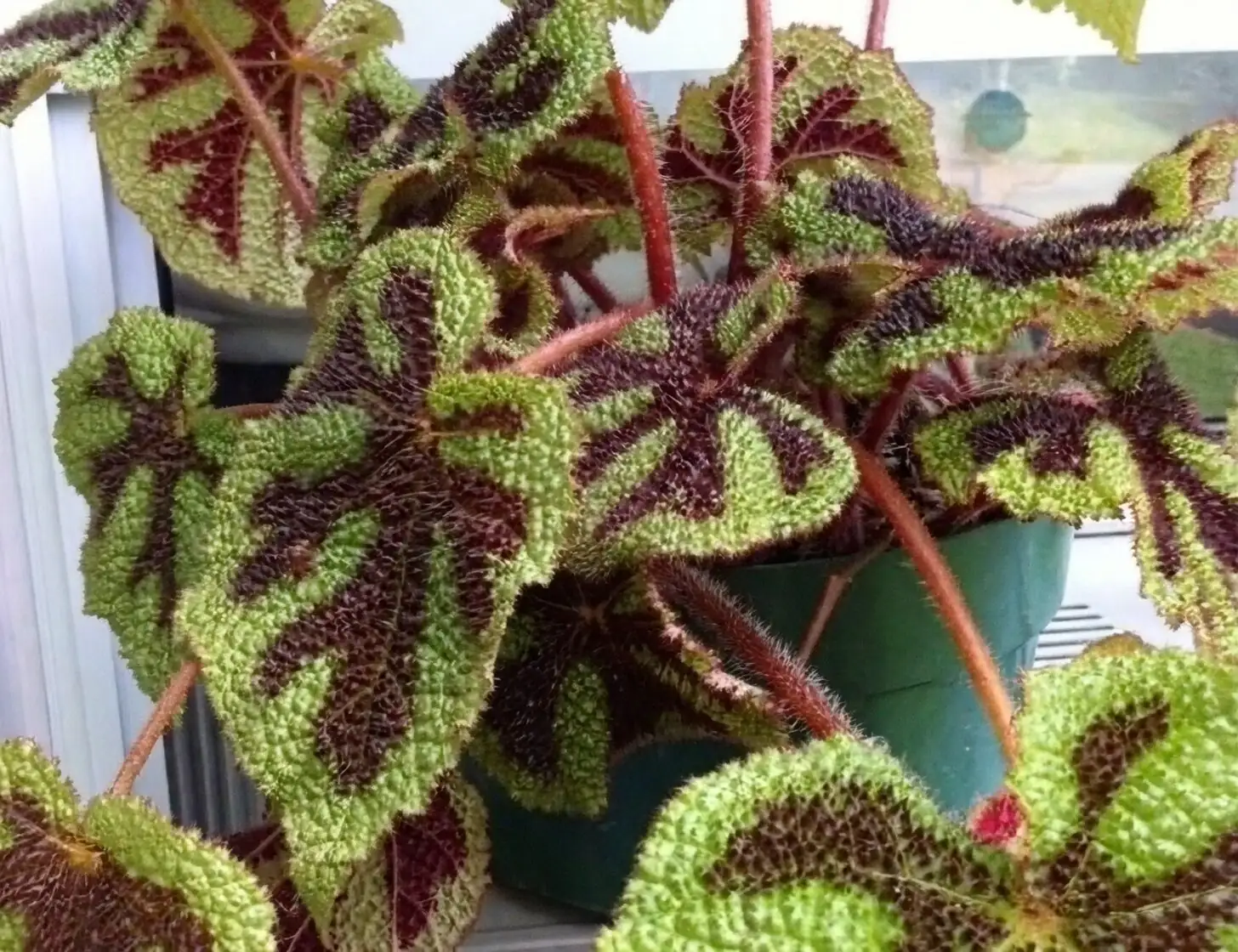
Iron Cross Begonia is a true “touch-and-stare” plant—its bright green, heart-shaped leaves feel like sandpaper and wear a bold, wine-red cross. That texture is part of its charm, but it also means you need a gentle hand when tackling pests and disease. Here’s a foliage-safe, integrated plan to keep Begonia masoniana dazzling without leaving spray scars or stress behind.
Meet the plant you’re protecting
- Identity: Begonia masoniana (Iron Cross Begonia; also called Mason’s Begonia)
- Origin: Southern China to Vietnam; now a beloved ornamental worldwide
- Habit: Compact, rhizomatous perennial, typically 12–18 in tall and wide in pots
- Light & climate: Bright, indirect light; 64–81°F (18–27°C); keep above 55°F (13°C)
- Humidity: Moderate to high (ideally 50–70%) with good airflow
- Potting mix: Loose, airy, fast-draining (peat/coco base with perlite + some bark)
- Watering rhythm: Water thoroughly when the top 1 in (2–3 cm) dries; never let it sit in water
- Safety note: Toxic to pets if chewed (insoluble calcium oxalates)
The IPM mindset (why it works for Iron Cross)
Integrated Pest Management = prevent first, act early, use the softest tool that works, then reassess.
1) Inspect routinely
2) Optimize environment and hygiene
3) Use mechanical/biological controls
4) Apply low-toxicity products sparingly and correctly
5) Evaluate and adjust
Quarantine any new plant for 2–3 weeks before it joins your collection.
Early warning signs (spot it before it spreads)
- Spider mites: Tiny yellow/white stippling, dusty look, fine webbing under leaves and at petioles; leaves may yellow and drop.
- Mealybugs: Cottony tufts in leaf axils and along rhizomes; sticky honeydew; stunted growth.
- Thrips: Silvery streaks or flecks, deformed new growth/flowers, peppery black frass; fast-moving sliver-like insects if you tap a leaf.
- Fungus gnats: Tiny black flies hovering at soil; larvae in topsoil; algae or green scum on mix.
- Powdery mildew: Talc-like white film on leaves; worse with crowded, still, humid air.
- Leaf spot: Round or irregular tan/brown spots that may have darker margins; often linked to persistently wet leaves and poor airflow.
- Rot (root/rhizome): Mushy, darkened rhizome or leaf bases; soil smells sour; collapse at the crown—often from cold, soggy conditions.
Prevention: tune the environment so pests don’t feel at home
- Light: Bright, indirect. Keep out of harsh direct sun to prevent scorch and stress.
- Airflow + spacing: Give the plant “elbow room”; a gentle fan on low helps foliage dry promptly.
- Humidity (smart): Aim for 50–70% with airflow. Skip heavy, routine misting—wet leaves invite mildew and spotting. Use a humidifier or pebble tray (pot not sitting in water).
- Watering: Let the top inch dry, then water thoroughly and drain. Reduce in winter; keep warm.
- Potting & drainage: Shallow, wide pot suits the rhizome; use a chunky, fast-draining mix.
- Cleanliness: Remove fallen leaves and spent blooms; sanitize shears; wipe shelves and saucers.
- Monitoring: Yellow/blue sticky cards near the plant to track thrips and fungus gnats.
- “Dry cap” for gnats: A thin top-dress of coarse sand or fine gravel helps the soil surface dry faster.
Foliage-safe, stepwise control for each pest
Spider mites
- First moves:
- Isolate the plant.
- Give a lukewarm, gentle shower focused on undersides. Let leaves dry fast with airflow.
- Raise humidity to the 50–70% sweet spot and avoid hot, dry drafts.
- Biocontrol allies: Predatory mites (Neoseiulus californicus, Phytoseiulus persimilis) excel in contained spaces like grow tents or greenhouses.
- Leaf-safe sprays:
- Insecticidal soap (1–2%) or horticultural oil (0.5–1%) works on contact. Spot-test on one leaf; treat in the evening; avoid heat or direct sun.
- Gently rinse leaves with plain water 30–60 minutes after application to prevent residue spotting.
- Repeat weekly 2–3 times to catch new hatchlings.
- Pro tip: Focus spray on undersides where mites congregate; keep pressure low to avoid bruising the rough leaf surface.
Mealybugs
- First moves:
- Dab visible clusters with a cotton swab dipped in 70% isopropyl alcohol, then wipe away. Target leaf axils and along the rhizome.
- Inspect nearby pots; mealybugs wander.
- Biocontrol allies: Mealybug destroyer beetle (Cryptolaemus montrouzieri) in enclosed growing spaces.
- Leaf-safe sprays:
- Follow up with a light application of insecticidal soap or horticultural oil after spot-testing.
- Repeat every 7–10 days until no new cottony tufts appear.
- Cultural tweak: Avoid overfertilizing; soft, lush growth invites mealybugs.
Thrips
- First moves:
- Isolate; remove and bag any blossoms or badly deformed new leaves (thrips love flowers).
- Place blue or yellow sticky cards at leaf height to trap adults and monitor.
- Biocontrol allies: Amblyseius cucumeris or A. swirskii predatory mites; minute pirate bugs (Orius insidiosus) in controlled environments.
- Leaf-safe sprays:
- Thorough coverage with insecticidal soap or a light horticultural oil; repeat 3 times at 5–7-day intervals to break the life cycle.
- Always spot-test—begonia leaves can be sensitive.
Fungus gnats

- First moves:
- Let the top 1 inch of mix dry between waterings; empty saucers.
- Top-dress with 0.25–0.5 in (0.6–1.2 cm) of coarse sand or fine gravel to keep the surface dry.
- Use yellow sticky cards to reduce adult numbers.
- Biocontrol allies:
- Bti (Bacillus thuringiensis var. israelensis) as a soil drench per label; targets larvae only.
- Beneficial nematodes (Steinernema feltiae) for persistent cases.
- Cultural tweak: Improve airflow at soil level; refresh compacted, peat-heavy surfaces that stay soggy.
Disease troubleshooting (rot, powdery mildew, leaf spot) without wrecking the leaves
Root/rhizome rot

- What to do:
- Unpot carefully; trim mushy, dark tissue back to firm, healthy rhizome with sterilized tools.
- Let cut edges dry and callus for a few hours.
- Repot in fresh, airy mix; set the rhizome at or slightly above the soil surface.
- Water lightly at first; keep warm (70–75°F / 21–24°C) and bright, indirect.
- Prevention: Never park the pot in water; use a shallow pot with ample drainage; avoid cold drafts.
Powdery mildew
- Immediate actions:
- Improve airflow; space plants; provide gentle fan movement.
- Remove a few heavily coated leaves at the base to open the canopy; bag and discard.
- Water the soil, not the foliage; avoid evening leaf wetness.
- If needed:
- Consider a gentle biofungicide (e.g., Bacillus-based) or potassium bicarbonate; always spot-test first and apply in the evening. Rinse lightly the next morning if residue mars the look.
- Avoid: Sulfur or strong copper products—begonias are prone to leaf injury from these.
Leaf spot (fungal or bacterial look-alikes)
- Contain and correct:
- Isolate; prune spotted leaves at the base with sterilized shears.
- Boost airflow; keep leaves dry, especially overnight.
- Water when the top 1 in dries; direct water to the soil only.
- If it continues to spread:
- Reassess crowding, humidity, and any routine misting.
- Severe, fast-moving bacterial spots may warrant discarding the most affected plant to protect the rest of your collection.
How to treat Iron Cross leaves without leaving marks
- Always spot-test any product on a single leaf and wait 24 hours.
- Treat in the evening, in a cool room with bright but indirect light the next day.
- Use distilled or soft water for mixing to avoid mineral spotting.
- Spray at low pressure; aim for undersides and junctions—don’t “buff” the rough leaves.
- After 30–60 minutes, lightly rinse with plain water to remove soap/oil residue, then dry with gentle airflow.
- Shield the potting mix with a towel or plastic during foliar sprays to keep the surface from staying wet (helps deter fungus gnats).
A simple weekly IPM routine
- Inspect: Flip a few leaves, scan petioles and the rhizome, and check sticky cards.
- Clean: Remove debris, spent blooms, and any yellowing leaves at the base.
- Adjust: Verify the top inch of soil is drying between waterings; confirm good airflow.
- Record: Note any stippling, cottony tufts, or gnats so you can act early next week.
Recovery and resilience
After any outbreak or rot event, keep conditions steady: bright, indirect light; warm temperatures; slightly drier intervals between waterings; and light feeding in spring–early autumn at 1/4–1/2 strength. Begonia masoniana rebounds best with consistency.
A note on symbolism
This begonia’s dramatic “iron cross” marking often symbolizes individuality and resilience—beauty with a bold streak. It’s a fitting emblem for a plant that thrives when you strike the right balance of moisture, warmth, and airflow.
Quick safety reminder
Keep Iron Cross Begonia away from pets and small children. Chewing the plant can cause mouth irritation and drooling.
With a gentle, integrated approach—and a little detective work each week—you’ll outsmart mites, mealybugs, thrips, and gnats, while keeping those sandpaper leaves crisp, cross-marked, and camera-ready.