
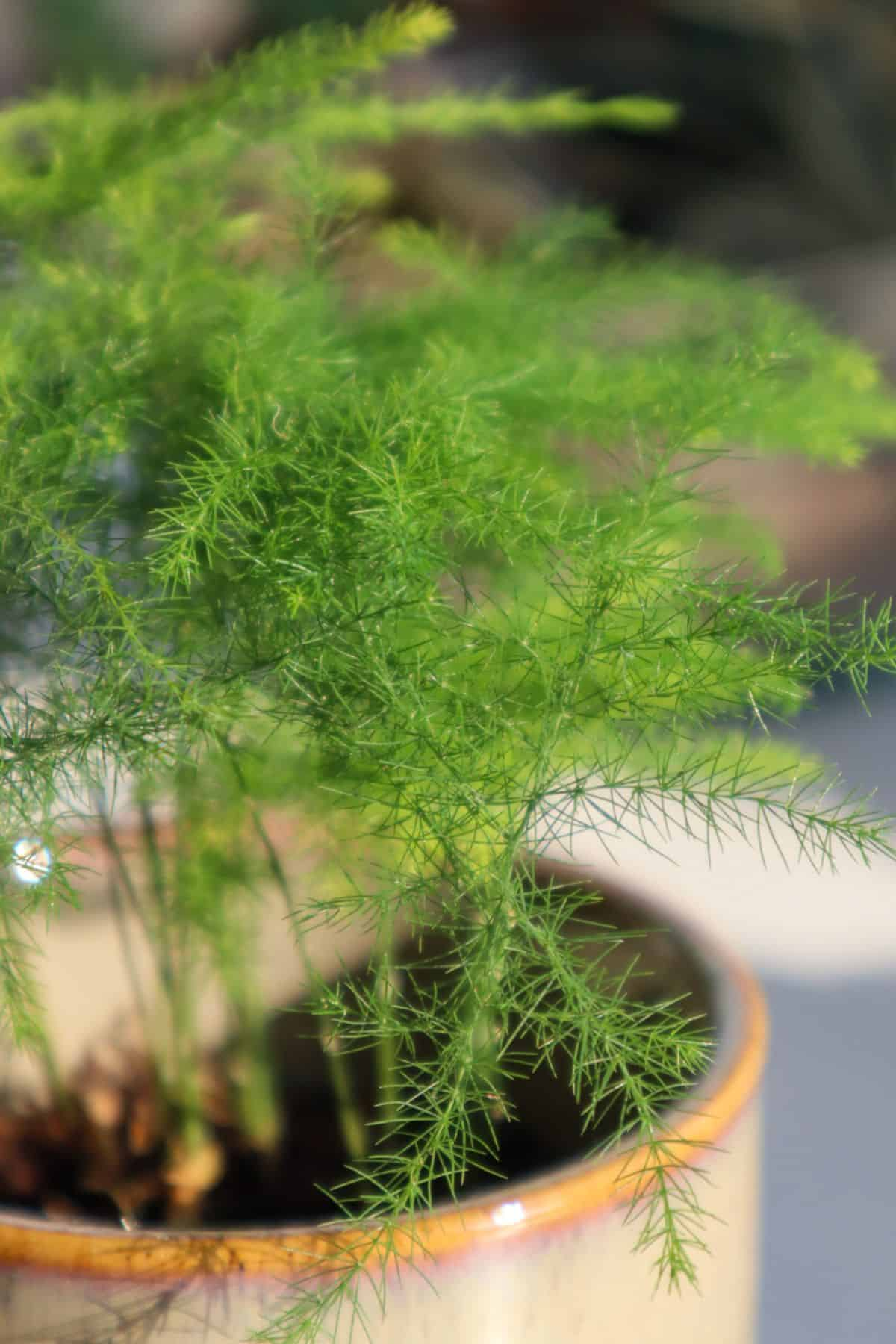
Feathery, floaty, and impossibly chic, Asparagus setaceus (Kunth) Jessop—better known as the asparagus fern—behaves like the tulle of the plant world. It’s not a true fern at all, but an asparagus relative whose soft “needles” are actually tiny, leaf-like stems (cladodes). Get the light, humidity, and vessel right, and you’ll have an enduring, design-forward statement that drapes, climbs, or clouds your space with airy green.
Meet the plant: lace, not fuss
- Personality: Fast-growing, evergreen, and versatile—happy to trail, scramble, or climb when given support.
- Look: Billowy sprays of fine, bright-to-deep green cladodes on slender arching stems; new shoots flush in warm conditions for the fluffiest texture.
- Scale indoors: Often 30–90 cm tall with stems that can extend 1–3 m if trained; keep compact with pruning or let it cascade with intent.
- Origin: Southern to eastern Africa, especially South Africa.
- Notable: Subtle starry white to greenish-white blooms on mature plants (usually summer into autumn indoors), followed by small berries that ripen dark purple-black if pollinated.
Light and humidity, styled like a pro
Think “bright, filtered,” not “blazing spotlight.”
Light that flatters (and doesn’t scorch)

- Sweet spot: Bright, indirect light or light shade.
- Window wizardry:
- East window: Ideal, gentle morning sun.
- South/west windows: Place a few feet back or use sheers to diffuse midday intensity.
- North window: Often fine if bright; expect slower, thinner growth.
- Signs to watch:
- Scorched, yellowed sprays = too much direct sun.
- Thin, sparse growth = not enough light.
Humidity that keeps the fronds cloud-soft
- Target: Moderate to high humidity, around 50%+.
- Design-forward boosts:
- Bright bathroom with a window (great light + humidity).
- A low-profile pebble tray under a pedestal or cachepot.
- A slim humidifier tucked behind a console or plant screen.
- Avoid: Hot, dry blasts from vents and heaters; they cause brown tips and leaf drop.
Hang it or trellis it? A decision guide
Use the plant’s natural habit—arching, trailing, or climbing—to shape your space.
Choose hanging when…
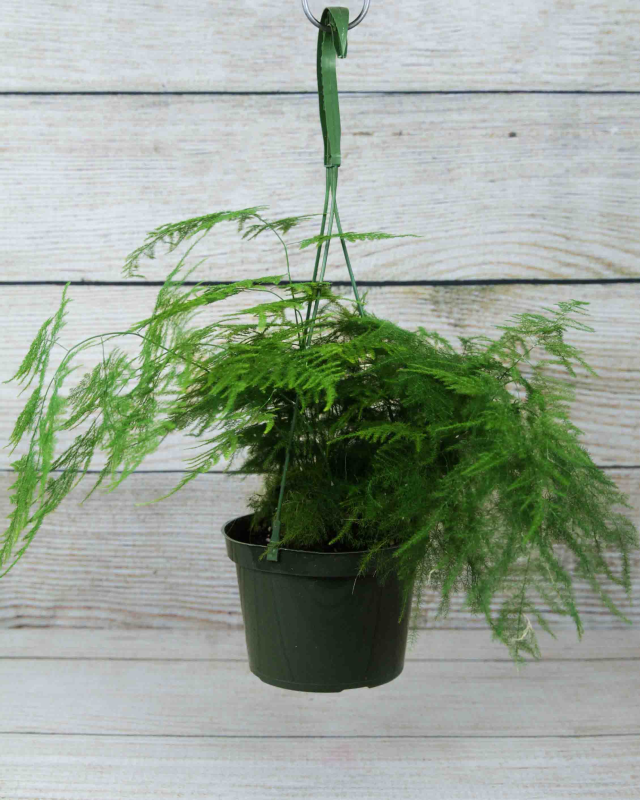
- You want cascading softness off a mezzanine, bookshelf edge, or in a bay window.
- You need to lift it above pet reach (especially if berries form).
- You crave a “living chandelier” moment in bright, indirect light.
- Go-to vessel: 15–18 cm lightweight hanging basket with drainage; line with coco fiber only if you’re consistent with watering (liners dry fast).
Design notes for hanging:
- Keep within arm’s reach for watering; even moisture matters.
- Rotate the basket every couple of weeks for even, plush growth.
- In strong afternoon exposures, a sheer curtain is your best friend.
Choose a trellis (or topiary hoop) when…
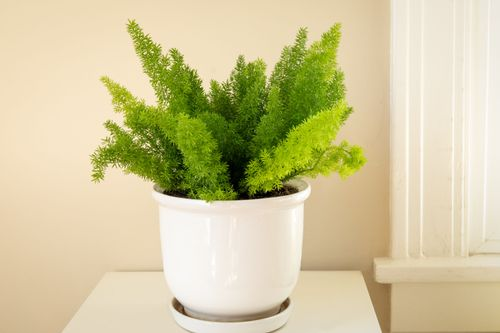
- You prefer a clean, architectural silhouette on consoles, desks, or pedestals.
- Airflow matters—training upward opens the plant’s center and prevents tangles.
- You want to guide stems up to 60–120 cm for a green “screen” without a full vine.
- Go-to support: Slim brass, matte black, or natural wire hoops/fans; soft ties.
Training tips:
- Redirect new, flexible shoots onto the support; avoid wrapping too tight.
- Lightly pinch very young tips (around 2–3 cm long) to encourage branching.
- Prune long, woody or yellowing stems at the base in spring to refresh the cloud.
A hybrid approach
- Pedestal pot + minimalist hoop: lets the plant rise, then drape elegantly.
- Wall-mounted planter with an internal trellis: the plant “floats” while staying trained.
Vessel choices that keep it lush (and on trend)
Form meets function here: even moisture without waterlogging is the brief.
- Drainage is non-negotiable: Always choose pots with holes; empty saucers after watering.
- Material matters:
- Terracotta: Breathable and sculptural; dries faster—pair with a slightly more moisture-retentive mix or a discreet self-watering insert.
- Glazed ceramic/stoneware: Holds moisture longer; emphasize chunky aeration in the mix.
- Lightweight plastic/fiberglass: Ideal for hanging to reduce strain; ensure good drainage.
- Self-watering systems: Great if you use a wicking design and an airy mix; keep the reservoir modest and let the top 2–3 cm of soil dry slightly between refills.
- Pot size cues:
- 12–15 cm for standard table pieces.
- 15–18 cm for hanging baskets with satisfying fullness.
- 20–25 cm for mature specimens—can improve odds of blooms/berries.
- Soil recipe: A quality potting mix + organic matter (compost/leaf mold or coco coir) + perlite or coarse sand for drainage. Slightly acidic to neutral is perfect.
Room-by-room placement playbook
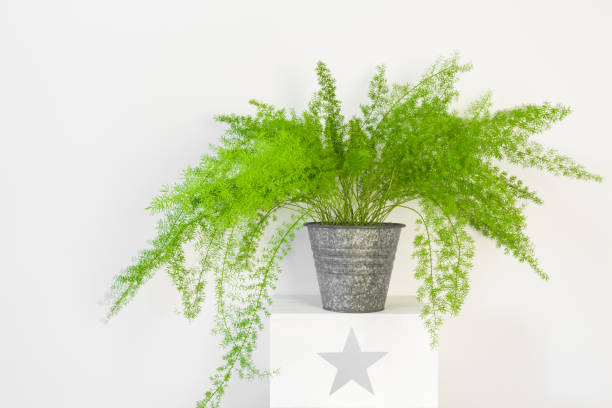
- Bright bathroom: The dream location—filtered light plus built-in humidity. Maintain airflow to avoid stagnant conditions.
- Living room: Park near an east window or a few feet back from a south/west exposure with sheers. Trellis on a sideboard for a sculptural moment or hang to soften corners.
- Study/office: A refined, calm texture for focus zones; training on a hoop keeps it tidy near tech and documents.
- Bedroom: Gentle morning light is lovely; keep out of harsh afternoon beams.
- Outdoors (warm months, frost-free): Bright shade on an east/north balcony or patio; shelter from wind and scorching sun. Bring indoors before nights drop near 4–5°C (39–41°F). In regions where the species is invasive, avoid letting berries mature outdoors.
Watering and feeding, simplified
- Watering rhythm: Soak thoroughly, then let the top 2–3 cm (about an inch) dry slightly before watering again. Evenly moist is the goal—never soggy, never bone-dry. No standing water in saucers.
- Seasonal tweaks: More frequent in summer/active growth; ease off in autumn/winter, especially in cool rooms.
- Fertilizer: Once every 4–6 weeks in spring–summer with a balanced liquid feed at half strength. Reduce or pause in autumn–winter. For mature plants aiming to bloom, a single, light phosphorus-leaning feed ahead of the flowering window can help.
Grooming, repotting, and propagation
- Prune in spring: Remove yellow, spent, or overly long stems at the base; tip-pinch very young shoots for fullness.
- Repot cadence: Every 1–2 years (hanging baskets often ~2 years). Step up just one size and refresh the mix; loosen circling roots gently.
- Propagate by division: Split clumps in spring into sections with a few stems each; pot up, keep in bright shade, and maintain even moisture while they re-establish.
- Seed is possible: Warmth (around 20–22°C), shallow sowing, and patience—germination can take a few weeks.
Reading the plant: quick diagnostics
- Yellowing and collapse: Often waterlogged soil, harsh sun, or nutrition imbalance.
- Brown, crispy tips: Low humidity or irregular, underwatered periods.
- Pests to watch: Spider mites (especially in hot, dry air), scale, and mealybugs. Rinse, treat with insecticidal soap or horticultural oil, and boost humidity to deter mites.
Pet and people safety: berries are the line you don’t cross
Asparagus setaceus is mildly toxic if ingested. The berries are the main concern and can cause gastrointestinal upset in pets and people; the fine foliage/sap may irritate sensitive skin.
- Pet-safe styling:
- Prefer trellised table pieces or high hangers out of reach.
- Prune off flowers/young berries on display specimens, and promptly remove any that appear.
- Sweep fallen berries; wear gloves if your skin is sensitive.
- If ingestion occurs, contact your veterinarian or a poison helpline.
Design formulas to steal
- Cloud over console: 18 cm glazed pot + matte black hoop + east light = soft, architectural green.
- Soften a corner: Lightweight 16 cm hanging pot + sheer-diffused south window = cascading texture without scorch.
- Spa vignette: Stoneware cachepot with pebble tray + bright bathroom window = lush, humidity-loving fronds.
- Balcony cameo (warm season): Fiberglass planter in bright shade + gentle airflow = vigorous, airy sprays; bring inside before chilly nights.
A note on symbolism (and why it still resonates)
Often gifted as a gesture of enduring love and steady support, this plant’s “flower language” leans into its visual poetry—fine, lasting fronds that weave softly through space. In Feng Shui contexts, it’s embraced for gentle protection and supportive energy in study or career areas. While symbolic meanings are cultural rather than botanical, they mirror the plant’s real-world appeal: resilient, graceful, and quietly uplifting when sited in the right light and humidity.
Quick specs (for the design dossier)
- Family/genus: Asparagaceae, Asparagus
- Common names: Asparagus fern, Lace fern, Plumosa/Plume asparagus, Climbing asparagus
- Light: Bright, indirect; avoid harsh midday sun
- Temperature: 15–25°C best; keep above 4–5°C
- Humidity: 50%+ preferred
- Soil: Well-draining, slightly moisture-retentive
- Habit: Arching/trailing; climbs when supported
- Hardiness outdoors: USDA 9–11 (frost-free)
Style it to float, frame, or flow—then let this lacework green do what it does best: bring softness, movement, and a touch of timeless romance to your space.