

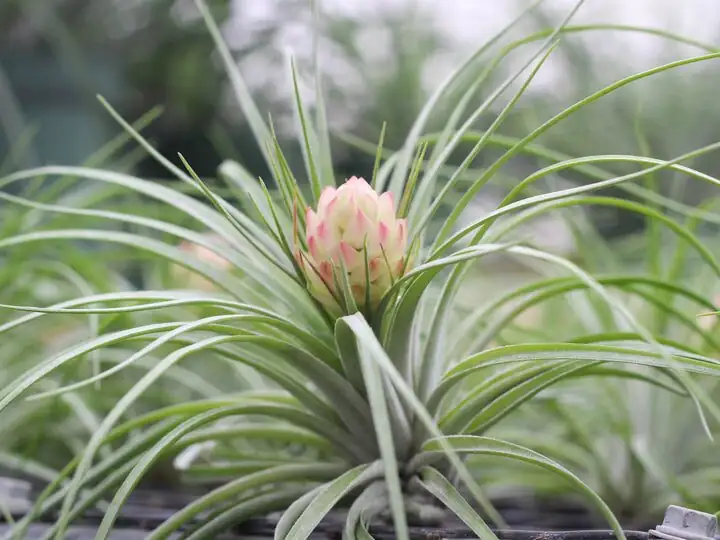
Meet Tillandsia juncea, the air plant that thrives on bright light, moving air, and a simple soak–shake–dry ritual. Its narrow, fountain-like leaves look like green fireworks frozen mid-spark, and when it blooms, a vivid pink spike with small purple tubular flowers steals the show. Best of all, it’s forgiving—miss a watering and it often bounces back once you hydrate it properly and let it dry fast.
Know Your Plant: Quick ID
- Scientific name: Tillandsia juncea (family Bromeliaceae)
- Native range: Mexico and Central America
- Look: Dense clump of long, slender, pointed leaves; neat, fountain-shaped form
- Size: Typically 15–30 cm (6–12 in) tall; clumps can spread 15–30 cm (6–12 in)
- Bloom: Bright pink spike with small purple tubular flowers; usually late spring to summer
- Growth habit: Clumping epiphyte that produces offsets (“pups”) around the base
Light, Airflow, Placement
Strong light plus great airflow is the winning combo for this species. Think breezy, bright spots rather than hot, still corners.
Indoors
- Target exposure: Bright, indirect light to gentle morning sun.
- Where to place it:
- East window: ideal—morning sun, then bright ambient light.
- West window: set back a bit or use sheer curtains to soften afternoon rays.
- South window: great behind a sheer or a few feet back; avoid harsh midday beams unless humidity and airflow are excellent.
- Grow lights: 10–12 hours under full-spectrum LEDs works well. Keep air moving around the plant, not baking under a hot lamp.
Outdoors (warm seasons)
- Bright shade or dappled light with good airflow.
- Avoid harsh midday sun; morning sun is fine if the plant dries quickly after watering.
Airflow hacks
- Use a small, quiet fan on low, oscillating past the plant—not directly blasting it.
- Elevate the plant on a mesh stand or wire rack so air reaches the base.
- Avoid sealed containers and deep glass vessels that trap moisture; choose open displays.
- After watering, place it where air moves; in humid bathrooms, ensure strong light and a fan or open window.
The Soak–Shake–Dry Watering Routine
This routine prevents the two big killers of air plants: staying too wet (rot) and staying too dry (desiccation).
Step-by-step
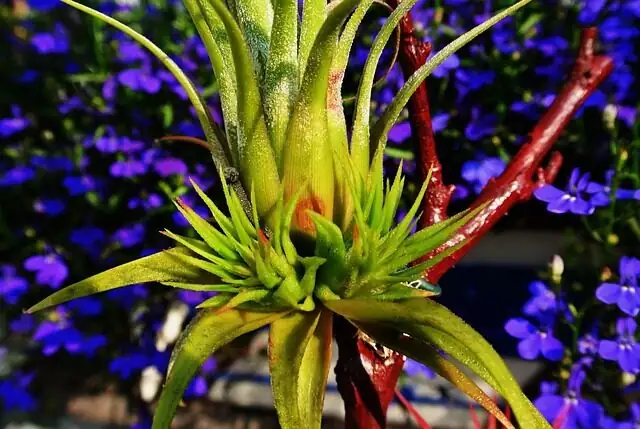
- Soak: Submerge the plant in clean, room-temperature water for 15–30 minutes.
- Shake: Gently but firmly shake out water, especially from the leaf bases.
- Drain: Set upside down on a towel for a few minutes, then return upright.
- Dry: Ensure the plant dries completely within 2–4 hours in moving air.
- Never leave water sitting in the base.
Tip if blooming: Keep the pink spike and open flowers above water or switch to a thorough rinse instead of a full soak to preserve the display.
How often?
- Warm/dry, bright conditions: 1–2 times per week.
- Cooler/darker periods: about every 10–14 days.
- Between soaks: If the plant feels extra light or the leaf tips curl inward, a quick rinse can help—just still dry it within 2–4 hours.
Cues to watch:
- Thirsty: Curling or wrinkling leaves; plant feels very light.
- Overwatered/stagnant: Soft, darkening base; leaves wobble or pull free—act fast to improve drying and airflow.
Water quality
- Use clean water. If your tap water is very hard or softened, consider rain, filtered, or distilled water. Rinse with plain water occasionally to prevent mineral buildup.
Seasonal Adjustments (Simple Calendar)
- Spring–Summer: Increase light (avoid scorching), soak more often (1–2× weekly), feed lightly, and keep strong airflow.
- Fall–Winter: Water less (every 10–14 days), maximize light, keep above 10°C/50°F, and prioritize rapid drying after each soak.
Feeding and Growth
- Fertilizer: Monthly in spring and summer with a bromeliad/air-plant formula at 1/4 strength (or a low-copper orchid fertilizer).
- Rinse with plain water occasionally to prevent mineral buildup.
- After flowering, the blooming rosette slows but produces pups that keep the clump going.
Mounting and Styling (No Soil Needed)

- Display options: Cork bark, driftwood, wire stands, mesh baskets, or simply set on a dry, airy surface.
- If tying or gluing, don’t smother the base—leave air gaps. Refresh ties/adhesive as the clump expands.
- Open terrariums are fine; sealed ones are not (they trap moisture and stagnate air).
Temperature and Humidity
- Temperature: 18–30°C (64–86°F); protect from cold and keep above 10°C (50°F).
- Humidity: Moderate to high (ideally 40–70%) paired with strong airflow so the plant dries quickly after watering.
Troubleshooting and Health
- Most issues trace back to slow drying. Speed up airflow and ensure the plant dries within 2–4 hours.
- Pests: Mealybugs and scale may appear. Remove with cotton swabs dipped in 70% isopropyl alcohol, isolate the plant, and improve airflow/drying.
- Tip browning can occur from underwatering or mineral buildup—adjust watering and flush occasionally.
Propagation: Pups for Days
- Pups form around the base. Let them grow until they’re 1/3–1/2 the size of the parent before gently separating.
- Or keep them attached to build a fuller, fountain-like clump.
Safety
- Generally considered non-toxic to people and pets, but not edible. Keep away from curious chewers to prevent plant damage and mild stomach upset.
Mini FAQ
- Why is my air plant turning brown at the base?
- Usually rot from staying wet too long or poor airflow. Soak to water, then shake and dry quickly in moving air. Never leave it in a puddle or closed container.
- Can I grow it in a closed glass terrarium?
- Not recommended. Tillandsia needs airflow to dry fast. Choose an open terrarium or an airy mount.
- Does it die after flowering?
- The blooming rosette slows after flowering, but it produces offsets (“pups”) that carry the clump forward.
Symbolism and Flower Language (花语)
Tillandsia juncea is often linked with independence, resilience, and elegance under minimal resources. These meanings aren’t ancient folklore so much as thoughtful interpretations of its epiphytic lifestyle: it anchors to trees or rocks, draws moisture and nutrients through silvery trichomes, and survives where others can’t. In modern “flower language,” that translates to self-reliance and adaptability—quiet strength that doesn’t demand much, yet rewards you with a bright, jewel-toned bloom when conditions are right.
Your Beginner-Friendly Weekly Routine (At a Glance)
- Light: Bright, indirect; gentle morning sun is welcome. Keep air moving.
- Water: Soak 15–30 minutes; shake thoroughly; dry fully in 2–4 hours.
- Frequency: 1–2× per week in warmth/brightness; every 10–14 days in cooler/darker times.
- Feed: Monthly at 1/4 strength in spring–summer.
- Check: Base stays dry between waterings; no trapped water in leaf axils.
- Adjust: If drying takes longer than 4 hours, increase airflow or shorten soaks; if leaves curl, add a rinse or an extra soak.
Do this, and your Tillandsia juncea will keep that tidy, fountain shape, bounce back from the occasional missed drink, and—when the season’s right—send up that vivid pink spike like a comet across your plant shelf.