

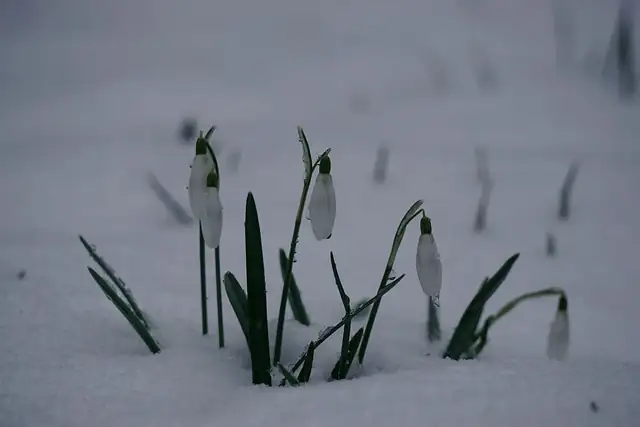
If winter had a doorbell, it would be a snowdrop—small, white, and delightfully insistent. Galanthus nivalis pushes up when the garden still looks asleep, its nodding bells tapping the season awake. Look closer and you’ll find a plant engineered for cold: spear-like leaves that punch through compacted soil, inner flower segments tipped with green, and chemistry that helps its tissues shrug off freezing nights. No wonder early pollinators make a beeline for it.
Meet Galanthus nivalis, the little bulb with big courage
- Common names: Snowdrop, Common Snowdrop, February Fairmaids
- Family: Amaryllidaceae; Genus: Galanthus
- Native range: Much of Europe—from the Pyrenees across France and Germany to Poland, and south/east through Italy, northern Greece, Bulgaria, Romania, Ukraine, and into west and north Turkey. Widely naturalized elsewhere, including Britain, the Netherlands, and parts of North America.
- Size: Typically 7–15 cm (3–6 in) tall
- Bloom time: Late winter to early spring (often January–March)
- Foliage: Two to three glaucous, lightly waxy, strap-like leaves
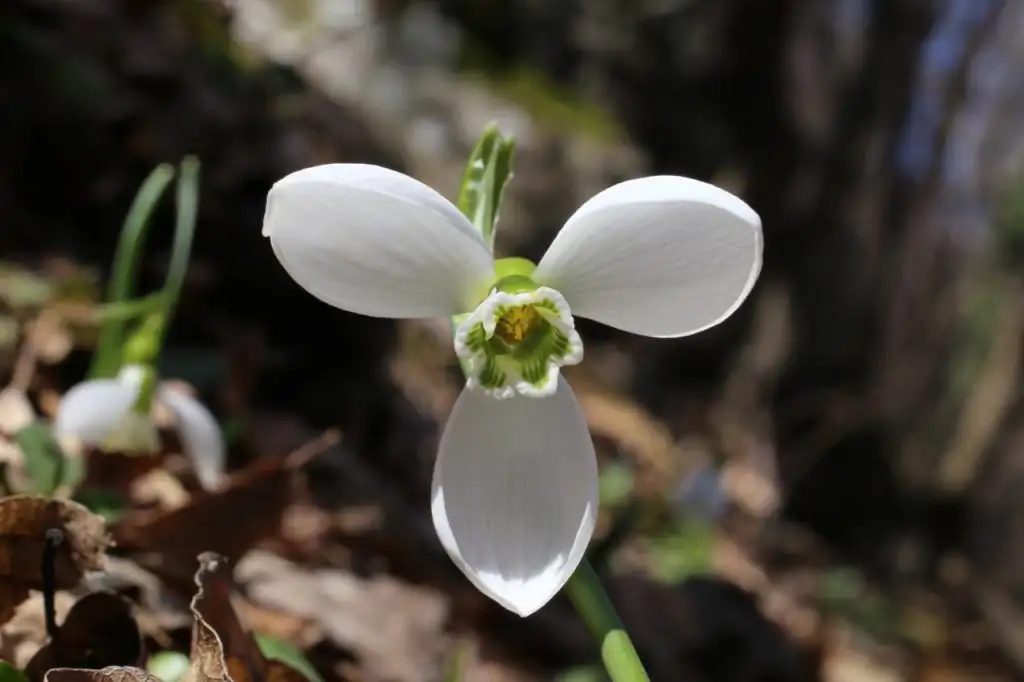
- Flowers: One per stem; six white tepals—three larger outer ones, three shorter inner ones with neat green marks near the tip
Built for winter: the science of snowdrop toughness
Leaf tips that act like icebreakers
Snowdrop leaves end in notably tough, pointed tips. Think of them as botanical crowbars: they brace and pry through cold, compacted soil—and even crusted snow—so the flower can emerge on time. Their waxy, gray-green (glaucous) surface also helps reduce water loss and shed sleet.

Cold-protective chemistry in the leaves
Snowdrop tissues contain compounds that help prevent freezing damage. By adjusting the “syrupiness” of their cell sap—using sugars and other protective molecules—the leaves keep ice crystals from forming where they’d do harm. Result: flexible, living cells when many neighbors are still in deep-freeze mode.
Weather-savvy blooms
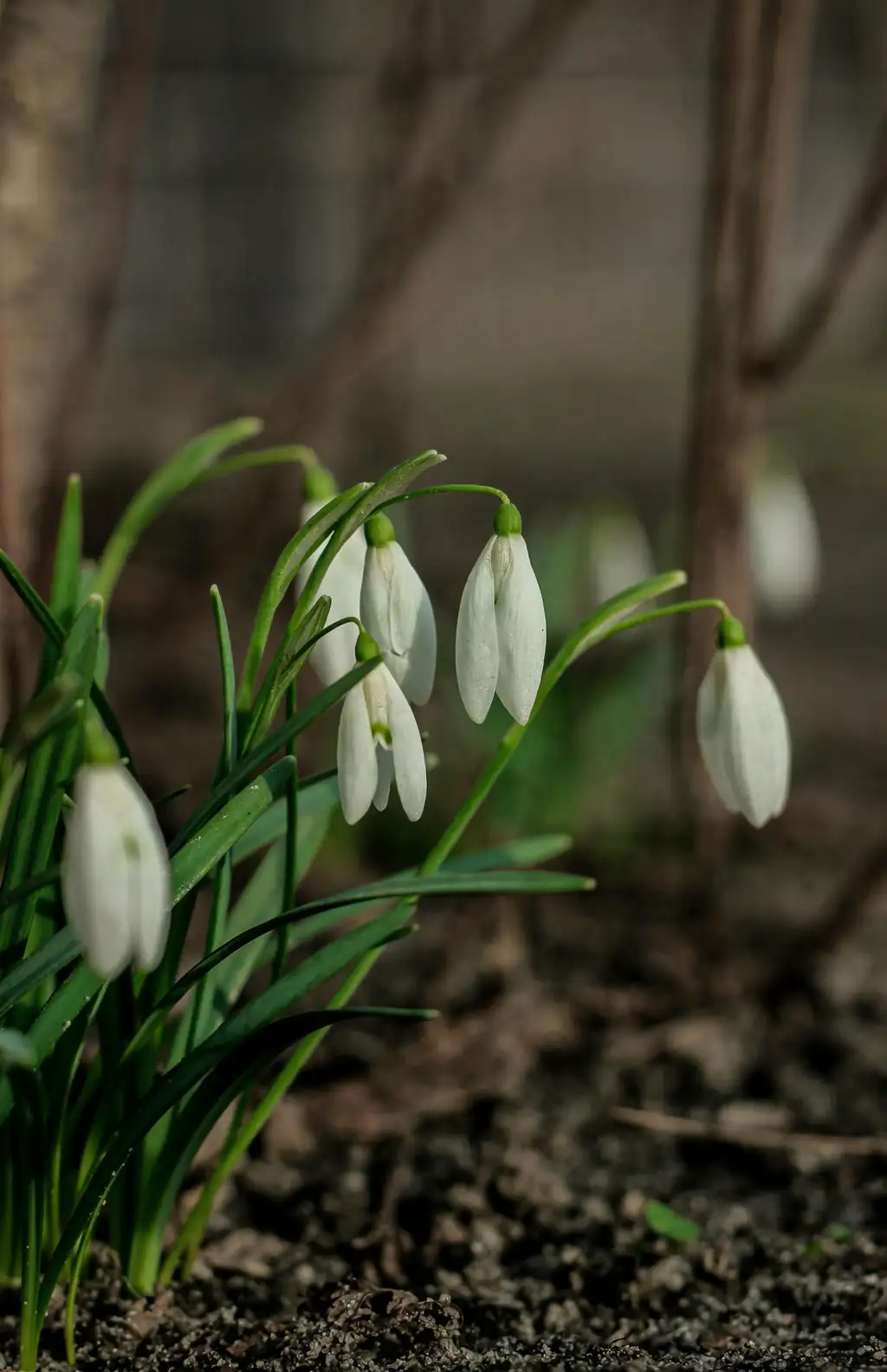
The nodding, bell-shaped flower is more than charming. Its pendant posture shields pollen and nectar from rain and wet snow. On milder days, the segments open a little wider; during cold snaps, they close more tightly—tiny, weather-responsive doors that protect precious cargo.
Those green-tipped inner segments: more than pretty markings
- Visual guidance: The three shorter inner tepals carry distinctive green spots or chevrons—classic nectar guides that tell visiting insects, “This way to the goods.”
- Hidden photosynthesis: Those green tips aren’t just for show. They contain chlorophyll and can photosynthesize, contributing energy to the flower and developing seeds. Research shows these inner segments can reach roughly half to about 60% of the leaves’ photosynthetic activity under moderate light—an elegant energy top-up when sunshine is scarce and leaves are still maturing.
- Why it matters: Flowering in winter is costly. Every little extra bit of self-supplied energy helps the plant finish its reproductive sprint.
Why pollinators adore these early bells
Timing is everything
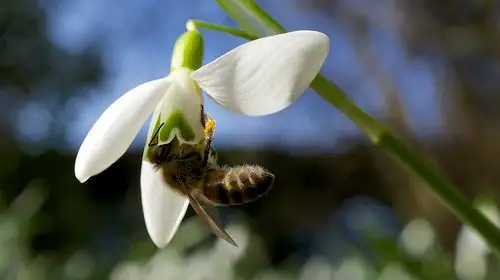
When little else is blooming, snowdrops serve as an early-season food stop. On mild winter days, bumblebees, honeybees, and certain flies will happily visit.
Clever design
- Nectar guides: Those green-tipped inner segments are unmistakable runway lights for insects.
- A dry, sheltered landing: The downward-hanging bell helps keep pollen dry and usable. The slightly enclosed space can warm a touch in winter sun—think micro-greenhouse for a chilly bee.
- Reliable menu: Snowdrops offer accessible pollen and small sips of nectar, critical when the floral cupboard is nearly bare.
Growing snowdrops: simple, science-savvy tips
Light and placement
- Best: Full sun in very early spring, then part shade as trees leaf out
- Ideal spots: Under deciduous trees and shrubs, along paths and steps, in rock gardens, at the front of borders, naturalized in lawns (delay mowing), and in containers
Soil and moisture
- Soil: Humus-rich, fertile, and well-drained; they’re happy in limestone/alkaline soils with plenty of organic matter
- Moisture: Keep evenly moist during growth and bloom; avoid waterlogging. During summer dormancy, soil can be drier but not bone-soggy.
Temperature and hardiness
- Extremely cold hardy: commonly to about -26°C to -29°C (-15°F to -20°F)
- USDA Zones: 3–7 (some kinds can stretch into 8)
- Cool winters with a proper chill promote best flowering
Planting and buying
- Best method: Plant “in the green” (freshly lifted with leaves and roots attached) in late winter to early spring—often February–March—just after flowering.
- Dry bulbs: Plant in fall (October–November), about 7–8 cm (3 in) deep. Choose firm, plump bulbs; dry, shriveled bulbs establish poorly.
- Spacing: Small clusters look more natural; drifts become breathtaking over time.
Water, feed, and aftercare
- Water: Keep lightly moist during growth and just after blooming; taper as foliage yellows.
- Feeding: Snowdrops aren’t heavy feeders. A light bulb fertilizer in early spring as shoots emerge, after flowering, or at fall planting is plenty.
- Don’t cut the leaves early: Let foliage die back naturally until fully yellow—this recharges the bulb.
- Deadheading: Optional; tidies the look.
Propagation and repotting
- Division: Easiest route. Split clumps right after flowering while still “in the green” (often March–April). Replant immediately, keeping roots intact.
- Seed: Possible, but slower—typically 2–3+ years to bloom.
- In pots: Avoid frequent disruption. If clumps weaken from crowding, divide after bloom to restore vigor.
A handy seasonal calendar
- Fall (Oct–Nov): Plant dry bulbs 7–8 cm deep
- Winter (Jan–Mar): Peak bloom—enjoy!
- Late winter to spring (Feb–Apr): Best time to plant/divide “in the green”
- After flowering: Light feed; allow foliage to fade naturally
- Summer: Dormant—keep on the drier side; never waterlogged
Landscape ideas that sing in late winter
- Woodland-style drifts under deciduous canopies
- Along paths and steps where you’ll notice the first buds
- Rock gardens and front-of-border accents for close-up viewing
- Naturalized in lawns where mowing starts late
- Containers by the door to ring in spring every time you come home
Great companions: hellebores, winter aconite (Eranthis), early crocuses, and dwarf iris—each overlapping slightly in bloom to extend the season.
Safety, pests, and peace of mind
- Toxicity: All parts are toxic to people and pets (cats and dogs) due to alkaloids such as lycorine. Ingestion can cause nausea, vomiting, diarrhea, and abdominal pain. Handle sensibly; keep out of reach of children and pets.
- Deer and rabbit resistance: Generally excellent, thanks to those alkaloids.
- Occasional nuisances: Squirrels or moles may dig; birds sometimes peck at flowers. Good drainage prevents most issues.
Note on galantamine: This compound associated with snowdrops is used pharmaceutically to treat symptoms of Alzheimer’s disease. Do not self-medicate with plant material.
Origins, history, and a dash of flower language
- Native to: Europe from the Pyrenees across central and southern regions to western/northern Turkey
- Naturalized: Britain, the Netherlands, parts of North America, and beyond
- In gardens since at least 1597; steeped in lore
- Cultural notes: Often linked with the Virgin Mary and called “St. Agnes’ flower.” Victorian folklore sometimes warned that a lone snowdrop indoors was unlucky, while outdoor drifts meant consolation and hope.
Flower language (花语) unpacked:
- Meanings: Hope, renewal, purity, consolation, and new beginnings
- Why these stuck: Timing. Snowdrops appear when winter still feels endless, offering a psychological lift—and so culture reads “hope” and “fresh starts” into their white drops of light. Flower language is cultural, not botanical law, but snowdrops embody their symbolism better than most.
Ethical collecting and the world of galanthophiles
- Trade note: The Galanthus genus is listed in CITES Appendix II, so international trade is regulated. Buy from reputable nurseries; never dig from the wild.
- Galanthophiles: Snowdrop enthusiasts who collect cultivars, pore over subtle green markings, and occasionally bid eye-widening sums for rarities.
Quick FAQ
When is the best time to plant snowdrops?
Plant “in the green” in late winter to early spring (often February–March) just after flowering for the easiest success. Dry bulbs are planted in fall (October–November) but may establish more slowly.
Do snowdrops come back every year?
Yes. They’re hardy perennial bulbs that return reliably and often clump up into larger drifts over time in cool climates with moist, well-drained soil.
Why aren’t mine flowering?
Common culprits:
- Insufficient winter chill
- Bulbs dried out before planting
- Incorrect planting depth (aim about 7–8 cm / 3 in for dry bulbs)
- Overcrowded clumps (divide after flowering)
- Site too warm for consistent bloom
Fast facts to wow your garden friends
- The genus name Galanthus means “milk flower” in Greek—gala (milk) + anthos (flower).
- Snowdrop leaves pack compounds that help guard against freezing damage.
- Leaf tips are tough little drills for cold soil and snow crust.
- Green-tipped inner tepals both guide pollinators and photosynthesize to fuel flowering and seed set.
- Vital early food source for pollinators when almost nothing else is open.
- Snowdrop lovers—galanthophiles—collect named forms with subtle, coveted markings.
Spotting the first snowdrop is like finding a lighthouse in winter’s fog. Plant a few now, and future you will thank you every late January when those white bells ring in spring ahead of schedule.


