

If your windowsill could talk, it would probably whisper, “Give me a jungle.” Syngonium podophyllum (the Arrowhead Vine) answers that call beautifully—especially in its compact, design-friendly cultivars. With tiny powerhouses like ‘Pixie’ and the gracefully variegated ‘White Butterfly,’ you can build a lush micro-jungle on a side table, in a bright bathroom nook, or inside a roomy terrarium. Think: crisp arrow-shaped foliage, fresh color contrasts, and just enough wild to feel like the tropics—without overwhelming your space.
Meet the Arrowhead Vine: small plant, big styling potential
- Botanical name: Syngonium podophyllum (Araceae)
- Also called: Arrowhead Plant, Goosefoot Plant, Nephthytis
- Origin: Tropical America (Mexico to Bolivia and the West Indies); widely grown and naturalized in warm regions
- Personality: Starts as a compact mound, then happily trails or climbs with age. Keep it pinched for a tidy tuft, let it spill from shelves, or give it a mini-moss pole for upright elegance.
Indoors, expect a neat 15–20 cm (6–8 in) height if you pinch and keep it cozy in a small pot; left to mature (and given room to roam), it can reach about 90 × 60 cm (35 × 24 in) by trailing or climbing.
Compact stars for micro-jungles
- ‘Pixie’ — Dwarf, delightfully compact, with creamy centers edged in emerald green. Perfect for terrariums, tabletops, and small containers where you want scale-appropriate drama.
- ‘White Butterfly’ — A classic with soft, creamy-green variegation that brightens arrangements. Give it bright, indirect light to keep that marbled pattern crisp.
Tip: Variegated forms prefer brighter indirect light than solid-green plants to hold their pattern—no harsh midday sun, please.
Design a tabletop micro-jungle (that stays tidy)
Step 1: Choose the right light and spot
- Best: Bright, indirect light—an east window, a bright north window, or set back from a south/west window behind a sheer curtain.
- Tolerates: Partial shade. If leaves lose variegation or growth stretches, move it to brighter filtered light.
Step 2: Use an airy aroid mix
- Mix idea: Quality peat/coco-based potting soil + perlite and/or fine bark, with a pinch of leaf mold/compost for richness.
- Goal: Evenly moist, never soggy; slightly acidic, well-draining, and airy.
- Pot size: Start with 10–12 cm (4–5 in) for ‘Pixie’ or small clumps; 15–20 cm (6–8 in) for fuller groupings. Hanging baskets are commonly 15–18 cm (6–7 in).
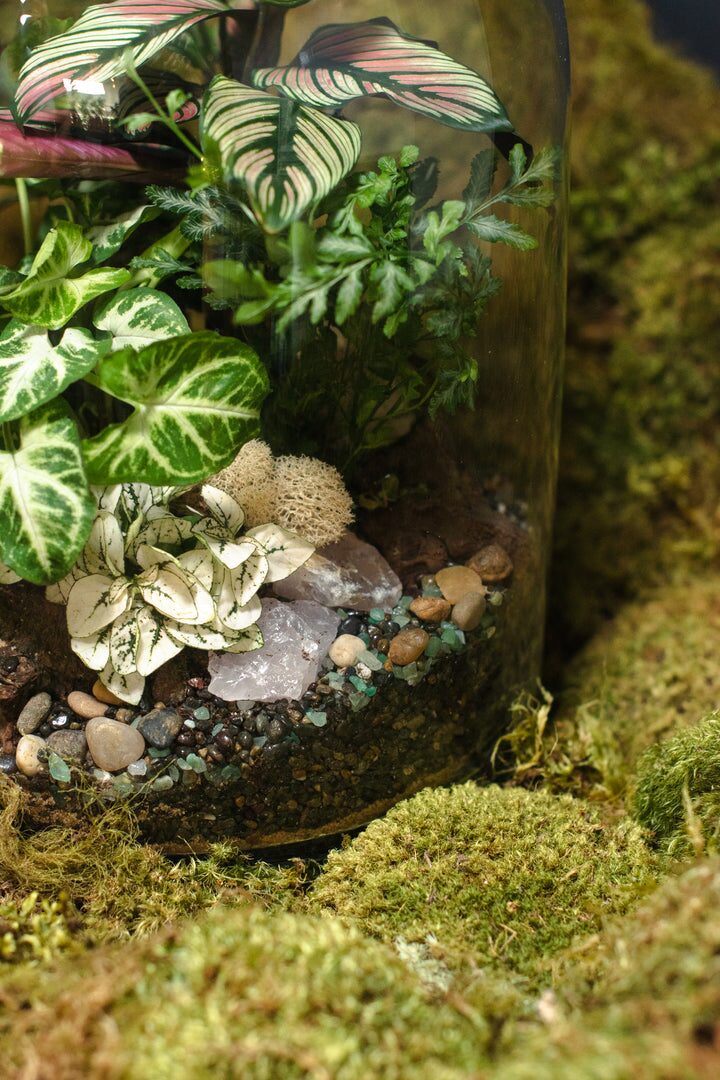
Step 3: Compose with companions
Build a layered look with foliage that loves similar conditions (bright, filtered light; medium to high humidity):
- Texture contrast: Fittonia (nerve plant) for low, quilted color splashes under the Syngonium canopy.
- Feathery softness: Small ferns (e.g., juvenile bird’s nest ferns, button/Boston fern dwarfs) for airy fronds.
- Moss accents: Pads of cushion moss or a tidy sphagnum top-dress to “green the gaps.”
- Structure: A mini moss pole or slim twig support behind ‘White Butterfly’ to invite vertical interest; keep ‘Pixie’ front-and-center as the compact anchor.
Spacing matters: Tuck plants close for that jungly look but leave a finger’s width of breathing room around crowns and stems—your insurance against disease and overcrowding.
Step 4: Add humidity (without the mildew)
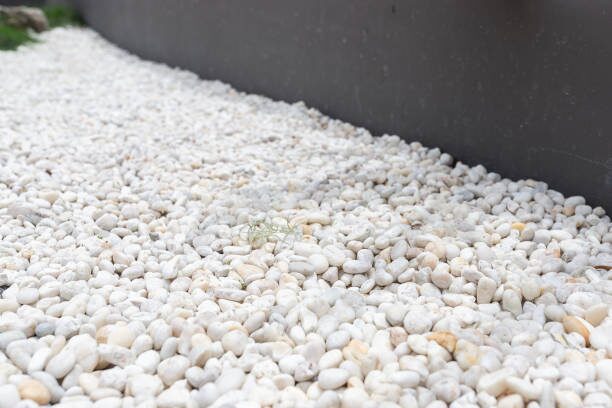
- Pebble tray: Fill a shallow tray with pebbles, add water to just below the stone tops, and set your pot on the pebbles. Evaporation boosts local humidity, and the pot never sits in water.
- Early-day misting: A light morning mist raises humidity and still lets leaves dry by evening—key to avoiding gray mold.
- Grouping: Cluster humidity lovers like Syngonium, fittonia, and ferns to create a shared microclimate.
- Humid rooms: Kitchens and bathrooms make gorgeous backdrops thanks to naturally higher humidity.
- Humidifier: On particularly dry days, a small unit on low near—not blasting—your plants is a game-changer.
Airflow: your quiet shield against gray mold
Gray mold (Botrytis) thrives in still, damp air and on persistently wet leaves. Keep your jungle fresh, not fussy:
- Gentle, steady airflow: A small fan on low across the room (not aimed directly at foliage) keeps air moving without desiccating plants.
- Water the soil, not the leaves: Especially later in the day. If you mist, do it in the morning so leaves dry by evening.
- Grooming: Remove spent leaves, dead bits, and any gray, fuzzy spots promptly. Space plants so foliage isn’t smothering neighbors.
- Clean leaves: Wipe dust occasionally to discourage pests and improve light capture.
Care that keeps the look lush
Light
- Bright, indirect light is ideal; avoid harsh direct sun.
- Variegated types (‘Pixie,’ ‘White Butterfly’) appreciate a brighter filtered spot to maintain pattern.
Water
- Spring to autumn: Water when the top layer of mix dries—often about weekly in warm weather. Keep evenly moist, never waterlogged.
- Winter: Cut back—often every 2 weeks—letting the top dry slightly first. Never let the pot sit in a saucer of water.
Temperature and humidity
- Temperature sweet spot: About 15–23°C (59–73°F); tolerates roughly 15–29°C (59–84°F).
- Keep above ~12°C (54°F). Below ~5°C (41°F), yellowing and leaf drop become likely.
- Humidity: Prefers moderate to high. The pebble-tray-and-early-mist combo works wonders.
Feeding
- Growing season (roughly May–August): Every 2 weeks with a balanced liquid fertilizer (e.g., 20-20-20) at half strength.
- Ease off in winter. Too much nitrogen = leggy growth and weaker stems.
Pruning and shaping
- Pinch tips at about 15–20 cm (6–8 in) to encourage branching and a bushier clump.
- Spring clean: Cut back leggy stems to thicken. Remove yellow leaves anytime.
- Mature makeover: Every 2–3 years, a harder cutback can rejuvenate the plant.
Repotting
- Repot in spring when roots crowd the pot. If you like the current size, simply refresh the top 2–3 cm (1 in) of mix annually.
Multiply your mini jungle: easy propagation
- Best window: May–October when temps are above 15°C (59°F).
- How: Take tip cuttings with 2–3 nodes (or segment longer stems into 2–3 node sections).
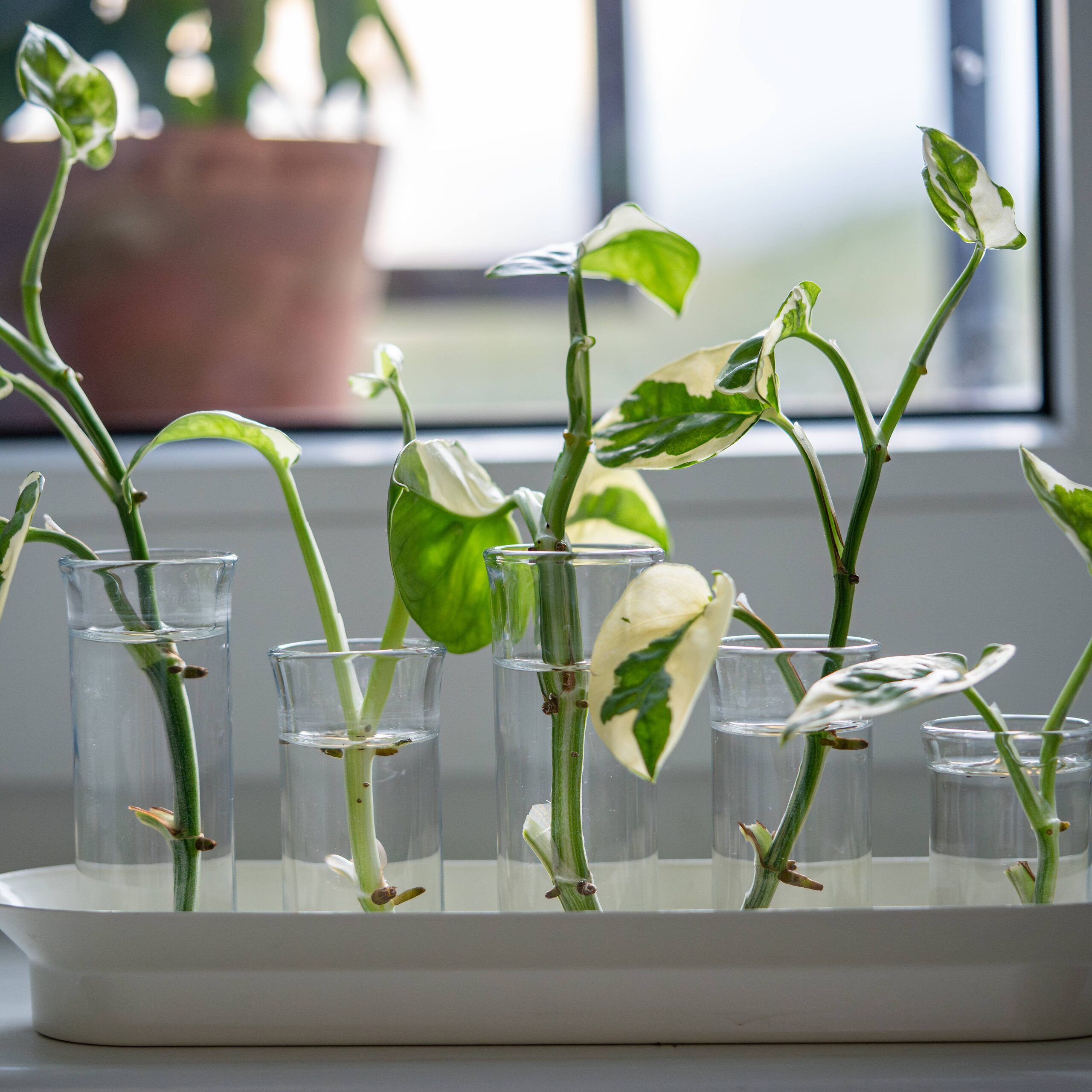
- Rooting: In water or a moist, airy medium (sand/vermiculite/peaty mix). Under warm conditions, roots often appear in about 10–15 days.
- Shortcut: Pieces with aerial roots can go straight into potting mix.
- Fun note: You can maintain small cuttings in water vases for extended periods with regular water changes, or pot them up once roots are robust.
Troubleshooting your micro-jungle
- Yellowing and leaf drop: Often low light, overwatering/root stress, temperature shock, or disease. Brighten the light (indirect), let the top mix dry before watering again, keep warm, and check roots if the pot stays wet.
- Crispy edges: Low humidity or underwatering—boost humidity and water thoroughly (with drainage).
- Faded variegation/leggy growth: Light is too low or nitrogen is too high. Move to brighter filtered light and moderate feeding.
- Pests: Spider mites (common in dry air), mealybugs, scale, whiteflies, aphids. Wipe leaves, raise humidity, and treat early with insecticidal soap or horticultural oil—repeat as needed.
- Gray mold (Botrytis): Improve airflow, remove affected tissue, avoid wetting leaves late in the day.
Safety notes for busy, beautiful homes
Syngonium podophyllum contains insoluble calcium oxalate crystals. It’s toxic if chewed or ingested by people or pets, and the sap can irritate skin and eyes. Keep out of reach of children and animals, and wear gloves if you’re sensitive.
Flower language and what this plant “says”
You’ll rarely see flowers indoors (they’re small and unshowy), but the Arrowhead Vine still carries a charming symbolic profile. It’s often associated with growth, adaptability, and fresh beginnings—fitting for a plant that changes leaf shape as it matures and readily shifts between compact, trailing, or climbing forms. In some home-plant traditions it’s casually considered a good-luck green, a reminder that fresh foliage and flexible habits can bring a sense of renewal to everyday spaces.
A quick planting recipe (copy-and-grow)
- Container: 12 cm (5 in) pot or shallow bowl with drainage
- Soil: Coco/peat base + perlite + fine bark + a pinch of compost
- Plants: 1 Syngonium ‘Pixie’ (center/front), 1 fittonia (carpet), 1 small fern (back/side), tuft of moss as accent
- Placement: Bright, filtered light near an east or north window
- Humidity: Pebble tray + morning mist
- Airflow: Gentle, consistent room airflow (small fan on low across the room)
- Maintenance: Water when the top layer dries; feed lightly every 2 weeks in summer; pinch to keep it cute and compact
With compact cultivars, clever humidity tricks, and silky-smooth airflow, your Arrowhead Vine micro-jungle will stay lush, healthy, and camera-ready. Start small with ‘Pixie,’ add a swirl of ‘White Butterfly,’ tuck in a fittonia and a fern—and let your windowsill finally whisper, “You did it.”