

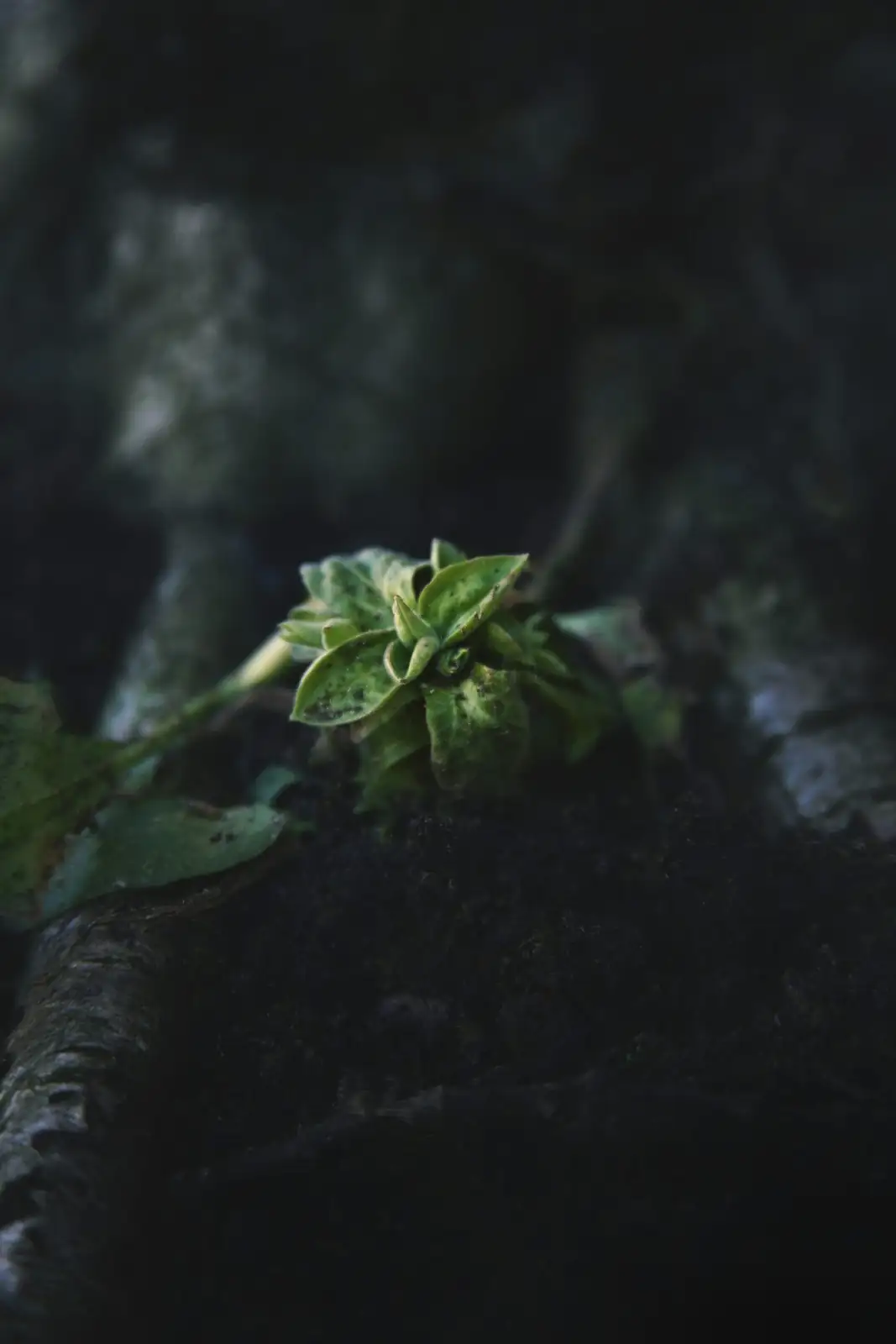
At daybreak in a warm, breezy canopy, a slim green fountain grabs hold of rough bark with wiry roots. No soil. No pot. Just air, light, and passing mists. This is Tillandsia juncea—an epiphyte that turned life in the treetops into an art form, then swung down into our homes to become the modern icon of soil-free style.
Meet Tillandsia juncea: the soil-free stylist
- Native range: Mexico and Central America
- Family/Genus: Bromeliaceae, Tillandsia—part of a wildly diverse genus with hundreds of air-loving species
- Look: A tidy, fountain-shaped tuft of long, narrow, pointed leaves that feels both architectural and featherlight
- Size: Typically 15–30 cm (6–12 in) tall; clumps can spread 15–30 cm (6–12 in) wide over time
- Temperament: Cheerful and forgiving—miss a watering and it often bounces back quickly once rehydrated, as long as it can dry fast afterward
- Growth habit: Clumping epiphyte; forms offsets (“pups”) around the base into a fuller colony
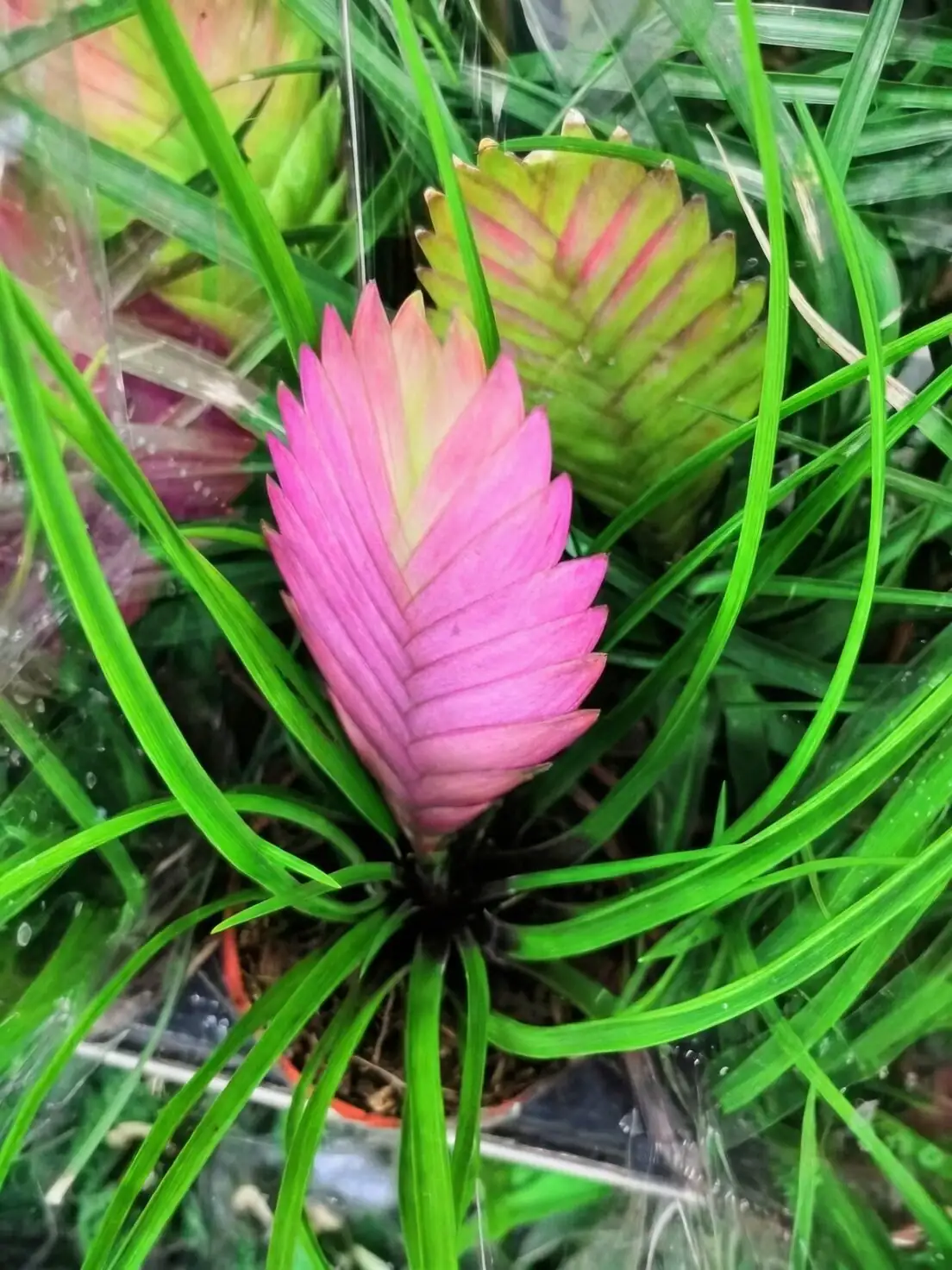
When it decides to show off, juncea sends up a vivid, comet-pink spike and then unfurls small purple tubular flowers near the tip. It’s a jewel-toned finale that lingers—the pink bract often stays brilliant for weeks.
How an epiphyte lives: sky roots and leaf sips
Hooks, not straws
Juncea’s roots don’t mine soil for nutrients; they behave like grappling hooks, anchoring the plant to bark, cork, or stone. Food and moisture arrive another way.
Trichomes: the thirsty armor
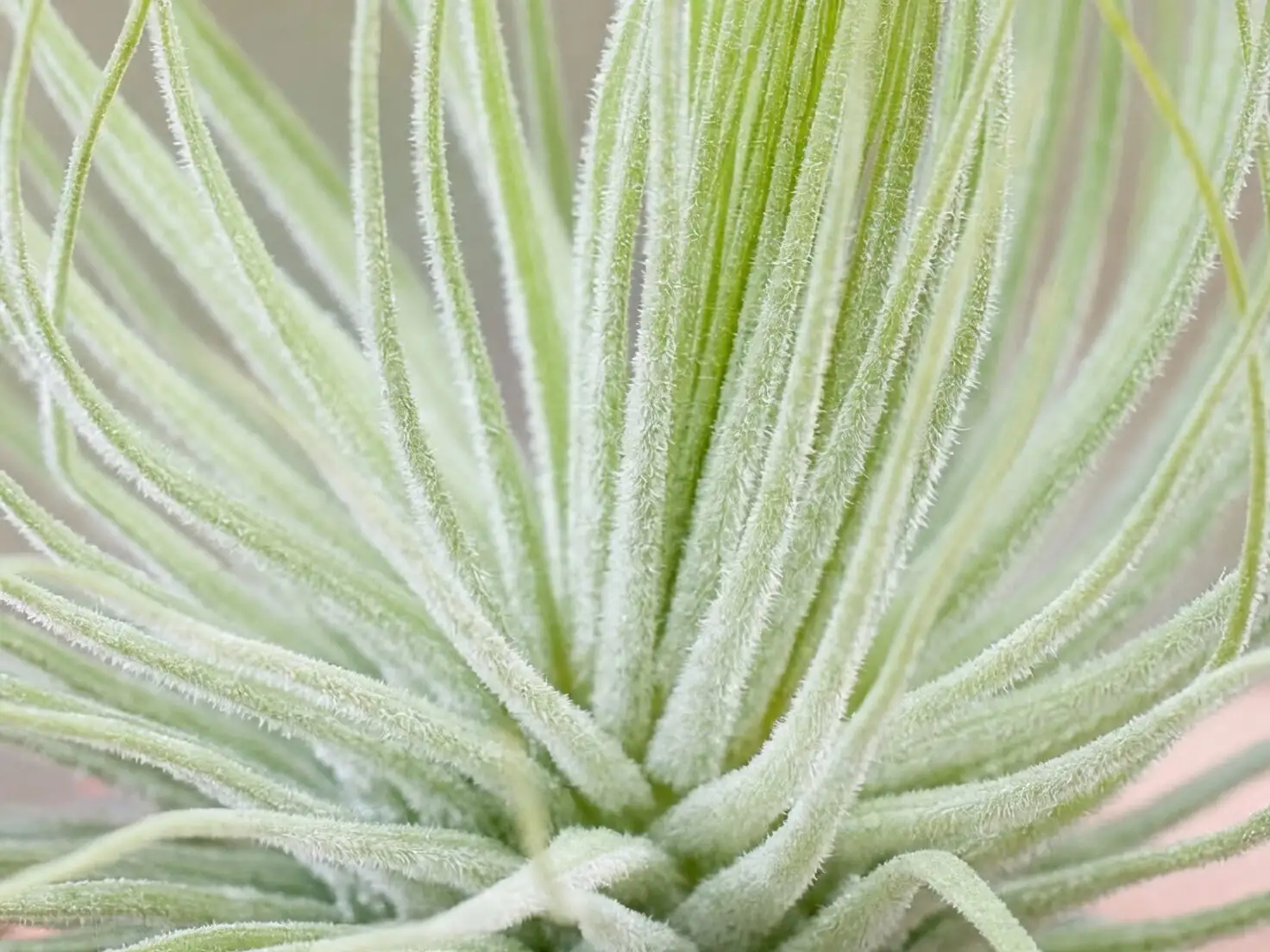
Those soft, silvery “dustings” on the leaves? They’re trichomes—tiny scales that act like thousands of little catchers’ mitts, grabbing dew, fog, and fine nutrients. They’re why the plant can drink from thin air and why a light silver cast is a sign of good health, not dust.
From dew to bloom
Given bright, indirect light and rhythmic wet-dry cycles, juncea stores enough energy to launch that pink, spike-like inflorescence in late spring to summer (timing varies by conditions), followed by petite purple flowers near the tip.
Colony-building instinct
After blooming, the flowering rosette slows, but it doesn’t check out—it parents pups around its base. Leave them be to build a sweeping clump, or separate once they reach about one-third to half the size of the parent.
From canopy to coffee table
Juncea’s epiphytic finesse made it a natural for design-forward homes:
- Mount it on cork or driftwood.
- Perch it in a mesh basket or on a minimalist stand.
- Float it in an open terrarium (never sealed).
- Cluster a few for a sculptural, soil-free centerpiece.

Outdoors, it’s happiest in warm seasons in bright shade with moving air. It’s not frost-tolerant—think USDA Zone 10–11, and keep it above about 10°C (50°F).
Care that keeps it sky-happy
Think bright, breezy, and quick to dry.
Light
- Bright, indirect light or gentle morning sun.
- Avoid harsh midday rays unless humidity is higher and airflow is excellent.
Temperature and humidity
- Ideal temps: 18–30°C (64–86°F); protect from cold.
- Humidity: Moderate to high (40–70%), but always paired with strong airflow.
Watering
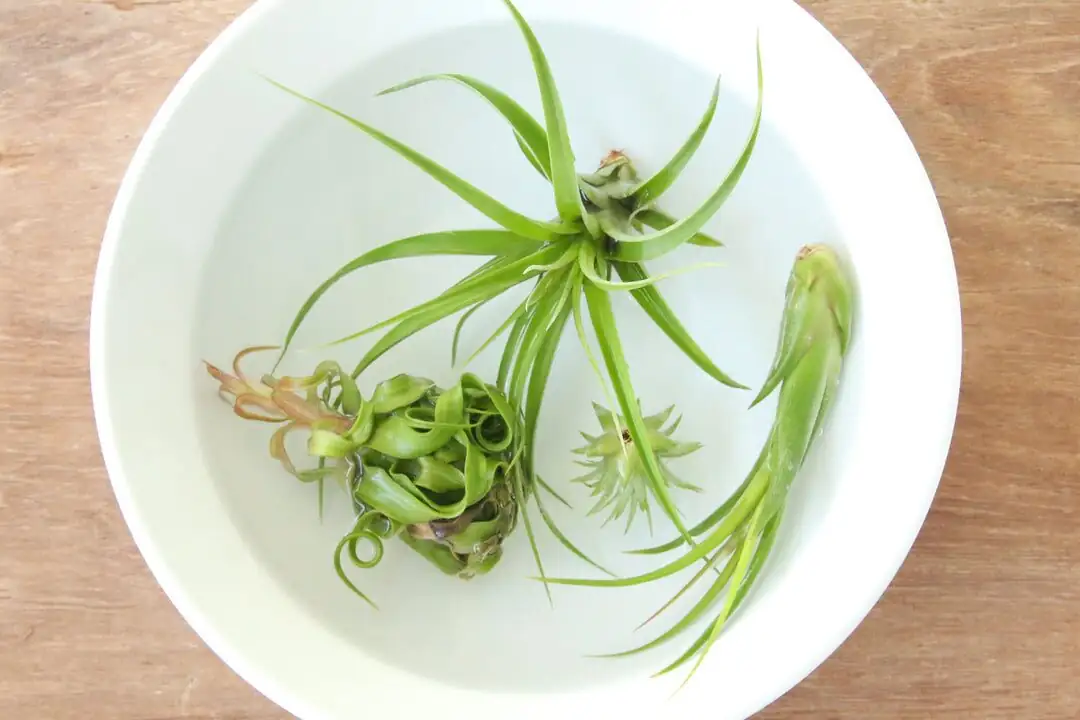
- Soak the whole plant in clean water for 15–30 minutes about 1–2 times per week in warm/dry conditions.
- In cooler or darker periods, scale back to about every 10–14 days.
- After soaking: shake out excess water and let it dry completely within 2–4 hours (never longer than about 4). Don’t let water sit in the base.
Pro tip: Juncea is forgiving of an occasional miss, but it’s not forgiving of staying wet and still.
Feeding
- Feed monthly in spring and summer with a bromeliad/air-plant fertilizer at 1/4 strength (or a low-copper orchid fertilizer).
- Rinse with plain water occasionally to prevent mineral buildup.
Mounting and “repotting”
- No soil. Ever.
- Mount on cork/wood, place in a mesh basket, or rest on an airy surface. Keep the base from staying damp.
- As clumps expand, remount onto a larger piece or refresh ties/adhesive—avoid smothering the base.
Grooming and aftercare
- Remove only fully dead, brown leaves by gently pulling or trimming.
- After flowering, trim the spike once it fades; the plant carries on by making pups.
Season-by-season rhythm
- Spring–summer: Nudge up light without scorching, soak a bit more often, feed lightly, keep airflow strong.
- Fall–winter: Water less frequently, maximize light, keep above 10°C (50°F), and ensure rapid drying after every soak.
Buying smart and troubleshooting
Choosing a healthy plant
- Look for firm, springy leaves and a clean, solid base.
- Avoid any blackened or mushy center (classic rot warning).
- A silvery wash on the leaves is normal and good—that’s trichomes.
Common hiccups
- Browning at the base: Usually rot from staying wet too long or poor airflow. Return to soak-then-dry-fast routine and improve circulation.
- Pests: Occasionally mealybugs or scale. Remove with cotton swabs dipped in 70% isopropyl alcohol, isolate the plant, and boost airflow and drying speed.
Quick FAQs
- Can I grow it in a closed terrarium? Not recommended—juncea needs airflow to dry quickly. Choose an open terrarium or an airy mount.
- Does it die after flowering? The blooming rosette slows, but it typically produces pups that keep the clump alive and growing.
Safety and companionship
- Generally non-toxic to people and pets, but not edible. Keep out of reach of curious chewers—both plant and pet will be happier.
Symbolism and meaning: independence with roots in the air
Juncea is often linked to independence, resilience, and thriving with minimal resources. That symbolism isn’t random—it springs directly from its epiphytic life strategy:
- Independence: It perches on a host but doesn’t steal from it, gathering what it needs from light, air, and passing moisture.
- Resilience: It tolerates a missed watering and rebounds when rehydrated—as long as airflow lets it dry afterward.
- Minimalism: No soil, no pot—just form, function, and an elegant silhouette.
In the language of modern houseplants, juncea’s vivid pink bloom spike reads like a comet—a brief, brilliant arc after seasons of quiet resourcefulness.
Creative display ideas
- Driftwood duet: Mount two or three plants at different angles on a single branch for a windswept look.
- Hanging constellation: Suspend individual plants with invisible filament near a bright window to mimic their canopy origins.
- Open glass vignette: Stage a clump in an open terrarium with chunky cork and river stones for airflow and drama.
- Mesh cradle: Tuck a clump into a wire or rattan basket where breezes can thread through every leaf.
Fun to know
- The silvery “dust” is a living toolset—trichomes that capture moisture and nutrients from the air.
- In good light, that pink flower spike can hold its color for weeks, even after the small purple flowers finish.
From mist-sipping mornings in Mexican and Central American canopies to bright shelves and breezy bathrooms, Tillandsia juncea hasn’t changed its ways—only its address. Give it light, air, and a swift dry after a good drink, and it will return the favor with a life lived artfully above the ground.