
If you’ve ever wondered why some air plants look frosted like sea-glass and others glow a fresh salad green, here’s the secret: their leaves are care instructions you can read with your eyes. In Tillandsia, texture and color tell you how much light, water, and humidity each plant prefers. Decode those clues once, and suddenly your living sculptures become easy keepers—no guesswork, just gorgeous growth.
Read the leaves: texture and color are your care code
Trichomes 101 (the “frost” that fuels them)
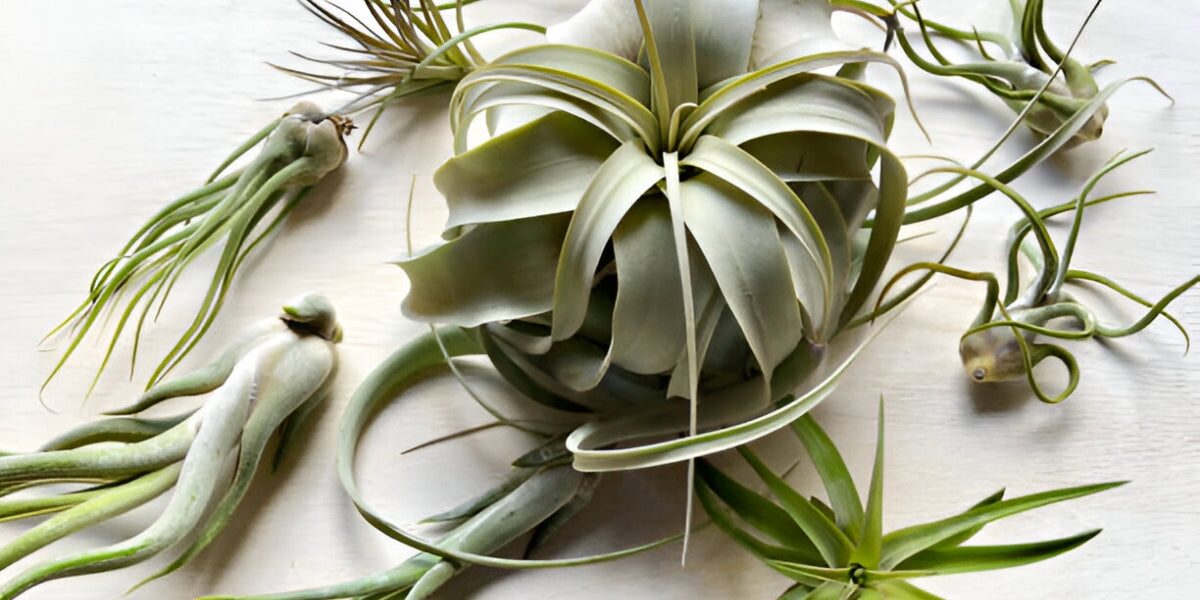
Air plants drink and feed through tiny leaf scales called trichomes. Think of them as microscopic sponges and parasols rolled into one—they soak up moisture and dissolved nutrients, and they also reflect and diffuse sunlight.
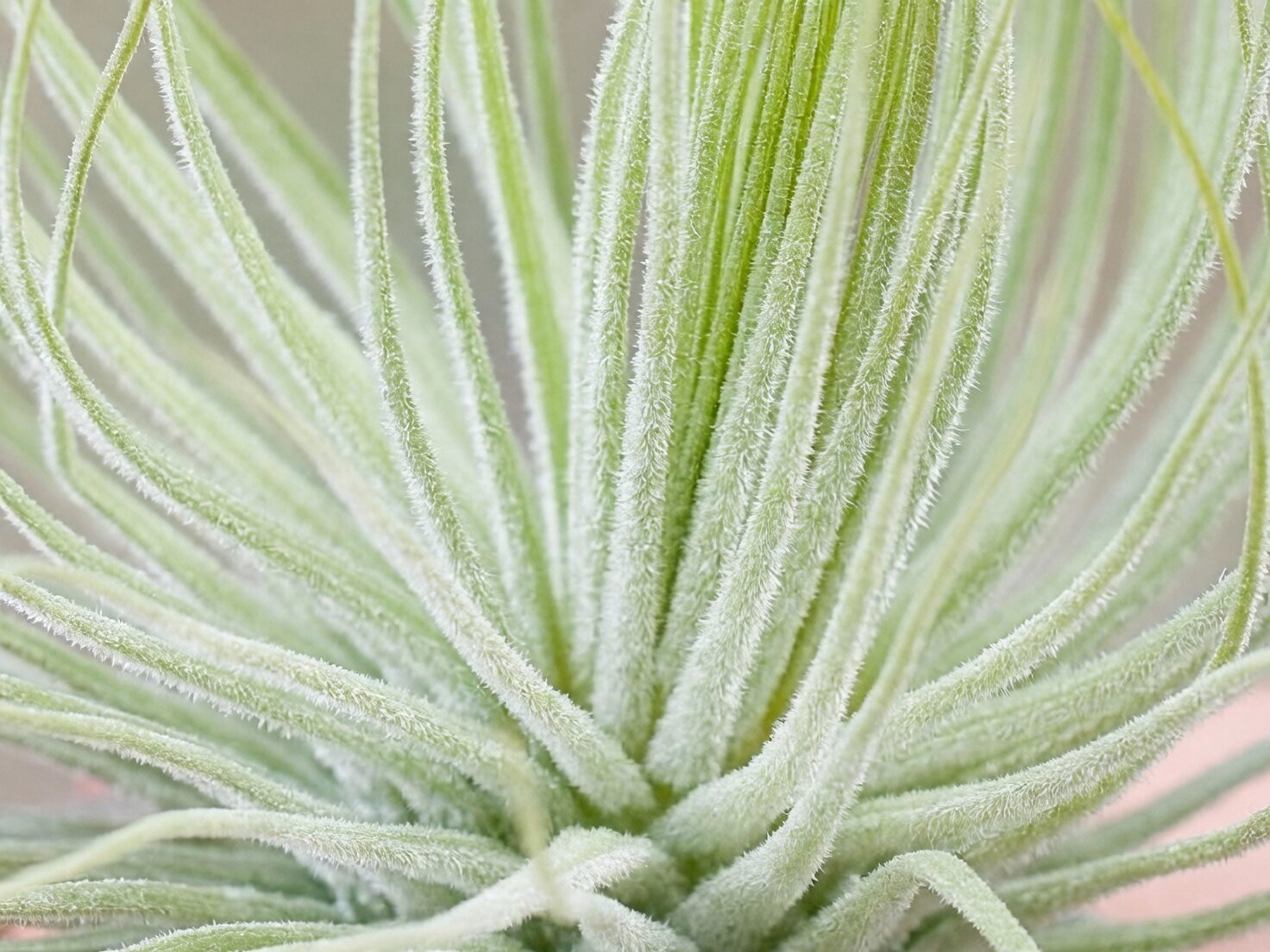
- Dense, fluffy trichomes = a silvery, matte, “sugary” look. These plants evolved for brighter, drier places.
- Sparse, subtle trichomes = smooth, shinier green leaves. These plants evolved for shadier, moister habitats.
Mesic vs. xeric at a glance
- Mesic (moderately moist habitats): leaves are greener, sleeker, often more lustrous. Prefer humidity, frequent moisture, and gentler light.
- Xeric (drier habitats): leaves are silvery to gray with a frosty cast; often broader or flatter to catch light, sometimes curly. Prefer brighter light, excellent airflow, and lighter, less frequent watering.
Tip: Many common Tillandsia fall “in between.” Use texture and color as a sliding scale and adjust care accordingly.
Care, dialed by leaf type
Xeric air plants (silvery, heavily scaled)
- Light: Bright, filtered light is ideal. Gentle morning sun is welcome; avoid harsh midday sun behind glass, which can scorch.
- Water: Less frequent overall. Quick dunks or thorough misting often suffice. When you do soak, do it briefly, then shake and dry fast.
- Humidity & airflow: Moderate humidity is fine if airflow is strong. They hate staying wet in still air.
- Pro tip: A few super-xeric species (like fluffy, heavily scaled types) may prefer only occasional misting rather than full soaks.
Mesic air plants (greener, smoother)
- Light: Bright, indirect light to light shade—think “brighter forest edge,” not blazing windowsill.
- Water: More frequent moisture. A weekly soak plus light misting between soaks (in dry rooms) keeps leaves supple.
- Humidity & airflow: They appreciate higher humidity (around 50–70%+), but ventilation still matters; wet + still air = rot.
Quick pairing tips for home microclimates
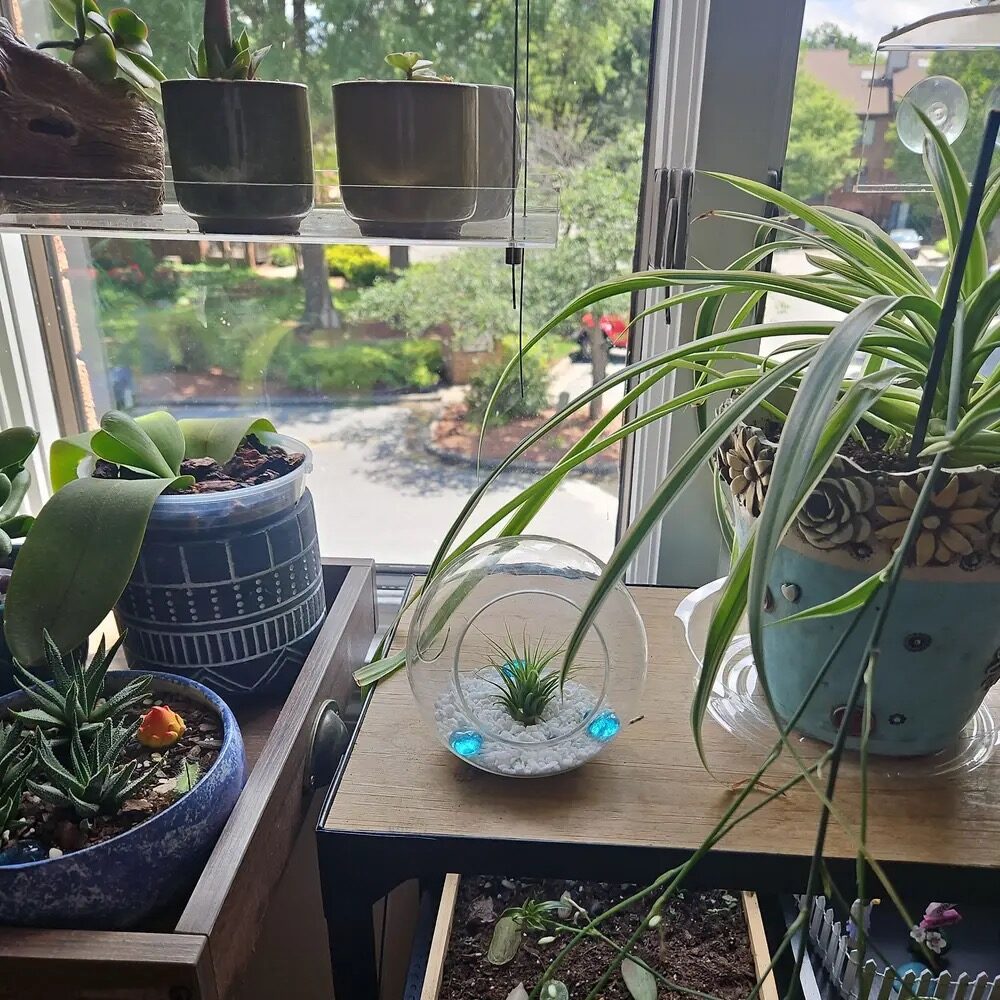
- Sunny east window (soft morning sun): Perfect for most xeric and many “in-between” types. Keep 30–60 cm (1–2 ft) back if glass intensifies light.
- Bright south/west window: Use sheer curtains or set plants back from the glass. Choose xeric types here; mesic types sit farther from the pane or under filtered light.
- Bright bathroom with a window: Mesic heaven. Warm humidity with regular ventilation suits green-leaved species beautifully. Run the fan after showers so plants dry promptly.
- Kitchen window (variable humidity, good airflow): Great for in-between types. Steam days act like bonus misting, but still let plants dry fully.
- Office with AC or winter heating (dry air): Favor xeric or semi-xeric plants. Mist lightly between less-frequent soaks; avoid parking them under vents.
- Low natural light? Supplement with an LED grow light 10–12 inches above the plants, 10–12 hours daily. Keep light gentle for mesic, brighter for xeric.
- Summer outdoors (frost-free zones or warm spells): Dappled shade to gentle morning sun, with excellent airflow. Acclimate gradually and avoid midday scorch.
Watering made simple (and safe)
A reliable baseline for most indoor Tillandsia:
1) Soak once weekly for 30–60 minutes in rain, distilled, or low-mineral water.
2) Shake off excess, then set plants upside down or on their side to drain.
3) Dry fast—aim for within about 4 hours, with good airflow.
4) In hot, dry rooms, add light misting 2–3 times weekly. In cool/dim winter, water less often and prioritize fast drying.
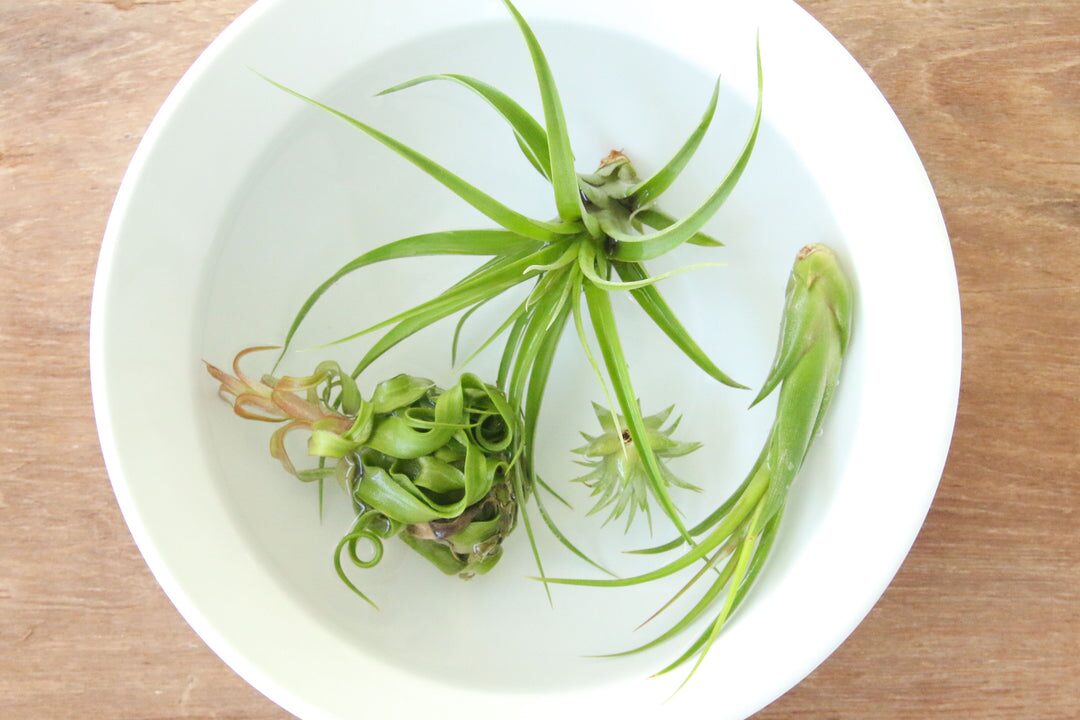
Adjust by type:
- Xeric: Shorter soaks, or dunk/mist only; water less often overall.
- Mesic: Stay on the weekly soak + supplemental misting rhythm when indoor air is dry.
Flowering note: Keep flowers and colorful bracts as dry as possible during soaks to avoid damage.
Light and placement the plants actually enjoy
- Best all-round: Bright, indirect light or filtered sun. East-facing windows are often perfect.
- Avoid: Harsh midday sun through glass; it concentrates heat and can bleach or burn leaves—especially on greener mesic types.
- Distance and diffusion: A sheer curtain or setting plants a step back from a south/west window gives you that “bright but gentle” sweet spot.
Airflow: the unsung hero
Air plants adore humidity, but only if they can dry promptly. Strong ventilation prevents rot, speeds post-watering drying, and keeps pests at bay. Think open shelves, hanging cradles, and open-front displays—not sealed terrariums. If you decorate with glass, keep it open and only return plants once fully dry.
Feeding, mounting, and styling
- Fertilizer: Mist or soak monthly in spring–summer with a bromeliad/air-plant (or orchid) fertilizer at 1/4 strength. Rinse with plain water occasionally to prevent mineral buildup. Reduce or pause feeding in winter.
- Mounting: Driftwood, cork bark, shells, rocks, or open wire cradles all work. Avoid permanent glue so you can remove plants for soaking and drying.
- “Potting”: Not needed, but if you use a container for looks, keep it very airy and never trap the crown.
Blooming, pups, and the long game
Most Tillandsia bloom once per rosette with vivid bracts and tubular flowers; then the mother slowly declines while producing offsets (“pups”). Leave pups attached to form a dramatic clump, or separate when each is about one-third to half the size of mom. With steady care, clumps become living sculptures that perform for years.
Fast troubleshooting
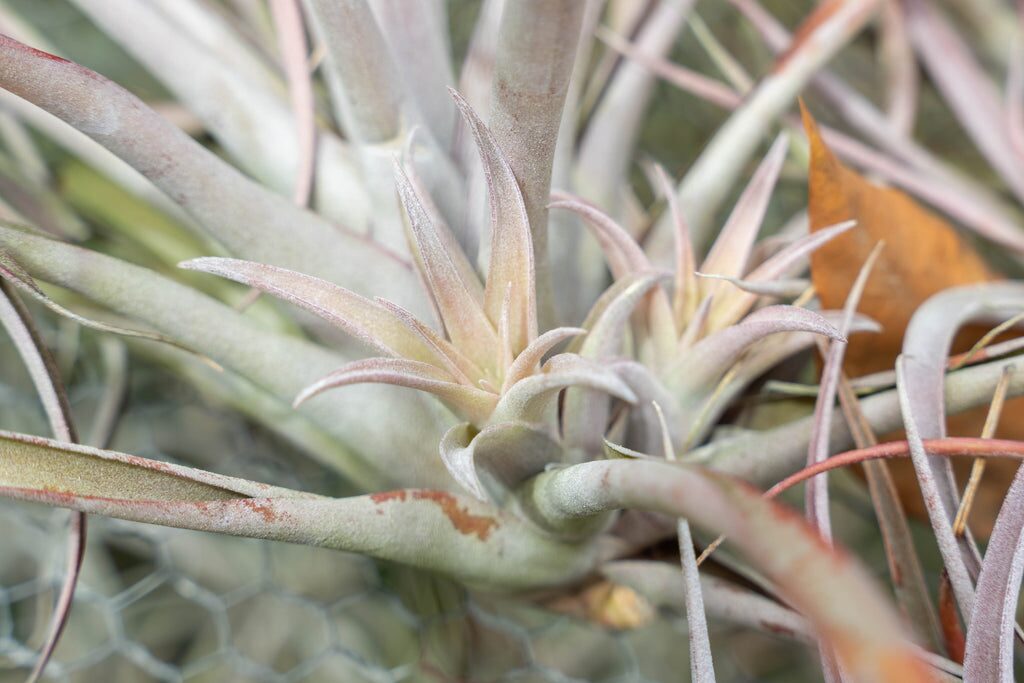
- Thirsty signs: Rolled or curled leaves, dull or papery tips, a slightly “shrunken” look. Remedy: a proper soak and better humidity/airflow balance.
- Rot warning: Soft, blackened base or sour smell—usually from staying wet too long in cool or still air. Remedy: Remove decayed tissue if possible, increase airflow, water less often, and always dry within ~4 hours.
- Pests: Mealybugs/scale show as cottony or shell-like bumps. Treat with insecticidal soap or dab carefully with diluted isopropyl alcohol. Keep crowns from staying wet after treatment.
Water quality and temperature
- Best water: Rain, distilled, or low-mineral. If using tap water, let it sit to dissipate chlorine and avoid softened water high in salts.
- Temperature: Aim for 15–25°C (59–77°F). Keep common types above ~10°C (50°F) in winter. They’re frost-tender.
Mini cheat sheet: match texture to care
- Frosty-silver and fuzzy: more light, leaner watering, strong airflow.
- Soft-green and glossy: gentler light, more frequent hydration, steady humidity with ventilation.
A note on meaning (flower language)
Air plants are often linked with freedom, resilience, creativity, and even “perfection.” The symbolism isn’t ancient lore so much as a modern reflection of how they live—no soil, lightly anchored, thriving on air, light, and mist. Their tidy rosettes and effortless poise make them icons of living lightly and adapting beautifully.
Native roots, modern homes
Tillandsia hail from across the Americas—perching on trees, rocks, even cacti—so it’s no surprise that leaf texture evolved as a built-in care label. Read it once, and you can place each plant exactly where it wants to be: silvery sun-sippers in brighter, breezier spots; greener dew-catchers in humid, softly lit corners. That’s the whole trick—decode the leaves, and the rest becomes delightfully simple.