

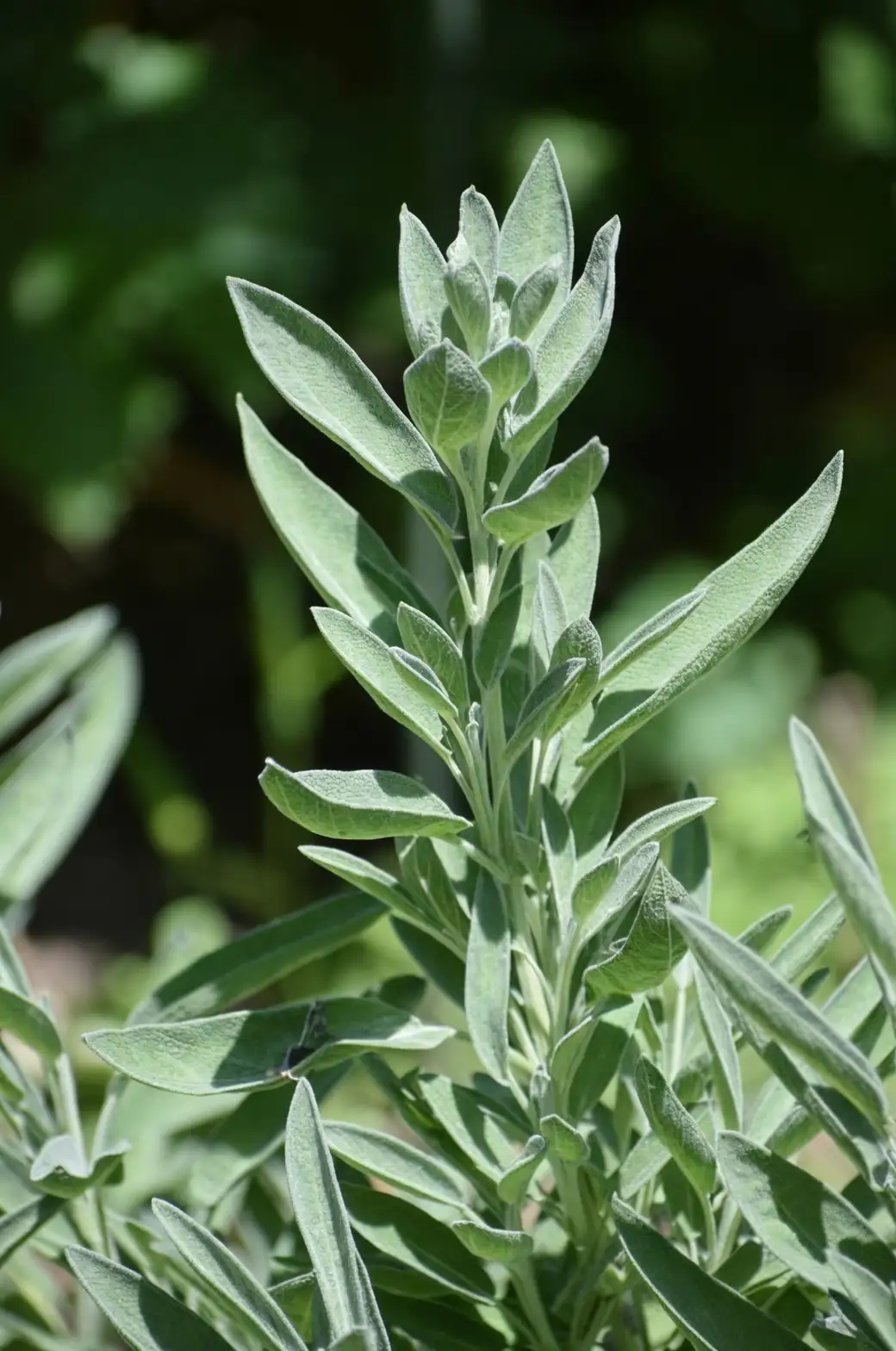
If your dream xeriscape is a sunlit tapestry of silver foliage, dancing bees, and fragrant herbs underfoot, make Salvia officinalis—common sage—your anchor. Its softly fuzzy, grey-green leaves flash silver in strong light, its early-summer spires brim with nectar, and its evergreen bones keep the garden looking intentional, even in the quiet months. Pair sage with lavender, thyme, and a blanket of gravel mulch, and you’ll have a water-wise garden that hums with life and looks good all year.
Why sage makes a superb xeriscape anchor
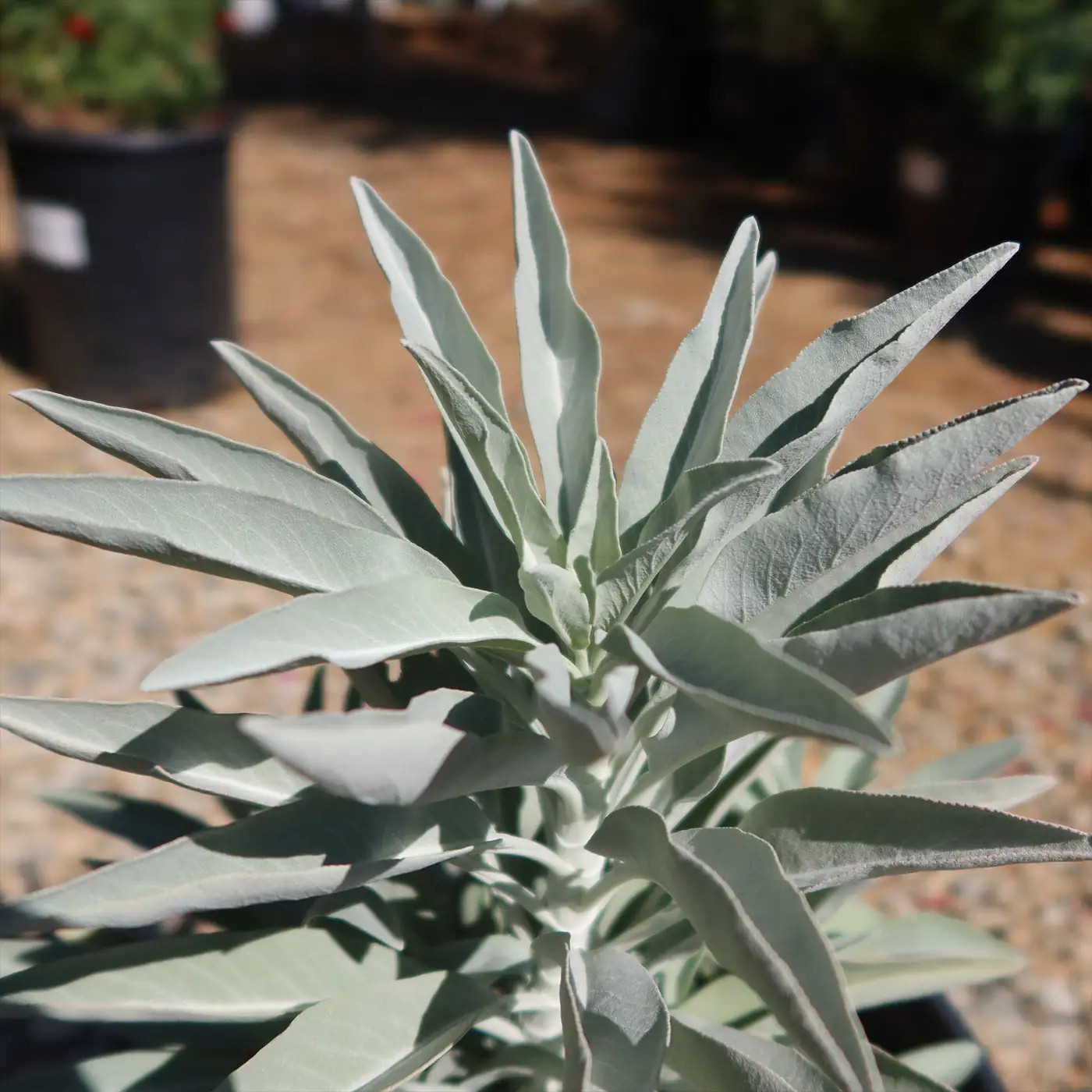
- Evergreen structure: An upright, mound-forming subshrub (typically 30–90 cm tall and wide, often 40–60 cm in gardens) that holds the bed together in every season.
- Silver foliage drama: Grey-green to silvery, softly textured leaves that brighten mineral mulches and stone.
- Drought-smart: Once established in the ground, it needs little extra water and thrives in lean, well-draining soils.
- Pollinator magnet: Early to late summer flower spikes (blue to purple, sometimes pink or white) are rich with nectar for bees and butterflies.
- Culinary bonus: Earthy, savory, slightly peppery leaves that get more flavorful in full sun—your kitchen will thank you.
Set the stage: site and soil
- Sun: Full sun is best—aim for 6+ hours daily. In very hot regions, a wisp of afternoon shade helps.
- Drainage: Non-negotiable. Use gritty, mineral soils and amend heavy ground with coarse sand or gravel. Ideal pH: slightly acidic to neutral (about 6.5–7.0).
- Humidity and airflow: Dry to average humidity suits sage. Ensure good air movement, especially in humid summers, to deter powdery mildew.
- Climate and hardiness: Generally hardy across USDA Zones 4–10 (varies by cultivar and winter wet). Best growth around 15–22°C. Winter waterlogging—not cold alone—is often the bigger threat; keep crowns dry with gravel and sharp drainage.
Design formulas: sage, lavender, thyme, and gravel done three ways
1) The Silver-and-Lavender Ribbon Border
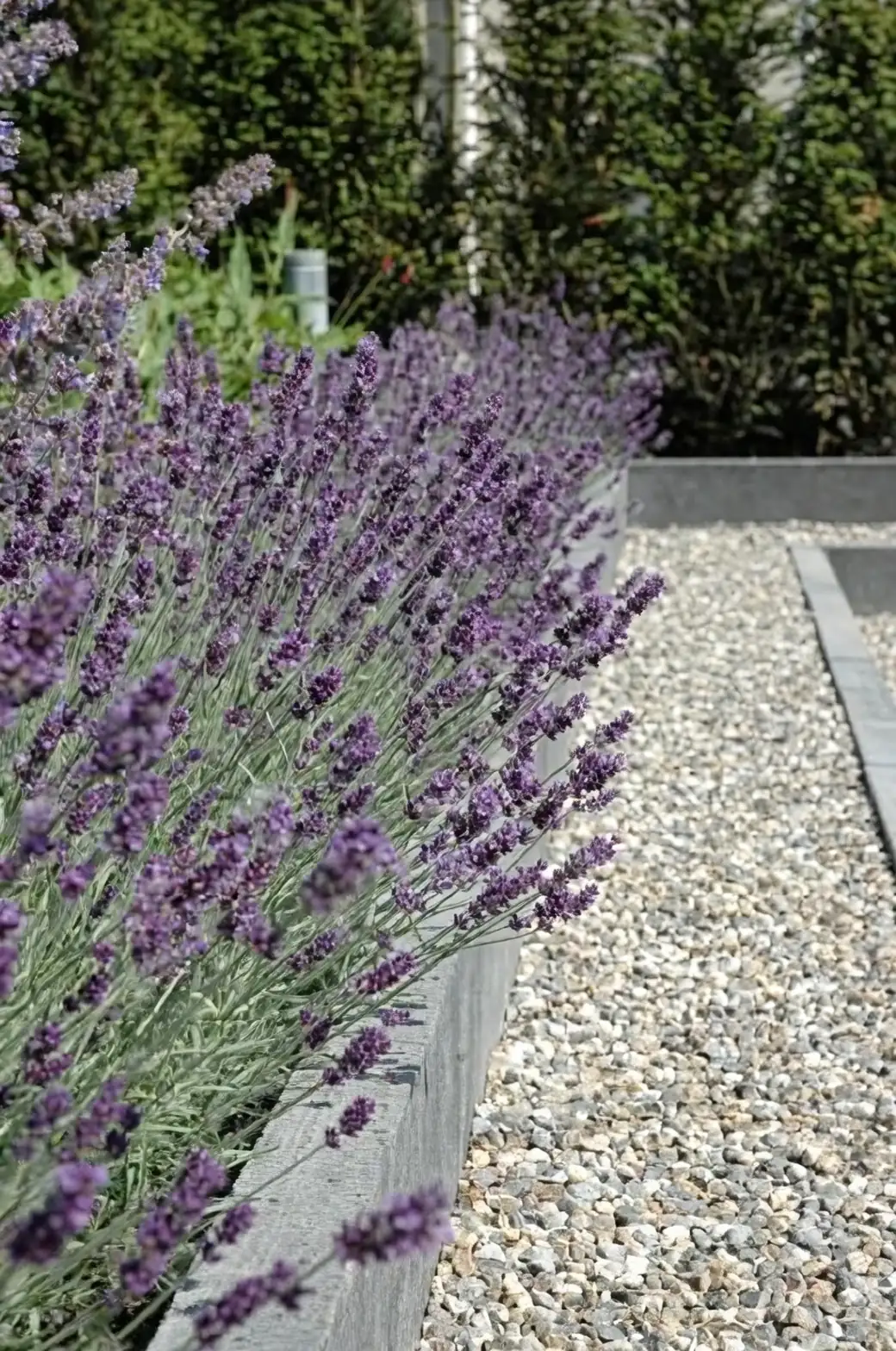
- Planting plan and spacing
- Anchor: 3–5 Salvia officinalis spaced 45–60 cm apart in a loose zigzag.
- Companions: Lavandula angustifolia (dwarf or medium forms) in a mirrored zigzag between sage clumps, spaced 45–60 cm.
- Groundcover: Creeping thyme (Thymus serpyllum or T. praecox) tucked at the front and between stones, 20–30 cm apart.
- Mulch: 5–7 cm (2–3 in) of pale gravel; keep it a few centimeters off stems.
- Color and texture
- A silver-green backbone with blue-purple blooms in early to mid-summer.
- The fine, tight knit of thyme softens stone edges and releases fragrance underfoot.
- Pollinator payoff
- A continuous runway: thyme starts early, sage peaks in early–mid summer, and lavender keeps the show rolling.
2) Mediterranean Courtyard Pad
- Planting plan and spacing
- Bed shape: A circular or oval gravel pad with a boulder or low water bowl as a focal point.
- Anchor ring: Salvia officinalis in a ring, 50 cm apart.
- Supporting cast: Alternating clumps of lavender and small domes of Thymus ‘Elfin’ (or similar) between the sages.
- Edging: Chunky limestone or terracotta pavers for warmth.
- Color and texture
- A restrained palette—silver, violet, and sun-warmed stone—reads elegant and timeless.
- Pollinator payoff
- Nectar-rich islands around a sunlit “landing strip” of gravel; bees and butterflies find it fast.
3) Low-Water Front-Yard Patch
- Planting plan and spacing
- Triangular grouping of 3–7 sages as the main mass, 45–60 cm apart.
- A lavender hedgelet (one tight row) as a backdrop or along the sidewalk.
- Thyme stitched through stepping stones, 20–25 cm apart, to green the gaps.
- Color and texture
- A calm, silvery canvas with seasonal pops of violet; looks tidy from the curb without trying hard.
- Pollinator payoff
- High nectar density in a small footprint; perfect for urban wildlife corridors.
Pro tip: Hydrozoning is your friend. Sage, lavender, and thyme share low-water needs once established, so keep them together and irrigate deeply but infrequently.
Build it right: step-by-step
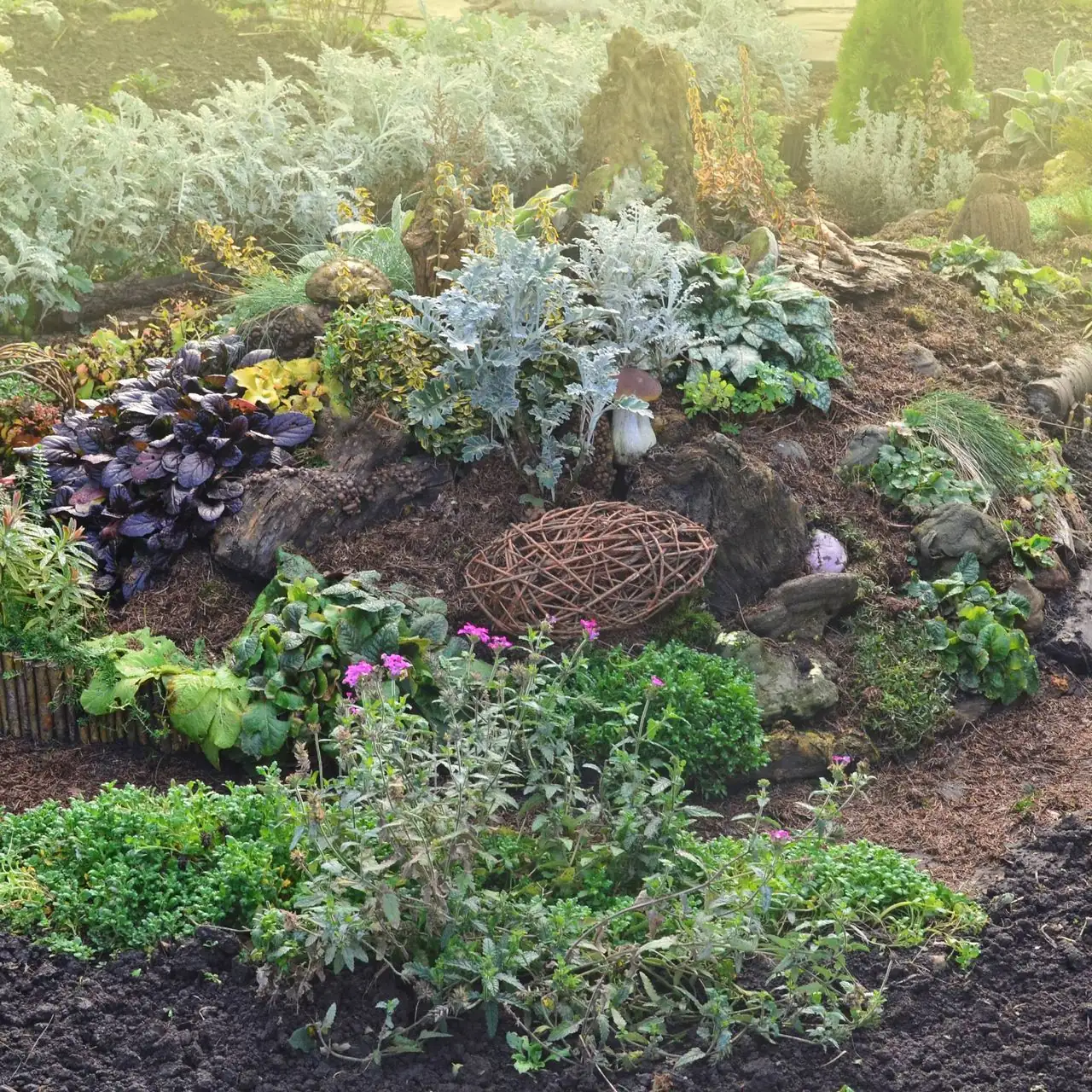
- Map the sun. Choose an open, south-facing spot if possible.
- Improve drainage. In heavy soils, create a 15–20 cm raised berm using sandy loam mixed with 25–40% grit or crushed lava.
- Plant high. Set crowns slightly proud of the surrounding grade.
- Lay mineral mulch. Top with 5–7 cm of gravel or decomposed granite to keep crowns dry and suppress weeds.
- Irrigation strategy.
- First season: Water regularly until roots run deep; then taper off.
- After establishment: In the ground, water only during extended droughts. In containers, water when the top 2–3 cm of mix is dry.
- Consider a simple drip line for deep, infrequent watering.
Care calendar for easy elegance
- Spring
- Lightly prune to shape and stimulate bushy new shoots—avoid cutting into old, leafless wood.
- Start seeds or take softwood cuttings; lightly feed container plants once.
- Summer
- Harvest sprigs often; deadhead or trim spent flower spikes to keep plants neat.
- Water pots when the surface dries; in-ground plants usually need little.
- Autumn
- Reduce watering; tidy lightly; try layering to make new plants.
- Winter
- Keep pots in a bright, sheltered spot and water sparingly.
- Guard against winter wet with extra gravel and good slope.
Note on longevity: Sage gradually gets woody. Many gardeners refresh clumps every 6–7 years or keep a steady pipeline of cuttings.
Container xeriscape: a portable silver trio
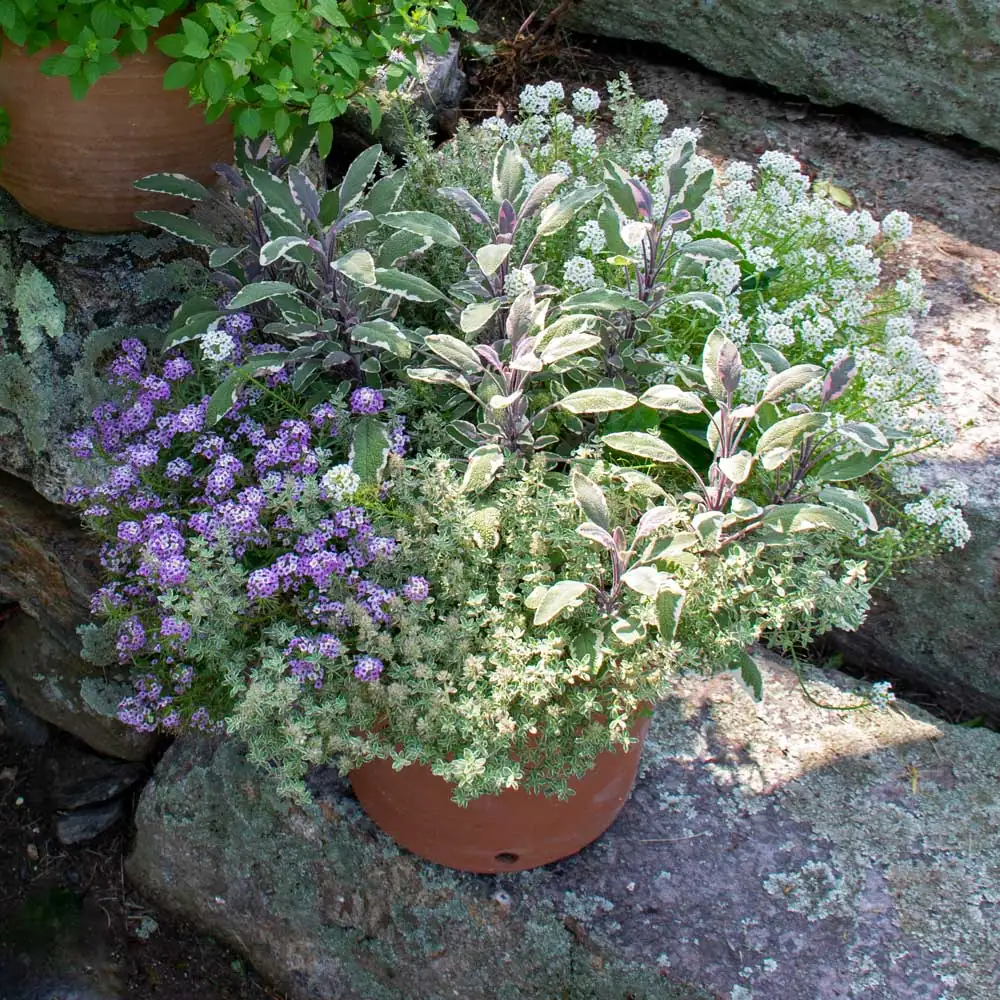
- Pot: At least 30 cm wide and deep with generous drainage.
- Mix: Free-draining, peat-free blend with up to 25% grit by volume.
- Composition: One sage in the center, flanked by a compact lavender and a rim of creeping thyme.
- Care: Full sun, rotate for even growth, and let the top 2–3 cm of the mix dry before watering again.
Troubleshooting the dry-garden way
- Yellowing leaves? Often overwatering or poor drainage. Let soil dry between waterings and improve airflow.
- No flowers? Usually too little sun or too much nitrogen. Aim for 6+ hours of direct sun and keep feeding minimal.
- Powdery mildew? Common in stagnant, humid air—thin neighboring plants, increase sun exposure, and avoid overhead watering.
- Pests to watch: Rosemary beetle, leafhoppers, capsid bugs, slugs, spider mites (especially indoors). Healthy, sunlit, airy plants are rarely troubled.
Harvest and kitchen wins
- Pick leaves or sprigs in the morning once dew dries.
- Dry small bundles in a warm, dark, airy spot; store crisp leaves in airtight jars.
- Freeze chopped leaves (or in ice cube trays) for quick cooking.
- A little stress (full sun, lean soil) intensifies flavor—don’t overfertilize.
Symbolism and cultural roots
Sage has long signified wisdom, longevity, good health, and domestic virtue—echoing its Latin namesake, salvere, “to save” or “to heal.” Medieval Europe wove sage into both medicine chests and kitchens, and a folk saying claimed, “He who has sage in his garden does not need a doctor.” While “flower language” traditions (floriography) blossomed in the 18th–19th centuries and often romanticized plant meanings, sage’s symbolism likely grows from centuries of practical respect: it fed families, scented homes, and served as a household remedy. That everyday usefulness is the root of its “wise” reputation.
Quick specs for Salvia officinalis
- Type: Evergreen, aromatic subshrub; mint family (Lamiaceae)
- Size: Typically 30–90 cm tall and wide (often 40–60 cm in gardens)
- Foliage: Grey-green to silvery, softly fuzzy, aromatic
- Flowers: Blue to purple (sometimes pink or white), early–late summer (often June–September)
- Sun: Full sun; light afternoon shade in extreme heat
- Soil: Very well-drained, lean to moderately fertile; ideal pH ~6.5–7.0
- Water: Low once established; avoid winter wet
- Hardiness: USDA Zones 4–10 (varies by cultivar and winter wet)
- Best companions: Lavender, thyme, rosemary, oregano, santolina, phlomis—plants that like sun and sharp drainage
- Safety: Culinary-safe in normal use; avoid ingesting essential oil and very large medicinal doses
Design takeaway
Keep it simple, silver, and sunny. Mass sage for evergreen structure, weave in lavender for bloom and perfume, stitch thyme through stone, and finish with a clean layer of gravel. You’ll use less water, feed more pollinators, and enjoy a garden that looks composed in every season—with the bonus of fresh leaves for dinner.


