
Step into any shop in December and Euphorbia pulcherrima Willd.—the poinsettia—will be everywhere, blazing in reds, pinks, whites, and marbled swirls. But not all plants are equal. If you decode a few pro grower cues—the cyathia stage, leaf density right down to the pot, and the firmness of those milky-sapped stems—you can buy a poinsettia that glows for weeks instead of days. Here’s your expert guide to picking a long-lasting beauty and getting it home safely.
Meet the plant (in 30 seconds)
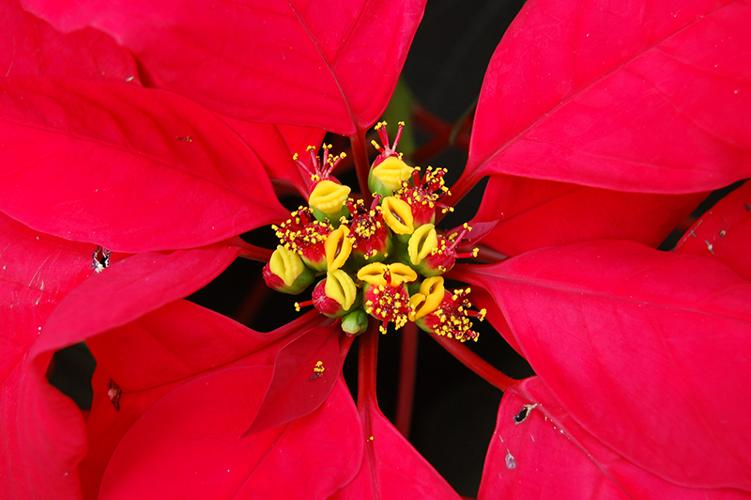
- What looks like petals are bracts: brightly colored, modified leaves that do the showy work.
- The true flowers are the tiny yellow-green cups in the center, called cyathia.
- Poinsettia is a warm-loving, frost-tender shrub native to Mexico—perfect as a festive indoor plant with bright light, steady warmth, and evenly moist (not soggy) soil.
The smart shopper’s poinsettia checklist
1) Read the cyathia (flower) stage for longevity
Think of cyathia as a freshness timer.
- Best for longest display: tight, clean yellow-green cyathia that are closed or just barely opening, with no visible pollen. This signals the bracts will hold their color longer.
- Still good: a few cyathia beginning to open but not shedding pollen.
- Avoid if you want weeks of color: cyathia dusting pollen, sticky nectar, or missing/aborting centers. These plants are already far along in their display.
Tip: Stand back and look at the center—fresh cyathia appear plump and button-like, not messy or spent.
2) Check leaf density all the way to the base
Full foliage from top to soil line is a health report.
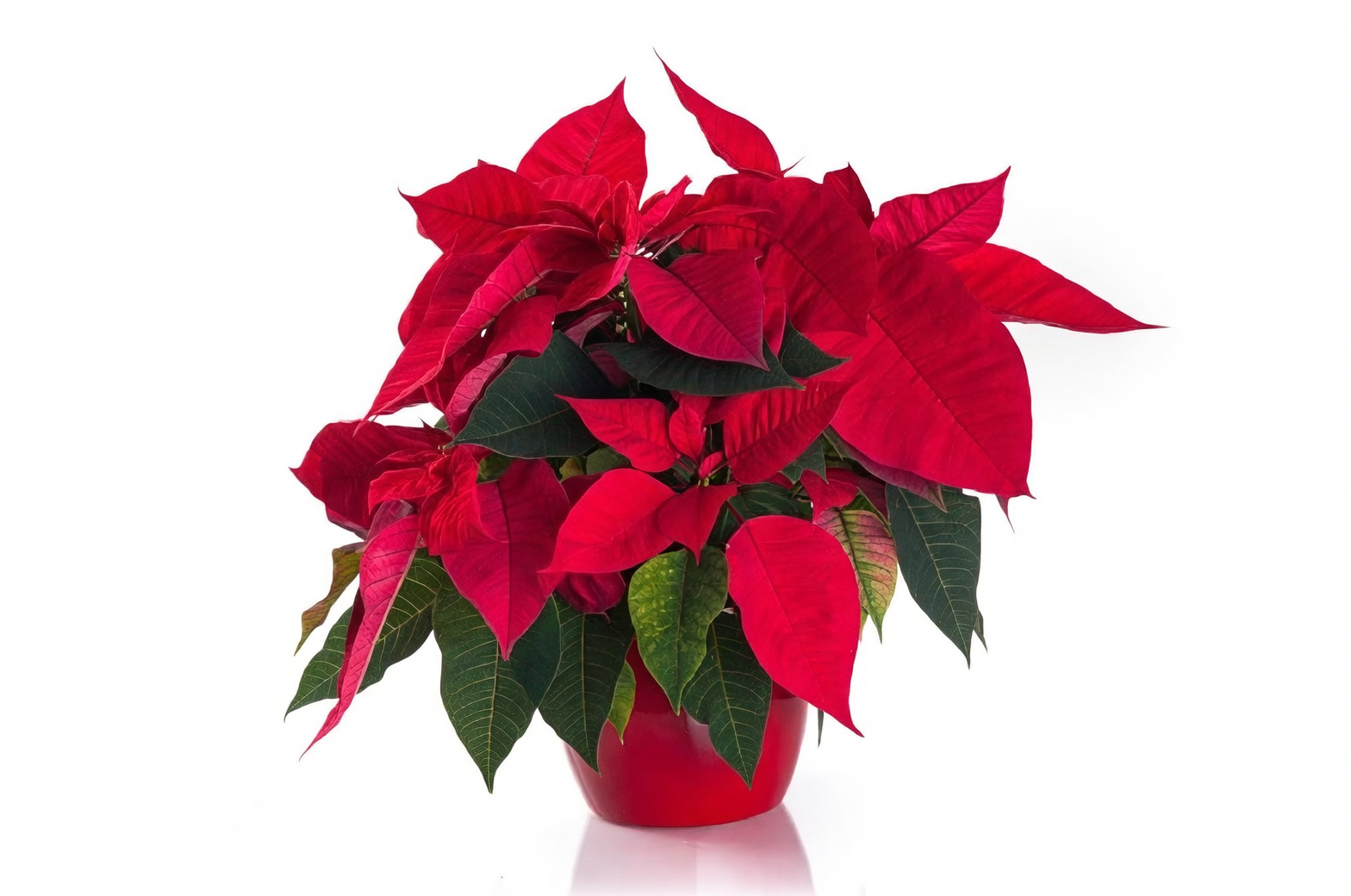
- Choose plants with lush, deep green leaves from crown to pot rim.
- Skip plants with bare lower stems, yellowing leaves, or leaf drop on the bench; that often points to stress from cold, drought/overwatering swings, or shipping woes.
- Bracts should be evenly colored, crisp-edged, and unbruised. Bent or creased bracts never recover.
Pro move: Gently fan a hand through the canopy—leaves should feel firm and turgid, not limp.
3) Test stem firmness and structure (without snapping!)
Poinsettia stems should feel sturdy and springy.
- Gently wobble the main stems and look for balanced branching that doesn’t splay apart.
- Avoid plants with cracked, partially broken, or taped-up branches; poinsettia wood is brittle and breaks easily.
- Milky latex sap will ooze from fresh breaks—irritating to skin—so handle with care.
4) Inspect the soil, roots, and potting setup
- Soil should be evenly moist—not bone-dry, not swampy. Water-logged pots lead to root rot and fast leaf drop.
- Lift the grower pot out of decorative foil. If water gushes or the foil holds a puddle, pass.
- Peek at drainage holes: no sour smell, no mushy roots, and ideally no clouds of fungus gnats.
- Choose a plant that’s proportional to its pot; overly top-heavy plants are more prone to breakage in transit.
5) Size, shape, and cultivar styling
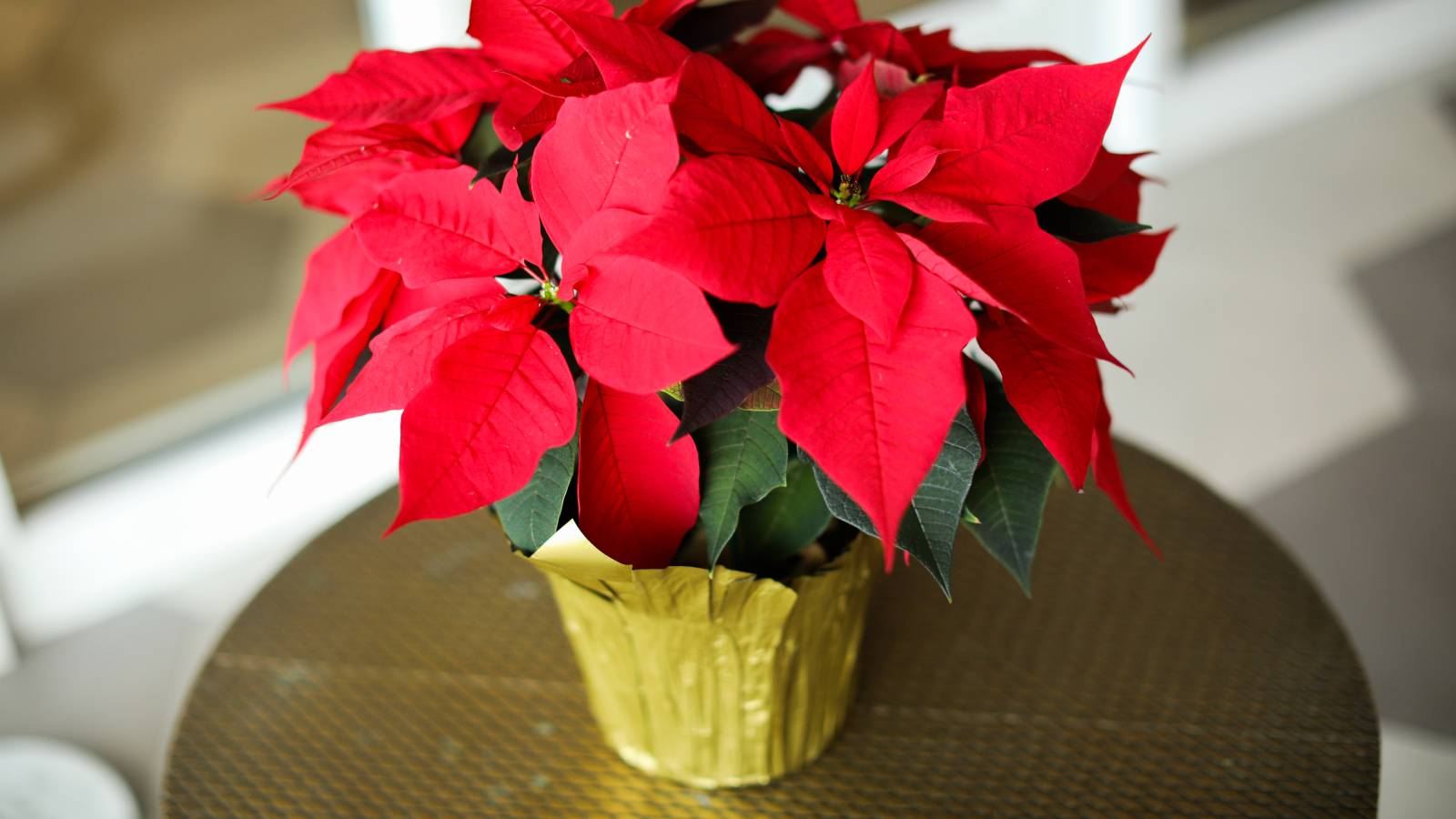
- Compact, well-branched plants with a dome of evenly sized bracts look fuller and hold up better indoors.
- Modern breeding focuses on bract longevity, stem strength, and color range—don’t be shy about comparing varieties side by side.
- If you value natural plant health, skip glitter-sprayed or painted specimens; coatings can stress leaves and bracts.
6) Quick pest check
- Turn a few leaves: look for whiteflies, mites, or thrips; sticky residue or speckles can hint at issues.
- A clean plant saves you headaches later—especially if you keep other houseplants.
Transport like a pro: cold-proof your prize
Cold is the poinsettia’s nemesis—one icy blast can trigger blackening and leaf drop.
- Buy it last, bring it home first. Don’t leave it in a cart or car while you run more errands.
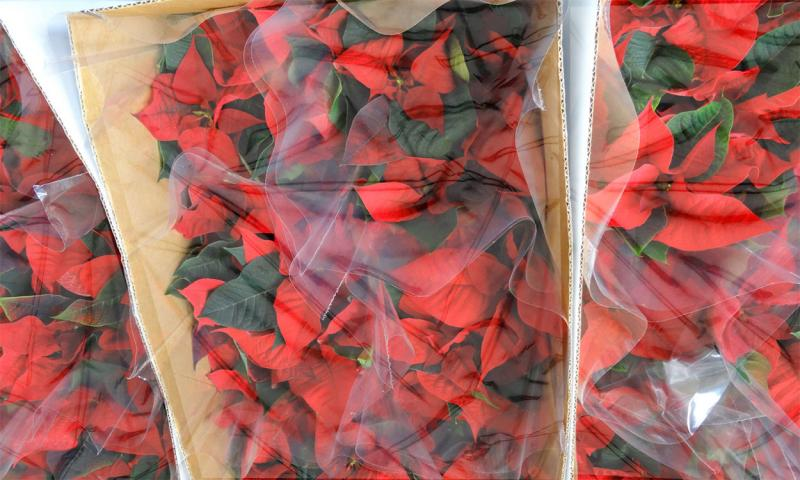
- Always sleeve or wrap: ask for a plant sleeve or loosely wrap with paper or a bag that covers bracts but allows air.
- Keep it warm: carry it upright, get straight into a heated car, and place it in the passenger footwell (not the drafty trunk).
- Indoor landing zone: at home, cut the sleeve off rather than pulling it down to avoid snapping stems and bracts.
- Warm, bright spot immediately; no cold windowsills, no blasts from doors.
Target travel temps: keep well above 10°C/50°F; for best results, aim to stay at or above 15°C/59°F the whole way.
The first 48 hours: set the stage for weeks of color
Light and placement
- Bright, indirect light with a touch of gentle direct sun is ideal.
- Keep days around 18–25°C (64–77°F), with slightly cooler nights ~15–18°C (59–65°F).
- Avoid cold glass, exterior doors, fireplace heat, and HVAC vents—drafts and temperature swings cause leaf drop.
Watering rhythm
- Water when the top 2.5–5 cm (1–2 in) of soil feels dry.
- Water thoroughly until excess drains, then empty the saucer or remove decorative foil so roots never sit in water.
- Err on the side of gently moist, not soggy. Overwatering is the fastest way to lose bracts and leaves.
Humidity and airflow
- Average home humidity is OK; slightly higher is better. Group plants or use a pebble tray if the air is very dry.
- Ensure light, fresh airflow, but no direct drafts.
Care routine for a long, luminous display
- Light: Keep it very bright—poinsettias fade fast in dim corners.
- Water: Consistent, even moisture. In winter, watering about once a week is common, but always check the soil first.
- Feeding: Pause or reduce fertilizer during peak display; resume after pruning in spring.
- Grooming: Snip off spent leaves from the soil surface to prevent mold; rotate the pot weekly for an even canopy.
- Pests: Watch for whiteflies, mites, and thrips. If present, isolate and treat with a gentle insecticidal soap or horticultural oil, and improve airflow.
How long will it last? If you bought with tight, pollen-free cyathia and keep the plant warm, bright, and evenly moist, expect bracts to look good for several weeks—often well past New Year’s, and sometimes into early spring.
Troubleshooting: quick cues and fixes
- Sudden leaf drop, especially lower leaves:
- Likely causes: chill, drafts, or wild watering swings.
- Fix: Move to a warm, bright, stable spot; water only when the top inch dries.
- Wilting with wet soil:
- Likely causes: waterlogged roots/incipient rot.
- Fix: Remove foil, improve drainage, let soil dry toward barely moist, and increase light/airflow.
- Bract edges browning:
- Likely causes: cold injury, physical damage, or very dry air.
- Fix: Protect from cold, handle gently, boost humidity slightly.
After the holidays: keep it or curate the next season
Want to keep growing?
- Late winter/early spring: When the display fades, prune—either down to about 10–15 cm (4–6 in) or leave a 20–25 cm (8–10 in) framework with 2–3 nodes per stem. Repot one size up if rootbound and resume feeding once new growth starts.
- Spring to summer: Bright light, warmth, regular watering and feeding. Pinch new growth to keep it compact and bushy.
- Outdoors (frost-free only): True landscape performance is in reliably frost-free zones; bring indoor plants back inside well before nights cool.
- Color again next year: Starting in late September, give long nights—about 14–16 hours of uninterrupted darkness every night for 8–10 weeks, with bright days. Even small amounts of light at night can delay bract coloring.

Safety note: the milky sap and curious pets
- Poinsettia’s white latex sap can irritate skin and eyes. Wear gloves when pruning and wash up afterward.
- If chewed, it may cause mild stomach upset in pets and people. Keep out of reach of kids and pets, but no need to panic—it isn’t considered deadly poisonous.
A brief note on symbolism and “flower language”
Poinsettia’s starry bracts are linked with celebration and the Star of Bethlehem; in many homes it symbolizes joy and fresh beginnings during winter’s darkest weeks. While modern “flower language” blurbs often paint it as a token of cheer and goodwill, remember the display’s power comes from bracts—not petals—and from timing the plant’s long nights to turn that vibrant red. In other words, its meaning is literally written in light and darkness: patience, care, and the promise of brightness after long nights.
—
Quick-buy cheat sheet
- Cyathia: tight, yellow-green, no pollen.
- Leaves: dense, dark green to the base—no bald ankles.
- Stems: firm, unbroken, evenly branched.
- Soil: evenly moist, never sloshy; no standing water in foil.
- Transport: sleeve, keep warm, go straight home, cut the sleeve off gently.
- Place: bright, warm spot; away from cold glass and vents.
- Water: when top 1–2 inches are dry; drain thoroughly.
Follow these cues, and your Euphorbia pulcherrima Willd. will shine for weeks—no holiday heartbreak, just star-bright color right through the season.