

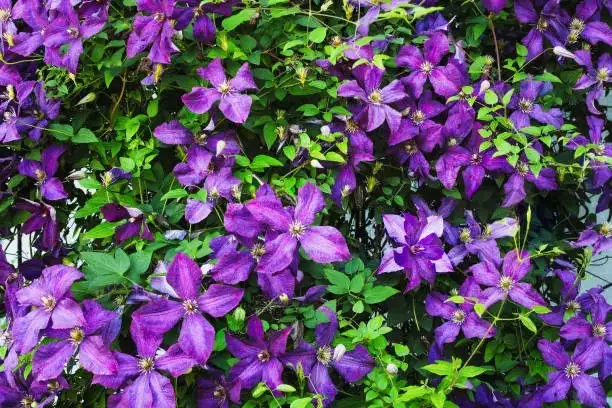
Think of clematis as living confetti cannons: once they start, they just keep tossing color where you point them. The trick to jaw-dropping displays? Prune by the rules their flowers follow. Here’s the punchy, visual ruleset every clematis-lover needs—plus a foolproof plan if you don’t know your plant’s group.
Meet Clematis (Clematis spp.): the Queen of Climbers
- An elegant, leaf-stem-twining vine from temperate Northern Hemisphere regions (with standout diversity in China and Japan), clematis brings everything from tiny bells to dinner-plate stars in white, pink, red, purple, and blue.
- Most garden types are woody or semi-woody climbers; many reach 6–12 ft (1.8–3.7 m) with support, while vigorous sorts can surge to 20–30 ft (6–9 m).
- Classic care mantra: head in the sun, feet in the shade—bright light for blooms, cool mulched roots for comfort. Keep moisture even, never swampy.
- Stems are surprisingly brittle; tie in gently and regularly.
- Bloom timing (and pruning) hinges on three groups:
- Group 1: early spring on old wood
- Group 2: late spring/early summer (often with a second flush) on old and new wood
- Group 3: summer to fall on new wood
The Visual Ruleset: prune by group
Group 1 — Minimal pruning, after flowering
Early bloomers (think C. montana, C. alpina) set buds on last year’s stems.
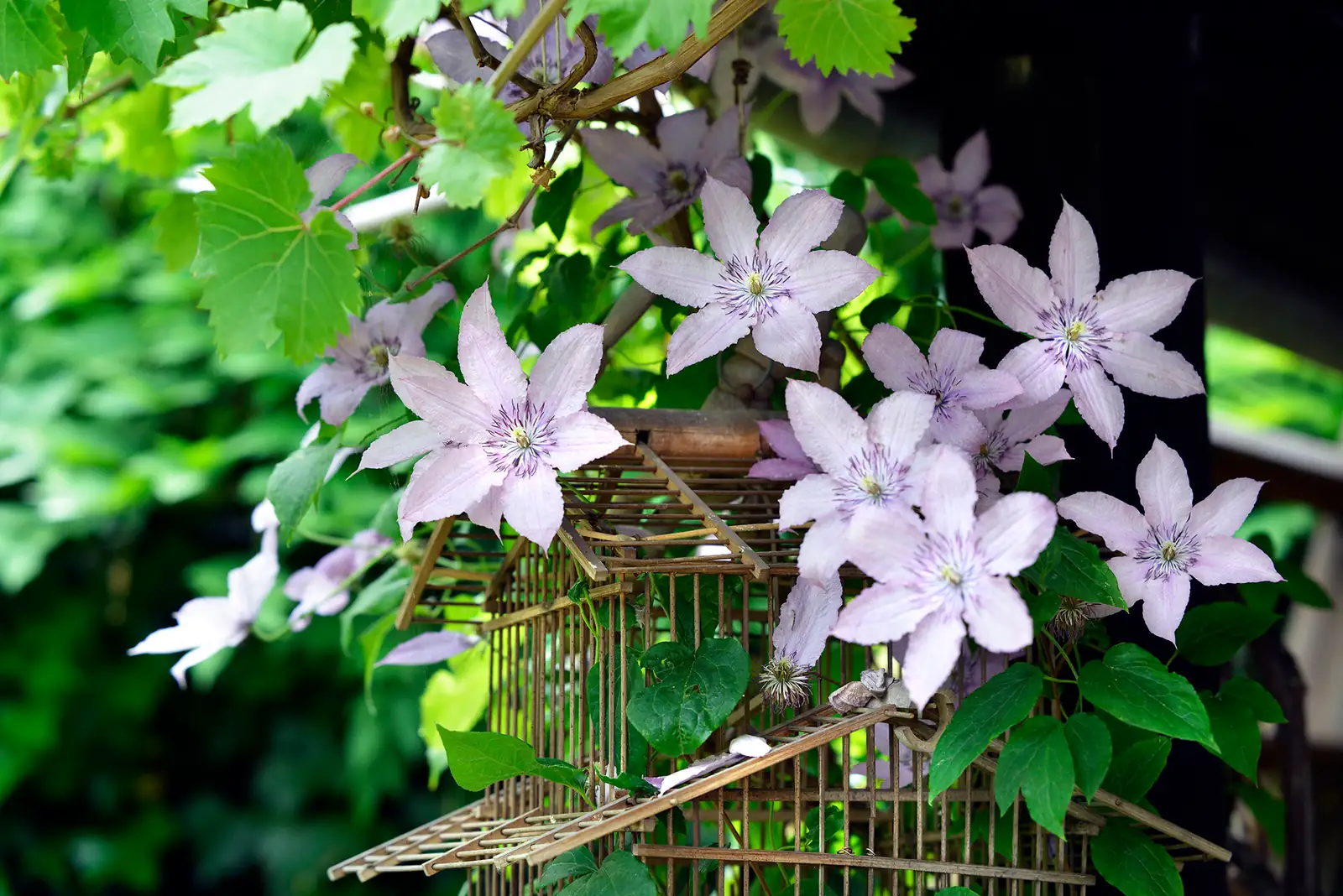
- When to cut: right after flowering in mid- to late spring, once frosts are past.
- What to do:
- Remove dead, damaged, or congested stems.
- Lightly thin and tidy; train new shoots onto their support.
- Don’t: hard-prune in winter—you’ll shear off the flower show.
- Renovation (occasional, if needed): after flowering, you can cut back harder to refresh an overgrown plant, knowing you’ll reduce or pause blooms while it rebuilds.
Group 2 — Light prune in late winter + tidy after first flush
These are the big stars—the large-flowered hybrids (e.g., ‘Nelly Moser’, ‘The President’, many Clematis florida types) that flower on a framework from last year and often again on new growth.
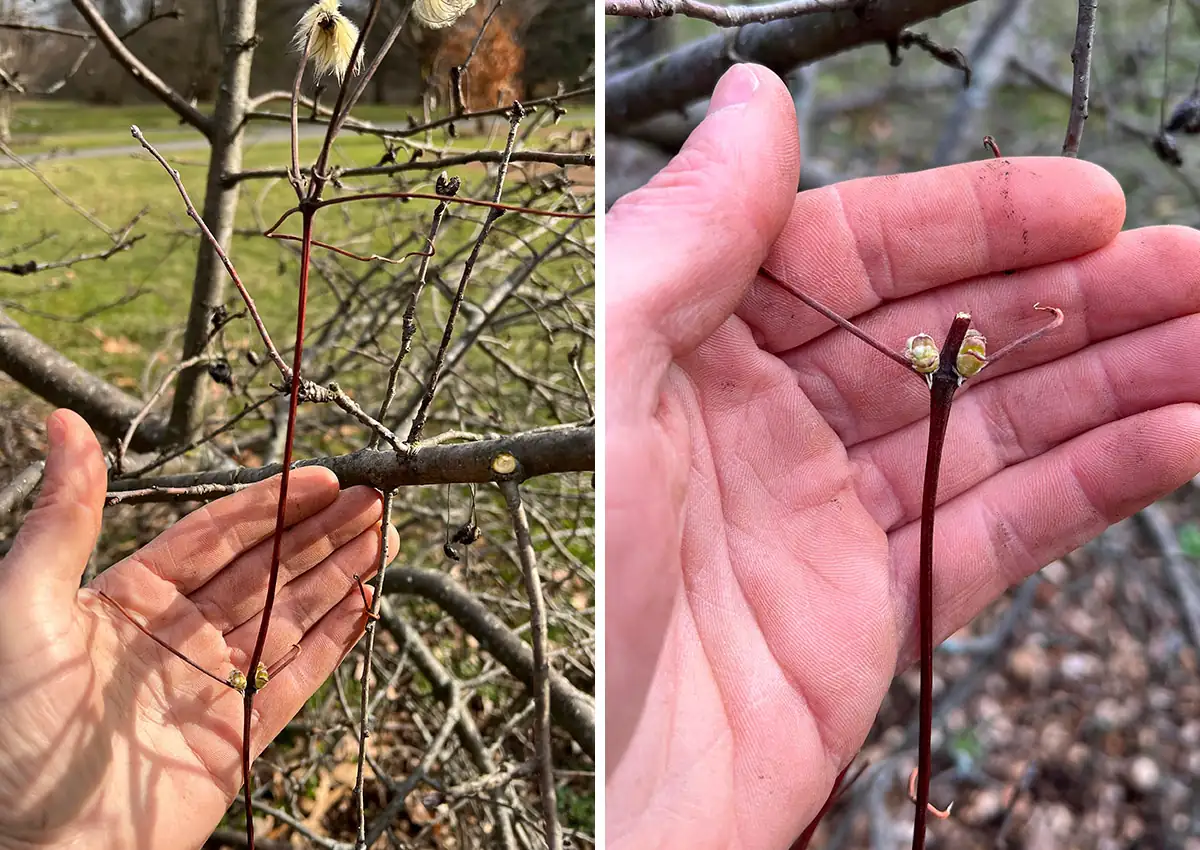
- Late winter/early spring (before leaf-out):
- Remove weak, dead, or spindly shoots.
- Shorten remaining stems to just above strong, high buds to keep a layered framework.
- After the first flush (early summer):
- Deadhead and trim stems back to a good pair of buds to encourage the encore.
- Aim: keep a balanced framework, stimulate fresh shoots, and set up repeat bloom.
Group 3 — Hard prune to 12–18 in (30–45 cm) in late winter
Summer–fall bloomers (e.g., C. viticella, texensis types, tangutica) flower on new wood each year.
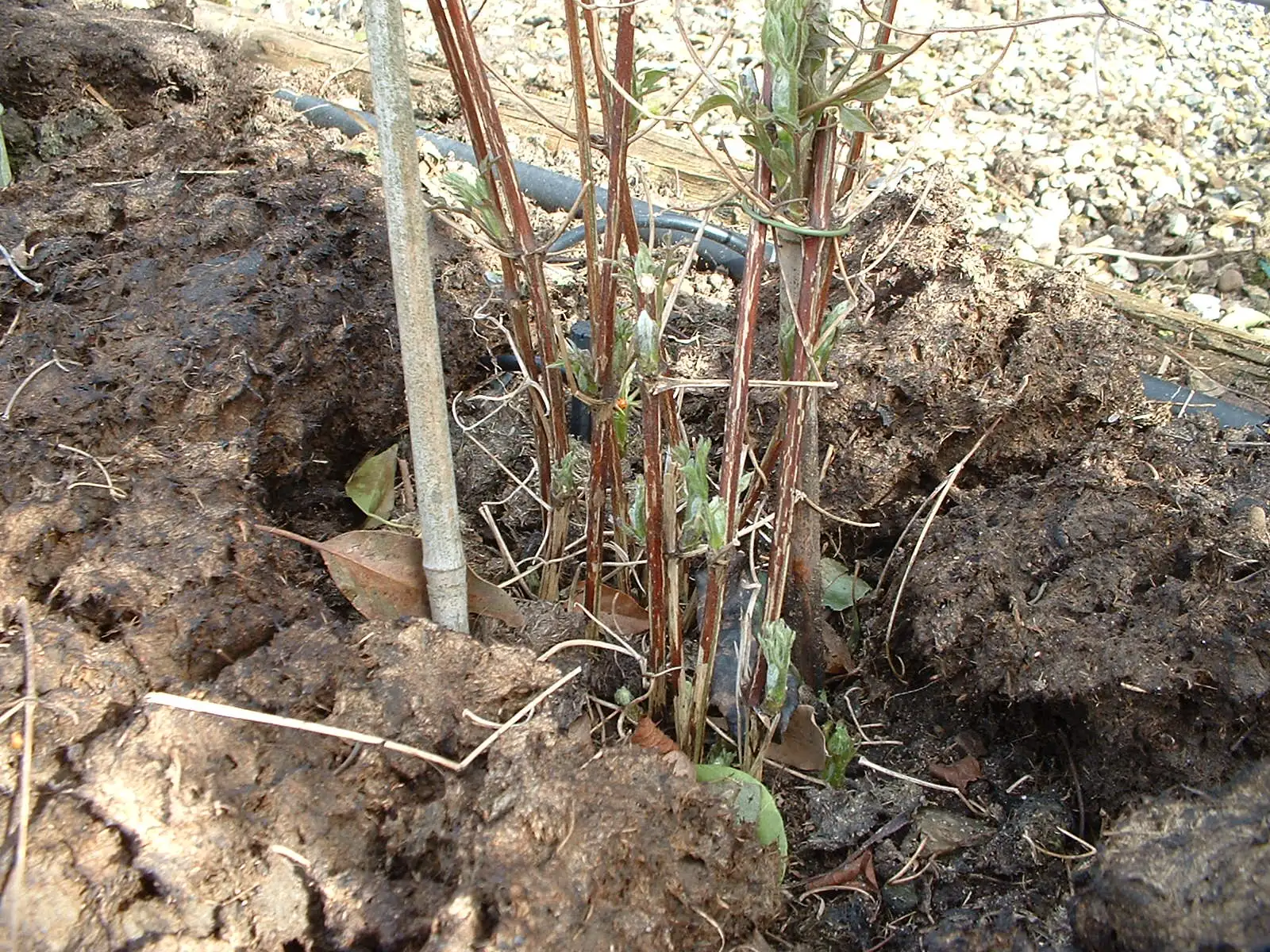
- When to cut: late winter/early spring, before growth surges.
- What to do:
- Cut all stems down to 12–18 in (30–45 cm), just above a pair of healthy buds.
- Clear old tangles; tie in new shoots as they elongate.
- Result: a clean, flowering machine that performs at eye level instead of a bird’s nest up top.
Not sure which group you have? Use the no-regrets method
- Watch the bloom:
- Flowers in early spring on woody stems that were present last year = Group 1.
- Big late-spring saucers, often with a second round after a light trim = Group 2.
- First flowers in summer or fall on fresh, green shoots = Group 3.
- Can’t wait to ID?
- Default to a Group 2 light prune in late winter: remove dead/weak growth, then shorten to strong buds. You won’t sacrifice a whole season.
- Or split the difference (belt-and-braces):
- Hard-prune half the stems to 12–18 in (for Group 3 insurance).
- Light-prune the other half (for Group 1/2 insurance).
- Label the plant once it reveals its schedule.
Quick cut-lines and cues (cheat sheet)
- Group 1: Snip after bloom. Keep the old framework; just thin and train.
- Group 2: Light prune late winter. After first flush, tidy back to a pair of buds.
- Group 3: Late winter reset—cut to 12–18 in (30–45 cm), then let it rocket back.
Training tips that make pruning pay off
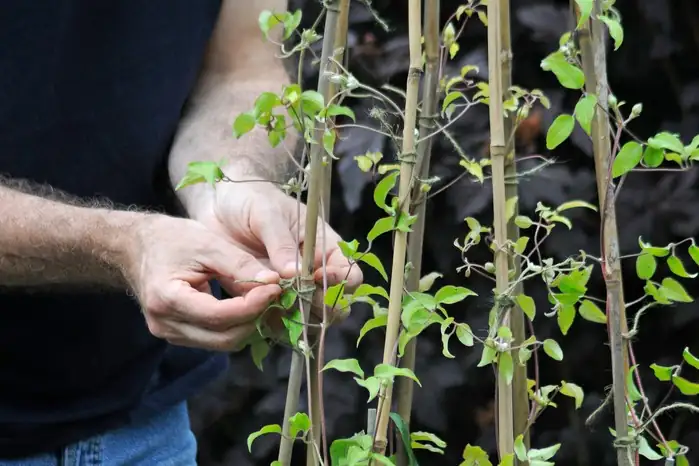
- Tie-in early and often. Space stems like spokes to avoid tangles and to bring flowers down where you can see them.
- Pinch young plants to encourage branching. A common starter move is cutting shoots to about 12 in (30 cm) after planting; as vigor builds, let 24–28 in (60–70 cm) stems remain after the next repotting or season.
- For containers: use a roomy, well-drained pot with a sturdy trellis; shield the root zone from harsh afternoon sun.
Aftercare that turbocharges regrowth
- Water: keep evenly moist—never bone dry, never soggy. Water at the base to keep foliage drier.
- Feed: mix in compost or a base feed at planting. In-ground, give a balanced feed in early spring and again in early summer; containers appreciate feeding about every two weeks in season. Emphasize phosphorus/potash when buds form; go easy on nitrogen.
- Mulch: cool those roots with organic mulch or low, shade-casting companions.
- Airflow: essential to reduce powdery mildew and gray mold; thin congested growth annually.
Safety, pests, and the “wilt” wobble
- Sap can irritate skin; wear gloves if sensitive. Avoid chewing/ingestion by people or pets.
- Clematis wilt causes sudden blackened collapse of stems. Prune affected shoots back to healthy tissue (even to ground level); many plants resprout strongly.
- Watch for aphids, spider mites, slugs/snails, earwigs, and caterpillars. Manage early with hand-picking, barriers, strong water jets, or gentle controls like insecticidal soap.
Mini seasonal calendar
- Late winter/early spring:
- Group 2: light prune; Group 3: hard prune to 12–18 in.
- Feed, mulch, tie in new growth.
- Spring:
- Group 1: bloom, then minimal prune right after.
- Early summer:
- Group 2: tidy after first flush to prompt rebloom.
- Summer–autumn:
- Group 3: peak bloom on new wood; water and feed steadily.
Flower language: why clematis means “mental beauty” and aspiration
In Victorian floriography, plants spoke in symbols. Clematis earned meanings like mental beauty, cleverness, and aspiration—apt for a vine that climbs by subtle means (its leaf stalks) and seems to reach for the sky. Some traditions add purity and a “beautiful heart,” especially with light-colored forms. Treat flower language as cultural poetry rather than botany: it reflects how people read a plant’s character—graceful climbing, intricate blooms—into messages of intellect, elegance, and upward desire.
—
Grow clematis with confidence: match the cut to the group, keep the roots cool and evenly moist, and tie stems with a gentle hand. Do that, and your “Queen of Climbers” will rule your trellis with a cascade of color, year after year.


