

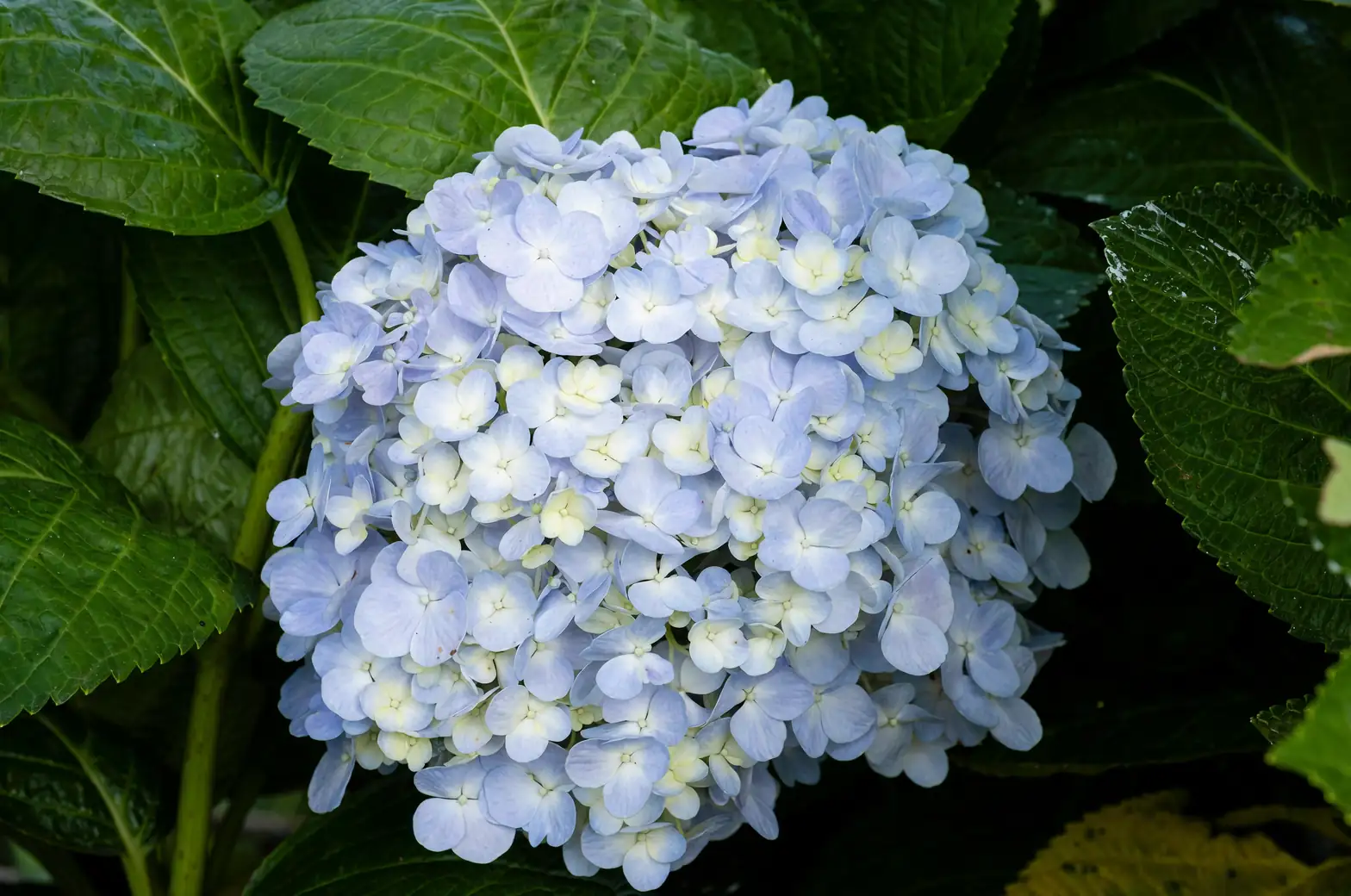
Bigleaf hydrangea is the garden’s generous host: a rounded, glossy-leaved shrub that sets the table with mophead or lacecap bouquets from late spring through summer—and invites an entourage of shade-lovers to the party. Design it smartly with ferns, hostas, hellebores, and astilbe, and you’ll get a border that’s cool at noon, electric at dusk, and healthy all season thanks to savvy spacing and airflow.
Meet Hydrangea macrophylla, the color‑shifting classic
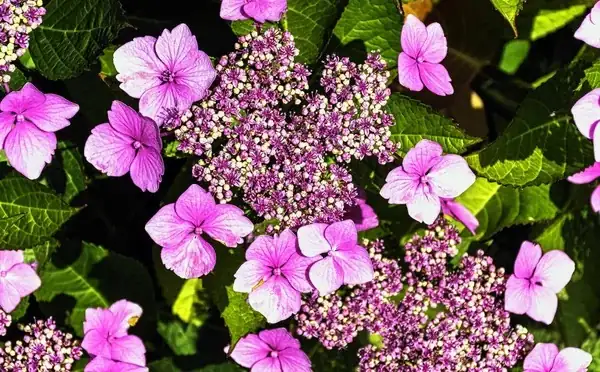
- What it is: A bushy, multi‑stemmed, deciduous shrub with large, serrated, mid‑ to deep‑green leaves and flower heads typically 6–8 inches across. Mopheads are the famous “pom‑poms”; lacecaps frame a plate of tiny fertile flowers with a ring of showy florets.
- Size and season: Commonly 3–6.5 ft tall and wide (some cultivars larger with age). Blooms late spring–summer, with some rebloomers nudging into fall.
- Light and siting: Morning sun with afternoon shade or bright dappled light is ideal—roughly 3–6 hours of sun daily. In cooler climates, it tolerates more sun if soil stays evenly moist.
- Soil and water: Moist, organic‑rich, well‑drained soil. Keep moisture steady—never bone‑dry, never swampy.
- Color magic: Many cultivars shift bluer in acidic soil (with aluminum available) and pink to rosy‑red in more alkaline conditions. White forms usually stay white.
- Hardiness note: Most reliably floriferous in USDA Zones 6–9, with buds more cold‑sensitive than stems.
Design‑meets‑horticulture: pairings that please the eye and pamper the plant
Ferns + hydrangeas: lace next to satin
The feathery fronds of ferns make hydrangea’s big rounds look even fuller—like lace edging a ballgown.
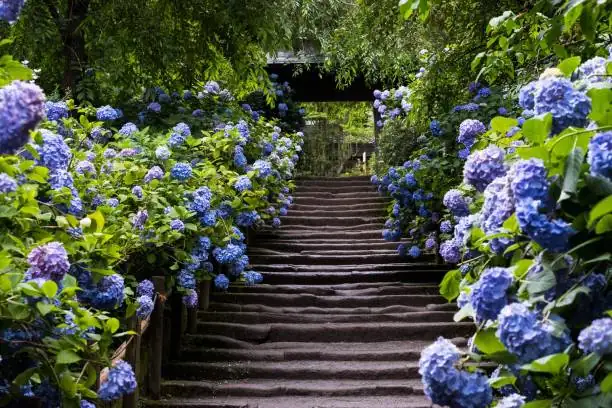
- Best picks: Japanese painted fern (silvered fronds with burgundy midribs), autumn fern (copper spring flush), lady fern for tall, soft texture.
- Where to place: Tuck ferns in the hydrangea’s dappled shade along the north or east side.
- Color echoes: Silvered ferns cool down blue hydrangeas; burgundy fern stems subtly rhyme with rosy‑pink blooms.
- Care alignment: Both enjoy even moisture and shelter from harsh afternoon sun.
Spacing tip
- Space ferns 18–24 in apart. Keep at least a 12–18 in air gap from the hydrangea’s base so fronds don’t press into its skirt during midsummer growth.
Hostas + hydrangeas: big leaves, calm rhythm
Hostas extend the “large‑leaf luxury” theme, giving a restful foil to showy flower heads.
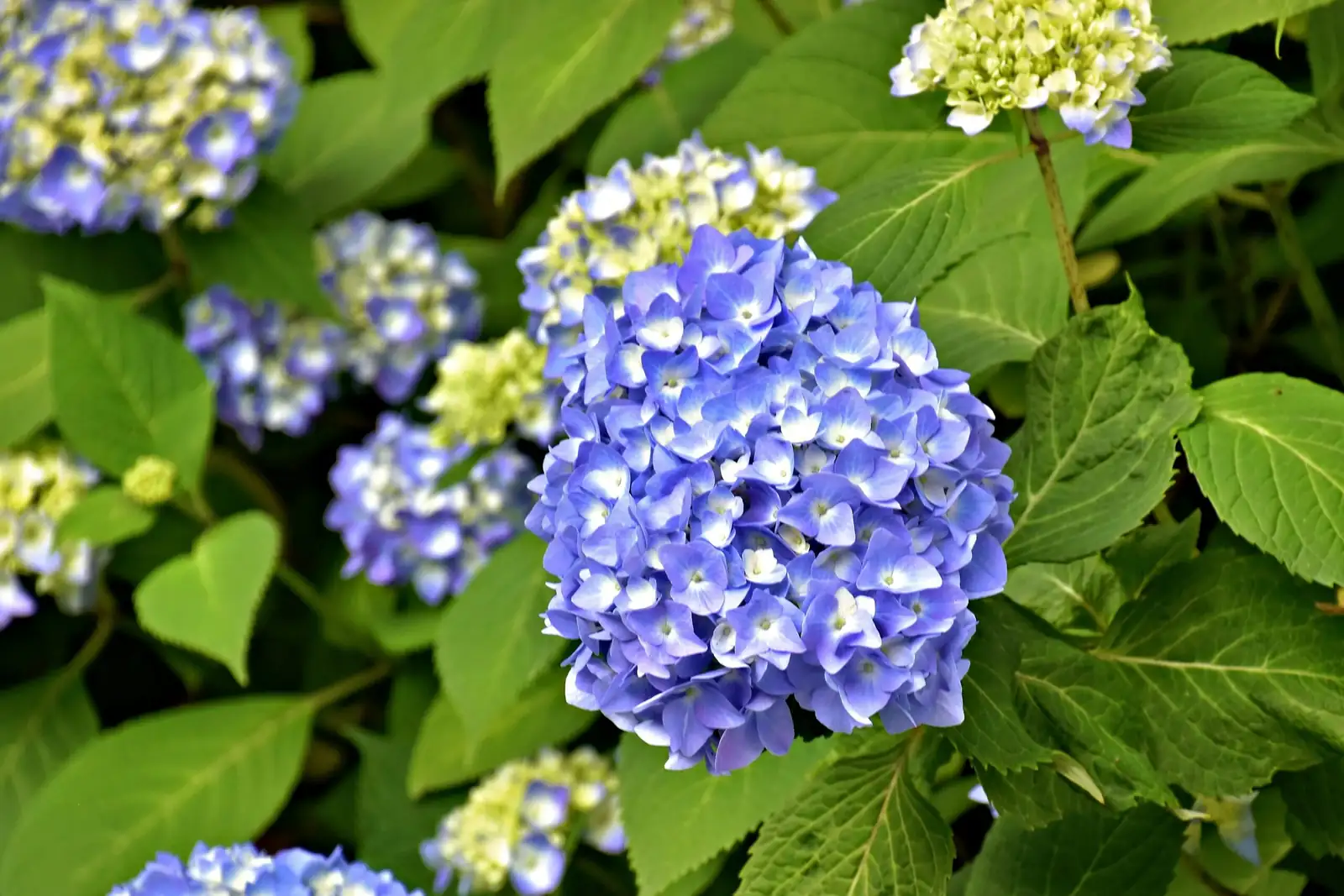
- Palette plays:
- Blue‑leaf hostas (glaucous, powdery tones) make pink hydrangeas pop.
- Gold or chartreuse hostas wake up a blue hydrangea scheme and brighten shade.
- Variegated hostas add sparkle near white lacecaps.
- Structure: Use medium to large hostas as a lower tier in front; mini hostas to scallop an edge.
Spacing tip
- Space hostas 18–36 in apart (size‑dependent). Keep foliage 18–24 in away from the hydrangea’s dripline for airflow and easy watering access.
Hellebores + hydrangeas: a four‑season handoff
Hellebores bloom when hydrangeas are sleeping, then hold handsome foliage through summer.
- Seasonal choreography: Hellebores flower late winter to spring under the leafless hydrangea canopy, then quietly green‑carpet the base while the hydrangea takes over.
- Color echoes: Choose hellebores in antique blush, plum, or ivory to bridge to pink or blue hydrangeas later in the season.
- Soil note: They like rich, well‑drained soil—don’t put them where gutters spill or soil stays soggy.
Spacing tip
- Plant hellebores 15–18 in apart and at least 18 in from the hydrangea base to maintain a dry “collar” around stems and deter foliar disease.
Astilbe + hydrangeas: plumes meet pom‑poms
Astilbe throws vertical, feathery plumes into the mix just as hydrangeas peak.
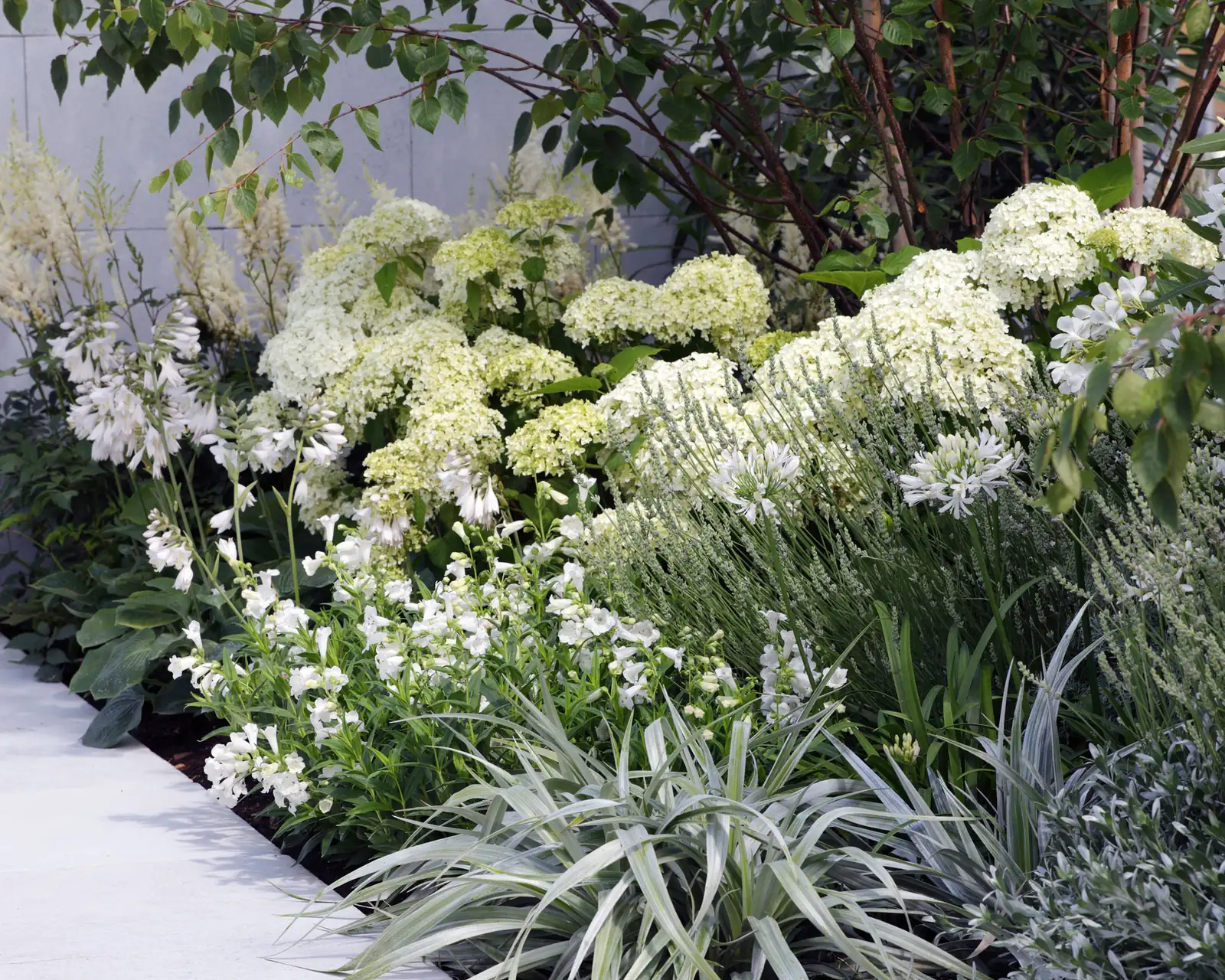
- Matchmaking:
- White astilbe near blue hydrangeas = crisp, cool serenity.
- Pink or red astilbe beside pink hydrangeas = a warm, romantic chorus.
- Site and moisture: Both like rich soil and consistent moisture; afternoon shade extends bloom life for both.
Spacing tip
- Plant astilbe in loose drifts 18–24 in apart. Keep 12–18 in of breathing room in front of the hydrangea’s outermost leaves.
Color echoes that spotlight blue and pink blooms
If you’re chasing blues
- Plant partners:
- Silvered ferns and blue‑leaf hostas amplify cool tones.
- White astilbe or hellebores add clean contrast so blues read brighter.
- Hardscape with gray stone or zinc planters; avoid orange‑red mulches that fight the palette.
- Culture cues:
- Encourage blue by maintaining more acidic soil (often below pH 6) with aluminum available. Gardeners commonly use aluminum sulfate as labeled.
- Changes are gradual; adjust over months, not days.
If you adore pinks
- Plant partners:
- Golden or chartreuse hostas warm the scene.
- Hellebores in rose, plum, or apricot extend that color family into spring.
- Deep pink or red astilbe creates a tone‑on‑tone duet.
- Culture cues:
- To nudge pink, many gardeners add garden lime where appropriate to raise pH (often above ~7). Only adjust if your soil and cultivar warrant it—white forms generally won’t change.
Spacing, airflow, and disease prevention: the beauty insurance
Big leaves and humid summers can invite powdery mildew and leaf spots if plants are crowded. Build your bed like a breathable bouquet.
- Shrub spacing
- For most bigleaf hydrangeas (3–6.5 ft wide), set 3–5 ft center‑to‑center for compact cultivars; 5–7 ft for larger selections.
- Keep at least 18–24 in between the hydrangea’s outer foliage and neighboring plants for summer airflow.
- Maintain 18–24 in clearance from walls or fences to prevent stagnant, disease‑friendly air.
- Watering and mulching
- Water deeply 1–2 times weekly in summer (more often in heat waves or small containers). Morning is best so leaves dry by evening.
- Water at soil level; avoid overhead late in the day.
- Mulch 2–3 in with shredded bark or leaf mold to stabilize moisture and reduce soil splash, but keep mulch a few inches off the stems.
- Pruning for health (and flowers)
- Many bigleaf hydrangeas bloom on old wood. Deadhead and lightly shape right after flowering.
- Each year, remove up to one‑third of the oldest stems at the base to open the center and refresh growth.
- Confirm if yours reblooms on new wood before making heavier cuts; avoid late fall/winter hard pruning that removes next year’s buds.
- Watchouts
- Common issues: powdery mildew, leaf spot (including bacterial), anthracnose; root rot in soggy soils.
- Prevention beats cure: space generously, prune for airflow, keep soil moist but not waterlogged, promptly remove infected leaves, and ensure containers drain freely.
Three ready‑to‑plant recipes
1) Morning‑porch blues
- Hydrangea: One lacecap Hydrangea macrophylla (centerpiece)
- Companions: 3 blue‑leaf hostas, 5 white astilbes, 3 Japanese painted ferns
- Layout and spacing: Hydrangea centered; hostas 30–36 in from the shrub; astilbes in a loose arc 18–24 in apart; ferns tucked 18–24 in apart on the shadiest side. Keep a 12–18 in air halo around the hydrangea.
2) Woodland‑edge pink duet
- Hydrangea: One pink‑leaning mophead
- Companions: 5 hellebores (rose to plum), 3 gold/chartreuse hostas, a drift of 5 pink astilbes
- Layout and spacing: Hellebores ring the base at 18 in from stems; hostas staggered 24–30 in out; astilbe drift on the brighter edge 18–24 in apart.
3) Patio container trio (bright dappled light)
- One compact Hydrangea macrophylla in a 18–22 in container with excellent drainage
- Underplant with a rim of miniature hostas and a tuft of small fern (e.g., Athyrium ‘Ghost’) opposite a dwarf astilbe
- Care: Water as soon as the top inch dries; fertilize lightly every 2 weeks in the growing season; rotate the pot monthly for even growth.
Care quick hits for long, lavish bloom
- Water: Keep evenly moist; never let roots stew in waterlogged soil.
- Feed: Balanced or acid‑forming fertilizer during the growing season—container plants often every 2 weeks; in‑ground shrubs 1–2 times (spring and early summer). Ease off after about July so stems can mature before winter.
- Winter: Protect buds from hard freezes, especially in containers. Keep the root ball slightly moist.
- Sun: Morning sun, afternoon shade is the sweet spot for most gardens.
Flower language, history, and meaning—why color matters here
Hydrangea carries layered symbolism: gratitude, abundance, and heartfelt emotion. In Japan (where it’s beloved as ajisai), a famous tale tells of an emperor offering blue hydrangeas in apology—cementing blue blooms as a gesture of remorse and understanding. Pink tones, by contrast, often speak to affection and sincere emotion, while white leans toward grace and purity. It’s fitting: each head is actually a crowd of many small flowers—abundance made visible. Even the name Hydrangea, from Greek for “water vessel,” nods to its thirst and its cup‑like seed capsules. If you like your gardens to “speak,” let blues anchor reflective spaces and pinks warm gathering spots; both tell a story while the shrub does what it does best—bloom generously.
Safety side note
Treat bigleaf hydrangea as ornamental only. All parts are mildly toxic if ingested by people or pets and can cause stomach upset. Keep clippings and flowers out of reach of curious chewers.
Design it wide, water it wisely, and let ferns, hostas, hellebores, and astilbe set the stage—your Hydrangea macrophylla will return the favor with months of color and decades of presence.


