

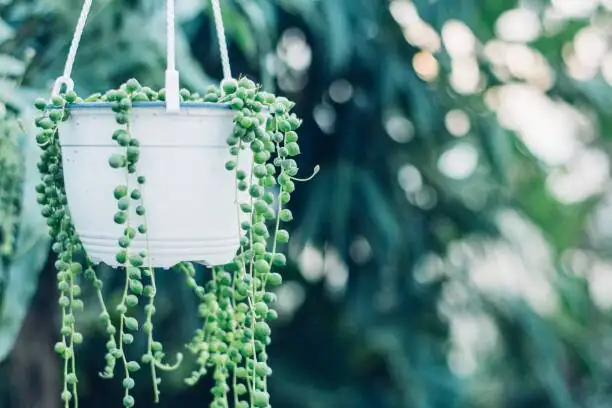
If plants could file paperwork, String of Pearls would have a stack of forms stamped with “Name Change Approved.” This beloved trailing succulent spent decades marketed as Senecio rowleyanus—then botanists shuffled it into the genus Curio. Same plant, same beads, same sweetly spiced perfume from its little blooms—just a new jersey in the daisy family lineup. Here’s the lively story of why the switch happened, how its “daisy-but-not-a-daisy” flowers fit the Asteraceae family, and what the rename means for your labels and day-to-day care.
A quick meet-cute with the plant
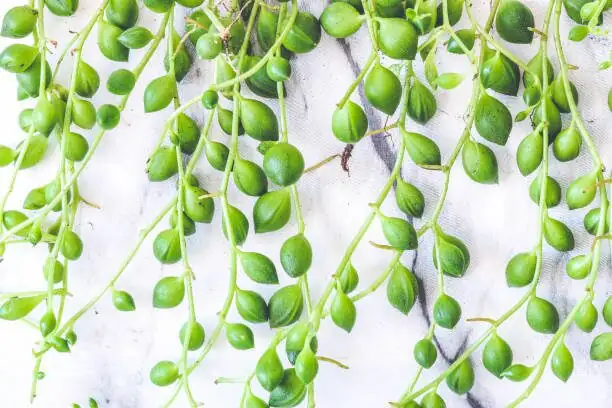
Native to the drier parts of southwestern Africa—especially South Africa’s Eastern Cape and southern Namibia—Curio rowleyanus (aka String of Pearls, Bead Plant, String of Beads/Peas, Rosary Vine) trails in long green necklaces. Each “pearl” is a pea-sized, spherical leaf that stores water and even has a faint translucent stripe, an epidermal window, to ferry light deeper inside. In a pot, the crown stays low (around 2 in/5 cm tall), while the stems cascade 2–3 ft (60–90 cm), rooting as they go if given the chance.
When happy, it throws small, creamy-white to white flowerheads that can read brush-like or daisy-ish depending on how closely you look. Lean in and the fragrance is surprisingly warm and sweet—think cinnamon with a hint of vanilla.
Why botanists moved Senecio rowleyanus into Curio
For ages, a huge, catch-all genus called Senecio held an unruly crowd—from ragworts to odd succulents. As botany embraced closer morphological and anatomical study (and, more broadly, modern taxonomic approaches), it became clear that the African succulent members didn’t really belong mushed together under Senecio sensu lato.
Enter Curio (formally described in the 1990s): a genus carved out to house mostly low-growing to medium-sized leaf succulents in the daisy family that share:
- Succulent, often spherical to elongated leaves (water-storage pros).
- Modest, often rayless flowerheads (no big showy “petals”).
- A growth habit well-suited to dry, bright conditions.
Curio rowleyanus fit this bill perfectly. Its move recognized natural relationships more accurately—an act of botanical housekeeping that helps researchers compare apples with apples (or in this case, pearls with pearls). In horticulture, the new name is now widely accepted, though you’ll still see “Senecio rowleyanus” in shops and old books.
Tip for your tag: write “Curio rowleyanus (syn. Senecio rowleyanus).” Your plant won’t mind either way, but this keeps your label current and searchable.
But… does the new name change how I care for it?
Not at all. Names reflect relationships; they don’t rewrite biology. Your String of Pearls still wants fast-draining soil, bright light with a little gentle sun, and infrequent, thorough drinks. Think of the rename as better library filing, not a lifestyle overhaul.
Daisy family detective work: composite flowers explained
String of Pearls belongs to Asteraceae, the daisy family—famous for composite blooms. Those “flowers” are actually tight heads (capitula) built from dozens of tiny florets.
- The head: a button of many micro-flowers packed together.
- Two common floret types:
- Ray florets: strap-like “petals” that give daisies their daisy look.
- Disk florets: tubular florets in the center, often forming a brushy tuft.
Curio rowleyanus generally lacks showy ray florets. Its heads are made mostly of small tubular disk florets that open into a little pompon. That’s why descriptions swing between “tubular” and “daisy-like”: it is a daisy family bloom, but it doesn’t perform with big rays. What you will notice:
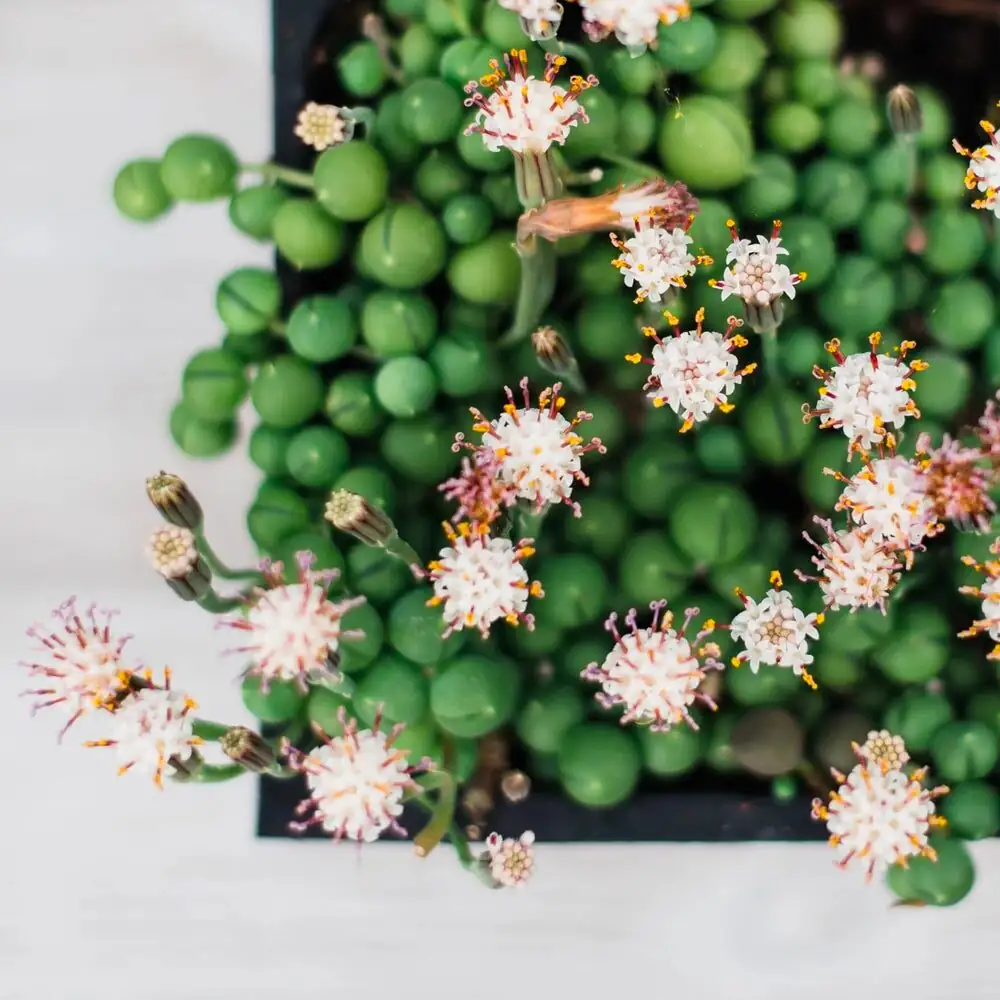
- Size: about 2–2.5 cm (around 1 in) across when open.
- Look: creamy-white to white, with conspicuous stamens creating that brushy effect.
- Scent: sweet, spicy—often likened to cinnamon/vanilla.
- Season: late fall to early spring (often winter indoors), sometimes nudging into spring depending on light and temperature.
Botanical bonus: many Curio species share this understated, mostly rayless style—another clue that helped taxonomists re-home string-of-pearls from Senecio to Curio.
Care that actually works (rename-proof!)
Treat it like the trailing succulent it is. The one big rule: don’t overwater.
Light
- Bright, indirect light with some gentle direct sun (morning or late afternoon) is ideal.
- South windows can work with filtering or by stepping the plant back.
- Too little light = stretched, sparse pearls with big gaps.
Water
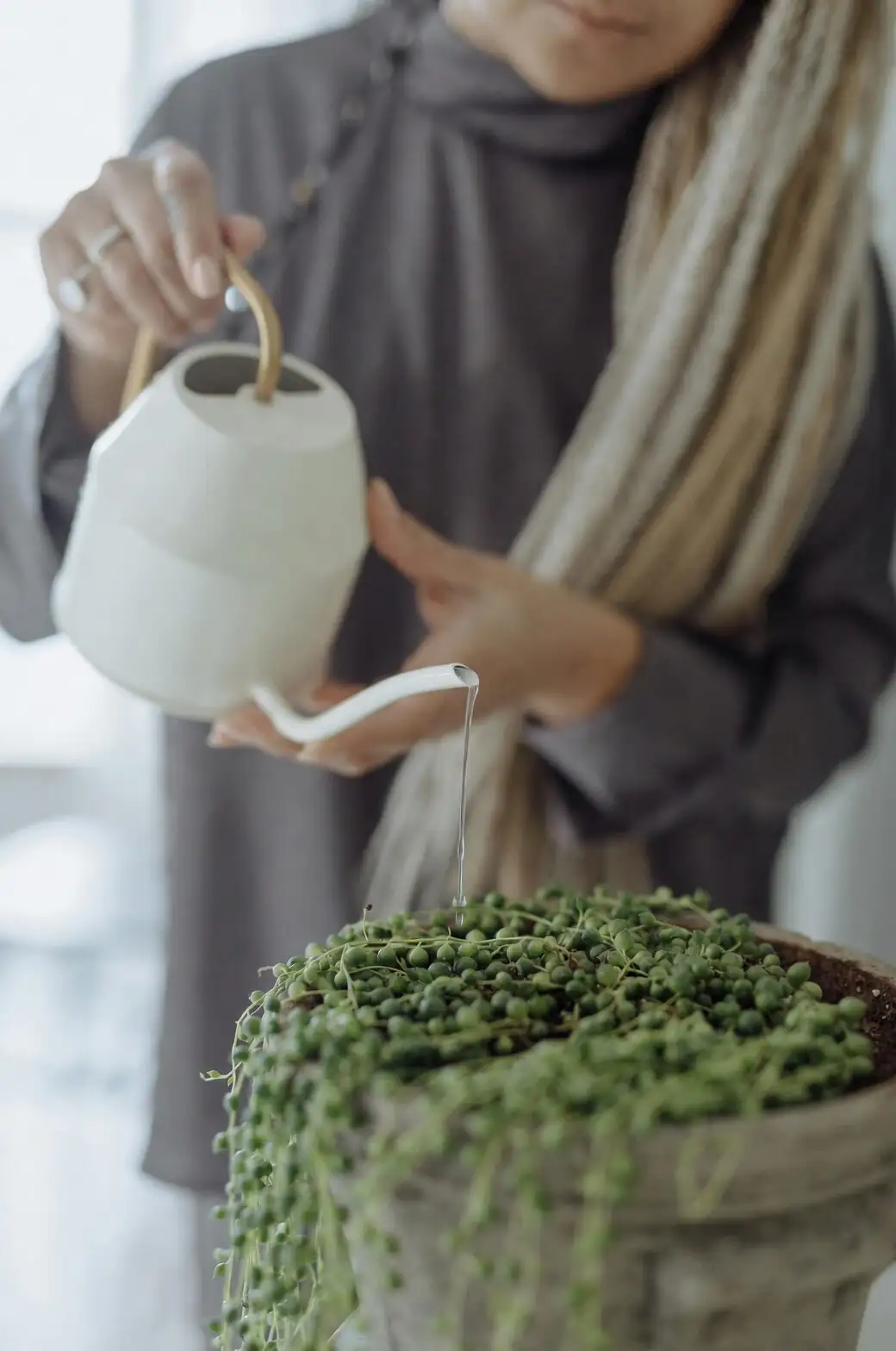
- Soak thoroughly, then let the mix dry well before watering again.
- In active growth (spring–summer), this is often every 2–3 weeks indoors—but go by dryness, not the calendar.
- In fall–winter, water sparingly—just enough to prevent severe shriveling. Slightly deflated pearls are your cue.
Soil and pot
- Very fast drainage is non-negotiable. Use a cactus/succulent mix cut generously with mineral grit (e.g., 1:1 potting mix to perlite/pumice/coarse sand; some growers do ~3:1 mix to coarse sand).
- Shallow pots suit its shallow roots. Always use drainage holes.
Temperature and humidity
- Happy at 15–27°C (60–80°F). It tolerates down to ~10°C (50°F) but is not frost-hardy.
- Above ~30°C (86°F), give light shade and airflow.
- Prefers low to average humidity. Skip misting; stagnant humidity invites fungus.
Feeding
- Light feeder: balanced liquid fertilizer at 1/2 strength about monthly (every 4–6 weeks) spring through early autumn. Little to none in winter.
Pruning and shaping
- Trim long, bare, or leggy trails—especially in spring—to encourage branching.
- Replant cuttings back into the top to fill out the crown.
Propagation (delightfully easy)
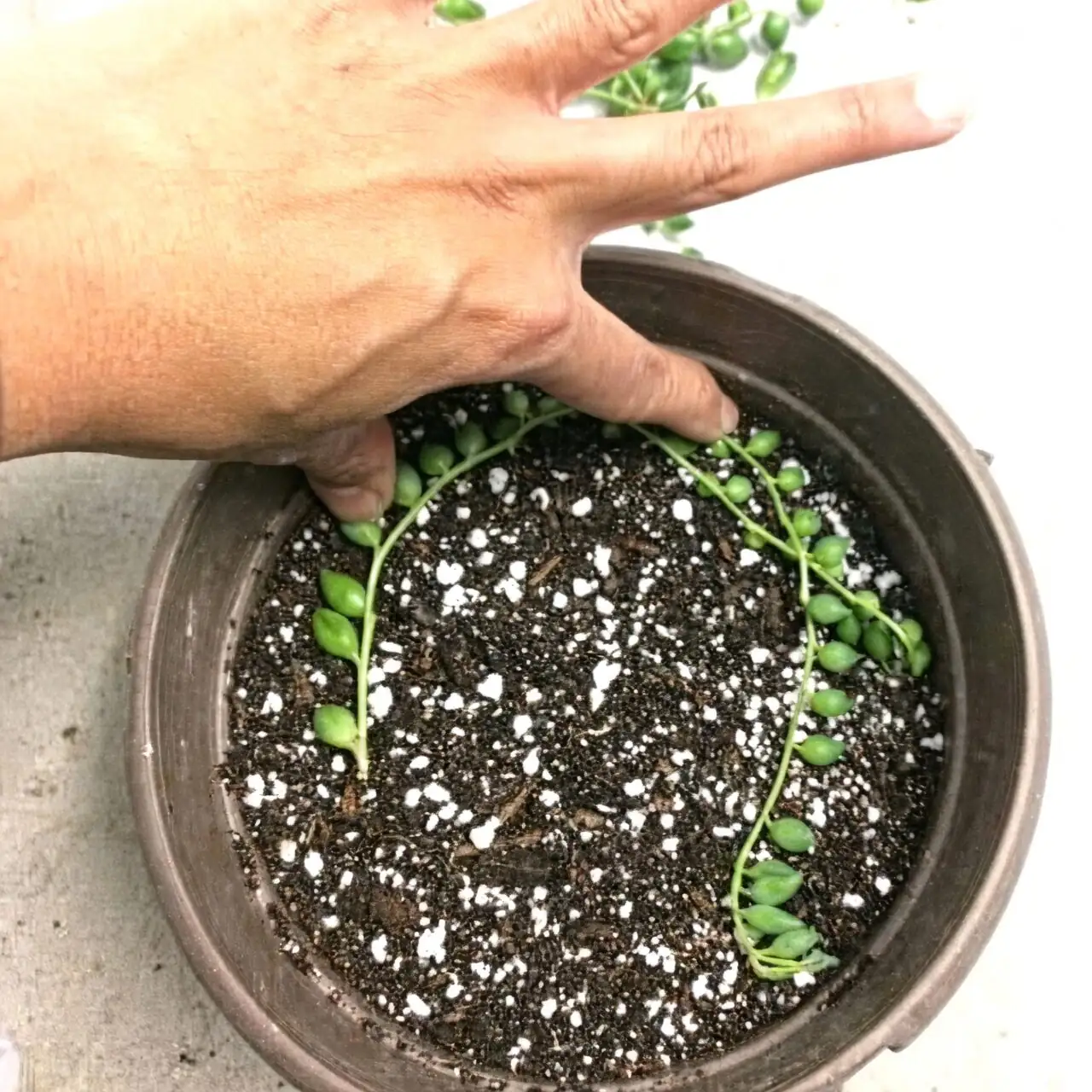
- Take 3–4 in (8–10 cm) cuttings, remove a few pearls near the cut, let callus for a couple of days.
- Lay the bare nodes on gritty mix (tuck slightly or leave on the surface).
- Keep bright and barely moist until rooted (often 2–3 weeks).
- Or pin a living strand onto the soil to root in place.
Repotting and placement
- Repot every 2–3 years or when crowded, ideally in spring.
- Aim for a modest pot (4–6 in / 10–15 cm for a small plant).
- Perfect for hanging baskets, high shelves, or bright sills. Avoid cold drafts and blasting HVAC.
Flowering nudge
- A bright winter with cooler nights around 10–16°C (50–60°F) and lean watering can encourage those cinnamon-scented blooms.
Hardiness
- USDA Zones 9–11 (sometimes listed as 9–12). It’s frost-tender—bring it in before cold bites.
Troubleshooting like a pro
- Pearls shriveling? Most often thirst. Water thoroughly, drain well; pearls usually plump in a day or two. If soil is wet but it still shrivels, check for root rot.
- Stems mushy, pearls dropping? Classic overwatering and/or dense mix. Move to brighter light, let dry, then repot into gritty mix. Save healthy strands as cuttings.
- Sparse, stringy look? More light, a spring haircut, and replanting cuttings into the crown will rebuild density.
- Pests: Mealybugs, aphids, spider mites can show up indoors. Improve airflow, isolate, and treat with insecticidal soap or neem/horticultural oil. Keep the plant on the dry side between treatments.
Safety note
Toxic if ingested and sap can irritate sensitive skin. Keep out of reach of children, cats, and dogs; wash hands if you’re prone to irritation.
Labels, shop names, and the great Curio/Senecio shuffle
- Best-practice label: Curio rowleyanus (syn. Senecio rowleyanus).
- Common names you’ll see: String of Pearls, Bead/Pearl Plant, String of Beads/Peas, Rosary Vine. Note: “Rosary vine” is also used for a totally different species (Ceropegia woodii), which explains some shop-floor mix-ups.
- You’ll still find old tags reading Senecio. That’s normal in horticulture—inventory and print cycles lag behind taxonomic updates. The care is identical.
Botany footnote for plant nerds: as classification settled, even hybrids received housekeeping. You might encounter names like Curio × peregrinus for the “string of dolphins,” and, in more specialized literature, hybrids involving Curio rowleyanus placed in newly coined nothogenera. It’s a reminder that names evolve, but the plants on our shelves remain delightfully themselves.
Culture and symbolism (a reality-check on “flower language”)
String of Pearls is often linked with enduring bonds and continuous good fortune—those cascading “strings” symbolizing connections that keep growing. Modern “flower language” here isn’t rooted in strict historical floriography; it’s a contemporary, feel-good association born from the plant’s form and the way it multiplies with simple cuttings. If you gift one, the symbolism writes itself: may the ties between us stay green and thriving.
Fast facts to drop into conversation
- Each bead’s tiny translucent window helps funnel light into water-storing tissues—brilliant desert engineering.
- The spherical leaf shape minimizes surface area, helping slow water loss.
- When the composite flowerheads open, the conspicuous stamens create that brushy tuft—and the room fills with a cinnamon-vanilla vibe.
A seasonal game plan
- Spring: Resume growth; repot if needed; prune to shape; start gentle feeding; easiest time to propagate.
- Summer: Bright light with protection from harsh midday sun; water only after the mix dries; heat above ~30°C (86°F) calls for light shade and airflow.
- Fall: Gradually reduce watering; taper fertilizer.
- Winter: Keep bright and on the dry side; cooler nights (50–60°F / 10–16°C) can encourage flowering; protect from frost and drafts.
Curio rowleyanus wears a new scientific name, but it’s the same charismatic trailing succulent you fell for—beads, perfume, and all. Update your tag, keep the watering light and the light bright, and enjoy that living necklace as it spills ever longer from its perch.