

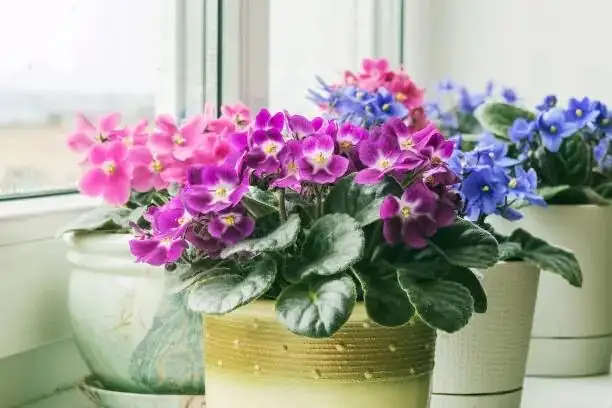
If you’ve ever sown dust-fine seed and watched a carpet of perfect, sturdy seedlings rise like a tiny forest, you know the thrill. Exacum affine—better known as Persian violet, Arabian violet, German violet, or Mexican violet—rewards precision at the seedling stage with a dome of glossy leaves and months of violet-to-lavender, yellow-centered blooms. This is your propagation masterclass: timing, feather-light seed handling, light that coaxes germination, bottom-watering that dodges damping-off, and the cool temperatures that grow compact, bloom-ready plants.
Meet Persian violet (Exacum affine) in brief
- Origin: Native to Socotra Island (Yemen); now a beloved cool-season pot plant worldwide.
- Habit: Compact, rounded cushion, typically 6–12 inches tall and wide.
- Look and scent: Masses of five-petaled violet-to-lavender flowers with bright yellow anthers; often lightly fragrant.
- Best conditions: Bright indirect light, cool air (59–70°F / 15–21°C), evenly moist, well-drained potting mix, moderate to high humidity.
- Bloom window: Late winter through spring—longer if kept cool and bright.
- Indoors: A natural on bright sills (especially east- or north-facing). Outdoors only in mild, frost-free conditions in bright shade.
The propagation sweet spot: when to sow
For peak late-winter to spring color, start early and stay cool.
- For indoor blooms: Sow in late autumn to mid-winter. Plan 12–16+ weeks from sowing to first flowers under bright, cool conditions.
- For mild outdoor climates: Sow late winter; grow on cool and move out only once nights are mild and frost-free, in bright shade.
Tip: Commercial growers often start new seed crops in autumn–winter for the next cool-season display. You can, too.
Substrate, trays, and sanitation
Start clean and airy to outpace disease and give fine roots what they love.
- Mix: A fine-textured, sterile, well-draining seed-starting blend (e.g., peat/coir with perlite). Aim for “light yet moisture-retentive”—evenly moist, never soggy.
- Containers: Shallow seed trays or plug cells with ample drainage. Black trays capture warmth; use only if you can hold temps in the cool range.
- Sanitize: Wash trays and domes; a 10% bleach or 3% hydrogen peroxide rinse helps nip damping-off spores in the bud.
- Pre-moisten: Thoroughly moisten the medium so it’s evenly damp—not glistening wet—before sowing.
Handling dust-fine seed like a pro
Exacum seed is tiny; precision prevents clumps and rot.

- Surface-sow: Do not bury. These fine seeds generally germinate best with light exposure.
- Even distribution hacks:
- Mix seed with a pinch of dry, fine sand and tap it across the surface.
- Use a folded index card as a “seed slide.”
- A barely damp toothpick can pick up and place single seeds.
- Press, don’t cover: Firm seeds lightly into contact with the medium using a clean card or sieve a whisper-thin layer of vermiculite if air is very dry.
- Dome and vent: Cover with a clear humidity dome or place inside a vented bag to maintain humidity while still allowing a bit of air exchange.
Light, temperature, and humidity for germination
Think bright, gentle, and cool.
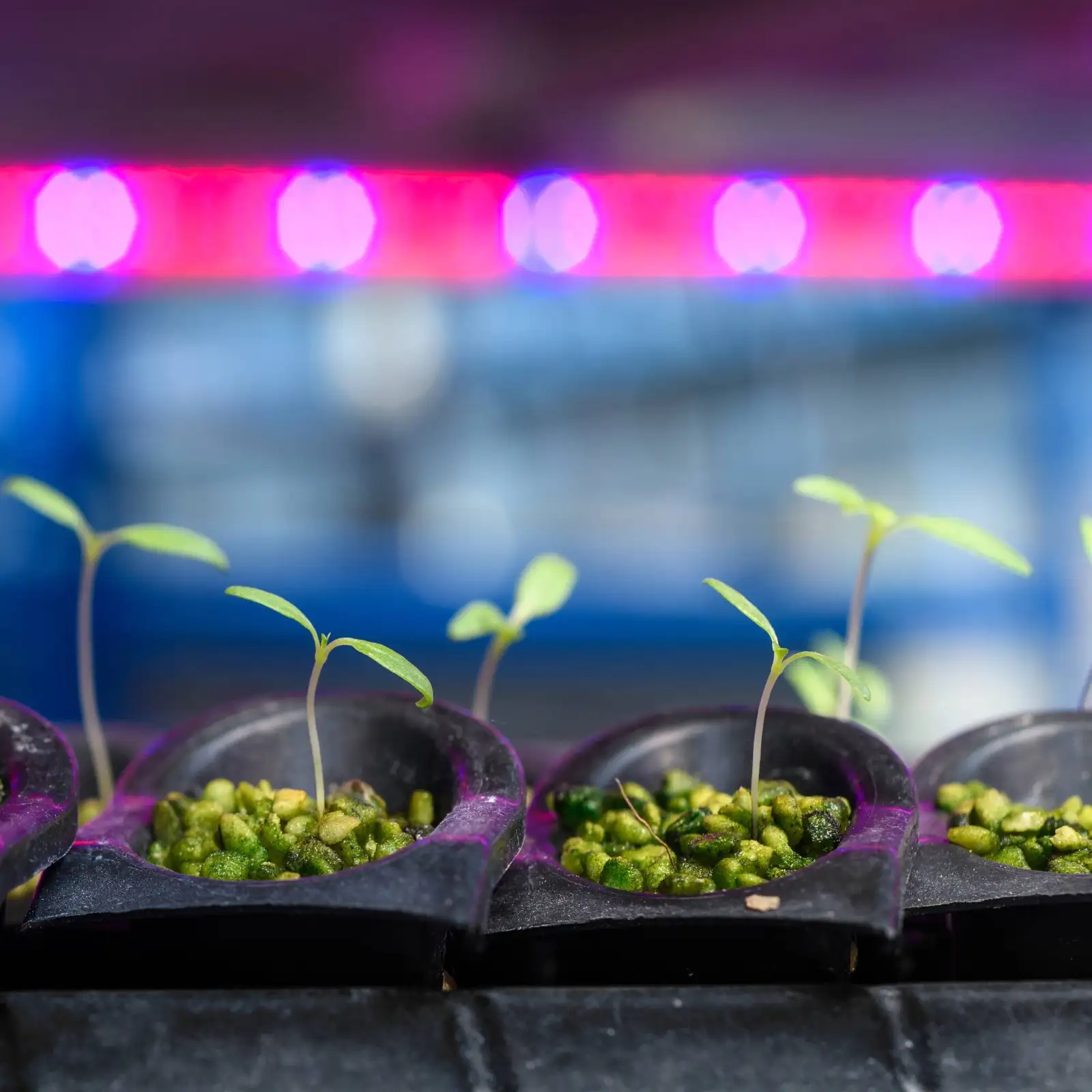
- Light: Bright indirect light or a grow light set high enough for soft, even illumination (12–14 hours/day). Avoid harsh, direct midday sun.
- Temperature: Aim for 59–70°F (15–21°C). Keeping seed trays in this cool band encourages compact growth and discourages fungi.
- Humidity: High humidity until germination, then gradually reduce. Lift or vent the dome daily to refresh air.
- Germination time: Typically 10–21 days when kept evenly moist and bright.
Bottom-watering to beat damping-off
Damping-off thrives on saturated surfaces and stagnant air. Your move: water from below.
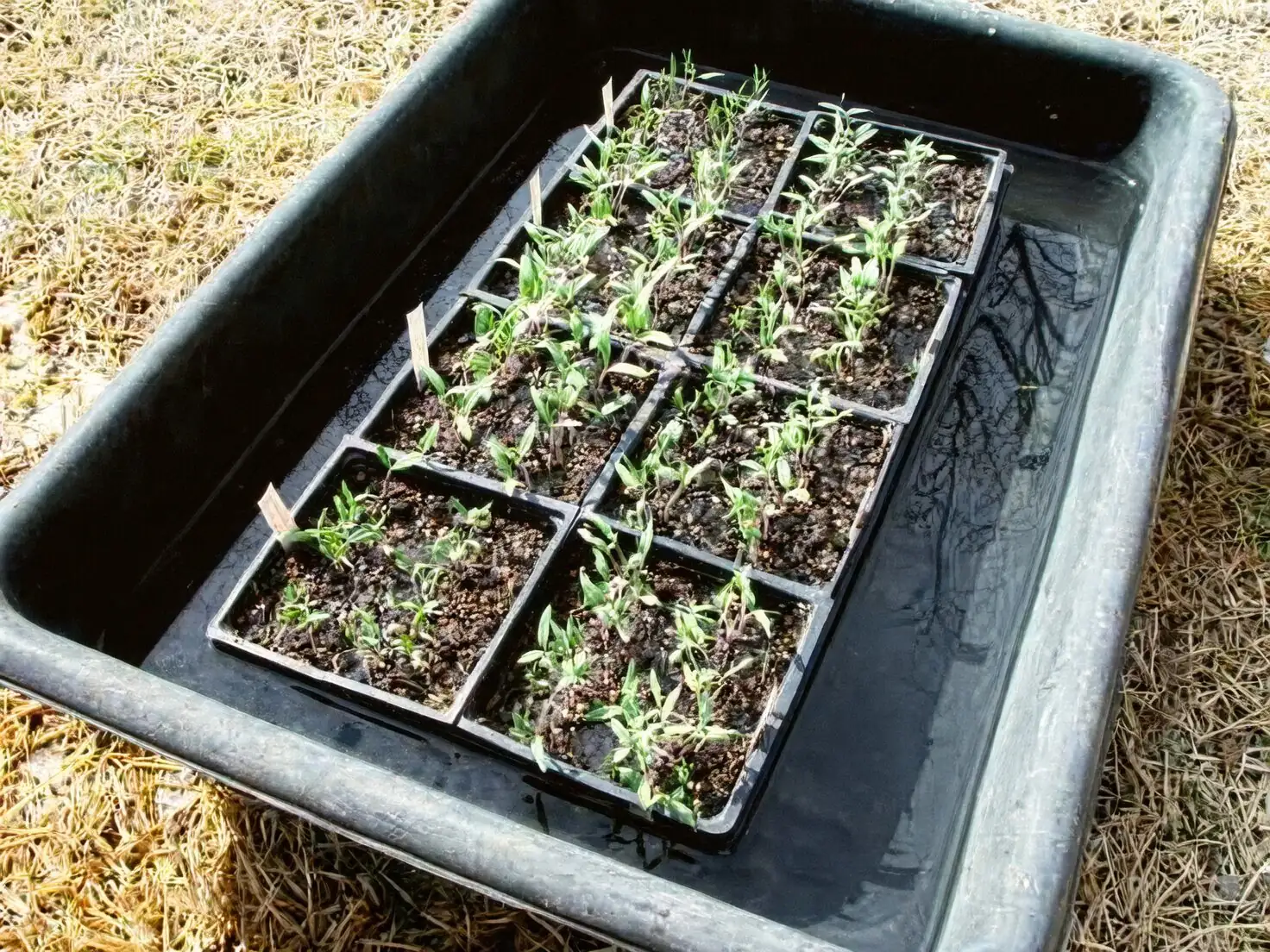
- Pre-fill: After sowing, place the tray in a watertight tray with 0.5–0.75 inch (1–2 cm) of room-temperature water.
- Wick up: Let the medium wick moisture for 10–20 minutes; remove when the surface darkens evenly.
- Drain: Always let excess drip off. Never leave trays standing in water.
- Maintain: Replenish from below whenever the top turns lighter in color but before it dries out. Aim for “evenly moist.”
- Airflow: A gentle fan on low, not aimed directly at seedlings, keeps air moving and fungal pressure low.
Extra insurance:
- Sow thinly—crowding traps humidity around stems.
- Sterile mix + cool temps + bottom-watering = your best anti-damping-off alliance.
After germination: thinning, pricking out, and first pot-up
- The first haircut: Once seedlings have 2–3 true leaves, snip out extras with fine scissors to reduce crowding.
- Prick out: Transplant carefully into cell packs or small pots, handling by leaves. Set each seedling just a touch deeper for stability.
- Spacing: Give each plant room for air and light; it builds sturdier stems.
- Light: Keep bright but indirect; extend daylength to 12–14 hours under lights for squat, branchy growth.
- Temperature: Maintain cool conditions (ideally 60–65°F / 16–18°C days, slightly cooler nights).
- First feed: Begin with a quarter-strength, balanced liquid fertilizer once seedlings are established. Gradually work to a light, regular program.
Growing on to bloom: the cool, even-moisture formula
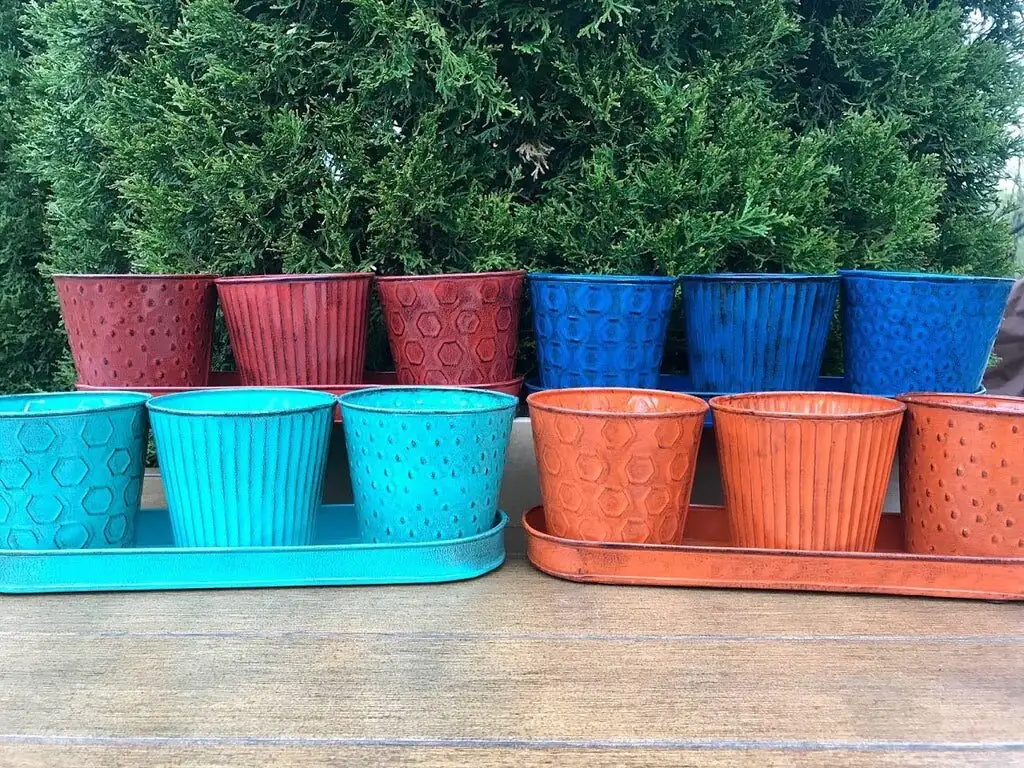
- Potting up: Move into a light, fertile, well-draining potting mix that holds even moisture.
- Pot size: 4–5 inch (10–12 cm) pots are ideal for a single plant. For a fuller look, set 2–3 seedlings as a trio in one pot.
- Light: Bright indirect or gentle morning sun. Shield from strong midday rays that stress foliage and shorten blooms.
- Watering: Keep evenly moist. Never waterlogged, never bone-dry—letting the root ball dry can cause rapid flower drop.
- Feeding: While budding and blooming, feed every 2–3 weeks with a diluted, balanced liquid fertilizer.
- Pinching and tidiness: A light pinch at 4–6 true leaves encourages a denser mound. Deadhead spent blooms to extend the show.
- Temperature: Stay in the cool sweet spot (59–70°F / 15–21°C). Prolonged heat shortens the flowering period and the plant’s overall lifespan.
Common pitfalls (and quick fixes)
- Heat stretch and fade: If plants elongate and bloom fizzles, they’re too warm or light is insufficient. Increase light, lower temps.
- Damping-off: Switch to strict bottom-watering, thin seedlings, boost airflow, and hold temps cool.
- Root rot: Ensure sharp drainage; never park pots in saucers of water.
- Flower drop: Avoid letting the mix dry out; maintain bright light and cool air.
- Pests indoors: Watch for aphids, spider mites, and fungus gnats. Bottom-watering and a clean surface layer reduce gnats; use sticky traps and, if needed, insecticidal soap.
Can you take cuttings?
Exacum affine is most commonly grown from seed. Vegetative propagation is uncommon (and often unreliable) for home growers. Seed is truly your best, most predictable route to compact, floriferous plants.
Outdoors or indoors?
- Indoors: Perfect near an east- or north-facing window—cool, bright, and out of harsh sun.
- Outdoors: Only where conditions are frost-free and mild. Place in bright shade or very gentle light; bring plants in if heat spikes.
A note on symbolism
Often linked with calmness, delicacy, and refined beauty, Persian violet became a cherished cool-season gift plant in the 19th century for precisely those soothing qualities. Despite the “Persian” moniker, it hails from Socotra, and its flower-language aura likely blends Victorian floriography (where violets suggested modesty and quiet grace) with its modern role as a compact, fragrant burst of spring indoors.
Your step-by-step recipe (summary)
- Week 0: Clean trays; fill with fine seed mix; pre-moisten. Surface-sow Exacum seeds; press lightly. Dome.
- Weeks 1–3: Bright, indirect light; 59–70°F (15–21°C). Bottom-water only; vent daily. Germination in 10–21 days.
- Weeks 3–5: Thin; prick out to cells or small pots. Keep cool, bright, and evenly moist. Start quarter-strength feeding.
- Weeks 6–10: Pot up to 4–5 inch (10–12 cm) pots (solo or trios). Light pinch for bushiness; continue cool temps and bottom-watering.
- Weeks 10–16+: Buds set and open. Feed every 2–3 weeks; deadhead. Keep cool and bright for a long, fragrant display.
Handled with a calm, cool hand—literal cool air, steady light, and bottom-watering—Persian violet pays you back with a cushion of green and a sky of violet stars right when you crave it most.