

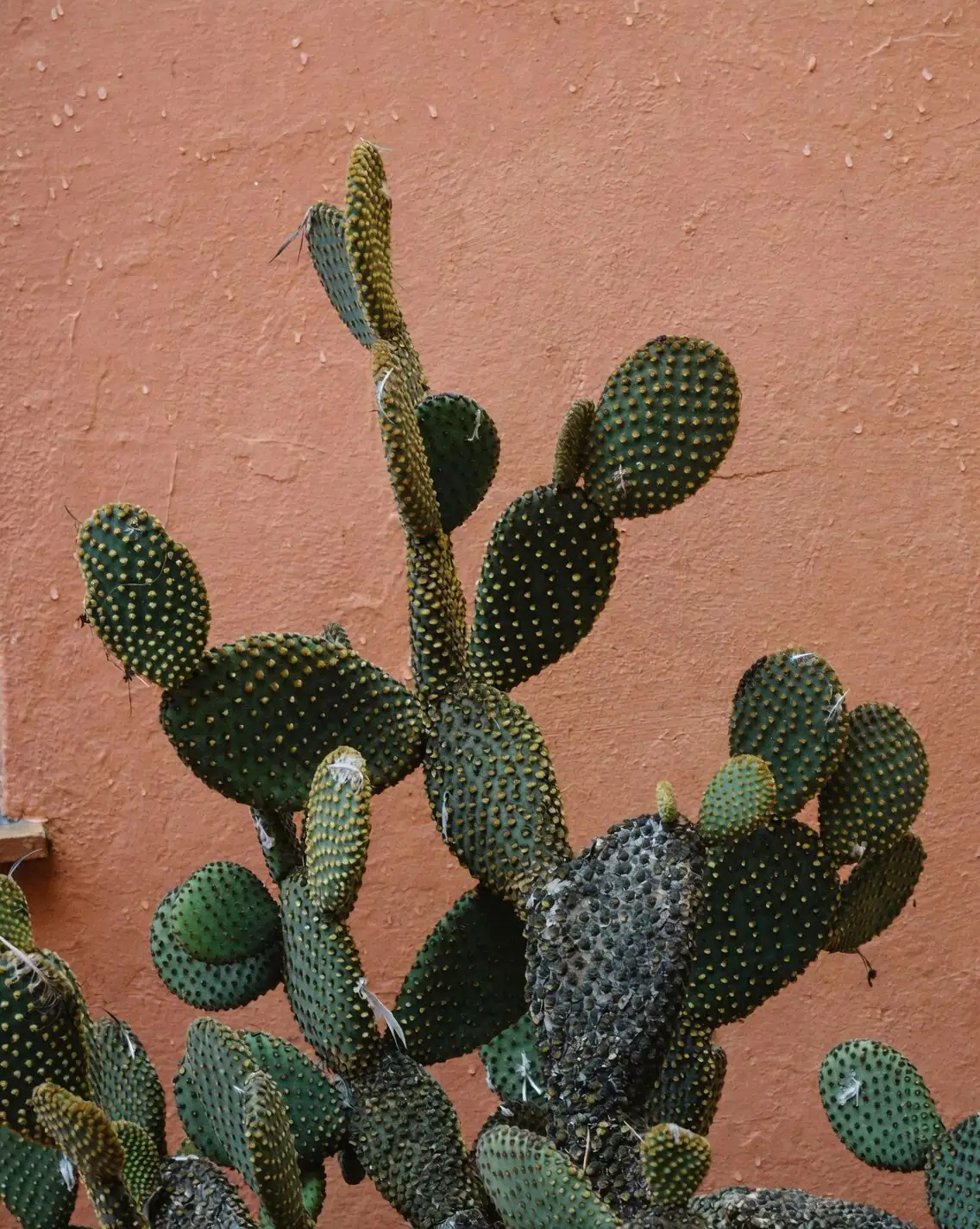
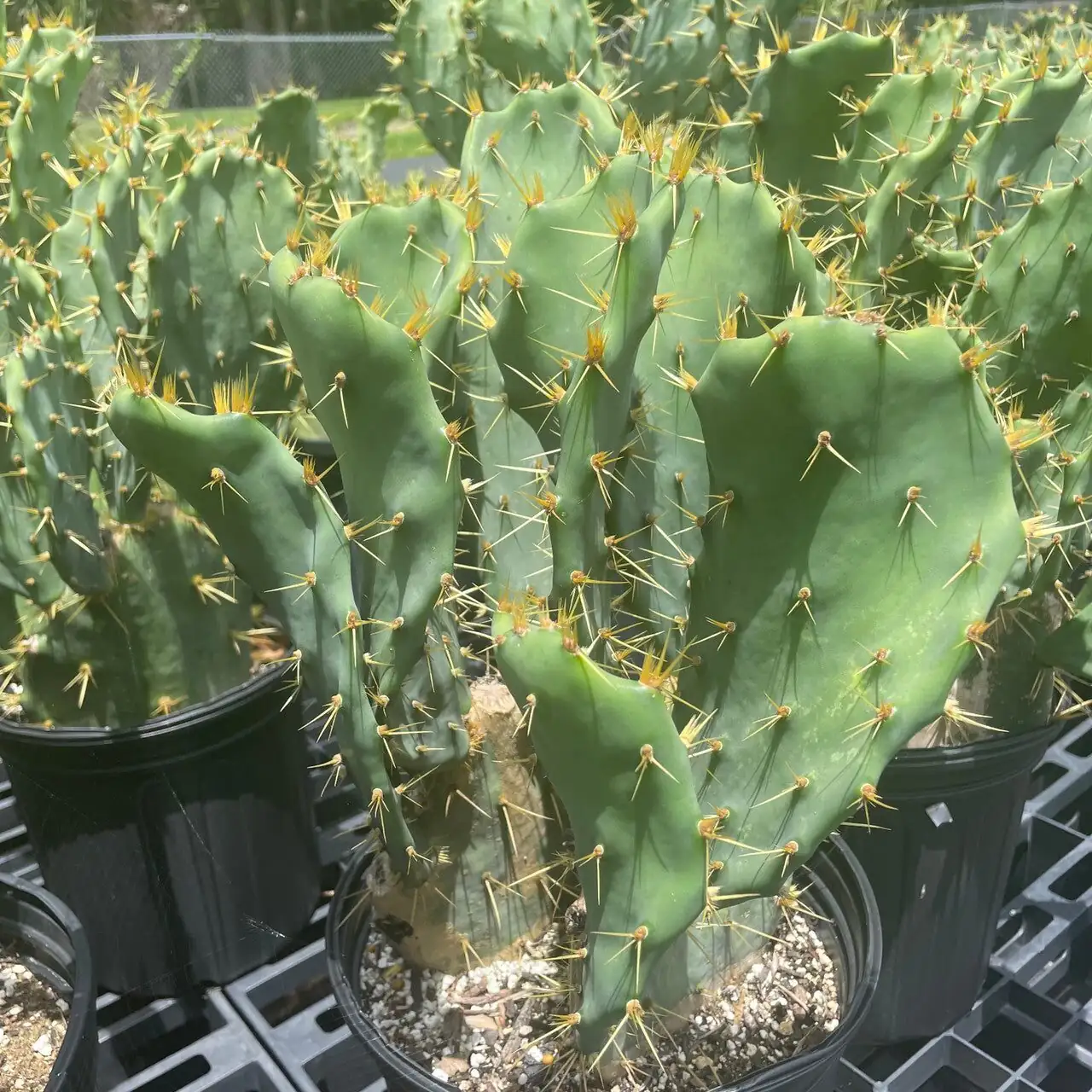
Opuntia dillenii brings instant architecture to a room—broad, paddle-like cladodes catching light like sails, casting poetic shadows on walls, and delivering desert calm with minimal fuss. Make it the hero of your interior by treating it as both sculpture and living color: the right pot silhouette, the right scale for your sight lines, and light that glances across those pads will do most of the work. Here’s how to style it beautifully (and safely) with warm woods, limewashed walls, or concrete backdrops.
Meet Opuntia dillenii: the sculptural “paddle cactus”
- Family: Cactaceae; Genus: Opuntia; Native to the Americas with a strong presence in tropical and subtropical deserts.
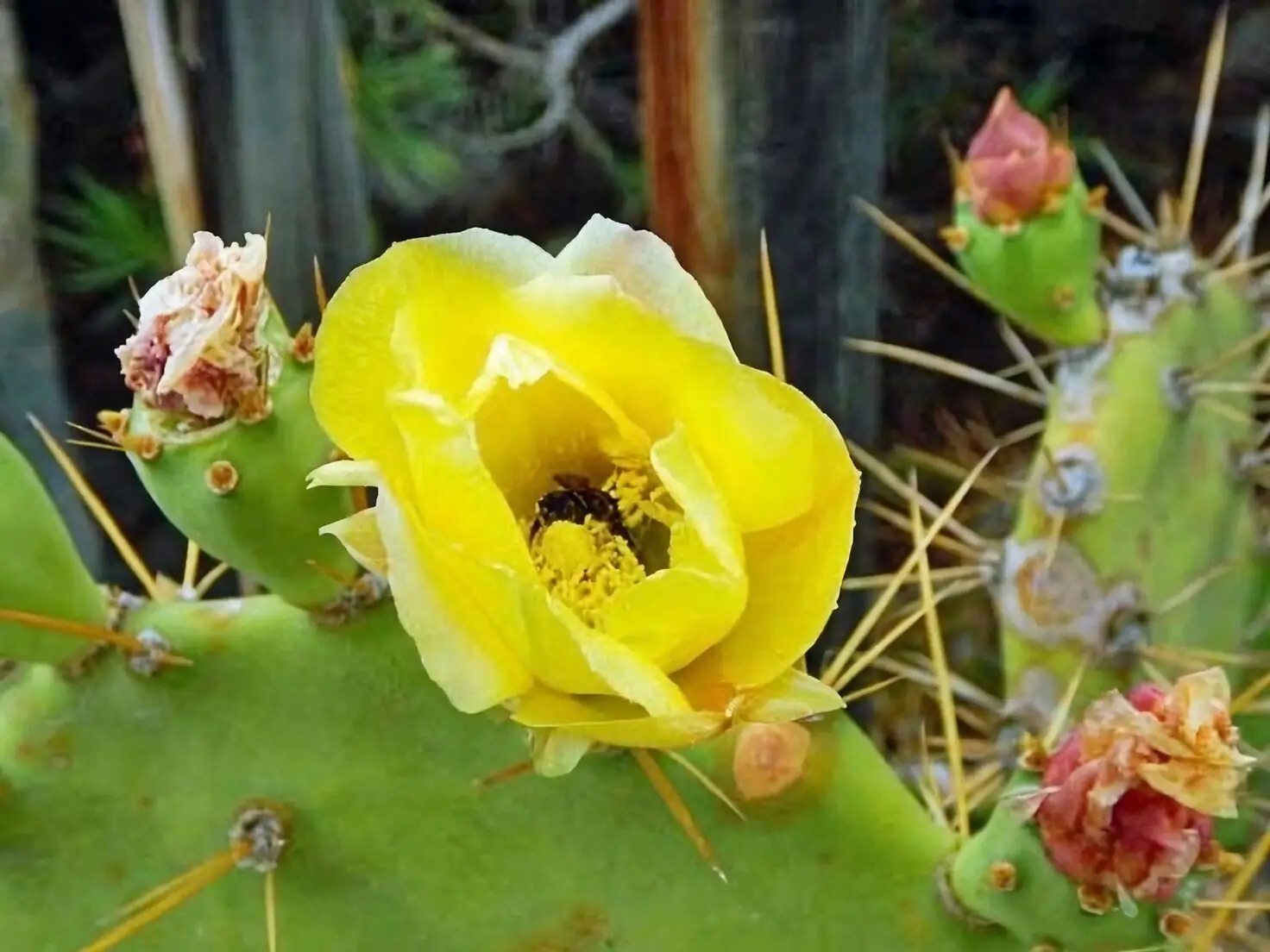
- Look: Thick, fleshy green pads (they’re stems, not leaves) with spines emerging from tidy areoles. In strong light and good conditions, spring–summer blooms can surprise you—large, silky, short-lived flowers (often yellow in this group) that feel like sudden jewelry.
- Habit: Slow-growing, upright to clumping, extremely drought-tolerant, and wonderfully low-maintenance.
Styling fundamentals: light, scale, and sight lines
Light angles that make it glow
- Give it real sun. Aim for 4–6+ hours of bright, direct light daily at a south or west window. East windows can work with fewer hours if unobstructed.
- Use raking light. Place the plant so morning or late-afternoon sun grazes the pads—this sculpts dramatic shadowplay across limewash or plaster.
- Rotate monthly. Turn the pot 90° every few weeks for symmetrical, non-stretched growth. In very hot summers, a touch of afternoon shade prevents sunburn while preserving form.
Choosing the right scale
- Statement piece: One medium plant (about 30–60 cm tall) in a substantial pot reads like gallery sculpture. Perfect for corners, next to a credenza, or on a low plinth.
- Minimalist cluster: A trio of Opuntia forms (one taller, one medium, one diminutive cutting) creates a balanced “visual triangle” without clutter.
- Proportion rules: Pot width roughly 1/2 to 2/3 the plant’s spread keeps it grounded; a heavier container prevents toppling as pads multiply.
Kid- and pet-safe placement
- Good news: Non-toxic to people and pets. Real risk: spines and tiny barbed glochids that can irritate skin.
- Safer placements:
- On a sturdy plant stand with a broad base, away from sofa arms and door swings.
- On a console or windowsill behind a couch back (a soft barrier discourages curious hands).
- In a sunny stair landing or mezzanine shelf with at least 20–30 cm setback from the edge.
- Handling tip: Use thick gloves and a folded strip of cardboard or newspaper to steady pads when moving.
Pot shapes and materials that flatter the paddles
Low, wide bowls for stability
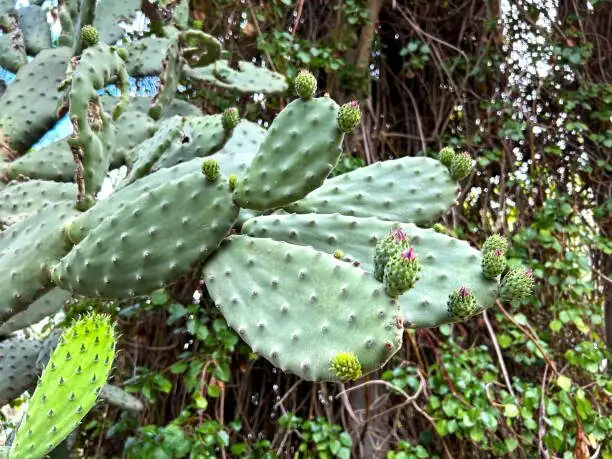
- Why it works: Opuntias root shallowly and can be top-heavy. A low, wide form lowers the center of gravity and echoes the plant’s horizontal pad rhythm.
- Best materials: Unglazed terracotta for warm, breathable earthiness; limewashed clay for soft, chalky texture.
Tall cylinders and plinths for drama
- A tall, straight-sided pot on a short plinth feels museum-worthy—excellent against concrete or limewashed walls. Keep the pot heavy and not overly tall to avoid tipping.
Materials palette to match your space
- Terracotta: Warms up oak, walnut, and rattan; deepens desert tones.
- Matte porcelain or stoneware: Quiet luxury for minimalist rooms.
- Concrete or fiber-cement: Brings a Brutalist edge; pairs beautifully with microcement floors and crisp lines.
- Always: Use a pot with drainage holes. Top-dress with pale limestone chips, pumice, or desert gravel for a finished, gallery look.
The right soil (the invisible hero)
- Use a fast-draining cactus mix—airy and gritty, often amended with sand and/or perlite. Water should never linger around roots.
Palette pairings: warm woods, limewash, and concrete
Warm woods: sun-kissed and cozy
- Pair an O. dillenii in unglazed terracotta with an oak credenza or walnut sideboard. The clay echoes the wood’s warmth; the cactus adds sculptural contrast to grain.
- Styling idea: A single pottery bowl of pumice on one side, a low stack of art books on the other. Minimal, balanced, intentional.
Limewash walls: soft shadows, soft edges
- Limewash amplifies the cactus’s silhouette. Place O. dillenii 20–60 cm from the wall so late-day light paints pad-shaped shadows.
- Potting note: Limewashed or chalky ceramic pots echo the wall; top-dress with pale gravel for a tonal, serene vignette.
Concrete and microcement: desert modern
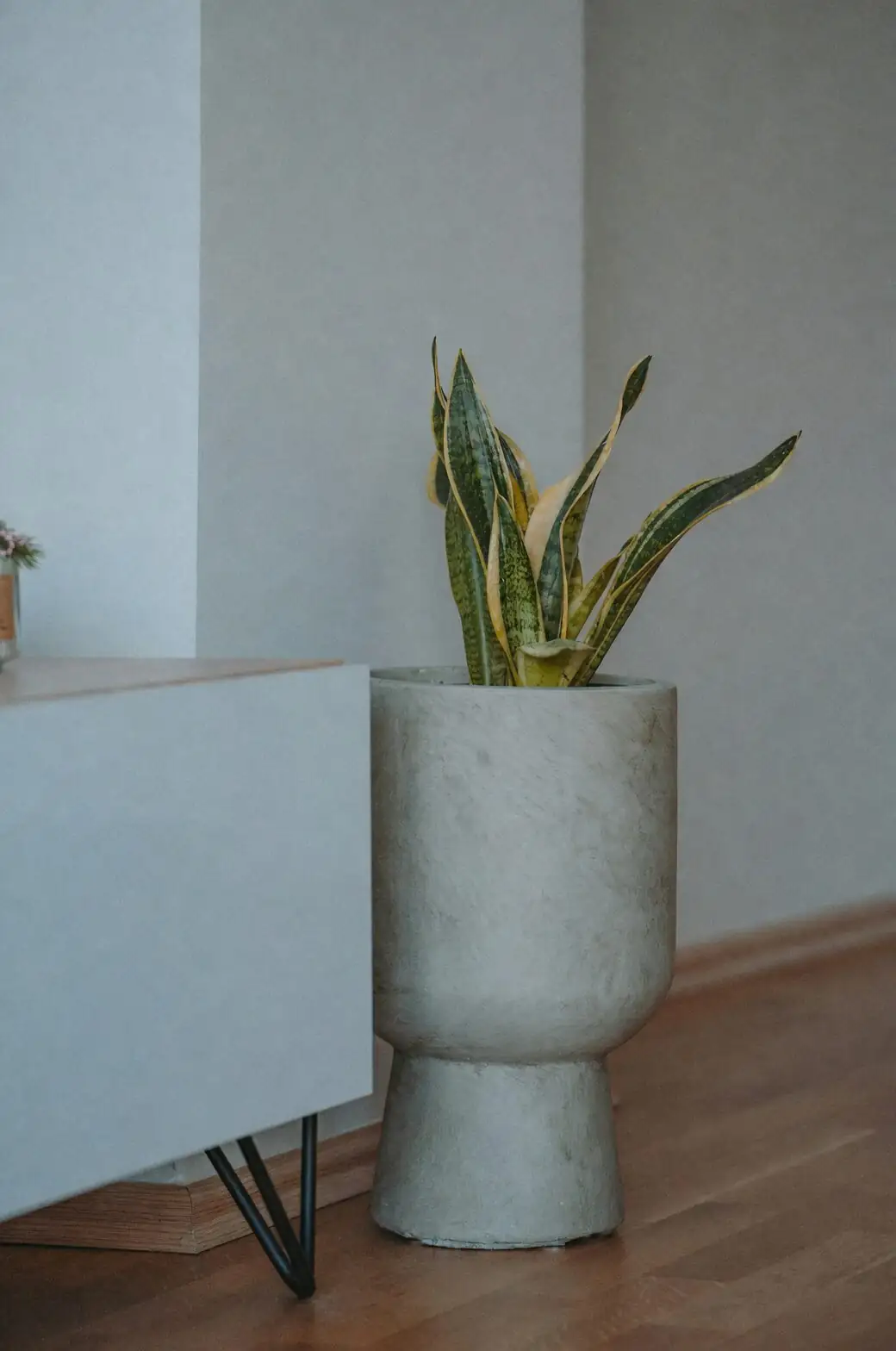
- Go matte and monolithic. A charcoal concrete planter or a pale grey fiber-cement cube makes the greens glow.
- Elevate on a low plinth or slab to emphasize negative space. Add felt pads under the pot to protect floors; use a discreet saucer that matches the pot tone.
Room-by-room styling ideas
Living room
- Corner sculpture: A medium O. dillenii in a low, wide terracotta bowl beside a lounge chair—kept a forearm’s distance from the armrest.
- Console vignette: Cluster two Opuntias of different sizes on a wood console under a west window. Add one slim brass lamp for night warmth.
Dining area
- Centerpiece on a pedestal side table rather than the dining table itself—safer for elbows and conversation flow.
Home office
- On a sunny windowsill, offset left or right of your monitor so the pads don’t crowd your sightline. The crisp form reads calming and orderly.
Balcony or bright sunroom
- Outdoors in warm seasons (Zones 9–11) or as a summer vacation spot: the plant bulks up beautifully in clear sun and airflow. Bring inside before temps drop near 5°C/41°F.
Care that keeps the look crisp
Quick care cheat sheet
- Sunlight: Bright, direct sun; at least 4–6 hours daily.
- Watering: Soak and dry. Thoroughly water, then wait until the mix is completely dry.
- Spring/Fall: every 2–4 weeks
- Summer: up to weekly if heat and airflow dry the mix fast
- Winter: every 4–6+ weeks (minimal—this is the rest period)
- Temperature: Best at 20–30°C (68–86°F). Tolerates hotter days with cooler nights; protect from cold; indoors, keep above 5°C (41°F).
- Humidity: Prefers dry air. High humidity + wet soil = rot risk.
- Feeding: Spring–summer, 1–2× per month with cactus fertilizer or diluted liquid feed (1/4–1/2 strength). Stop in fall–winter.
- Pruning: Rarely needed; remove only damaged or stretched pads. Let cuts callus before watering.
- Repotting: Every 3–5 years in spring/early summer; choose a pot just slightly wider, always with drainage.
- Bloom boost: Strong sun, a marked winter rest, and gentle day/night temperature swings improve the odds of spring–summer flowers.
Tidy, safe handling
- Dust pads with a soft brush for a matte, uniform look.
- Pests: Watch for mealybugs, scale, spider mites. Spot-treat with alcohol swabs or insecticidal soap; improve airflow.
- Handling: Thick gloves + folded cardboard grip. Keep away from high-traffic paths.
Styling recipes to copy
Warm wood minimalism
- Low, wide terracotta bowl + pale pumice top-dress
- Oak sideboard, single ceramic vase in off-white
- South window; rotate monthly
- One medium cactus only—let the grain and form converse
Limewash shadowplay
- Chalky clay pot + limestone chip top-dress
- Place 30 cm off a limewashed wall, west light for long afternoon shadows
- Add a thin black steel plinth for lift and graphic contrast
Concrete calm
- Matte fiber-cement cube planter
- Microcement floor or concrete side table
- Pair with a flax-linen throw or a single black-and-white print
- Keep negative space generous to highlight outlines
Propagation (and styling doubles)
- In late spring or early summer, take a healthy pad, let it callus 2–3 days, then set it upright in dry cactus mix. Start light watering after 10–14 days once roots begin. Instant matching “siblings” for a balanced duo display.
Meaning and mood: the quiet language of cacti
People often speak of “flower language” (花语) as if it were ancient canon. For cacti, it’s more a modern cultural shorthand than a classical code—but it resonates. Opuntias are widely read as symbols of resilience and protection (those spines), and a steady, understated kind of love that endures tough conditions. In interiors, that translates into calm strength: a single, steadfast form that anchors the room without noise.
—
Give O. dillenii sun, space, and a pot that respects its geometry, and it will reward you with year-round sculpture—sometimes even a flash of spring glamour. Keep the palette pared back, let light do the styling, and your paddle cactus becomes the room’s quiet star.