

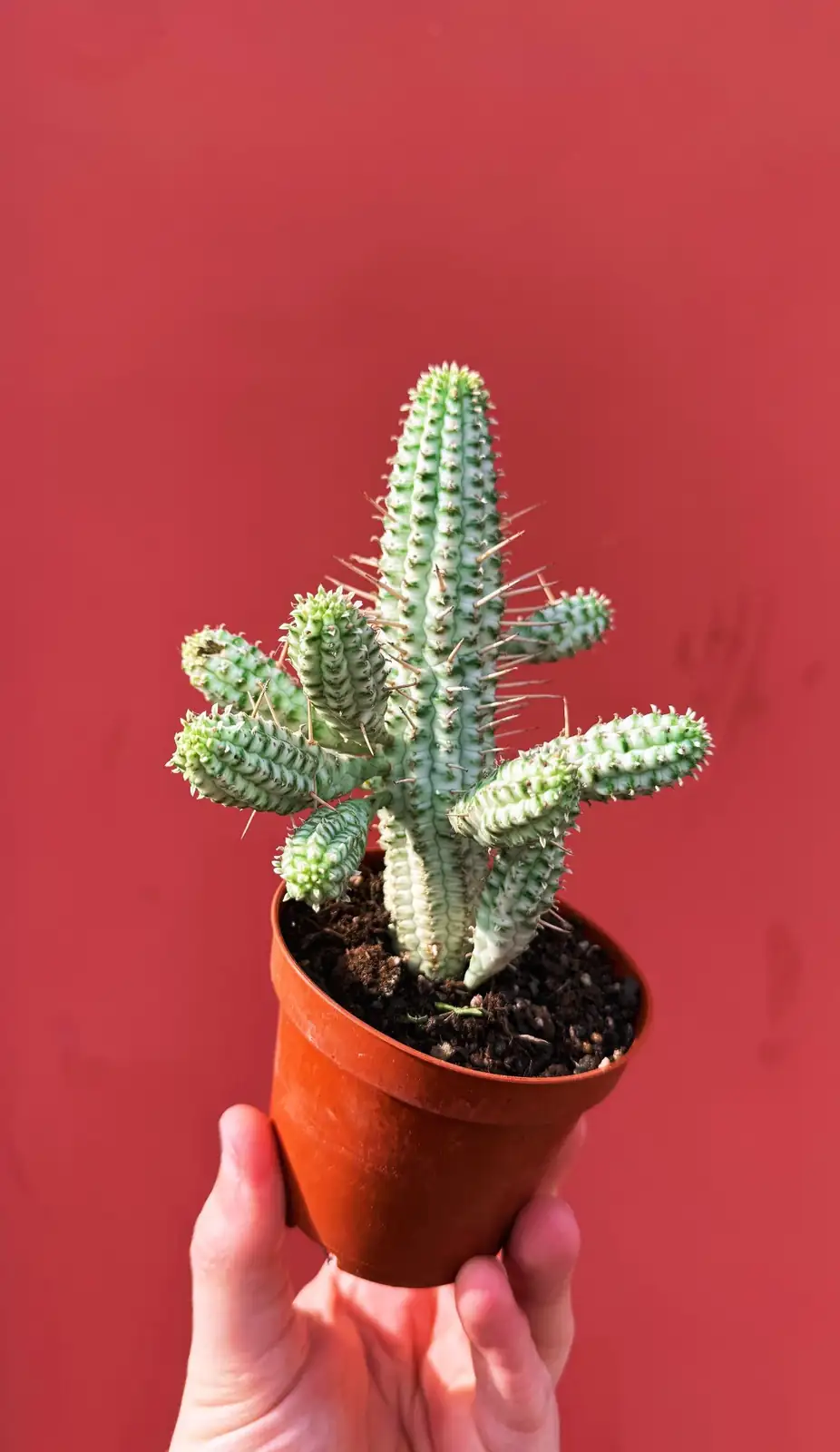
Think of Red Coral Spurge as a pocket-sized skyline: crisp ribs, rhythmic “spines” edged in red, and a tidy, upright stance that reads like sculpture. In small spaces, Euphorbia mammillaris turns a windowsill into a gallery—if you style the light, pot, and backdrop just right.
Meet Red Coral Spurge (Euphorbia mammillaris)
- Origin: South Africa (Cape Provinces)
- Habit: Upright, branching, cactus-like Euphorbia that forms compact clumps
- Scale: Typically to about 30 cm (12 in) tall; clumps spread 20–40 cm (8–16 in) with time
- Look: Gray‑green, ribbed stems lined with short red to reddish‑brown “spines”—bold, architectural, and almost leafless
- Flowers: Small, yellowish‑green cyathia; easy to miss and not the main show
- Light love: Bright light to full sun; thrives on a sunny sill
Not a cactus—this is a Euphorbia. The milk-sapped “spurge” lineage evolved similar looks through convergent evolution, which gives it that clean, geometric attitude designers adore.
Why it excels in small spaces
- Vertical lines read larger than their footprint, so you get presence without bulk.
- Clumping habit creates rhythm—repeat stems = instant pattern.
- Naturally tidy silhouette reduces visual noise; it looks intentional even on a narrow ledge.
Pot palettes that frame its architecture
Think of the pot as the picture frame—the right one amplifies the plant’s ribs and red spines.
1) Charcoal, graphite, and matte black
- Why: The gray‑green stems pop against deep neutrals; red spines glow like embers.
- Materials: Unglazed stoneware, concrete, basaltic finishes.
- Styling note: Add a thin top-dress of black lava or dark pumice to extend the pot’s shadow line.
2) Soft bone, ivory, and porcelain white
- Why: A gallery-white vibe heightens the sculptural form and shadow play.
- Materials: Porcelain, matte ceramic with subtle texture.
- Top-dress: Pale granite grit or white pumice for a seamless, airy look.
3) Warm terracotta and rust
- Why: Complements the reddish spines and adds earthy warmth to modern rooms.
- Materials: Classic terracotta (unglazed wicks moisture—great if you tend to water generously).
- Top-dress: Crushed terracotta chips or tan granite to echo the pot and unify the vignette.
4) Aged metal as cachepots
- Why: Oxidized brass or copper pulls out the plant’s subtle browns.
- Tip: Use metal as a cachepot only—always keep the Euphorbia in a nursery pot with drainage inside.
Proportion cheat: Aim for a pot height about 1/2–2/3 the plant’s height, and leave negative space around the clump so each rib casts its own shadow.
Light as your design tool
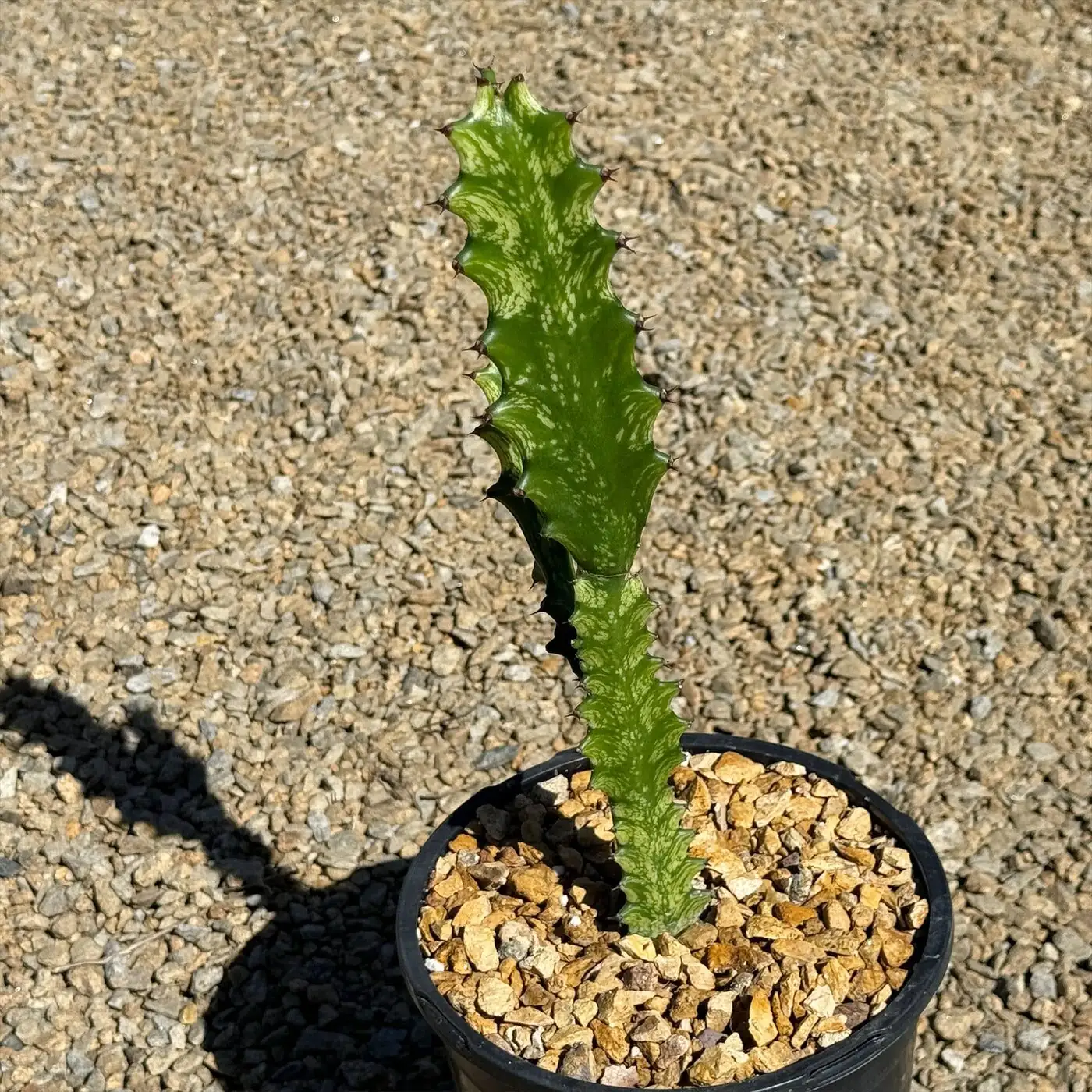
The silhouette changes dramatically with light angle. Use this to your advantage.
Side-light for drama
- Placement: South or west window with 4–6+ hours of direct sun.
- Effect: Ribs throw crisp shadows; spines gain relief and color.
- Tip: Rotate a quarter‑turn every 1–2 weeks for even growth without losing the sculptural highlight.
Backlight for glow
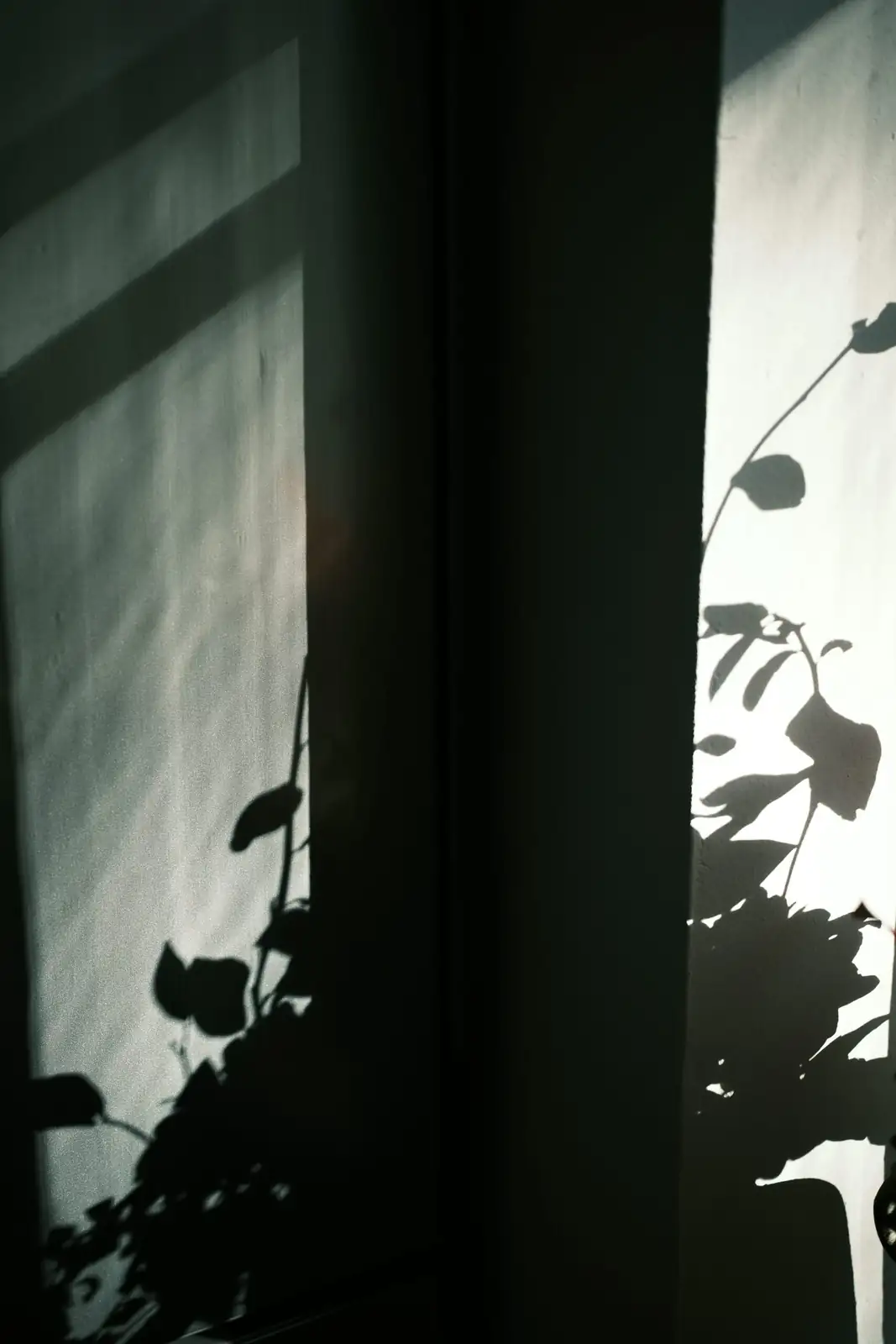
- Placement: In front of a bright window with a pale wall beyond.
- Effect: Spines edge‑light; the clump reads as a translucent, architectural column.
- Tip: Keep leaves of companion plants behind it sparse so light bleeds through.
Top‑down midday punch
- Placement: Shelf directly under a skylight or beneath a high south‑facing window.
- Effect: Clean, graphic silhouette; perfect for minimalist compositions.
- Tip: Acclimate gradually to stronger sun to prevent scorch.
When sunlight is limited
- Use a full‑spectrum LED grow light positioned 20–30 cm (8–12 in) above the plant, 10–12 hours/day.
- Mix warm and cool fixtures or choose 4000–5000K for neutral, gallery‑like color rendering.
Vignette ideas for tight quarters
1) Windowsill Triptych
- Center: Euphorbia mammillaris in matte charcoal.
- Flankers: Two low bowls of pale pumice with a single black river stone in each.
- Why it works: Vertical–horizontal contrast and repetition; the Euphorbia reads as the “tower.”
2) Slim Console, Big Statement
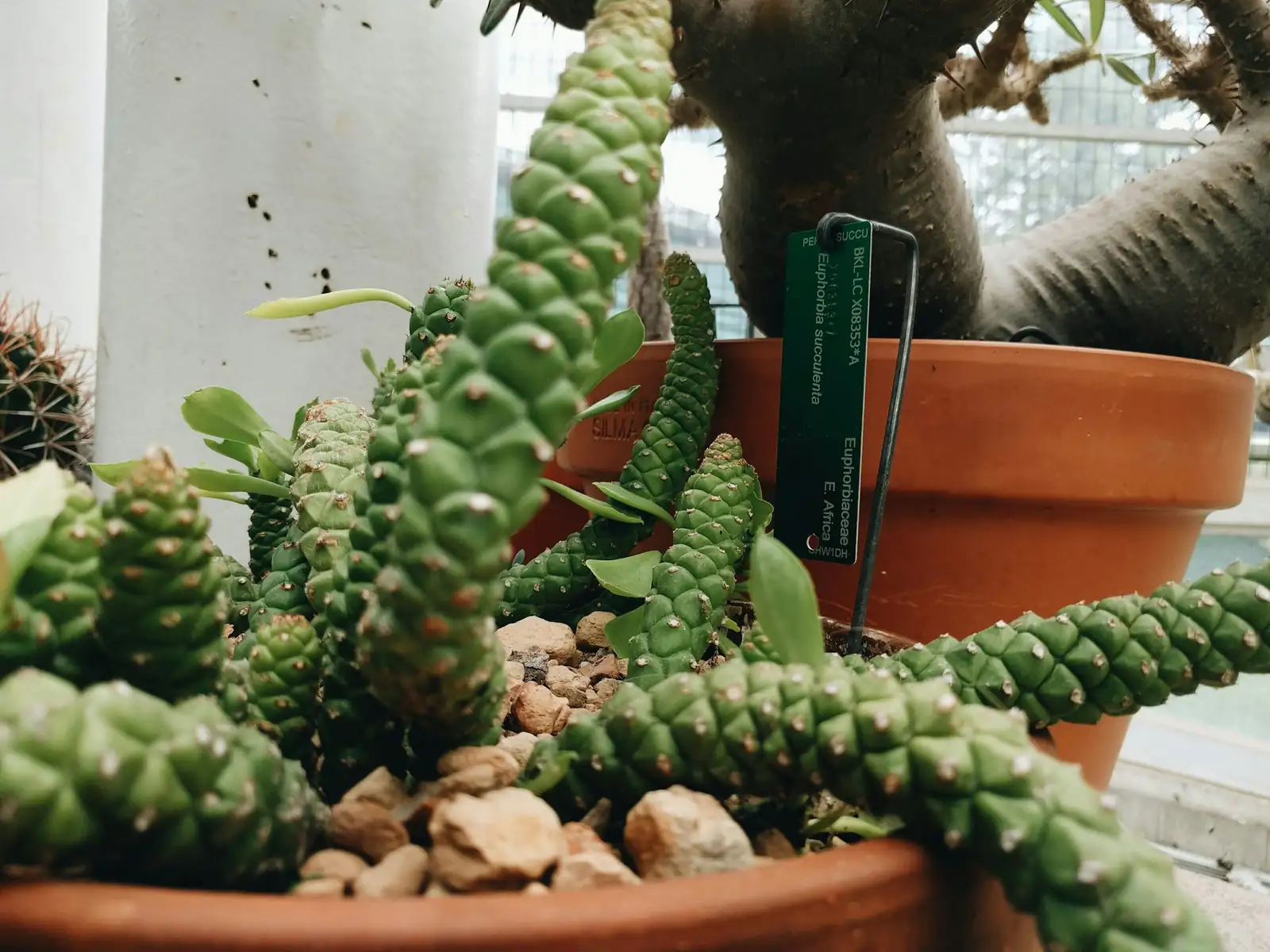
- Place a single clump in bone‑white porcelain; hang a small oval mirror behind to bounce side‑light.
- Top-dress: White pumice. Keep the surface otherwise empty for negative space.
3) Coffee‑Table Capsule
- A shallow oak tray with the Euphorbia in rust terracotta, an amber glass votive (unlit away from plant), and a small basalt rock.
- The warm palette amplifies red spines and invites touch—without actually touching.
4) Floating Shelf Grid
- One plant per shelf cube; vary pot finishes (charcoal, bone, terracotta) but keep identical sizes.
- Use a pale wall to capture moving shadows across the day.
5) Desk Companion
- Euphorbia in matte black on a coaster of raw travertine; pair with a brass pen holder.
- Keep the composition strict and simple—this plant shines in minimalism.
6) Micro‑Xeric Bowl for the Patio (summer only)
- A wide, low bowl with mineral mix and top-dressed gravel; star the Euphorbia with a small lava rock.
- Bring indoors before nights drop below 10°C (50°F).
Companion choices that share its rhythm
- Plant pairings (same bright, dry ethos):
- Dwarf Aloe or small hybrid Aloes (upright geometry, similar watering needs)
- Compact Crassula (e.g., small Jades) for a thicker leaf counterpoint
- Haworthia in a separate but matching pot for a softer, window‑safe duet
- Object pairings:
- Rough stone (basalt, granite), pale plaster, or oxidized metal accents
- Avoid busy patterns; this plant prefers calm backdrops and clean lines
Space smart: Don’t crowd. A few centimeters of air around the clump keeps the outline legible and improves airflow.
Care that keeps the silhouette sharp
- Light: Bright light to full sun, ideally 4–6+ hours of direct sun daily. Acclimate to stronger sun to prevent scorch.
- Watering: Drench, then let the mix dry out completely before watering again.
- Spring–summer: often every 10–21 days.
- Winter: much sparser—about every 3–6 weeks, depending on light and warmth.
- Never leave the pot sitting in water.
- Soil: Very fast‑draining cactus/succulent mix with added mineral grit or pumice.
- Temperature: Prefers 18–30°C (64–86°F). Keep above 10°C (50°F); protect from frost and cold drafts.
- Humidity: Low to average is best; avoid persistently damp, stagnant air.
- Feeding: Lightly in spring–summer with diluted cactus fertilizer (1/4–1/2 strength) every 4–6 weeks; none in winter.
- Repotting: Every 2–3 years, spring is ideal; only step up one size and always use a pot with drainage.
- Pruning/Styling: Remove damaged stems or thin to shape. Wear gloves and eye protection—milky sap is irritating. Let cuts dry and callus before replanting or rooting.
- Propagation: Stem cuttings only after a several‑day callus; set in dry, gritty mix and begin very light watering once roots form.
- Pests: Check ribs and crevices for mealybugs or scale. Spot‑treat early with cotton swabs dipped in isopropyl alcohol; use horticultural soap if needed.
- Biggest risk: Root rot from cold, wet soil—err on the dry, warm side.
Design‑care synergy:
- Unglazed terracotta dries faster (great for heavy‑handed waterers).
- Glazed ceramic holds moisture longer (better for very bright, hot spots).
- Add pot feet so runoff clears; wipe salts for a crisp, gallery look.
A note on variegated forms
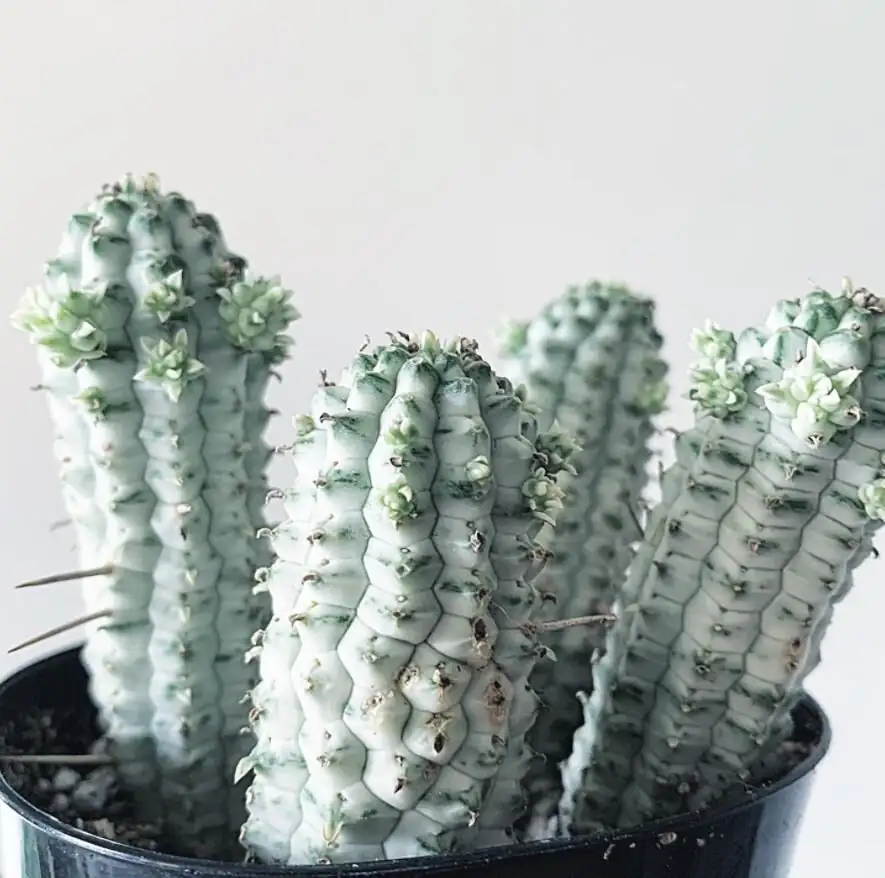
Variegated selections of Euphorbia mammillaris circulate in the trade, offering ghostly white‑green stems that can blush pink in cooler conditions. They’re stunning in bone or blush pots. As always, protect from cold and frost and keep the same fast‑draining soil and bright light.
Safety first (and stylishly)
- Toxic/irritant latex sap can harm skin and eyes; harmful if ingested.
- Keep away from children and pets; wear gloves and avoid face contact when pruning or repotting.
Symbolism and the “flower language” question
Red Coral Spurge often symbolizes resilience and protection—its drought‑tough, spiny, fortress‑like form makes that reading obvious. In cultural “flower language” traditions, meanings are assigned more by human interpretation than botany. Here, the tiny cyathia aren’t the point; the plant’s armored posture is. In small‑space design, that translates into a quiet confidence: a compact guardian with elegant lines.
Seasonal styling checklist
- Spring: Increase light exposure, resume light feeding, repot if roots are snug. Refresh top‑dress for a clean slate.
- Summer: Maximize sun; keep compositions airy and minimal to celebrate bold shadows.
- Autumn: Taper watering and feeding; swap in warmer pot tones to echo fading light.
- Winter: Keep bright but much drier; lean into monochrome palettes and strong silhouettes.
Ready‑to‑use styling formulas
- Monochrome Modern
- Pot: Matte charcoal cylinder
- Top-dress: Black lava
- Placement: South window, side‑lit
- Companion: A single basalt paperweight
- Warm Minimalist
- Pot: Unglazed terracotta with saucer on pot feet
- Top-dress: Tan granite grit
- Placement: West window console with a small amber glass vase (empty)
- Gallery White
- Pot: Porcelain ivory
- Top-dress: White pumice
- Placement: Floating shelf under skylight
- Companion: A palm‑sized plaster cube for scale contrast
FAQ quick hits:
- Is it a cactus? No—this is a Euphorbia with milky sap and specialized cyathia.
- Why is the base soft? Likely rot from overwatering or cold, wet soil. Stop watering, warm it up, increase light, and re‑root healthy stems if needed.
- Can I touch the spines? Avoid handling bare-handed. Spines can prick, and broken stems release irritating sap—use gloves and tools.
With the right pot, purposeful light, and a little negative space, Euphorbia mammillaris becomes a compact piece of living architecture—bold enough to anchor a room, small enough to fit on your hand.