

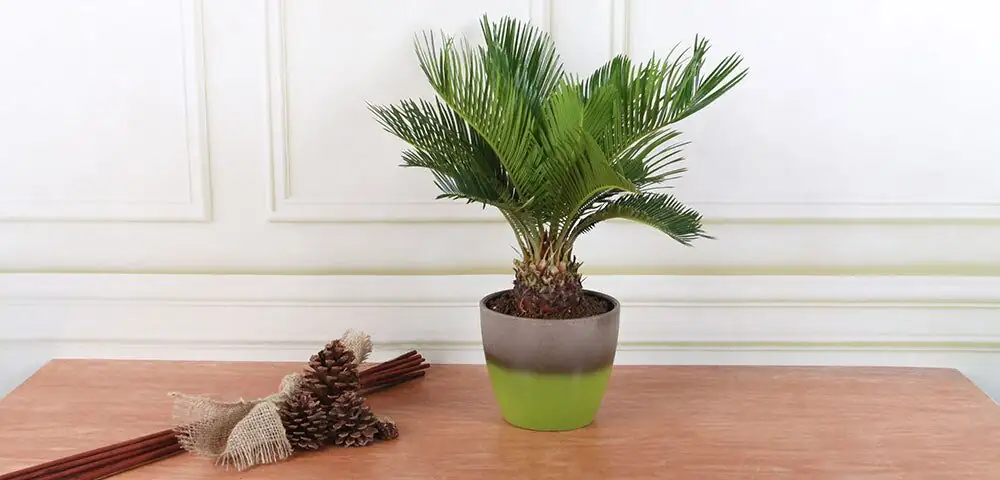
If your interiors lean minimal, sculptural, and a little bit wabi-sabi, Cycas revoluta is your plant. Often sold as a “mini sago palm,” it’s not a palm at all but a cycad—a living fossil with a stout, pet-like trunk (caudex) and a tidy rosette of stiff, glossy fronds. It grows slowly, lives for ages, and looks phenomenal in shallow bowls with mineral finishes and stone accents. Below, design-forward ways to style it beautifully—while keeping kids and pets safe.
Why Cycas revoluta works so well in design-led spaces
- Timeless form: A compact, upright silhouette with a symmetrical frond crown reads crisp and architectural.
- Slow, steady growth: Shape changes gradually, so your composition stays balanced for years.
- Forgiving diva: Tolerates shade and heat but wants quick-draining soil and careful watering.
- Indoors or out: Thrives as a container specimen near bright windows or on sheltered patios.
The vessel is the frame: shallow bowls done right
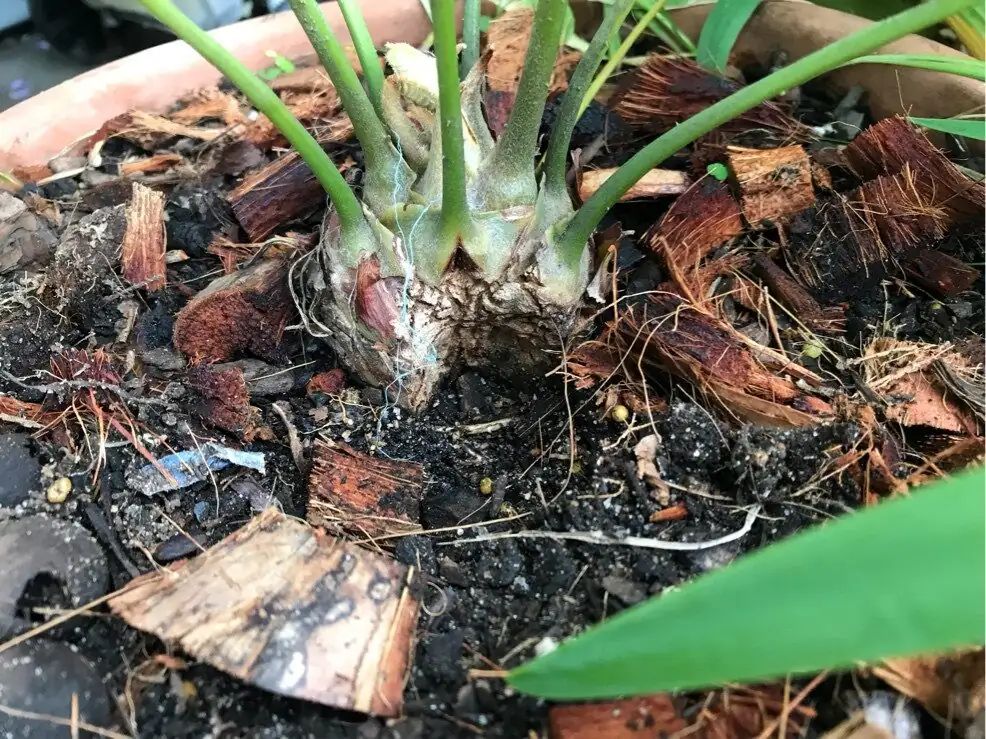
A slightly shallow, round pot highlights the caudex and the plant’s perfect rosette. Think gallery plinth for your cycad.
- Ideal proportions
- Diameter: About 1.5–2× the frond span looks balanced. Common pot widths: 15–50 cm (6–20 in).
- Depth: Slightly shallow with ample drainage holes (add pot feet to lift the base and boost airflow).
- Materials and finishes
- Unglazed clay or matte ceramic emphasizes texture and age.
- Glazed bowls in ink-black, charcoal, smoky blue, or warm ochre create refined contrast with glossy green fronds.
- Avoid overpotting
- Too much wet mix around slow roots is a rot risk. When in doubt, size up modestly.
Soil architecture for style and health
Build a sharply draining mix that keeps roots oxygenated.
- A balanced recipe: loam or garden soil + peat/coir, amended heavily with coarse sand or grit. Pumice or small lava rock improves structure.
- Skip the “drainage layer” myth—what matters is the whole mix drains fast.
- Re-rooting a “bald” (leafless) caudex? Use clean coarse sand temporarily to reduce rot risk until new roots and fronds appear.
Mineral topdressings: crisp, modern, and practical
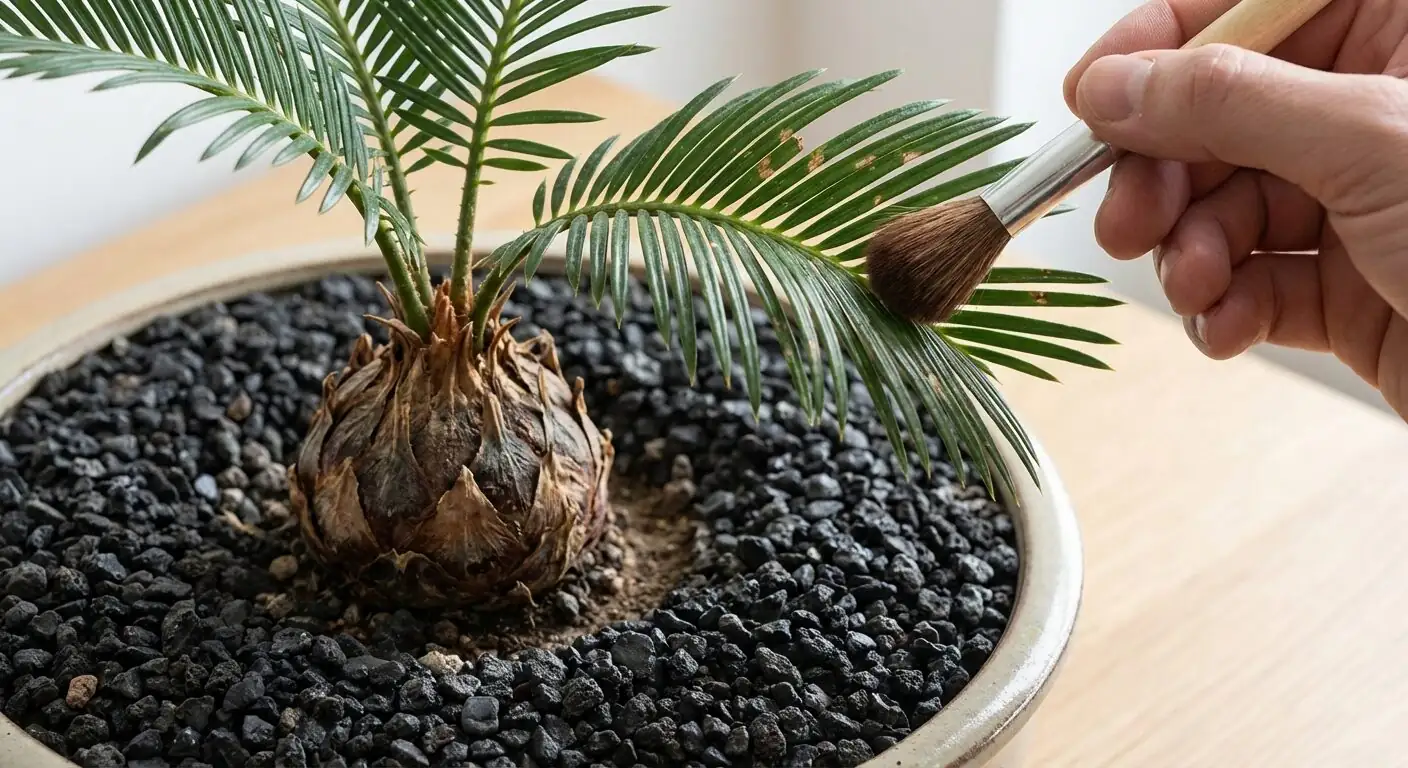
Topdressing tidies the surface, unifies the composition, and dries quickly after watering.
- Great options
- Crushed granite, black lava, pumice, or pea gravel (2–6 mm).
- Pale pumice for light, airy looks; black lava for dramatic, gallery-ready contrast.
- Application tips
- Depth: 1–2 cm (0.4–0.8 in)—just enough to hide soil.
- Leave a narrow, clean “moat” around the caudex to keep the crown dry.
- Use a soft brush to sweep stray grains off fronds after watering.
Stone pairings: build a miniature, modern landscape
Stones amplify the cycad’s prehistoric vibe and add a wabi-sabi counterpoint.
- Choose stones with character
- Basalt or lava: porous, matte, and textural.
- River-worn granite or smooth pebbles: soften the composition.
- One “hero stone” (suiseki-style) plus a few accents beats a crowded jumble.
- Placement principles
- Create negative space around the caudex to showcase symmetry.
- Echo the frond arc with a low stone arc on the opposite side.
- Keep stones off the crown and away from the trunk to avoid moisture trapping.
Airy placement: where it shines
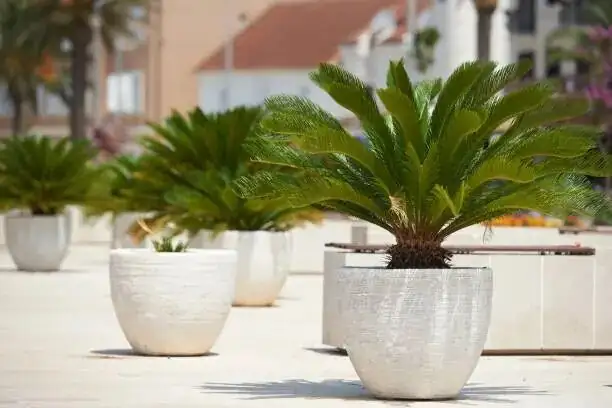
Bright and breezy is the mantra. Indoors, place close to a bright window with airflow; outdoors, think sunny, well-ventilated patio.
- Light
- Adaptable from bright light to full sun if acclimated gradually.
- During a new growth flush, low light can cause stretched, longer, narrower fronds—move it brighter to keep that crisp rosette.
- Ventilation
- Good airflow reduces pest pressure (scale) and helps the mix dry reliably.
- Temperature
- Best at 13–27°C (55–81°F). Can handle heat to ~40°C (104°F) if soil drains well.
- In winter, keep above 7–10°C (45–50°F). Cold + wet is the classic rot combo.
- Avoid
- Dark corners, cold drafts, and any spot where the pot stays soggy.
Watering and feeding: deliberate minimalism
- Watering
- Let the top of the mix dry before watering again.
- Never let the pot sit in water.
- Spring–summer: water more regularly; when indoor temps are above ~18°C (64°F), light misting can help humidity.
- Autumn: taper off as temps fall.
- Winter: keep distinctly drier.
- Fertilizing
- During the growing season, feed about monthly with a balanced fertilizer at a conservative dose, or use a gentle, well-rotted organic feed.
- Hold fertilizer in winter.
Grooming for graphic lines
- Tidy the silhouette
- Remove aging, yellowing outer fronds once the newest fronds have fully expanded to keep the crown crisp.
- Cones (it’s dioecious)
- Male and female cones appear on separate plants, typically in summer.
- After a male cone finishes or a female structure sets and matures seeds, remove the spent structure to redirect energy to leaf growth.
- Dust and pests
- Wipe fronds to keep the gloss.
- Scale insects are the usual suspect indoors—improve airflow, wipe them off, and treat with horticultural oil or insecticidal soap as needed.
Repotting and right-sizing your composition
- Timing and cadence
- Best in spring–summer.
- Small–medium plants: every 2–3 years. Large specimens: every 5–6 years.
- Process
- Refresh into a fertile, fast-draining mix; resist jumping multiple pot sizes at once.
- Add topdress and re-compose your stone accents.
Propagation notes (for the design-minded)
- Offsets (pups)
- Divide in spring during repotting. Let cut surfaces callus, then pot in a 50/50 sand-and-soil mix and keep in bright shade until established.
- Seeds
- Sow late spring–early summer, covered with about 2 cm (0.8 in) of mix at 15–29°C (59–84°F).
- Trunk sectioning (advanced)
- Early summer: 2–3 cm (0.8–1.2 in) slices laid on moist sand with high humidity. Pups may emerge in ~3–4 months.
Family-safe styling: essential notes for homes with kids and pets
Cycas revoluta is highly toxic if ingested—every part, with seeds especially dangerous. Ingestion can cause severe gastrointestinal upset and serious liver damage in pets.

- Smart placement
- Elevate: shelves, high consoles, or secured pedestals; consider a low-profile plant stand with a wide base.
- Shield: display cloches, acrylic vitrines, or niche shelves if small hands are curious.
- Outdoor patios: position away from play areas; promptly remove fallen seeds or frond debris.
- Handling
- Wear gloves when removing cones/seeds or old fronds.
- Store prunings securely; never compost where pets can access.
Seasonal styling calendar
- Spring–summer: peak growth and display. Brighter light, more frequent watering, and boosted humidity; ideal for repotting and offset division. Outdoor time on a sunny, breezy balcony or patio is perfect.
- Late spring–early summer: sow seeds if propagating.
- Early summer: trunk sectioning (advanced) under high humidity, if desired.
- Autumn: reduce watering, edit stones and topdress if needed, and move indoors ahead of cold.
- Winter: brightest possible, distinctly drier, and above 7–10°C (45–50°F).
Symbolism, history, and that wabi-sabi mood
In East Asian tradition, this species is often associated with good fortune, freedom, happiness, and longevity—fitting for a plant that can outlast generations. While it doesn’t offer a “flower language” in the strict sense (it produces cones, not flowers), the cultural aura it carries is about time itself: patience, endurance, and quiet strength. As a “living fossil,” its slow, steady presence dovetails beautifully with wabi-sabi interiors—natural materials, graceful imperfection, and a calm, contemplative mood.
Three quick design recipes to try
- Minimalist foyer vignette
- Matte charcoal shallow bowl + black lava topdress + one river-smooth granite “moon” stone. Place on a pale oak console near a bright window with a small fan for airflow.
- Wabi-sabi nook
- Unglazed, sandy-beige bowl on pot feet + mixed pumice/grit topdress + a single weathered basalt stone. Pair with a rough linen runner and a simple wall scroll. Keep the crown free of topdress for that clean caudex reveal.
- Sun-splashed patio piece
- Smoky blue ceramic bowl + pale pumice topdress to bounce light + two small, low-profile accent stones echoing the frond arc. Morning sun, afternoon bright shade; excellent drainage is non-negotiable.
Bring it all together: a shallow bowl to reveal the caudex, a mineral surface to modernize, a few thoughtfully placed stones to suggest landscape, and an airy, bright perch. With careful watering and a watchful eye for safety, Cycas revoluta becomes less “houseplant” and more timeless sculpture—the kind that just keeps getting better.