
There’s nothing shy about a hyacinth. One bulb can perfume a room, send up a glossy fan of leaves, and top it with a dense spike of jewel-toned bells. The trick indoors is to style that bold fragrance—placing, lighting, and pairing your Hyacinthus orientalis so it looks chic, lasts longer, and doesn’t overwhelm your space.
Meet Hyacinthus orientalis at home
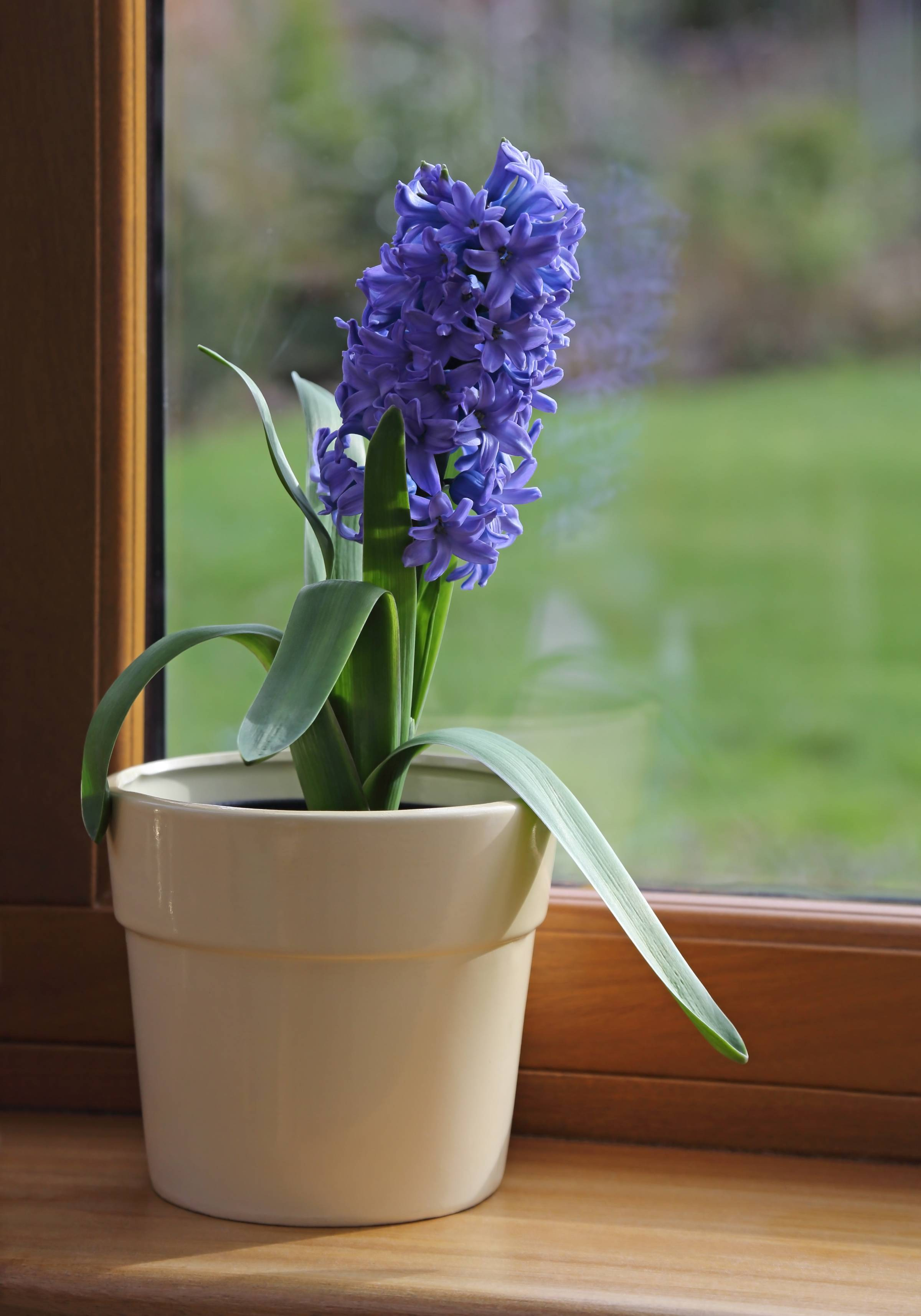
- What you get: a compact, upright spring bulb (about 15–30 cm tall) with waxy, bell- to star-shaped florets in blue, purple, pink, white, red, and more—often powerfully sweet-scented.
- Best spots indoors: bright windowsills, desks, shelves with good airflow.
- Temperature sweet spot: cool. Bud and flowering are happiest around 15–18°C; cooler rooms make blooms last longer.
- Styling superpower: easy in pots or in a classic hyacinth glass (water forcing), so you can watch the roots grow.
Fragrance-first styling: place it so scent and style feel intentional
Windowsills: use light angles to your advantage
- East-facing sills: perfect. Gentle morning sun keeps stems sturdy without overheating.
- North-facing: bright but indirect; great for long-lasting blooms—just keep it very close to the glass.
- West-facing: warm afternoon rays can shorten bloom life; set the pot 10–30 cm back from the glass and use a sheer curtain on hot days.
- South-facing in warm weather: protect from harsh midday heat behind glass. A light-filtering blind prevents scorched tips and flopping.
- Tip for symmetry: rotate the pot a quarter turn every 2–3 days so the spike grows upright and full on all sides.
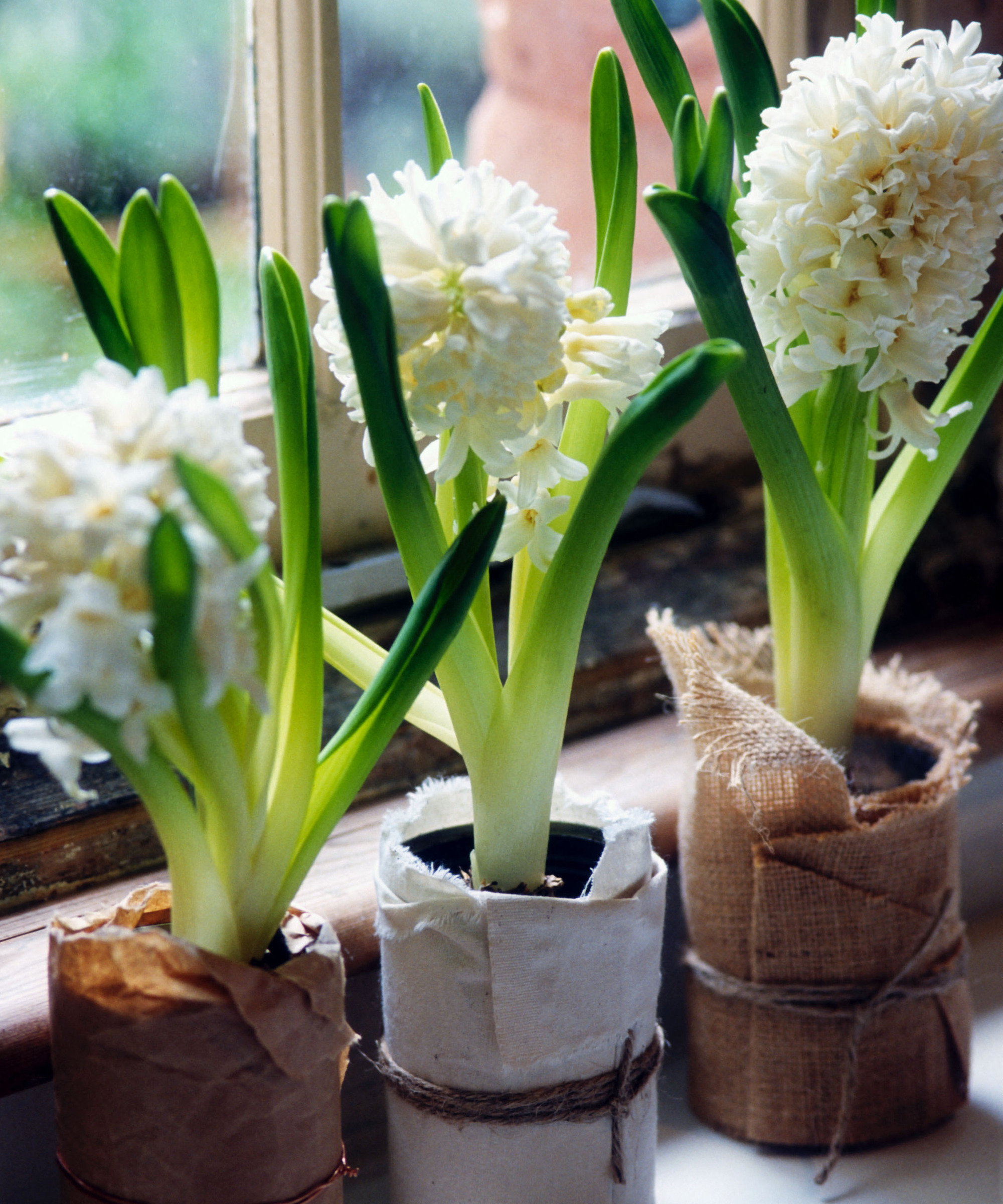
Desks and workspaces: dial in comfort for your nose (and neighbors)
- One bulb, not three: on a desk, a single hyacinth gives a sophisticated hit of scent; a trio is best for a sill, console, or entry where air moves.
- Keep it an arm’s length away: 50–100 cm from your seat softens intensity while keeping the bloom in view.
- Airflow matters: place where a gentle cross-breeze passes, not in the direct path of a vent. Stale, damp air shortens bloom life.
- Low and cool: a cool desk corner preserves the spike; avoid spots above radiators or heat registers.
Small rooms vs. open-plan spaces
- Small rooms: the fragrance can feel huge. Style a single bulb on a tray you can move to a cooler sill overnight to “reset” the scent.
- Open plan: groupings sing here. Cluster three bulbs for visual impact, but place them where air moves naturally—near a window or passageway—so perfume drifts, not dominates.
Airflow choreography for perfect blooms
- Aim for “fresh, not gusty.” Slight movement prevents gray mold and petal spotting; strong drafts can tip a top-heavy spike.
- Keep blooms dry. Water or mist on petals can discolor or rot them. Water the soil directly, never the flower.
Light, temperature, and timing: the longevity trio
- Light: indoors, very bright light is essential. Think 4–8 hours of sun-equivalent brightness. Dim rooms = floppy stems.
- Temperature: 15–18°C for flowering is ideal; cool nights extend the show. Avoid warm, sunny glass at midday in warm weather.
- Forcing timeline (if starting from bulbs):
- Prepared (pre-chilled) bulbs: commonly need about 10–12 weeks cool and dark around 9°C, then 2–3 weeks to bloom after you bring them into light.
- Regular bulbs: typically 12–14 weeks of chilling in the 2–9°C range for strong spikes.
Chic containers and glass pairings that flatter your space
Soil setups (easy, classic, endlessly styleable)
- Pot size and mix:
- A single large bulb shines in a 12–15 cm wide pot with drainage.
- Use a free-draining mix—about 2 parts potting mix to 1 part grit or pumice.
- Topdress with:
- Sheet moss for a soft, Scandinavian finish.
- Pale pea gravel for modern minimalism (great on a white desk).
- Charcoal-colored chips for dramatic contrast with white or blush blooms.
- Color pairings that always work:
- Delft blue blooms in matte white ceramic for a clean, gallery feel.
- White blooms in smoky gray stoneware for soft, architectural lines.
- Pink blooms in blush or terrazzo for a playful design note.
- Deep purple in brushed brass or black clay for luxe moodiness.
- Grouping tip: line three identical pots along a sill for rhythm and height variation; stagger slightly so side-light grazes each spike.
Water forcing (the iconic hyacinth glass moment)
- The setup:
- Use a hyacinth vase or any chic, stable glass that holds the bulb above the water.
- Keep the water line 1–2 cm below the bulb’s base so only roots drink—and get oxygen.
- Add a small piece of horticultural charcoal to keep water fresh; change water weekly (every 2–3 days early on).
- Styling with glass:
- Smoky or amber glass tempers the lab look and hides early algae.
- A clear cylinder with river pebbles on the bottom (below root zone) anchors the vignette.
- Place a trio of different glass shapes on a narrow tray for a curated, collector vibe.
- Desk vs. sill:
- Desk: choose a single, slim hyacinth glass for a vertical, uncluttered profile.
- Sill: mix heights—one classic hourglass, one squat bowl with a bulb on stones (bulb still above water), and one narrow cylinder for a mini “botanical bar.”
Keeping blooms flawless: care that respects the perfume
- Watering in soil:
- After planting, water once to settle. In growth and bloom, water when the top 2–3 cm feels dry.
- Always water at soil level. Keep petals dry to avoid spotting or rot.
- Watering in glass:
- Maintain that 1–2 cm gap below the bulb; never let water touch the bulb scales.
- Refresh water regularly; keep the vase in bright, cool conditions for the straightest stems.
- Light support:
- Rotate for even growth; use a discreet stake if stems lean in low light.
- Air and cleanliness:
- Good airflow prevents gray mold. If any floret turns mushy, remove it promptly.
- Avoid crowding multiple damp arrangements together in stagnant corners.
Safety and scent etiquette
- Toxicity: all parts can cause issues if eaten (bulbs are most concerning) for people and pets. Keep out of reach of cats and dogs; wash hands after handling.
- Skin sensitivity: the bulb scales and sap can irritate skin (“hyacinth itch”)—gloves are wise when planting.
- Fragrance etiquette: the scent isn’t toxic, but it’s potent. In tiny rooms, stick to a single bulb or place arrangements where airflow gently dilutes perfume.
After the show: make the most of your bulb
- Post-bloom:
- Snip off the spent flower spike so energy goes back to the bulb.
- Keep leaves in bright light; water moderately until foliage yellows.
- Feed lightly while leaves are green if you plan to keep the bulb.
- Dormancy and next year:
- Let foliage die back fully, then keep the bulb dry for summer.
- Replant in autumn (or transition water-forced bulbs into soil to recover). Expect next year’s indoor bloom to be weaker unless bulbs fully recharge.
Buying once, styling twice: what to look for
- Bulbs: choose firm, heavy bulbs with intact skins—no mold or soft spots. Bigger is better: aim for at least 16 cm circumference; ~18 cm often gives the fullest spikes indoors.
- Potted plants: leaves should be glossy and upright, with many buds just showing color (not fully open) so you get the longest display.
- Planning a winter bloom: reach for pre-chilled/prepared bulbs for the simplest path to indoor flowers.
Color mood and the “language” of hyacinths
- A centuries-old tradition links hyacinths with devotion and sincerity—spring’s promise in flower form.
- Color notes often cited:
- Blue: constancy and sincerity
- White: purity or quiet love
- Pink: playfulness or romance
- Red: passion
- Yellow: joy
- Purple: sorrow or jealousy
- Where does this come from? Victorian floriography popularized “flower language,” and the plant’s name nods back to Greek myth—Hyacinthus, beloved of Apollo, whose tragic tale gave the flower a legend of remembrance. Treat these meanings as poetic layers for your décor, not hard rules.
Quick styling recipes to try
- Scandinavian calm (north window): three white hyacinths in matte white cylinders, topdressed with sheet moss, spaced 8–10 cm apart for air between spikes.
- Minimalist desk focus: a single blue hyacinth in a smoky hyacinth glass; place 60–80 cm from your seat; rotate every other day.
- Entryway “hello, spring”: a brushed brass bowl with two bulbs in a gritty mix, moss top, and a cool cross-breeze from the door; move to a cooler sill overnight to extend bloom.
- Kitchen windowsill trio: pink, white, and purple in identical stoneware pots on a narrow oak tray; open the window a crack at midday for scent diffusion.
- Modern botanist: one bulb over water in a clear lab beaker (bulb above water), one in an amber bottle-vase, one in a matte black pot—grouped for contrast without clutter.
- Moveable feast centerpiece: a low ceramic bowl with three bulbs nestled in gritty mix and moss; enjoy at dinner, then return to a bright, cool sill to keep blooms fresh.
Care at a glance
- Light: very bright; protect from harsh hot midday sun behind glass in warm weather.
- Temperature: coolest bright room you have; 15–18°C in bloom is ideal.
- Water: keep soil lightly moist; never soggy. Keep flowers dry. In water culture, hold water 1–2 cm below the bulb base and change regularly.
- Air: gentle, steady airflow; avoid stagnant corners and blasting vents.
- Safety: toxic to people and pets if ingested; wear gloves if you have sensitive skin.
When you balance placement, airflow, and light, hyacinths transform from “just a strong scent” into a styled moment—graphic, elegant, and unmistakably spring. One well-placed bulb can perfume your morning; a curated trio can frame a window like living sculpture. That’s the beauty of Hyacinthus orientalis indoors: design-forward, fragrance-savvy, and gloriously simple to love.