

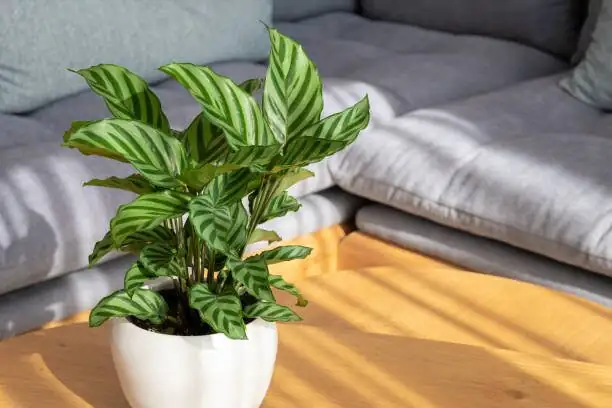
If your rose-painted calathea has been looking a little tired—sticky spots on the leaves, tiny “cotton” tufts in the nooks, or mysterious speckles—it’s time for a simple, repeatable routine that actually works. This fast, every-5–7-day cycle will help you wipe out mealybugs and scale, prevent leaf spot, and keep those painted leaves glossy and vibrant without turning your living room into a lab.
Meet Goeppertia roseopicta (Rose-painted Calathea)
- Origin: Northwestern Brazil; a warm, humid forest dweller.
- Look: Broad, oval leaves with dramatic striping and purplish undersides—striking at eye level.
- Habit: Clumping from the base; pushes out new leaves quickly in warmth and humidity.
- Light: Bright, indirect or gentle medium light; avoid harsh direct sun (use a sheer curtain or 50%–70% shade if near a sunny window).
- Climate: Ideal 18–24°C (64–75°F), high humidity (60%–70%). Not frost hardy.

Why this matters for pests and disease: High humidity supports healthy growth, but stale, still air and chronically wet leaves invite leaf spot. The trick is to pair humidity with airflow and keep foliage from staying wet overnight.
The 10‑minute, every‑5–7‑days routine that actually works
This cycle breaks the life stages of common sap-suckers like mealybugs and scale, while reducing leaf spot risk.
Step 1: Isolate and stage your tools (2 minutes)
- Move the plant away from others to prevent hitchhikers.
- Gather: soft cloths/cotton pads, a spray bottle, a mild soapy solution, and pruning shears.
- Optional for mealybugs: cotton swabs and 70% isopropyl alcohol for dabbing individual pests.
Tip: Calatheas can be sensitive—always test any spray or alcohol on one leaf, wait 24 hours, then proceed if no damage appears.
Step 2: Inspect like a pro (2 minutes)
Look where pests actually hide:
- Leaf undersides, especially along the midrib
- Leaf axils (where leaf meets stem) and edges of new, unfurling leaves
- Lower stems and petiole bases
What you might see:
- Mealybugs: little white “cotton” clusters, sometimes sticky honeydew
- Scale: tiny, smooth bumps that don’t brush off easily
- Honeydew or sooty mold: shiny or dark residue on leaves or pots
- Early leaf spot: water‑soaked specks or irregular patches, especially if foliage has stayed wet in still air
Step 3: Rinse and wipe (2 minutes)
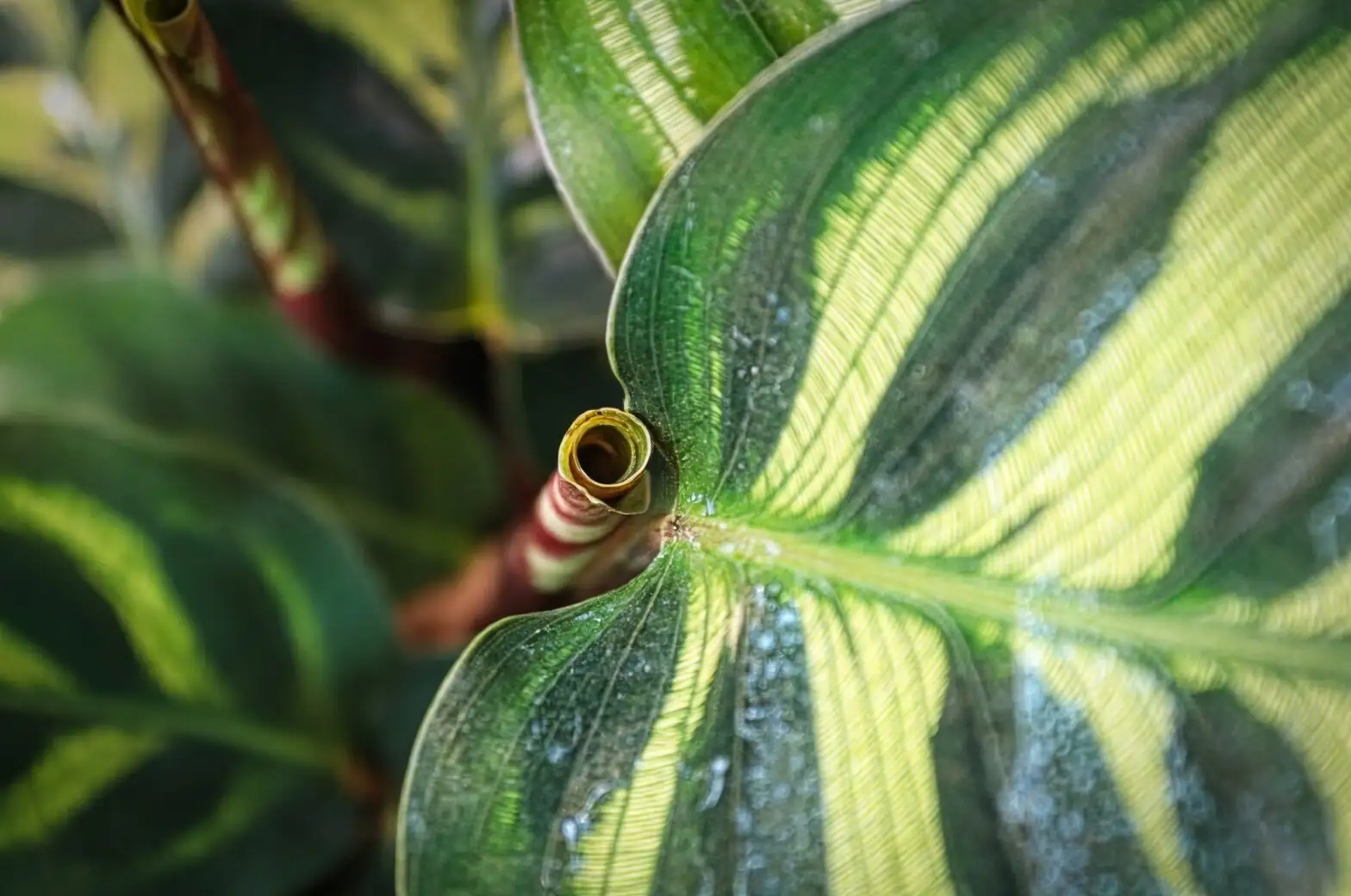
- In the morning, give leaves a gentle, lukewarm rinse in the sink or shower, focusing on undersides.
- Wipe each leaf (top and bottom) with a soft, damp cloth to remove pests, honeydew, and dust.
- For visible mealybugs or scale, dab the insect directly with a cotton swab dipped in 70% isopropyl alcohol, then wipe off.

Step 4: Gentle soapy spray (3 minutes)
A mild, leaf‑safe soap helps smother soft‑bodied pests and crawlers.
- Mix a weak solution: about 1–2 ml of mild liquid soap per liter of water (¼–½ tsp per quart). Avoid degreasers or antibacterial dish liquids.
- Spray thoroughly, especially the undersides and hidden creases. Aim for fine coverage, not dripping.
- Allow 20–30 minutes of contact time, then lightly rinse so leaves don’t stay soapy or wet into the evening.
Calathea care note: Avoid leaving water or soap on foliage overnight; it increases the risk of leaf spot.
Step 5: Dry with airflow (1 minute)
- Set the plant where it gets bright, filtered light and good airflow.
- Space it away from neighbors, and consider a small fan on low, indirect flow for an hour or two to help leaves dry.
Step 6: Repeat to break the cycle (every 5–7 days)
- Repeat this routine every 5–7 days for several rounds.
- Continue until you see no pests for at least 2–3 full cycles. This catches newly hatched “crawlers” before they mature.
Leaf spot and blight: stop it fast without sacrificing humidity
Overly wet conditions with stale air are the classic setup for leaf spot/blight. Here’s a quick save:
- Prune: Remove affected leaves at the base; discard them—don’t compost indoors.
- Airflow: Increase gentle air movement around the plant; thin crowded clumps lightly if needed.
- Water smart: Water the soil, not the leaves, in the morning. Keep the mix evenly moist but never soggy. Let excess drain fully.
- Humidity balance: Keep 60%–70% humidity with a humidifier or pebble tray, but avoid misting late in the day. If leaves get splashed, blot them dry.

Bonus: Keep foliage clean and dust‑free—clean leaves dry faster and are less hospitable to pathogens.
Environment tweaks that help your calathea outgrow pests
- Light: Bright, indirect is best. East windows are ideal; south windows need a sheer curtain (aim for roughly 50%–70% shade). Direct midday sun = scorched patches.
- Watering rhythm: Water thoroughly when the top 2–3 cm (0.8–1.2 in) of mix feels dry; drain fully. Reduce in winter when growth slows.
- Temperature: 18–24°C (64–75°F) is the sweet spot. Keep above 8°C (46°F); avoid dips below 5°C (41°F). In heat waves, keep below 32°C (90°F) with added airflow and humidity.
- Humidity: 60%–70%. Group plants, use a humidifier or pebble tray—but pair with airflow.
- Soil and pot: A loose, moisture‑retentive but free‑draining mix (peat/coco + perlite/coarse sand). Repot in spring if rootbound or the mix has broken down.
A realistic schedule you can copy
- Day 0 (Morning): Isolate, inspect, rinse/wipe, spot‑treat, gentle soapy spray, brief contact time, rinse, dry with airflow.
- Day 5–7: Repeat inspection + rinse/wipe + soapy spray + airflow.
- Day 10–14: Repeat.
- Day 15–21: If you saw any pests last time, repeat again. If not, move to weekly checks.
- Thereafter: Quick underside check every weekend; wipe leaves monthly.
Why it works: Repeating every 5–7 days intercepts newly hatched pests before they mature, while clean, fast‑drying foliage and better airflow starve leaf‑spot pathogens of the damp stillness they need.
Troubleshooting quick cues
- Sticky, shiny leaves or pots: Honeydew from pests—resume the 5–7 day routine.
- Tiny cotton tufts in joints: Mealybugs—be thorough on undersides and new leaves.
- Smooth, pinhead‑like bumps: Scale—dab, wipe, and repeat on schedule.
- Crispy edges or scorched patches: Too much direct sun or dry air (also overfertilization/salt buildup). Filter light; raise humidity.
- Yellowing leaves: Often stress from chill, low light, or overwatering. Re‑set care: bright, indirect light; warm; evenly moist, not soggy.
Prevention between battles
- Quarantine new plants for 2–3 weeks; inspect undersides before introducing them.
- Keep leaves clean; wipe monthly to discourage pests and reduce dust.
- Prune the occasional tired or crowded leaf to improve air movement within the clump.
- Avoid overwatering and stale potting mixes—both invite trouble.
Pet safety and peace of mind
Rose-painted calathea is generally considered non‑toxic to cats and dogs. Still, prevent nibbling—any plant can cause mild tummy upset if chewed. Wash hands after treatments and keep sprays off pet bowls and toys.
Why it’s worth the effort
This species is living art: deep purplish undersides, painted stripes, and that gentle “prayer plant” rhythm as leaves subtly reposition from day to night. Give it filtered light, steady warmth, humid air—and your quick, repeatable 5–7‑day care loop—and it will answer back with lush, healthy growth and color.