

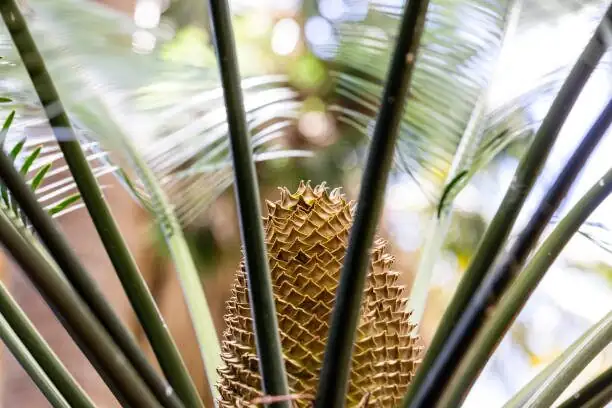
Think of Cycas revoluta (Sago Palm) as a stoic little dinosaur: slow, tough, and beautiful—until stale air, sticky scale insects, or soggy soil take it down. This is your no-nonsense troubleshooting guide to spot problems early, treat them safely, and keep that glossy, prehistoric crown thriving for decades.
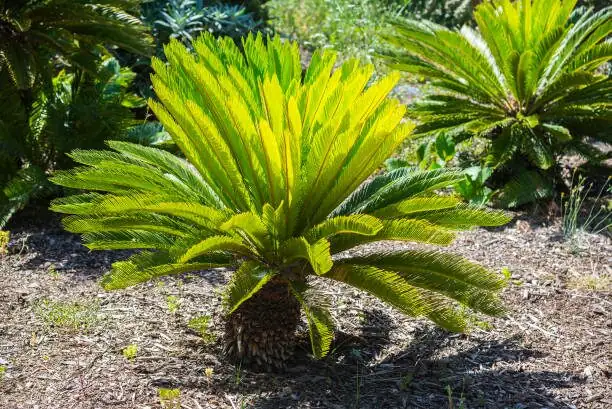
Sago Palms aren’t true palms at all—they’re cycads from southern Japan (including the Ryukyu Islands). They grow slowly, forming a firm, pet-like trunk (caudex) topped by a tidy rosette of stiff, evergreen fronds. They’re heat-tolerant, shade-tolerant, and long-lived—but they strongly dislike staying wet, especially when it’s cool.
Below: how to identify scale correctly, apply oil/soap without harming the plant, upgrade ventilation, and diagnose crown or root rot with a clear rescue protocol.
First, set the stage for success
- Light: Bright light to full sun with good airflow is ideal. Shade is tolerated, but low light during a new flush encourages stretched, weaker fronds.
- Temperature: Best at 13–27°C (55–81°F). Can handle heat up to ~40°C (104°F) if the mix drains fast. Keep above 7–10°C (45–50°F) in winter. Cold + wet = rot risk.
- Soil: Fertile, sharply draining mix (loam or potting soil + peat/coir + coarse sand/grit). A “drainage layer” won’t fix heavy soil—make the whole mix fast draining.
- Water: Let the top of the mix dry before watering again. Never let the pot sit in a saucer of water. Keep noticeably drier in winter.
- Air: Good ventilation is not optional; it’s your primary pest and rot prevention.
Quick diagnostic cheatsheet
- Sticky residue, black sooty film, and tiny dome-like dots on fronds/rachis → scale insects (sometimes mealybugs too).
- New fronds weakly elongated in dim light → light is too low during a flush.
- Outer, oldest fronds yellowing slowly → normal aging. Remove only after the newest fronds harden.
- Whole crown browning from the center, foul smell, or a “wobbly” trunk → likely crown/root rot from overwatering and poor drainage.
- Pot stays heavy for days, fungus gnats hover → soil too water-retentive, roots at risk.
—
Spotting scale (and mealybugs) with confidence
Scale is the most frequent indoor issue for Sago Palms in stagnant air.
What to look for:
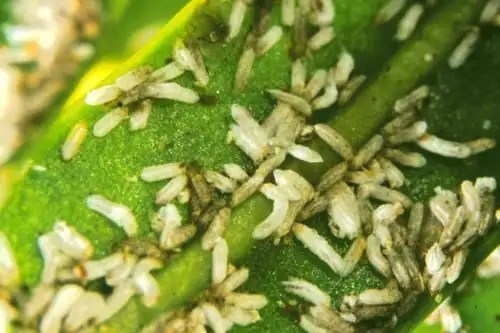
- Armored scale: Tiny, hard, pinhead-sized domes (tan, brown, gray, or white) that don’t wipe off easily. Often cling along the midrib and leaflet bases.
- Soft scale/mealybugs: Softer, cottony patches or fuzzy white tufts that wipe/smear. Mealybugs often hide in leaflet bases and crown crevices.
- Secondary clue: Sooty mold (a black, smudgy film) grows on honeydew from soft scales/mealybugs. It wipes off but returns if pests remain.
Confirm the diagnosis:
- Gently scrape with a fingernail or a cotton swab. If it pops off as a tiny cap revealing a yellowish base, that’s scale.
- Mealybugs squish and smear; scale tends to be more shell-like.
—
Oil and soap: safe, effective, and repeatable
Horticultural oil and insecticidal soap are the go-to treatments. The goal is to smother/disable pests while protecting your cycad’s stiff fronds from phytotoxicity.
Before you start:
- Isolate the plant.
- Improve airflow immediately (see “Ventilation upgrade” below).
- Do a test spray on a small area. Wait 24–48 hours to check for leaf spotting.
Application protocol (indoor-friendly):
- Timing and conditions
- Treat in the morning or late afternoon—never under hot, direct midday sun.
- Ideal room temp: 18–27°C (64–81°F). Avoid heatwaves.
- Prep the plant
- Dust or rinse the fronds first to knock down loose pests and reduce residue.
- Lay down newspaper/plastic to catch drips; oils can be slippery.
- Product and mix
- Use ready-to-use insecticidal soap or horticultural oil per label directions.
- If mixing from concentrate, follow dilution precisely; stronger is not better.
- Coverage that counts
- Spray to glisten, not to drip. Thoroughly wet both sides of every leaflet, the midrib, petioles, caudex crevices, and the crown (avoid pouring into the growth point).
- For heavy clusters, dab with a cotton swab dipped in diluted soap first.
- Wipe and repeat
- After 15–30 minutes, gently wipe accessible areas with a soft cloth or paintbrush to remove dead scale shells and mealy fluff.
- Repeat every 7–10 days for 3–4 rounds to catch “crawler” stages.
- Aftercare
- Keep the plant in bright, indirect light with airflow until foliage is dry.
- Rinse lightly between rounds if residue builds up.
Bonus physical control:
- Use a soft toothbrush to dislodge armored scale along tough midribs.
- Prune heavily infested old fronds once new fronds have fully hardened.
Skip the scorched-earth chemicals:
- Systemic or harsh insecticides are rarely necessary indoors and can be overkill for a slow-growing cycad. Good coverage + repetition with oil/soap and better airflow usually wins.
—
Ventilation upgrade: the cheapest, most overlooked fix
Static, stale air invites scale and rot. Your Sago Palm wants a bright, airy perch.
Do this today:
- Indoors: Place near a bright window; crack it for fresh air when weather allows. Run a small oscillating fan on low for a few hours daily (not blasting the crown).
- Outdoors (warm seasons): A sunny, well-ventilated balcony/patio spot is ideal. Acclimate gradually to stronger sun.
- Spacing: Keep leaves from touching walls or neighboring plants.
- Cleanliness: Remove dead frond bases and debris from the crown where pests hide.
—
Crown and root rot: how to diagnose and rescue
Overwatering—especially in cool conditions—is the classic path to rot. Cycads hate staying wet.
Early warnings:
- Potting mix stays wet for days; gnats are present.
- Fronds dull, limp, and discolor quickly from the crown outward.
- Caudex feels less firm than usual; may wobble at the base.
- A sour or swampy smell near the crown or from the pot.
Immediate triage (if you suspect rot):
- Stop watering. Move to bright light with airflow and warmth (18–27°C / 64–81°F).
- If the crown is firm and there’s no odor, let the mix dry down more than usual and reassess over a week.
If symptoms persist or the caudex feels soft, proceed to a full rescue.
The clear rescue protocol
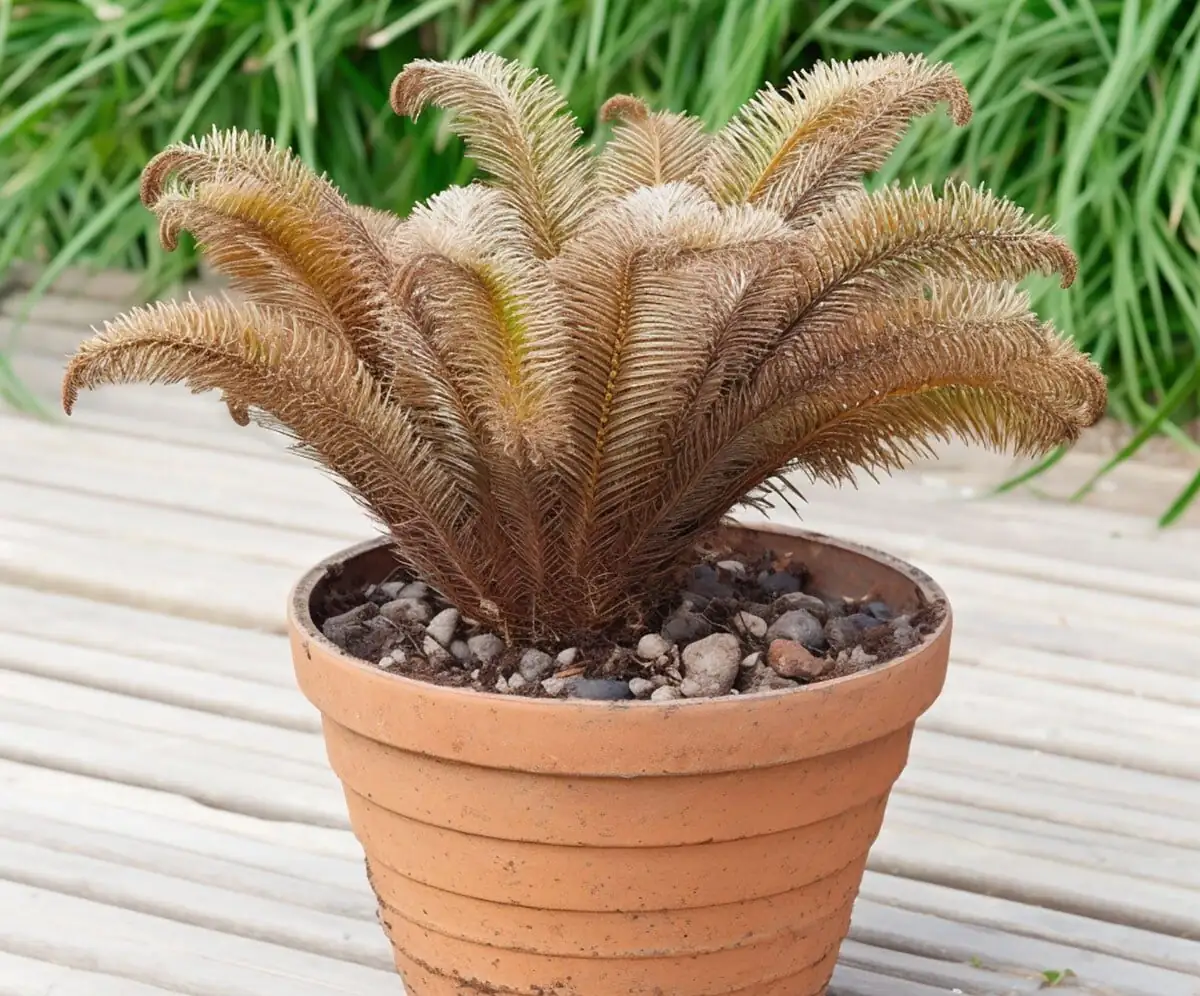
- Unpot and inspect
- Gently remove the plant. Hose or tease away all soil.
- Healthy roots: firm, tan to light brown. Rotted roots: black, mushy, or hollow.
- Check the caudex and crown. Any mushy, discolored tissue indicates active rot.
- Sanitize and trim
- Sterilize a sharp blade (flame/alcohol).
- Cut away all rotted roots and any mushy crown/caudex tissue until only firm, healthy tissue remains.
- Rinse cuts with clean water; blot dry.
- Optional: Dust cut surfaces lightly with powdered sulfur or cinnamon to deter fungi.
- Dry and callus
- Air-dry the plant in bright shade with airflow for 2–5 days, allowing cuts to callus. Keep it upright and stable.
- Re-root in safer media
- Pot in a shallow, perfectly draining setup. Two reliable options:
- Clean coarse sand (excellent for re-rooting and rot-prone caudexes).
- A 50/50 mix of coarse sand and a gritty soil blend.
- Use a pot with large drainage holes; don’t bury the crown. Keep the caudex above the surface; stake for stability if needed.
- Watering reboot
- After potting, wait 3–5 days before the first light watering to avoid re-wetting fresh cuts.
- Then water sparingly around the pot’s perimeter. Allow the top to dry thoroughly between sips.
- Absolutely no standing water in saucers.
- Recovery conditions
- Bright light, strong ventilation, and warmth. Avoid cold rooms.
- No fertilizer until you see clear signs of new roots or a healthy new frond flush.
- Be patient—cycads are slow. Successful rescues can take weeks to months to show growth.
When to call it:
- If the entire caudex is soft, hollow, or foul-smelling, recovery is unlikely.
—
Prevention you can feel under your fingertips
- Mix matters: Aim for a gritty, fast-draining blend. If a handful stays gloppy when wet, add more coarse sand or grit.
- Pot choice: Slightly shallow, wide pots with excellent drainage suit the shallow root system. Avoid overpotting; too much wet mix around slow roots is risky.
- Water rhythm:
- Spring–summer: Water more regularly, but let the top dry first. Light daily misting in warm rooms is fine.
- Autumn: Taper as temperatures fall.
- Winter: Keep on the dry side, especially in cool rooms.
- Feeding: In the growing season, feed about monthly with a balanced fertilizer at a conservative dose. Skip heavy feeding in winter.
- Grooming: Remove aging outer fronds only after new fronds have fully expanded and hardened. This keeps the plant tidy and improves airflow into the crown.
—
Safety first: this plant is highly toxic
All parts are poisonous if ingested—seeds are especially dangerous. Keep out of reach of pets and children, and dispose of fallen seeds/frond pieces responsibly.
—
Fast FAQs for tricky situations
- “My new fronds look extra long and narrow.” Likely low light during the flush. Move to a brighter, airy spot before the next flush.
- “Outer fronds are yellowing.” That’s normal aging if it’s the oldest ring of leaves. If younger fronds yellow suddenly, reassess watering and check for pests.
- “I bought a leafless ‘bald’ caudex.” Pot it in clean coarse sand, keep bright with good airflow, mist lightly for humidity, avoid soaking, and wait for new roots/fronds before feeding.
—
A note on cones and patience
Cycads are dioecious: male and female cones develop on separate plants in summer. Once a male cone finishes or a female structure matures seeds, removing the spent structure helps the plant refocus on leaf growth.
—
Symbolism, thoughtfully considered
In East Asian garden culture, this enduring cycad is often linked with good fortune, freedom, happiness, and especially longevity—fitting for a plant that can inhabit the same spot for generations. Unlike fleeting “flower language,” the Sago Palm’s meaning comes from its lived presence: slow, sculptural growth and an almost timeless steadiness.
—
Bottom line
- For pests: identify scale correctly, then smother with oil or soap—thoroughly, safely, and repeatedly—while boosting airflow.
- For rot: act fast—unpot, cut to sound tissue, callus-dry, and re-root in coarse, fast-draining media with conservative watering.
- For life: bright light, sharp drainage, and fresh air are your Sago Palm’s best friends. Keep it drier in winter, and it will reward you with decades of prehistoric poise.