

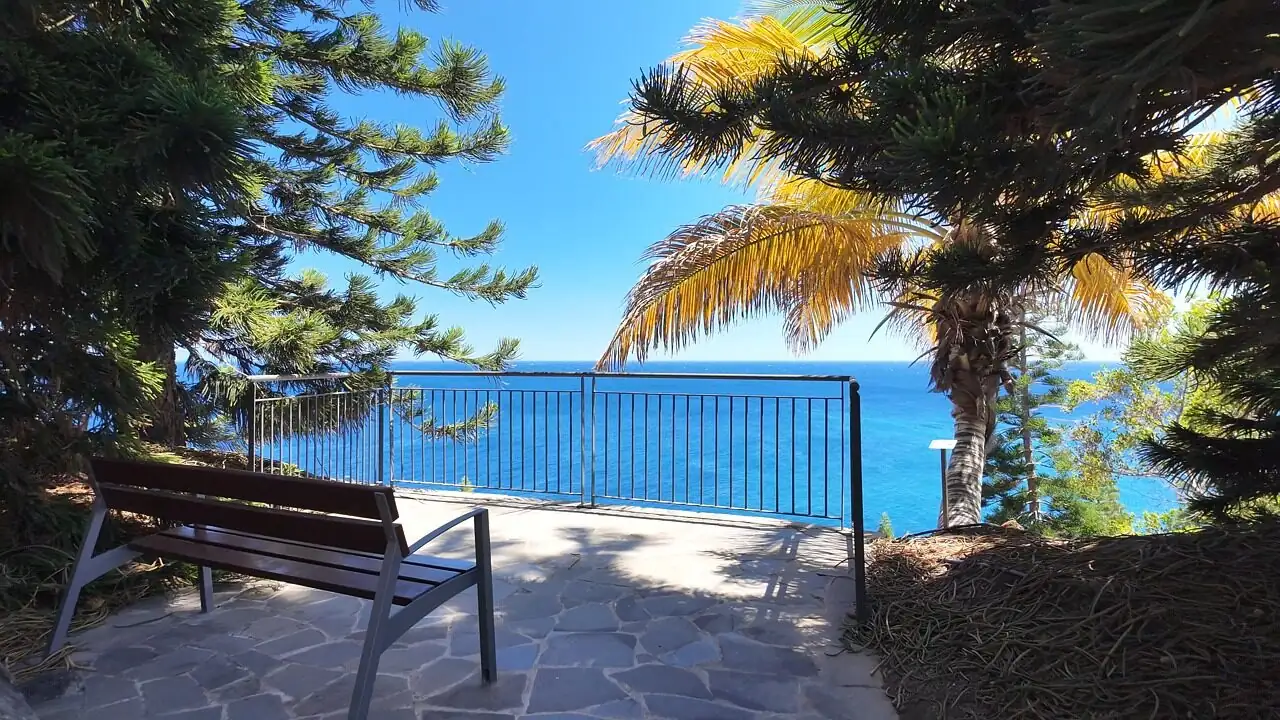
Imagine stepping onto a terrace where the air smells faintly of citrus and sea spray, and a crown of blue‑green feathers sways overhead. That’s the mood Butia odorata (Pindo Palm, a.k.a. Jelly Palm) sets—calm, architectural, and unmistakably coastal. With its stout, patterned trunk and arching, silvery-green fronds, it’s a natural for breezy, resort‑style gardens near the sea. The secret to unlocking its magic? Smart spacing, clean sightlines, and companions that love salt, sand, and sunshine almost as much as you do.
Why Butia odorata loves the coast
- Sculptural silhouette: A single, sturdy trunk topped with sweeping, feather‑like fronds in a blue‑green to silvery tone. It looks as wide as it is tall—perfect as a stand‑alone statement.
- Coastal tolerant: Thrives in seaside air and breezes, and looks right at home along promenades and patios.
- Easygoing nature: Slow to moderate growth and forgiving care when you provide excellent drainage and bright light.
- Seasonal charm: Creamy summer flowers on mature plants, followed by aromatic, edible fruit used for jellies and even fermented drinks.
- Climate sweet spot: Generally hardy outdoors in USDA Zones 8b–11; protect from prolonged hard freezes. Great in large containers where winters bite.
Light note: Outdoors, give part sun to bright filtered light; in very hot climates, protect from harsh midday sun to prevent leaf scorch.
Right place, right spacing: sightlines that breathe
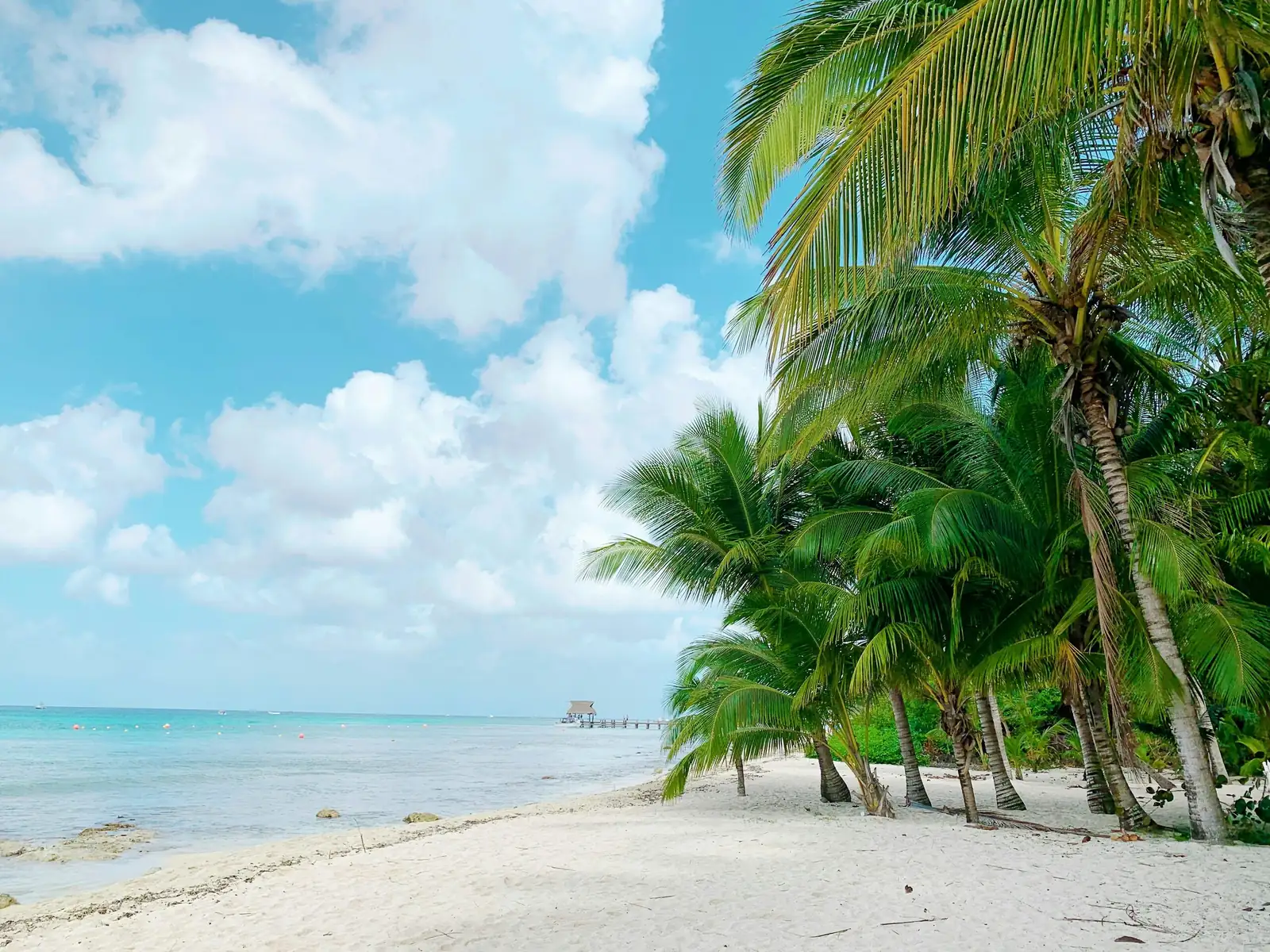
Think of Butia as living sculpture—its fronds describe graceful arcs that define space. Use that curve to frame views and move breezes through your garden.
Solo statement, front and center
- Give it room: Plan for a clear planting circle of about 2–3 m (6.5–10 ft) diameter. The crown often spreads nearly as wide as the plant is tall, so air and light around the fronds keep the look airy, not cramped.
- Keep paths comfortable: Set the trunk at least 1 m (3 ft) back from walkways so leaf tips don’t brush passersby.
- Sightline tip: To preserve views, allow the canopy to form above eye level; remove only fully brown fronds to “lift” the skirt without weakening the palm.
Framing views to the sea (or a focal point)
- Use the palm slightly off‑center in the view cone so the fronds frame rather than block the horizon.
- For a layered, breezy vignette, underplant with low, wind‑tousled grasses and silvery mounds below 60 cm (24 in). This keeps the mid‑horizon open and the scene uncluttered.
A relaxed avenue or coastal promenade
- Spacing: Place palms 3–3.5 m (10–11.5 ft) on center to read as a rhythm without overlapping crowns too soon.
- Stagger in a gentle zigzag to create depth and keep ocean views slipping between the canopies.
Pool and patio placement
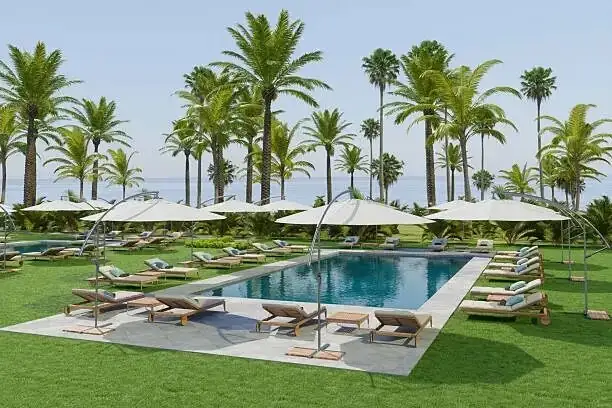
- Set back 2–2.5 m (6.5–8 ft) from pool edges to keep fruit drop away from water and paving.
- On windward edges, the palm serves as a soft wind filter. Add lower, salt‑tough companions leeward to calm air eddies around seating areas.
- In heat‑intense courtyards, pair with pale stone or crushed shell to bounce light, but offer dappled midday shade to protect fronds in scorching climates.
Salt‑tolerant companions for a resort‑ready palette
Design for texture first—then layer color. Blue‑green fronds love company in silvers, soft purples, and sunset pinks.
Silvers and blues (cool, coastal calm)
- Santolina chamaecyparissus (cotton lavender): Compact silver mounds; great edging.
- Festuca glauca (blue fescue): Tufted, glaucous texture that mirrors the palm’s tone.
- Dymondia margaretae (silver carpet): Durable groundcover between pavers; salt‑tolerant and tidy.
- Armeria maritima (sea thrift): Button blooms and grassy tufts for the fore‑edge of beds.
- Limonium platyphyllum or L. perezii (sea lavender; choose the hardy type for your zone): Hazy violet clouds that love coastal air.
Flowering haze and motion
- Muhlenbergia capillaris (pink muhly grass): Cotton‑candy plumes for warm coastal sites.
- Gaura (Oenothera lindheimeri): Airy wands that flutter in sea breezes.
- Kniphofia spp. (red hot pokers): Vertical accents that pop against blue‑green fronds.
Structure and shine (evergreen anchors)
- Pittosporum tobira ‘Nanum’ (dwarf mock orange): Salt‑tough, glossy, and compact.
- Arbutus unedo (strawberry tree) or dwarf forms: Textured bark and fruit; a Mediterranean echo.
- Leucophyllum frutescens (Texas sage): Silvery foliage with purple flushes after humidity events.
Succulents and sculptural foils
- Agave americana or hardy agave selections: Architectural counterpoints; site responsibly with space.
- Aloe striata (coral aloe): Smooth, blue‑green rosettes and coral blooms in frost‑free spots.
- Delosperma cooperi (hardy ice plant): Jewel‑toned groundcover; choose non‑invasive ice plants for dune edges.
Fragrant, edible, and herbal notes
- Salvia rosmarinus (rosemary): Wind‑scented hedging or drifts; thrives in sandy, drained soils.
- Thymus spp. (thyme): Between stones, where heat and salt splash are common.
Companion placement tip: Keep underplantings low and set back slightly from the trunk so the palm’s patterned base remains visible—this negative space creates that high‑end, resort feel.
Soil, water, and wind: comfort for coastal living
- Soil and drainage: Use a free‑draining, loam‑based mix; sandy coastal soils are ideal if you boost structure with grit or fine gravel. Mound planting by 10–15 cm (4–6 in) helps shed storm water.
- Watering: Spring to autumn, keep soil evenly moist but never soggy. In winter, water sparingly—only after the top layer dries. Deep, infrequent soaks are better than frequent sips on sand.
- Feeding: Monthly, spring through autumn, with a balanced fertilizer; palm formulations with micronutrients shine in lean coastal soils. Pause feeding in winter.
- Mulch: A light ring of gravel or crushed shell looks the part and keeps crowns dry; avoid piling mulch at the trunk.
Seasonal rhythm and light
- Light: Part sun to bright, filtered light. In very hot climates, shield from the harshest midday sun.
- Growth habit and size: A single‑trunk palm with slow to moderate growth. Plan for about 1.8 m tall × 1.5 m wide (about 5.9 × 4.9 ft) in many garden settings; the crown often approaches the plant’s height in spread.
- Bloom and fruit: Creamy flowers appear in summer on mature plants, followed by aromatic, edible fruit (hello, jelly and cordial season).
Maintenance made simple
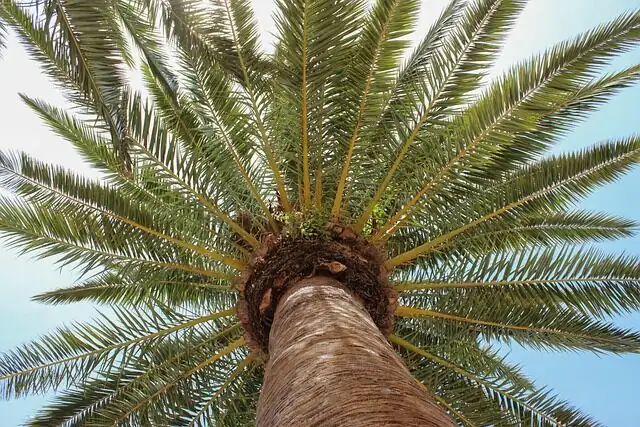
- Pruning: Remove only fully brown fronds and spent flower/fruit stalks. Cutting green fronds weakens the palm and spoils its symmetry.
- Pests: Watch for scale, mealybugs, and spider mites, especially in dry, sheltered corners. Best prevention: bright light, airflow, and avoiding overwatering.
- Winter: Outdoors, it’s generally hardy in Zones 8b–11 once established; protect from prolonged hard freezes. In containers, shelter in bright, cooler conditions (about 5–12°C / 41–54°F).
- Safety: Generally non‑toxic to people and pets; fruit is edible. Handle fronds carefully—the leaflet edges can be sharp. Set back from play zones and narrow entries.
Three ready‑to‑plant resort looks
1) Shell & Silver Courtyard
- Butia odorata centered in a pale gravel ellipse
- Santolina and Festuca in repeating drifts
- Dymondia as a living joint between limestone pavers
- Limonium for watercolor purples, plus a rosemary low hedge
Design note: Keep all underplanting below knee height to preserve the palm’s floating canopy.
2) Pink‑at‑Dusk Promenade
- A staggered line of Butia along a path, 3–3.5 m on center
- Muhlenbergia capillaris for blush plumes in fall
- Leucophyllum frutescens as silvery anchors
- Delosperma at the path edge for sparkle
Design note: Offset palms slightly to frame long views; prune only brown fronds to keep arches clean.
3) Poolside Breeze Filter
- Butia set back 2.5 m from the waterline
- Aloe striata and Agave groupings for sculptural contrast
- Armeria and thyme as sun‑baked deck softeners
- Soft uplighting to graze the trunk’s pattern at night
Design note: Place the palm on the windward side so fronds sift breezes rather than create turbulence.
Symbolism and the “flower language” of Butia
While palms don’t sit squarely in traditional “flower language” systems, this species has earned an identity all its own. With its relaxed posture and stamina in coastal weather, Butia odorata stands for seaside ease, resilience, and that holiday‑promenade spirit seen from Uruguay to Mediterranean resort towns. Its fragrant summer bloom and generous, edible fruits add a note of hospitality—plants that welcome you back, year after year.
Quick profile recap
- Names: Butia odorata (Pindo Palm, Jelly Palm, Butia Palm, Wine Palm)
- Look: Blue‑green to silvery feather fronds; stout, textured trunk; broad, architectural crown
- Size and habit: About 1.8 m tall × 1.5 m wide; single trunk; slow to moderate growth
- Light: Part sun to bright filtered light; protect from harsh midday sun in very hot climates
- Soil: Free‑draining, loam‑based mix; avoid oversized pots and soggy soils
- Water: Evenly moist spring–autumn; sparing in winter after the surface dries
- Feeding: Monthly in the growing season; palm fertilizer with micronutrients is ideal
- Hardiness: Generally USDA Zones 8b–11; shelter container plants in winter
- Bloom/fruit: Creamy summer flowers; aromatic, edible fruits used for jelly and drinks
- Pests/disease watch: Scale, mealybugs, spider mites; root rot if drainage is poor
- Safety: Generally non‑toxic; handle leaf edges with care
Design it with breathing room, keep your underplanting low and salt‑savvy, and let those blue‑green fronds do the talking. Your garden will read as relaxed, resort‑ready—and perfectly at home by the sea.