

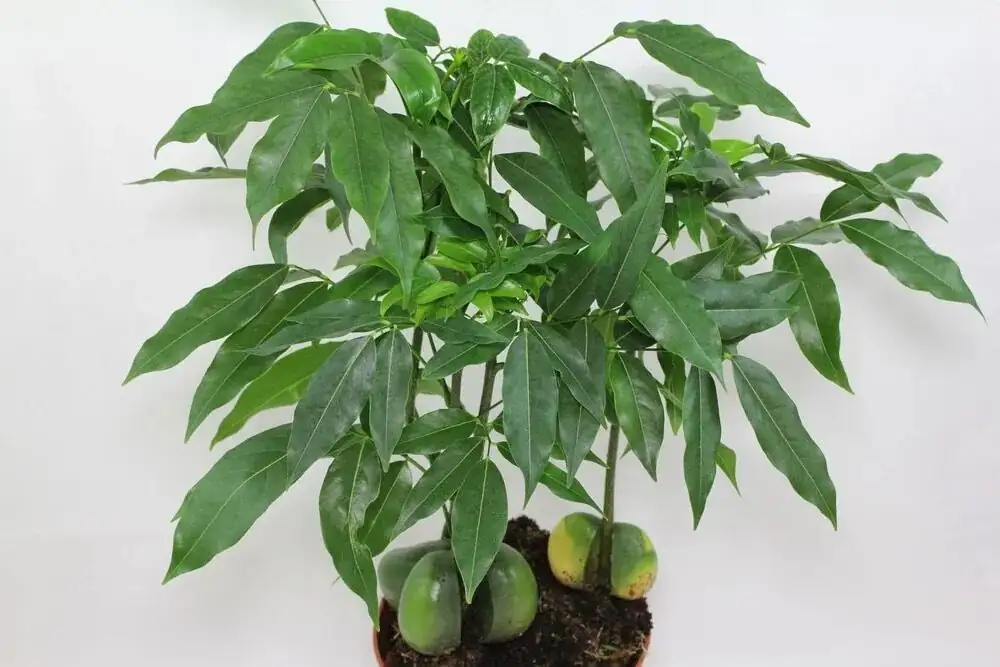
If you’ve ever been charmed by a tiny “money tree” whose bright green “beans” crack open like little ingots, chances are you’ve met Castanospermum australe. It’s an Australian evergreen that makes an adorable desk or countertop plant and, with time, a handsome indoor tree. In family homes, though, we treat it with a simple house rule: look, don’t taste. Here’s how to enjoy this plant’s good‑luck vibes while keeping kids and pets completely out of harm’s way.
Meet the plant behind the “money tree” nickname
- Botanical name: Castanospermum australe (family Fabaceae)
- Also sold as: Black Bean Tree, Moreton Bay Chestnut, and often marketed as “Money Tree”
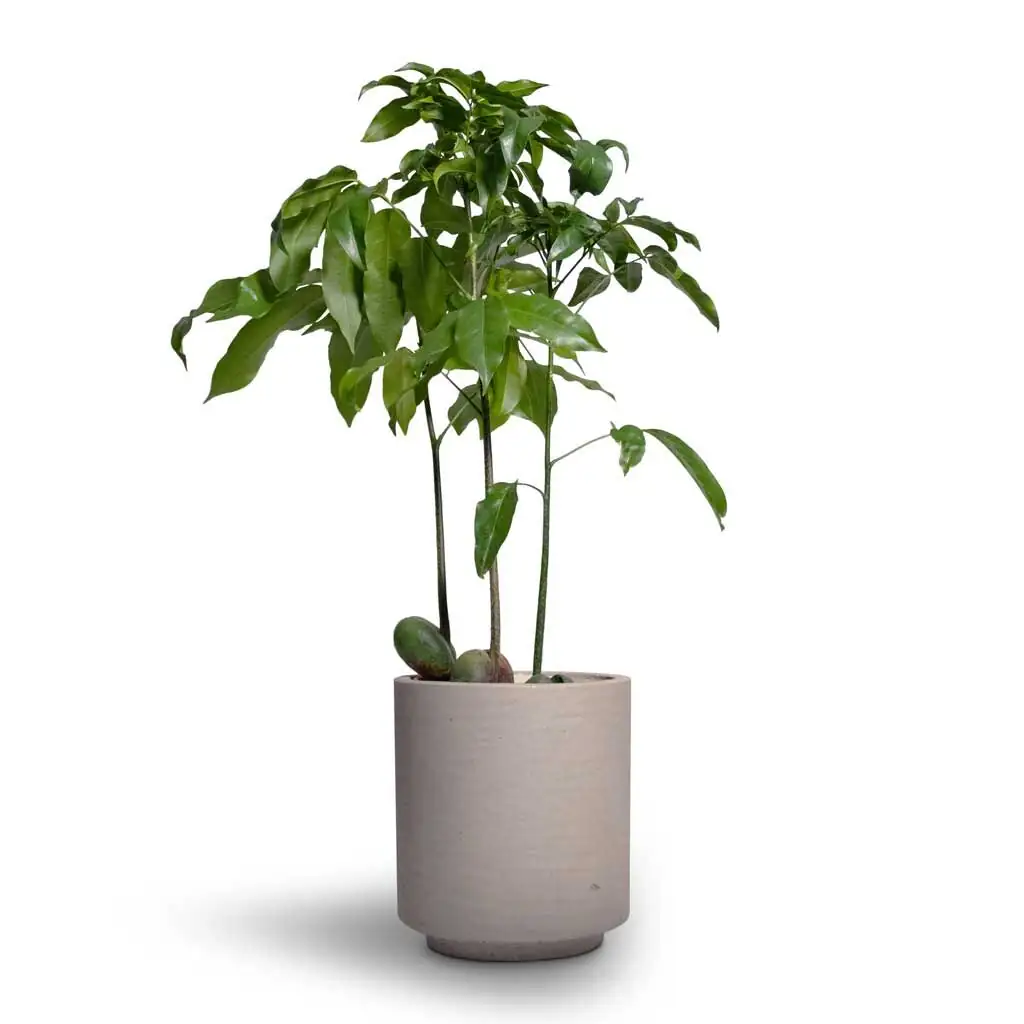
- What it looks like: The round, chestnut‑like seed splits as it sprouts, revealing two thick, fleshy green cotyledons—like a pair of glossy ingots—followed by elegant, pinnate leaves.
- Indoors: Commonly sold as a small seedling in a 5–15 cm (2–6 in) pot. With steady care, it can be trained into a 1–2 m (3.3–6.6 ft) statement plant.
Light, briefly: Bright, filtered light is ideal (east or softly shaded south exposure). Avoid harsh midday summer sun on tender leaves.
Warmth and humidity: Thrives at 20–28°C (68–82°F). Protect from cold below 7°C (45°F). It appreciates humid air.
Why we call it a “look, don’t taste” plant
- Household safety for ingestion isn’t reliably established in standard houseplant sources, so the safest approach is to treat all parts as inedible.
- The large, nut‑like seeds (“beans”) are especially tempting to small children and pets. Many local safety lists flag the seeds as potentially harmful if eaten, particularly for animals.
- Practical takeaway: Keep seeds and all plant parts away from kids and pets, and don’t experiment with “edible if processed” claims you may read elsewhere. In a family home, Castanospermum australe is strictly ornamental.
Smart placement that protects curious hands and paws
Think like a toddler or a cat: if it looks like a toy, snack, or batting practice, place it elsewhere.
- Height and distance
- Put seedlings on a sturdy shelf or wall bracket 1.5–2 m (5–6.5 ft) high, not on low coffee tables.
- Glass‑fronted shelves, plant cloches, or a tall étagère keep the look while removing access.
- Light with safety
- Best spot: bright, indirect light near an east window or a south window filtered by a sheer curtain.
- Avoid midday scorch, which can trigger leaf drop—and more debris on the floor for pets to find.
- Room zoning
- Use a child‑ or pet‑free room (home office, studio) and close the door.
- Baby gates and playpens help create “plant‑safe” and “kid‑safe” zones.
- Stable containers
- Choose heavier pots or add a weighted cachepot so an investigative cat can’t topple it.
- Cover soil with a layer of decorative pebbles to discourage digging and to hide the seed surface.
If you display it in water (it can!)
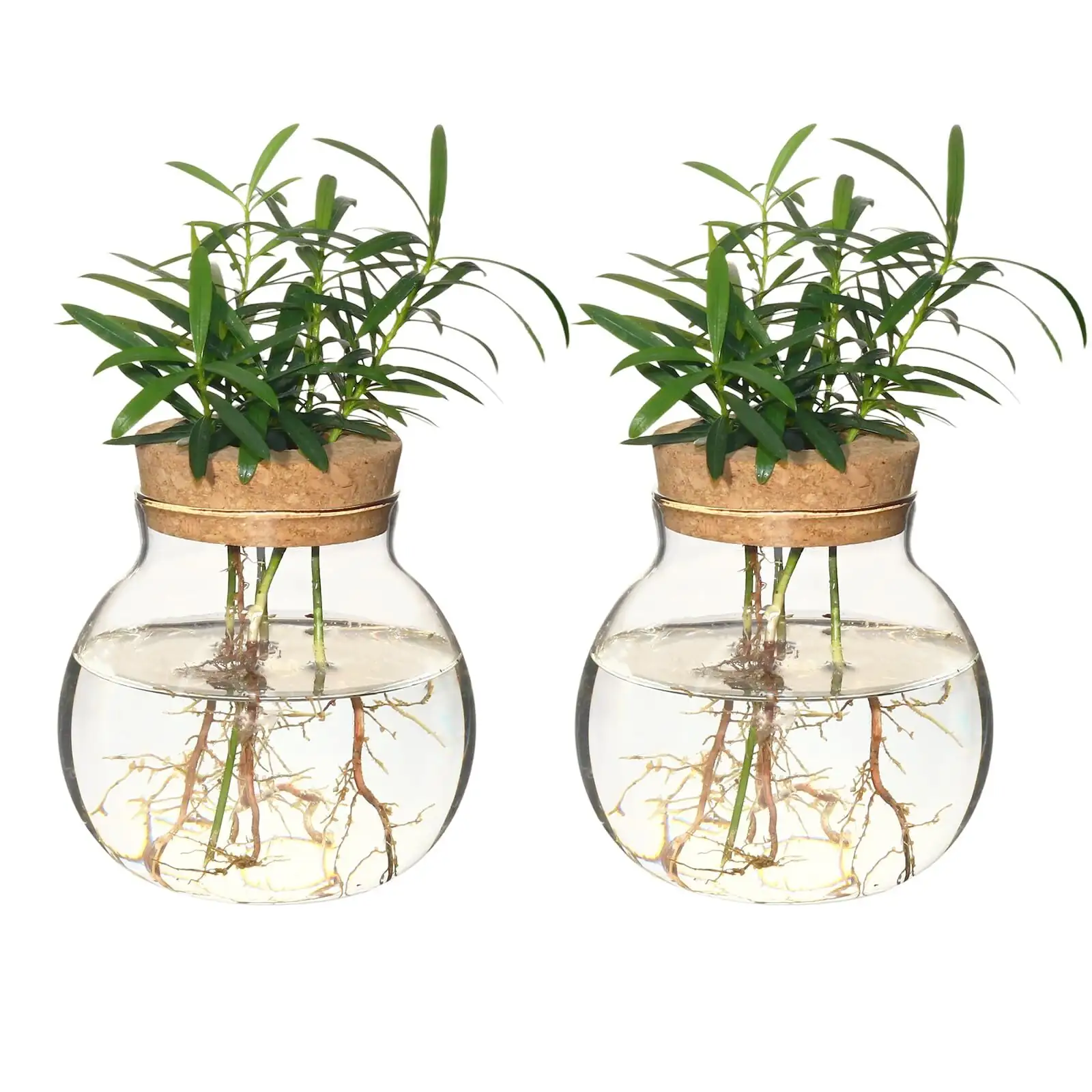
Seedlings look fantastic in water culture:
- Use a stable, narrow‑neck or heavy vase so it can’t be tipped.
- Keep the water level below the cotyledons to prevent rot.
- Change water weekly; place the display well out of reach.
Weekly safety routine (quick and easy)
Five minutes now saves tears later.
- No‑taste rule refresher
- Teach children: we only eat plants that come from the kitchen, never from pots.
- Add a small “Look, don’t taste” tag to the pot as a friendly visual cue.
- Floor sweep
- Pick up any dropped leaves or seed bits immediately—especially after hot, sunny days or cold snaps that can prompt leaf drop.
- Clean, then green
- Wipe leaves with a damp cloth. It beautifies the plant and removes dust that attracts pets.
- Water wisely
- Keep the mix evenly moist, never soggy. Overwatering can cause rot (and fungus gnats), which sends more bits to the floor.
- Mist with mindfulness
- In dry air, lightly mist foliage about twice weekly, but do it when pets and kids aren’t underfoot so no one licks drips.
- Pruning and repotting care
- Wear gloves, trim indoors away from play areas, and bag trimmings and any loose seeds before binning.
- Repot every ~2 years into a rich, well‑drained mix; let it re‑establish in partial shade.
- Pest patrol
- Check for spider mites or scale. A gentle shower, then horticultural soap or oil works—let leaves dry in a ventilated, off‑limits area before returning the plant.
Care basics that also reduce hazards
A healthy plant sheds less and tempts less.
- Light: Bright, indirect to partial shade. Protect from harsh midday sun.
- Water: Evenly moist during active growth; never waterlogged. Reduce in winter.
- Warmth: Aim for 20–28°C (68–82°F). Keep above 7°C (45°F).
- Humidity: Prefers humid air; mist lightly in dry seasons.
- Feeding: Every 2–3 months in spring–summer with a balanced fertilizer; avoid overfeeding (it causes lanky growth).
- Height control: Pinch or cut back shoot tips in autumn–winter to encourage branching instead of ceiling‑ward lunges.
Buying and first‑week setup
- In the shop: Choose plants with firm, fully green cotyledons and fresh green new leaves. Clumps in 12–15 cm (4.7–6 in) pots with 7–9 strong sprouts look lush.
- At home: Place in bright, filtered light; keep the soil evenly moist (not wet). Increase humidity with gentle misting.
- Family tweak: Once the seed has finished feeding the seedling and the plant is established, some households choose to remove and discard the spent seed to reduce temptation. It’s optional—balance safety needs with the plant’s decorative look.
What to do if someone nibbles a leaf or seed
- Remove any plant material from the mouth and rinse with water.
- Keep the plant label or a photo handy to identify it.
- Call your local poisons information center or your veterinarian for pets. (In Australia: 13 11 26. In an emergency, dial your local emergency number.)
- Do not induce vomiting unless a medical professional tells you to.
Common mix‑ups and quick answers
- Is this the braided “money tree”? No. That’s usually Pachira aquatica. Castanospermum australe is the one with the thick green cotyledons that open like little ingots.
- Can I keep it with cats or dogs? Yes—treat it as non‑edible, place it out of reach, and stick to the safety routine above.
- Will it flower indoors? Flowers are mainly on mature plants; you’re growing it for the glossy foliage and sculptural form.
A note on symbolism (and modern etiquette)
This plant’s “money tree” moniker comes from those split green “ingots,” so many people gift it as a good‑luck charm for steady growth and prosperity. Pair your gift with a clear house rule card—“Look, don’t taste”—so the good fortune doesn’t come with unwanted curiosity.
Enjoy your Castanospermum australe as a lush, living sculpture. With smart placement and a few easy habits, you get all the beauty and “good luck” feels—zero risky taste tests.