

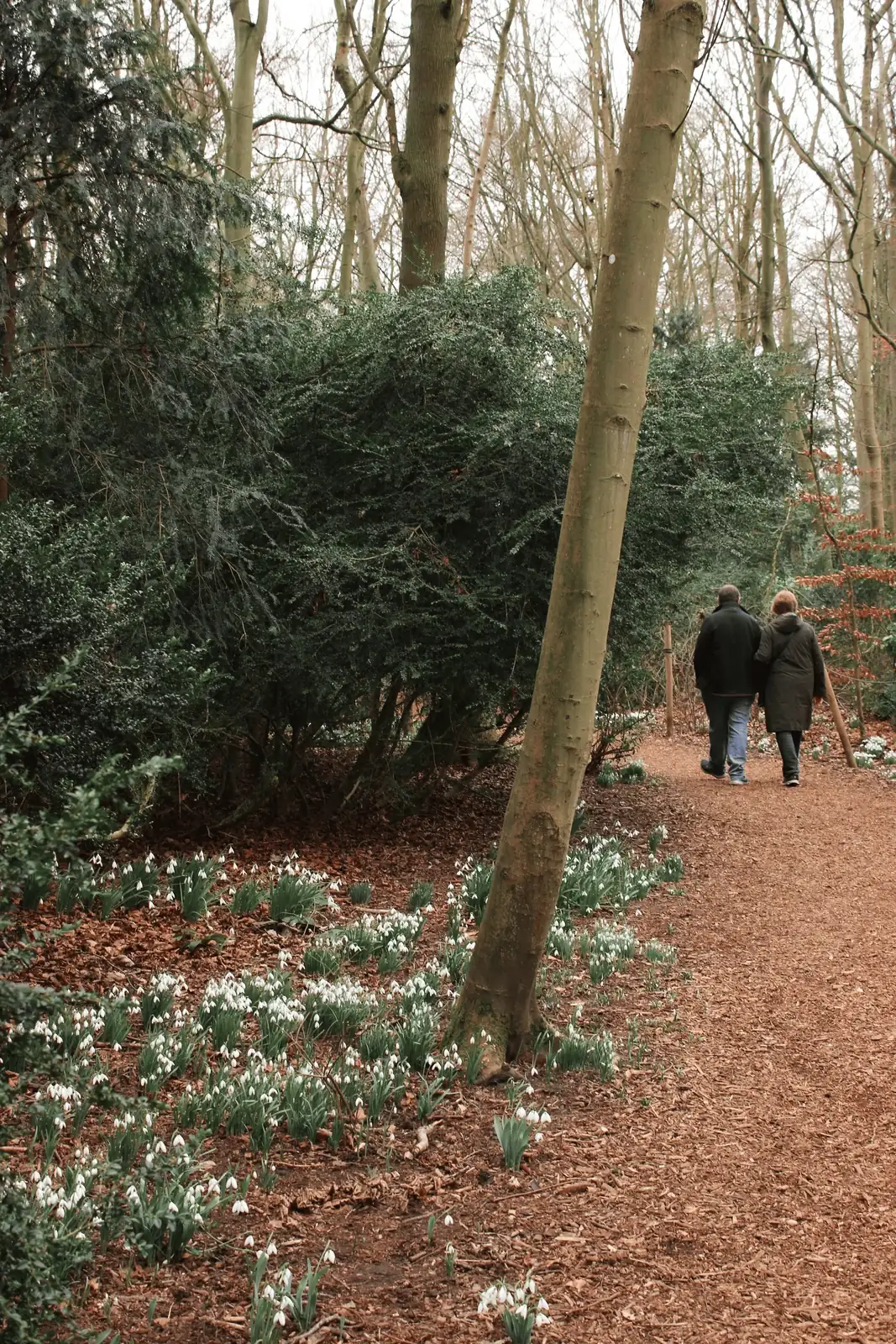
When winter still has its boot on the ground, snowdrops draw the first bright line of spring. Galanthus nivalis may be tiny, but with smart planting densities, sinuous “river” layouts, and a little patience with the mower, these small bulbs can deliver a big, breathtaking show.
Why Snowdrops Punch Above Their Weight
- They bloom when nothing else does. Late winter to early spring (often January–March), their clean white bells read like lanterns against bare soil and winter turf.
- They’re tough. The leaves are tipped like little chisels, built to punch through cold, compacted soil—and even snow.
- They multiply. Over time, clumps expand via offsets and light self-seeding, building drifts with very little intervention.
- They’re lawn-friendly. Naturalize them in turf you’re willing to mow later in spring for a more dramatic display every year.
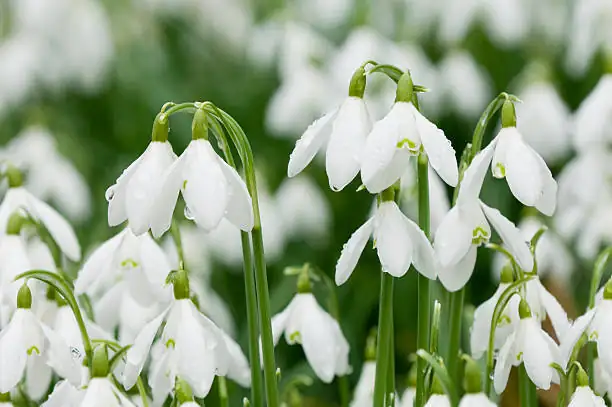
Botanically speaking: Galanthus nivalis (family Amaryllidaceae) typically grows 7–15 cm tall, with two to three glaucous, strap-like leaves and a single nodding white flower per stem. The three outer tepals are pure white; the three inner ones carry neat green markings. It thrives in cool climates (USDA Zones 3–7, sometimes into 8) and loves bright spring light with summer shade—like under deciduous trees.
Where They Thrive
- Light: Full sun in late winter/early spring; part shade later. Perfect under deciduous trees and shrubs.
- Soil: Humus-rich, well-drained; often happiest where there’s some lime/alkalinity and abundant organic matter.
- Moisture: Evenly moist during growth and bloom; avoid waterlogging, especially in summer dormancy.
- Cold: Very hardy, commonly tolerating around -26°C to -29°C (-15°F to -20°F). Winter chill improves flowering.
Design for Drama: Curving “Rivers” in Lawn or Woodland
Straight lines feel stiff; snowdrops do their best work in curves. Imagine a bright ribbon of white meandering through turf, pooling wider in places and narrowing as it “flows” into the distance.
- Start with an S-curve. Lay a hose on the lawn to sketch a sinuous path. Vary width so it swells into “eddies” near trees or benches and narrows as if turning a corner.
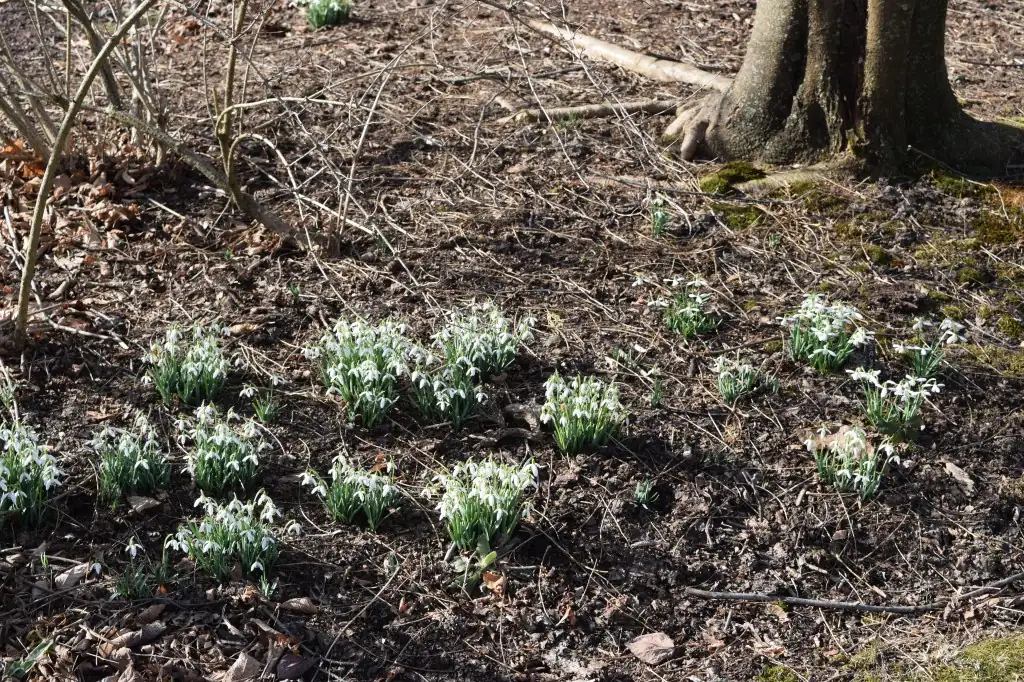
- Use density to create highlights. Pack bulbs more tightly in the “pools,” and loosen spacing at the edges for a feathered, natural look.
- Play with perspective. Make the river slightly narrower as it moves away from the main viewing point; it reads as longer and more immersive.
- Add quiet companions. In woodland edges, scatter a few clumps of winter aconite (Eranthis) or crocus nearby to stretch the season—but keep snowdrops massed for clarity and impact.
Planting Densities That Actually Wow
For real presence—especially in grass—plant more closely than you think. Here’s a practical guide:
- Light scatter (a soft, natural look): 50–75 bulbs per square meter (about 5–7 per square foot)
- Showy drift (clear, continuous ribbon): 100–150 bulbs per square meter (about 10–14 per square foot)
- Saturated carpet (intense impact): 200–250 bulbs per square meter (about 19–23 per square foot)
Tips:
- Cluster, don’t grid. Plant in small groups of 3–7 bulbs, then repeat, leaving some open turf between clusters at the edges.
- Mix sizes for texture. If desired, blend a few taller snowdrops (e.g., Galanthus elwesii) at 15–30 cm tall into the “pools” for layered depth.
How to Plant for Success
- Best timing, best results: Plant “in the green” in late winter to early spring (often February–March). These are freshly lifted plants with leaves intact and they establish fast.
- Planting dry bulbs: Do this in fall (October–November). Depth: about 7–8 cm (3 in). Choose firm, healthy bulbs; avoid shriveled or soft ones.
- In turf: Slice a flap of sod with a spade, fold it back, tuck in your clusters, and return the flap—no obvious holes left behind.
The Mowing Manual: How to Keep Bulbs and Lawn Happy
The golden rule: never cut the leaves early. After flowering, snowdrop foliage photosynthesizes to feed next year’s bulbs. Premature mowing weakens displays.
- During bloom (Jan–Mar): No mowing where snowdrops grow. Mark the areas if needed.
- After bloom (Apr–May): Keep protecting the foliage. Wait until leaves are fully yellow and lying flat and seed heads have ripened and dispersed.
- First safe mow (often late May–June, depending on your climate):
- Set the mower to its highest setting for the first pass.
- Gradually lower height over subsequent mows.
- Remove clippings so they don’t smother regrowth.
- Around the edges: Use hand shears or a string trimmer—carefully—to neaten borders without scalping leaves.
Rule of thumb: Roughly six weeks after flowering finishes is the earliest most lawns can be mowed, but always let the leaves tell you when they’re done.
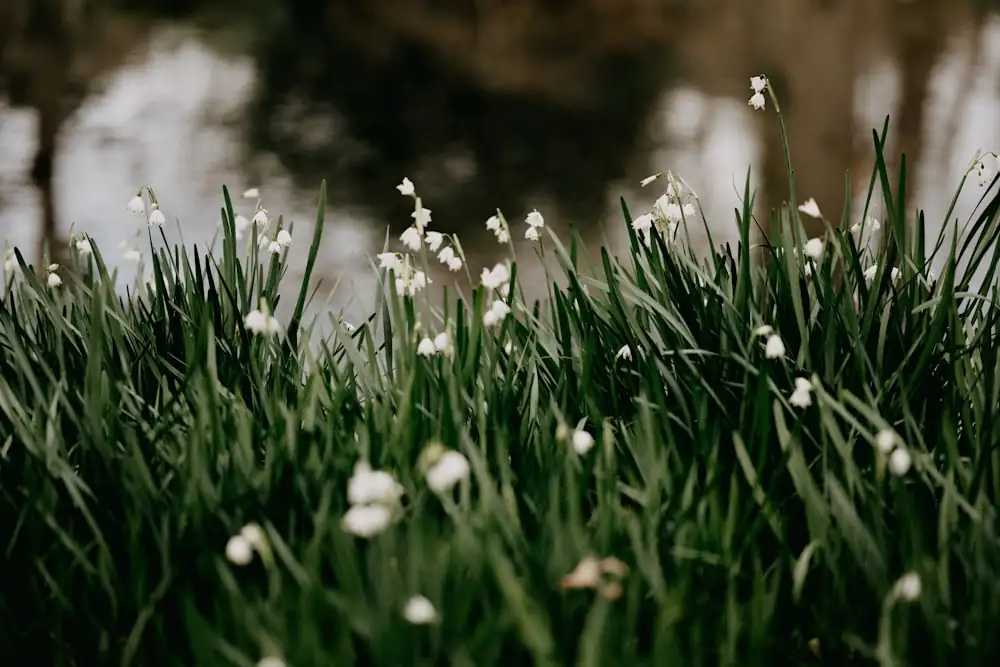
Simple Tricks for Big Impact with Small Bulbs
- Plant for the view. Concentrate density where you see it: along a path, across from the kitchen window, or under a favorite tree.
- Stagger plantings. Add a new “pool” each year for three years; your display builds naturally and looks intentional.
- Feather the edges. Looser spacing at the margins looks more like a self-sown drift.
- Contrast counts. Dark mulch in borders or the tawny tones of late-winter grass make the white pop.
- Mix a few earlies and lates. Pair common snowdrop (G. nivalis) with a handful of later-blooming selections to stretch the show without muddling the look.
- Don’t overcomplicate color. Keep the snowdrop river mostly white; let other bulbs appear nearby, not within the ribbon, to avoid visual noise.
Care, the Easy Way
- Water: Keep lightly moist during growth and bloom if spring is dry; scale back as foliage yellows. Avoid soggy soil in summer dormancy.
- Feeding: Not heavy feeders. A light bulb fertilizer in early spring, right after bloom, or at fall planting supports vigor.
- Pruning: Deadheading is optional. Do not cut the leaves until they yellow and wither naturally.
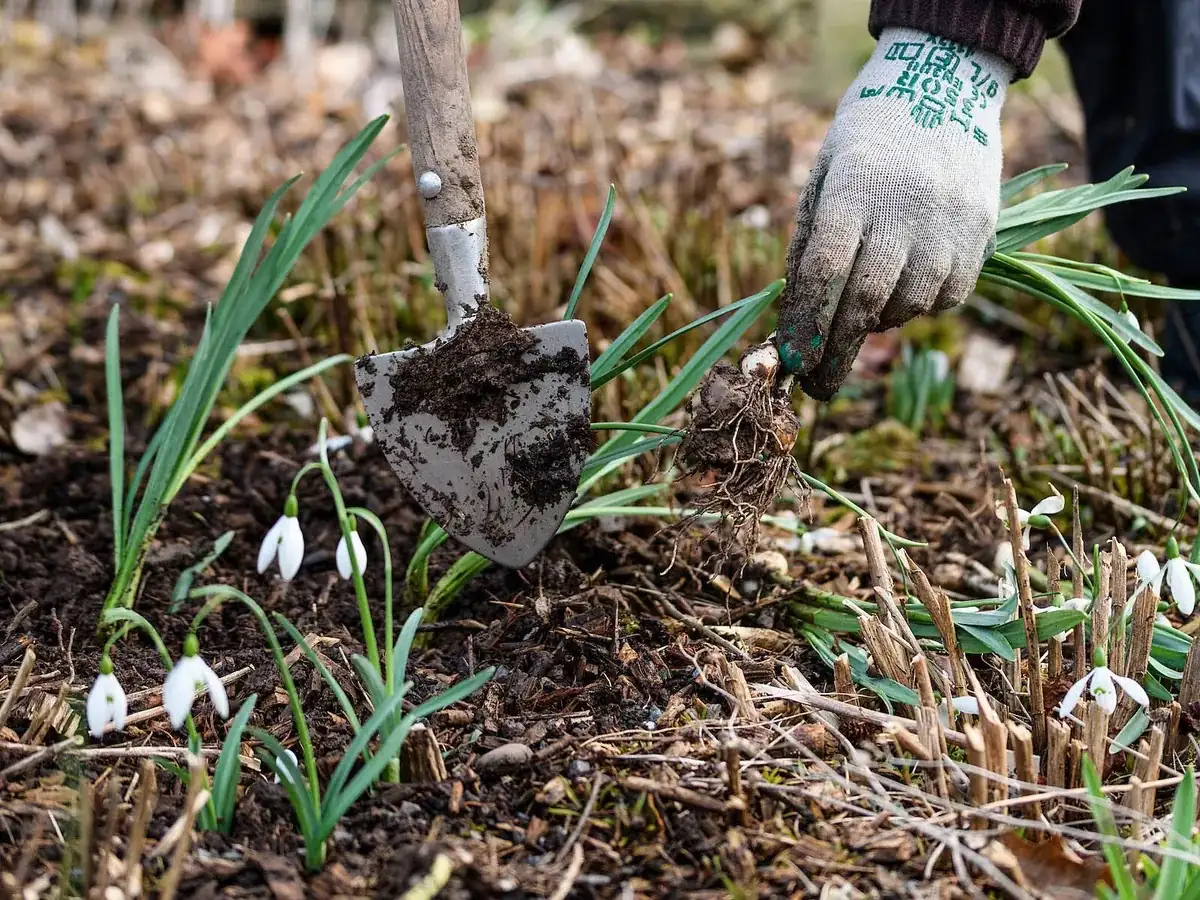
- Division: If clumps get crowded or flowering dips, divide “in the green” after bloom (often March–April). Replant immediately and keep roots intact.
Naturalizing in Lawns vs. Borders vs. Pots
- Lawns: Best for rivers and broad drifts. Commit to the delayed mowing window for repeat performance.
- Woodland borders: Under deciduous canopy is prime. They’ll enjoy bright late-winter light and cool, humusy soils.
- Containers: Great for close-up enjoyment. Keep evenly moist in spring; allow summer dormancy with excellent drainage.
Troubleshooting Bloom Gaps
- Few or no flowers?
- Bulbs may have dried out before planting (common with dry bulbs).
- Not enough winter chill or the site is too warm.
- Planted too shallow or too deep—aim for about 7–8 cm (3 in) for dry bulbs.
- Overcrowding—divide after flowering.
- Pests: Generally unbothered—deer, rabbits, and rodents tend to leave them alone thanks to toxic alkaloids. Squirrels might dig out of curiosity; replant promptly.
Safety, Sourcing, and a Note on Trade
- Toxicity: All parts are toxic to humans and pets if ingested, causing gastrointestinal distress. Handle sensibly and keep away from children and animals.
- Sourcing: The Galanthus genus is regulated under CITES Appendix II. Buy from reputable, ethical suppliers and avoid wild-collected stock.
A Quick Planting-Day Checklist
- Prepare humus-rich, well-drained soil; under deciduous trees is ideal.
- Sketch a curving river and mark “pools” for higher density.
- Plant “in the green” for fastest establishment—or dry bulbs in fall at 7–8 cm (3 in) deep.
- Aim for 100–150 bulbs per m² for a showy ribbon; denser in the pools.
- Label or map your river to protect it from spring mowing.
Symbolism and the Story Behind the “Language of Flowers”
Snowdrops have carried the meaning of hope, consolation, and new beginnings for centuries—no surprise, given their timing and purity of color. In Christian tradition, they’re linked to the Virgin Mary and sometimes called “St. Agnes’ flower.” Victorian flower language (floriography) often assigned layered meanings: a single snowdrop was sometimes considered ill-omened, while sweeping drifts symbolized comfort and the promise that winter would pass. Taken together, their “flower language” today resonates as gentle optimism: resilience without bravado, light arriving exactly when it’s needed most.
The Takeaway
Small bulbs, big theater. Mass your snowdrops, lay them out like a living river, and give them a few unhurried weeks after flowering before you bring out the mower. Do this, and Galanthus nivalis will turn the gray tail of winter into one long, gleaming exhale of spring—year after year.


