

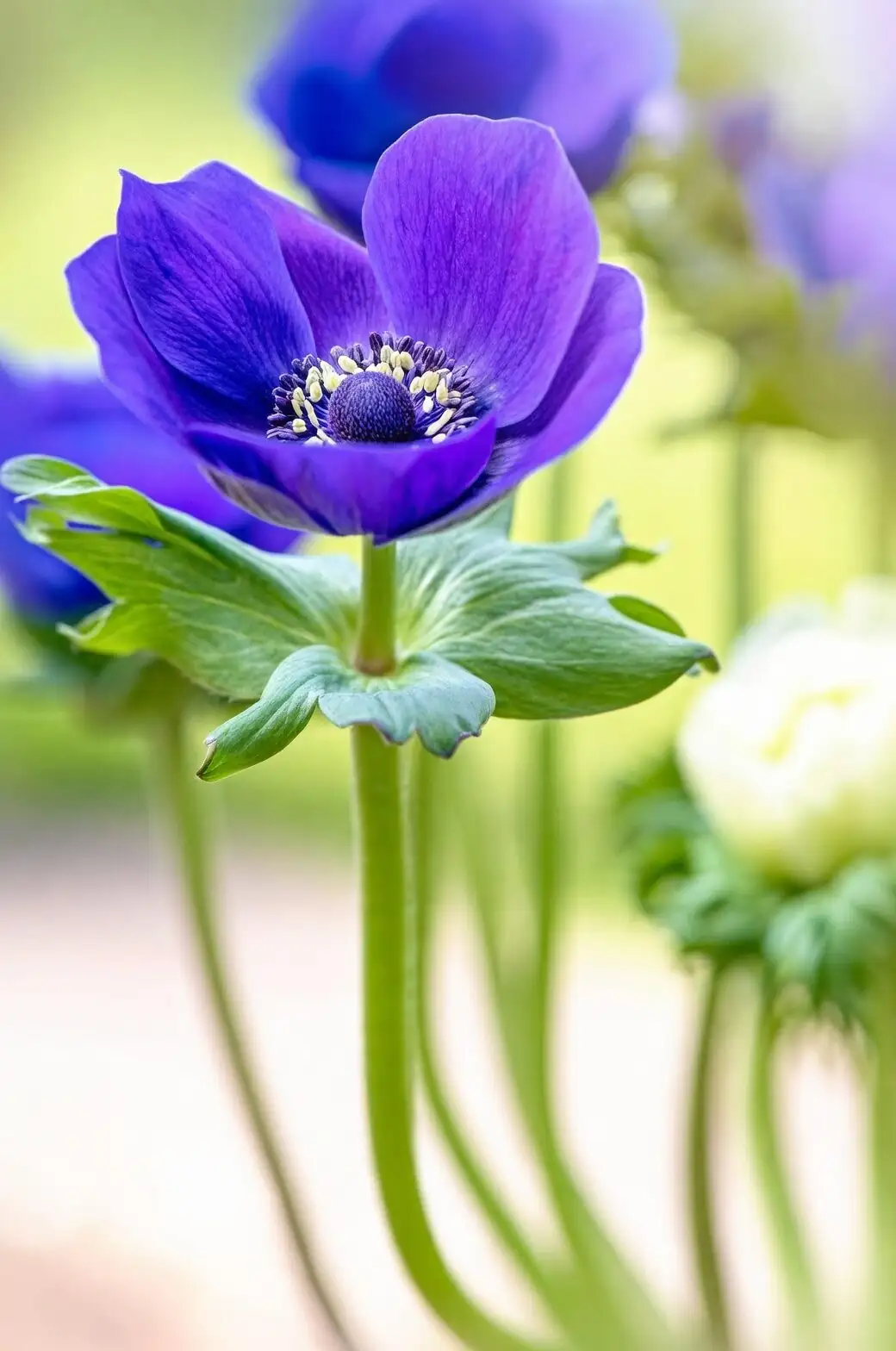
A warm breeze, a burst of saturated color, and a flower that seems to wake with spring itself—no wonder Anemone coronaria earned the nickname windflower. This Mediterranean beauty has carried messages of anticipation and protection across centuries. But where did those meanings come from? Think timing, movement, and a very European love of coded bouquets.
The wind in its name—and its behavior
The clues start with language and motion.

- Etymology: Anemone comes from the Greek for “wind’s daughter,” a nod to the way blossoms nod and shimmy on slender stems when breezes pass. That airy poise is one reason people read the plant as a sign of change carried on spring winds.
- Daily rhythm: Many anemones exhibit day–night opening and closing. That simple cycle—petals tight in the cool or dark, unfurling in light—telegraphed “waiting” and “about-to-bloom” to early observers. It’s the living picture of anticipation.
Anemone coronaria is the iconic windflower: a tuberous perennial from the Mediterranean that surges to life in cool, bright weather and produces big, poppy-like blooms on elegant stems. When heat arrives, its tubers naturally rest. That seasonal on/off switch made the plant a shorthand for thresholds—between winter and spring, rest and activity, hush and fanfare.
Spring writes the message: why timing matters
Windflower meanings ride on the calendar.
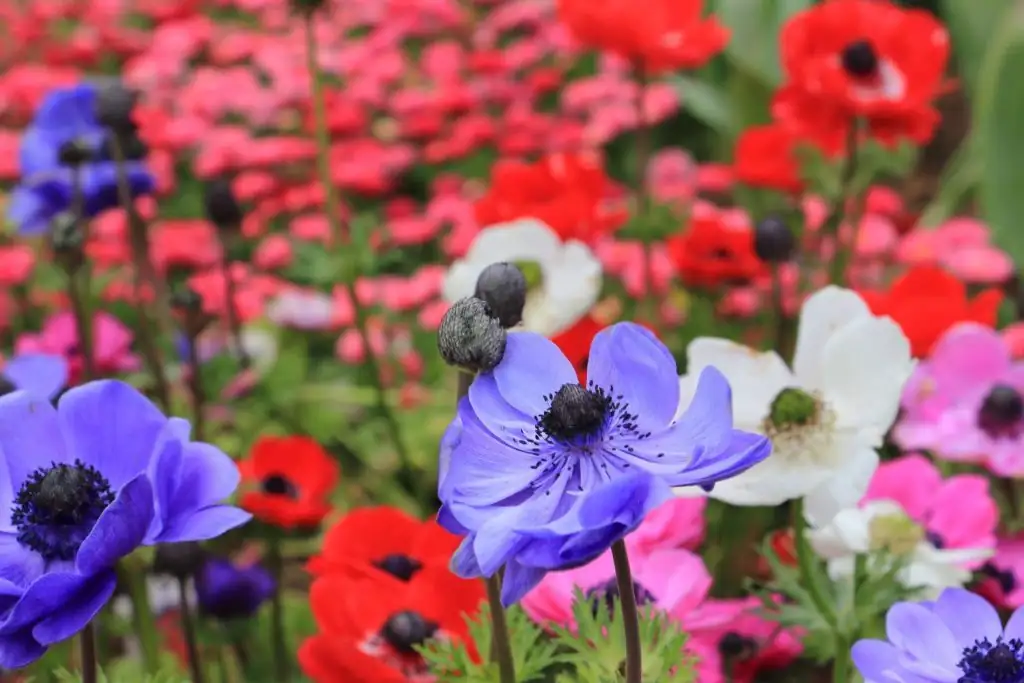
- Cool-season star: In mild, bright conditions—prime spring—A. coronaria grows actively and throws its vivid flowers. Then, as summer heat sets in, it slips into dormancy.
- A spring arrival cue: In traditional European gardens, windflowers appear just as breezes soften and days lengthen. This reliable entrance framed them as harbingers: “Get ready—change is coming.” Thus, anticipation.
- A quiet shield: In European folk belief, people sometimes carried anemones to ward off miasmas and illness. Whether or not that worked, it cemented an association with protection—a floral charm against ill winds.
How floriography fixed the message
Europe’s language of flowers, popular in the 18th and 19th centuries, took observations and folklore and turned them into code.
- Anticipation: Buds held like secrets and blossoms that open with light offered a perfect emblem for waiting with hope.
- Protection: The flower’s outer sepals (which look like petals) shield the inner parts as a bloom forms. Gardeners also noticed how healthy plants thrived in brisk air and good light—fresh wind as friend, not foe. These cues, plus folk practices, evolved into a protective meaning.
- Love and loss: Layered atop this, classical stories—especially the tale linking anemones to Aphrodite and a lost love—introduced a more somber undercurrent. In Victorian lists, windflowers could also signal fragile or forsaken affection. The result: a bloom that holds both shield and sigh.
The richness is the point. In Western gifting, anticipation and protection lead the way; in some Eastern contexts, white anemones can read as mourning. The windflower speaks, but not always in the same dialect.
Color cues for modern gifting
Anemone coronaria comes in a painter’s palette—bold reds, crisp whites, velvety purples, lucid blues, and many bi-colors. Color gently steers the message.
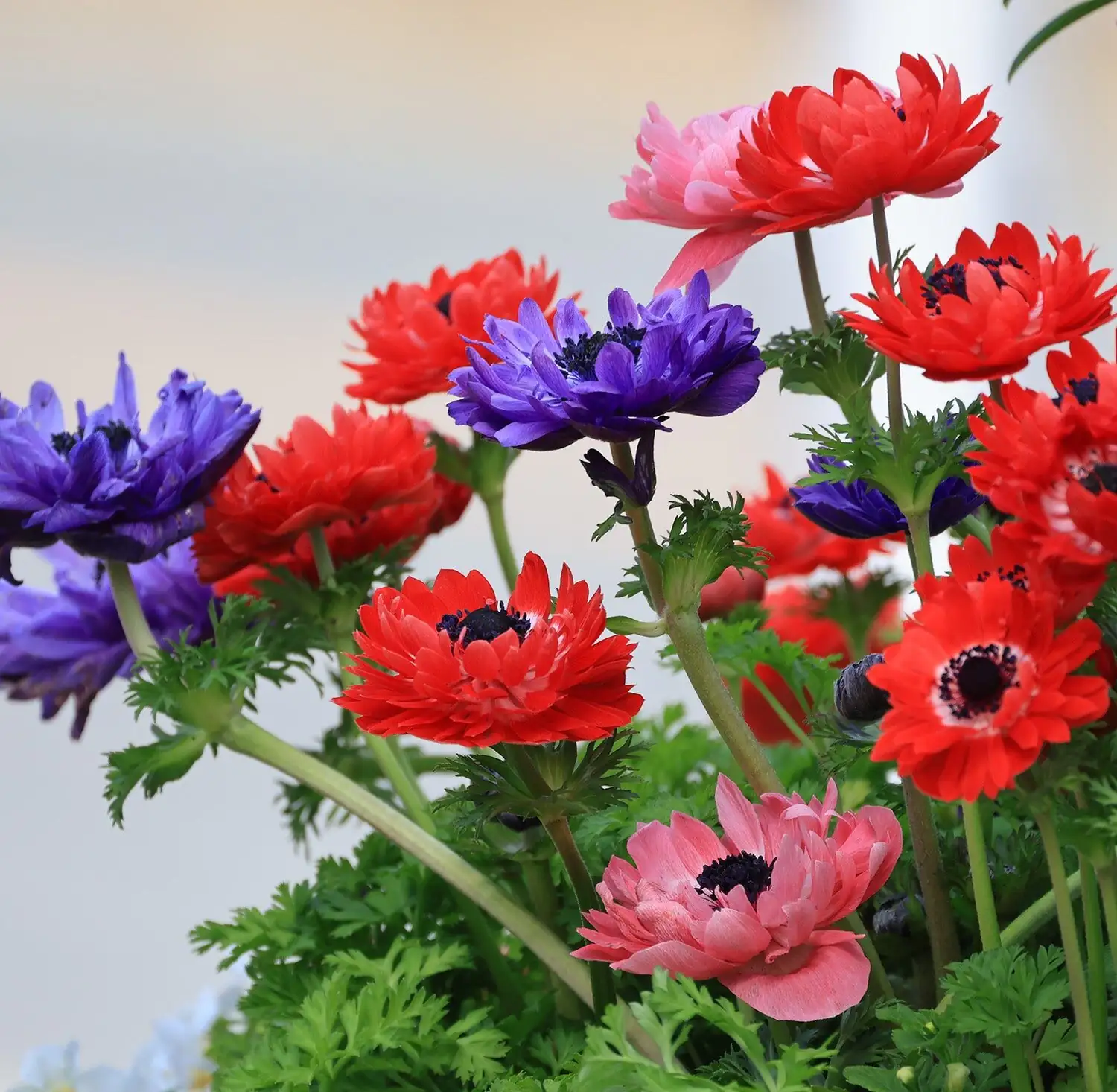
- Red or pink: Romantic intensity, but historically tied to love tested or lost. Choose thoughtfully for anniversaries or heartfelt declarations.
- White: Purity, sincerity, and peace in many Western settings; in several Eastern cultures, white reads as mourning—use with cultural care.
- Purple and blue: Wonderful for “protection” and “anticipation,” perfect for new chapters, exams, job changes, or travel send-offs.
- Bi-colors and pastels: A lighter, celebratory note—ideal for spring birthdays, housewarmings, and cheerful “thinking of you” bouquets.
Tip for cut flowers: Keep petals dry and the environment cool to preserve that crisp, satiny look. Avoid wetting open blooms.
Cultural sensitivity: when a windflower is a whisper, not a shout
- Excellent choices:
- New beginnings: promotions, graduations, moves, launches—pair purple/blue with tulips or ranunculus for a buoyant spring message.
- Protection and well-wishes: recovery, travel, big life leaps—purple/blue or gentle bi-colors say “I’ve got your back.”
- Seasonal joy: Easter and spring fêtes—white, blue, and magenta mixes sparkle without overshadowing.
- Use care:
- Sympathy: appropriate in many Western contexts (white, soft blues), but check local customs; in some regions white anemones feel too closely aligned with mourning.
- Romantic red: stunning but storied—add a note about “steadfast anticipation for our future” to tilt the meaning toward hope rather than loss.
Styling windflowers at home: breezy, modern, unforgettable
Anemone coronaria is as good in a vase as it is in a pot.
In arrangements

- Let them breathe: Their elegant, long stems and crisp discs love air and light. A loose, wind-swept style suits them better than densely packed domes.
- Pairings: Tulips, muscari, hellebores, and ranunculus echo that cool-season sparkle. A sprig of rosemary or olive leaf underscores the Mediterranean origin and “protective” motif.
- Color plays: Build tension with inky purple and cherry red; or keep it serene with white and sky-blue.
In pots and on porches
- The instant spring-maker: Plant 3 tubers in a 12–15 cm container for a lush look; choose a bright, east- or south-facing windowsill or balcony.
- Texture matters: Their fine, fresh-green foliage gives airy contrast beside structural succulents or bold hyacinths.
- Keep petals pristine: Mist foliage in dry air if needed—but don’t spray open blooms.
Quick grower’s notes to make the symbolism last
- Light: Full sun is best for strong stems and abundant flowers; partial shade is fine. Indoors, choose a bright east or south window with good airflow.
- Temperature: Loves 15–20°C (59–68°F). Dislikes hot, humid spells.
- Water: Keep evenly moist while stems extend and during bloom; never soggy. After potting dry tubers, water lightly at first, then increase as growth appears.
- Feeding: During active growth, a monthly dilute organic feed; give one extra bloom-boost higher in phosphorus and potassium when buds first show.
- After flowering: Deadhead to help tubers recharge. Expect natural dormancy in summer heat; growth resumes when conditions turn mild again.
- Safety note: Like many Ranunculaceae, sap can irritate skin and the plant is potentially toxic if ingested—keep away from pets and children.
Buying tip: For potted plants, look for sturdy specimens under about 40 cm tall with thick stems, many buds, rich color, and deep green leaves. Long-stemmed or double-flowered cultivars are outstanding for cutting.
Why anticipation and protection still feel right
Watch a poppy anemone on a breezy spring morning and you’ll see the whole story. The flower leans into moving air, opens to light, and then—when seasons shift—withdraws to rest. European floriography simply wrote down what gardens had been saying all along: this is a bloom about thresholds and guardianship, about the breath before something begins and the wish that good winds carry you safely there.
Gift it when someone is on the cusp of possibility. Arrange it where the room needs a little courage. In the language of the windflower, hope is not static—it stirs.