


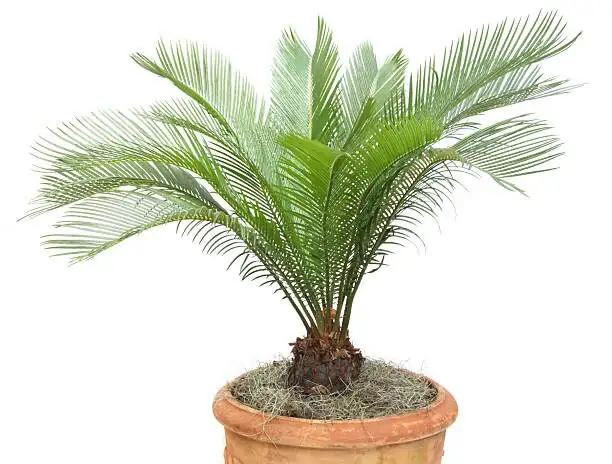
If you’ve ever craved a plant that radiates quiet confidence—something sculptural, evergreen, and deeply un-fussy—Zamia furfuracea delivers. Known widely as the Cardboard Palm (though it isn’t a palm at all), this ancient cycad brings a grounded presence to bright rooms and serene workspaces. Its gift? A long, steady life and an architectural calm that feels like a deep breath for your decor.
Meet Zamia furfuracea (Cardboard Palm)
- Not a true palm: it’s an ancient cycad in the family Zamiaceae, native to eastern Mexico (Veracruz).
- Look and feel: thick, stiff, feather-like fronds with deep green, glossy leaflets; a compact rosette that slowly develops a thickened base (caudex).
- Pace of life: slow-growing, evergreen, and remarkably forgiving indoors—perfect for long-term container culture on bright windowsills, in living rooms, and in offices.
- Cones, not flowers: this species produces separate male and female cones, most often in warm, bright summer conditions.
Modern symbolism: resilience and longevity
Why this plant feels so “steadfast”:
- Ancient lineage, modern poise: as a “living fossil,” Zamia evokes endurance across eras—a natural emblem of longevity.
- Slow and steady: growth is measured, not rushed. That steady tempo suggests patience, reliability, and the wisdom of pacing.
- Tough without theatrics: drought-tolerant and shade-adaptable once established, it weathers the small stresses of indoor life with grace.
Together, these traits translate beautifully into modern symbolism: resilience that’s calm, not flashy; longevity that whispers, not shouts.
Flower language? Not for cycads—and here’s why that matters
Many houseplants are assigned meanings through “flower language” (floriography), a cultural practice popularized in 19th-century Europe and echoed in Japan through hanakotoba. Those traditions center on blossoms used in bouquets and arrangements.
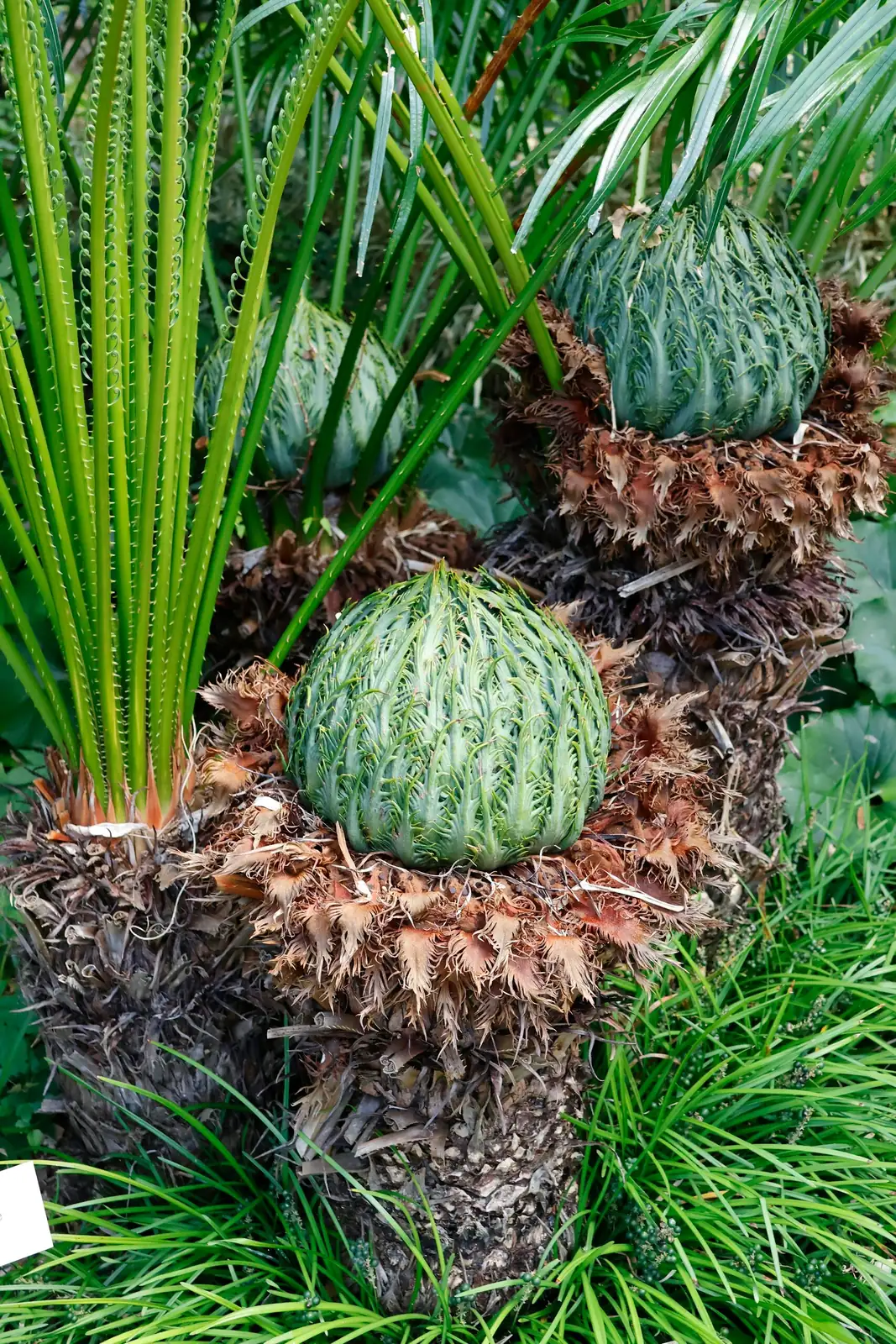
Cycads, however, don’t bloom—they bear cones. They weren’t part of the cut-flower trade that birthed those symbolic dictionaries, so there’s no traditional, codified “flower language” for Zamia furfuracea. Culturally, that leaves us freer to read the plant on its own terms: we look to its form, longevity, and ancient heritage rather than to petal color or bouquet context. The result is a more contemporary, values-based symbolism—resilience, longevity, quiet strength—rooted in how the plant actually lives.
Feng shui–leaning placements for calm, grounded spaces
While cycads don’t have classic floriographic meanings, they excel as “anchors” in serene interiors. Think of Zamia furfuracea as a visual weight: textural, orderly, and evergreen.

Design and placement ideas that also suit the plant’s needs:
- Living room reset: place it near a bright, well-ventilated window to steady a seating area. A low, wide ceramic or stone planter enhances the grounded vibe.
- Home office focus: set it to the side of your desk (not blocking walkways) to suggest steady, sustainable progress.
- Entryway welcome: stage on a bench or console in bright light—a sculptural “exhale” as you come and go.
- Sheltered balcony calm: give it sun with airflow, shielding from scorching midday rays behind glass.
Feng shui–inspired pointers (gentle, not dogmatic):
- To nudge a sense of steady growth, many place upright, evergreen plants in the East (health/family) or Southeast (growth/abundance) zones—provided these spots are bright and airy.
- For contemplative calm, a reading nook in the Northeast can benefit from a single, well-kept plant as a focus anchor.
- Prioritize light, warmth, and ventilation over strict map positions; a thriving plant is the most harmonious one.
Avoid:
- Dark, stagnant corners with no natural light.
- Direct, scorching midday sun behind glass.
- Drafts from vents, and high-traffic spots where fronds get brushed or bent.
- Areas accessible to pets or small children (see Safety).
Care essentials (easy, forgiving, and long-lived)
Sunlight
- Best: bright light to full sun indoors with good airflow.
- Tolerates bright shade.
- Protect from harsh, scorching midday sun behind glass.
Temperature & humidity
- Ideal: 13–24°C (55–75°F).
- Keep above 2°C (36°F); leaf damage can occur below 0°C (32°F).
- Average indoor humidity is fine; occasional misting or leaf-wiping keeps foliage clean.
Soil & pot
- Use a very free-draining mix: roughly 2 parts peat/leaf-mold–based potting mix to 1 part coarse sand/grit/perlite.
- Always use a pot with drainage holes; shallow, wide containers suit the root system and improve stability.
Watering
- Water thoroughly, then let the top layer of mix dry before watering again.
- Growing season: keep the mix lightly moist, never soggy.
- Autumn: reduce as temperatures drop.
- Winter: keep on the dry side—cold + wet soil invites root rot.
Feeding
- Feed monthly in the growing season with a balanced fertilizer (e.g., NPK 20-20-20) at label rates or a gentle organic liquid feed.
- Skip fertilizing in winter if growth slows.
Pruning & grooming
- No shaping needed. Remove yellowing or damaged older leaves at the base with clean tools.
- Avoid nicking the caudex; small buds/offsets may form near the base.
Propagation
- Seeds: sow indoors in spring, cover with ~2 cm (0.8 in) of mix; warmth (24–30°C / 75–86°F) speeds germination.
- Offsets: in April–May, separate pups with minimal wounding; let cuts callus, then root in sand at ~26–30°C (79–86°F) before potting on.
Repotting
- Slow grower: repot small plants every ~2 years; larger ones every 3–4 years.
- Refresh with a fast-draining mix and excellent drainage; typical pot sizes range from 15–40 cm (6–16 in) diameter.
Seasonal rhythm (your simple calendar)
- Spring: resume watering gradually; sow seeds; divide offsets (Apr–May); repot if needed.
- Summer: brightest light with ventilation; keep lightly moist; fertilize monthly; cones may appear in warm, bright conditions.
- Autumn: ease off watering as nights cool.
- Winter: brighter and cooler spot; water sparingly; keep above 2°C (36°F).
Styling notes for a serene look
- Pair with materials that feel elemental: unglazed clay, river stone top-dressings, or matte ceramic.
- A low, wide bowl accentuates the rosette and makes the plant read as a living sculpture.
- Keep the silhouette clean by removing naturally yellowing basal leaves—tidiness enhances that calm, architectural presence.
Safety and health
- Toxicity: toxic if ingested; all parts—especially the seeds—contain potent toxins. Keep away from children and pets.
- Common pests/diseases: watch for scale (wipe and treat with horticultural oil or insecticidal soap as needed). Improve airflow to prevent leaf spot. Avoid waterlogged soil to prevent root issues (including possible root-knot nematodes in contaminated media).
Buying checklist
- Choose a plant with:
- A firm, thick caudex/base.
- Even, symmetrical crown with deep-green, intact leaves.
- No pest specks (especially scale) or damage.
- After purchase:
- Place in your brightest, best-ventilated spot.
- If pushing new leaves, weak light causes thin, stretched leaflets—upgrade the light.
- Water lightly at first while it settles in.
Troubleshooting quick hits
- Leaves yellowing by second spring?
- Possible causes: low winter temperatures or big day–night swings, weak light, drafts from vents, overwatering in cool weather, severe underwatering, fresh paint/renovation off-gassing, or misapplied fertilizer.
- Fixes: stabilize temperature, right-size watering (slightly drier in cool periods), improve light and airflow, and check for drafts.
Why this plant calms a room
Zamia furfuracea whispers longevity through its poise and patience. Without showy flowers—or the inherited scripts of flower language—it invites you to value endurance over spectacle. In bright, airy placements that honor its needs, it becomes a living reminder to move steadily, breathe deeply, and let strength be quiet.