

Think of bigleaf hydrangea (Hydrangea macrophylla)—those mophead and lacecap showstoppers—as a plant that writes next summer’s love letters in late summer and fall. Those letters are flower buds tucked along last year’s stems. Prune at the wrong moment and you’re not hurting the shrub—just shredding the stationery. This myth-busting, confidence-boosting playbook shows you exactly when to snip, how much to remove, and how to protect those precious old-wood buds so you get armfuls of blooms, year after year.
Meet Hydrangea macrophylla in 30 seconds
- Also known as bigleaf, French, mophead, or lacecap hydrangea; native to East Asia (especially Japan).
- Deciduous, bushy, usually 1–2 m tall and wide (3–6.5 ft), larger in mild climates.
- Blooms late spring through summer (some cultivars rebloom into fall).
- Morning sun with afternoon shade is the sweet spot; keep soil evenly moist and well-drained.
- Many varieties shift flower color with soil chemistry: more acidic soils with available aluminum encourage blue; more alkaline pushes pink/red (white forms generally stay white).
Myth-busting: what to stop doing right now
- Myth 1: “Cut it back hard in fall to keep it tidy.” That’s the surest way to remove next year’s flowers. Most bigleaf hydrangeas bloom mainly on old wood (last year’s stems), which already carry the coming season’s flower buds.
- Myth 2: “If it won’t bloom, dump on more fertilizer.” High nitrogen fuels foliage, not flowers. Use balanced feeding in spring and early summer; ease off after about July so stems harden before winter.
- Myth 3: “All hydrangeas prune the same.” Not true. Panicle (H. paniculata) and smooth (H. arborescens) bloom on new wood and can be cut back late winter. Bigleaf hydrangea is different—respect the old wood.
- Myth 4: “Deadheading equals pruning.” Snipping spent blooms is cosmetic. Structural pruning (renewing older canes) has its own timing and rules.
- Myth 5: “No blooms = plant is ‘too old.’” Far more often it’s bud loss from winter cold, late pruning, too much shade, or drought swings—not age.
Old-wood buds, decoded

- Where they are: Along last year’s stems at the nodes (where leaves were attached). In winter, these look like fat, scaled buds.
- When they form: Late summer into fall. The plant needs a steady finish to the season to set and mature buds.
- What harms them:
- Pruning after the main bloom window (late summer to winter).
- Harsh freezes and drying winds, especially in exposed sites or containers.
- Staying too warm indoors over winter (breaks dormancy prematurely, then buds get zapped by cold snaps).
- Why it matters: Protecting and timing your pruning around these buds turns “why didn’t it bloom?” into “wow, look at that!”
The confidence-boosting pruning playbook
Late winter to early spring: assess, don’t guess
- Wait for leaf-out to show what’s alive. If you must decide earlier, use the scratch test: green beneath the bark means living wood.
- Remove only what is clearly dead, diseased, crossing, or winter-killed tips. Cut just above healthy outward-facing buds.
- Resist shearing. Hydrangeas aren’t boxwood topiaries; shearing chops off bud-bearing nodes.
- On young plants, pinch soft tips when shoots reach about 15 cm/6 in to encourage branching and future flower capacity.
- Reblooming cultivars (those that can flower on both old and new wood): in spring, limit cuts to dead wood. Heavy spring pruning risks delaying or reducing the earliest flush that comes from old wood.
Right after the main bloom: your safe-shape window
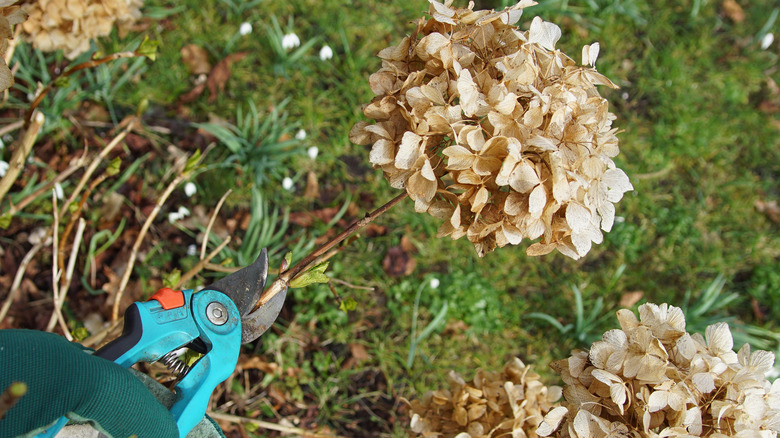
Timing: As soon as flowers fade in summer—don’t wait beyond a few weeks.
What to do:
- Deadhead precisely. Cut each spent bloom back to the first strong pair of buds or a healthy side branch.
- Size and shape lightly. Shorten overly long stems by up to about one-quarter to one-third to keep the shrub balanced.
- Renew tired canes. Remove up to about one-third of the oldest, thickest canes right at the base to stimulate vigorous replacements.
- How to spot “old”: thicker stems with rougher bark and fewer strong side shoots.
- Keep the best new, sturdy canes; they’re next year’s flower factories.
Stop pruning by late summer so the plant has time to set and mature next year’s buds.
Yearly cane renewal, simplified
- Each summer post-bloom, select 2–4 of the oldest canes (up to roughly one-third of the plant) and remove them at ground level.
- Space the remaining canes for good airflow and even light—especially important in humid climates prone to leaf spots and mildew.
- Over 2–3 seasons, this rolling renewal keeps the shrub youthful and floriferous without drastic resets.
Special note for rebloomers
- These can flower on both old and new wood. You can deadhead after each flush to tidy, but still avoid heavy late-season cuts.
- If you do need to reduce size significantly, do it right after the first bloom cycle. You might sacrifice some later flowers that year, but you’ll preserve the earliest flush next season.
Winter bud protection that actually works
Bigleaf hydrangea’s stems are fairly hardy; the flower buds are the divas. Shield them and you keep the show.
Garden plants:
- Choose a sheltered spot with morning sun and protection from harsh winter winds.
- After a few hard frosts (soil cooling), mulch 5–10 cm (2–4 in) over the root zone. Keep mulch just off the stems.
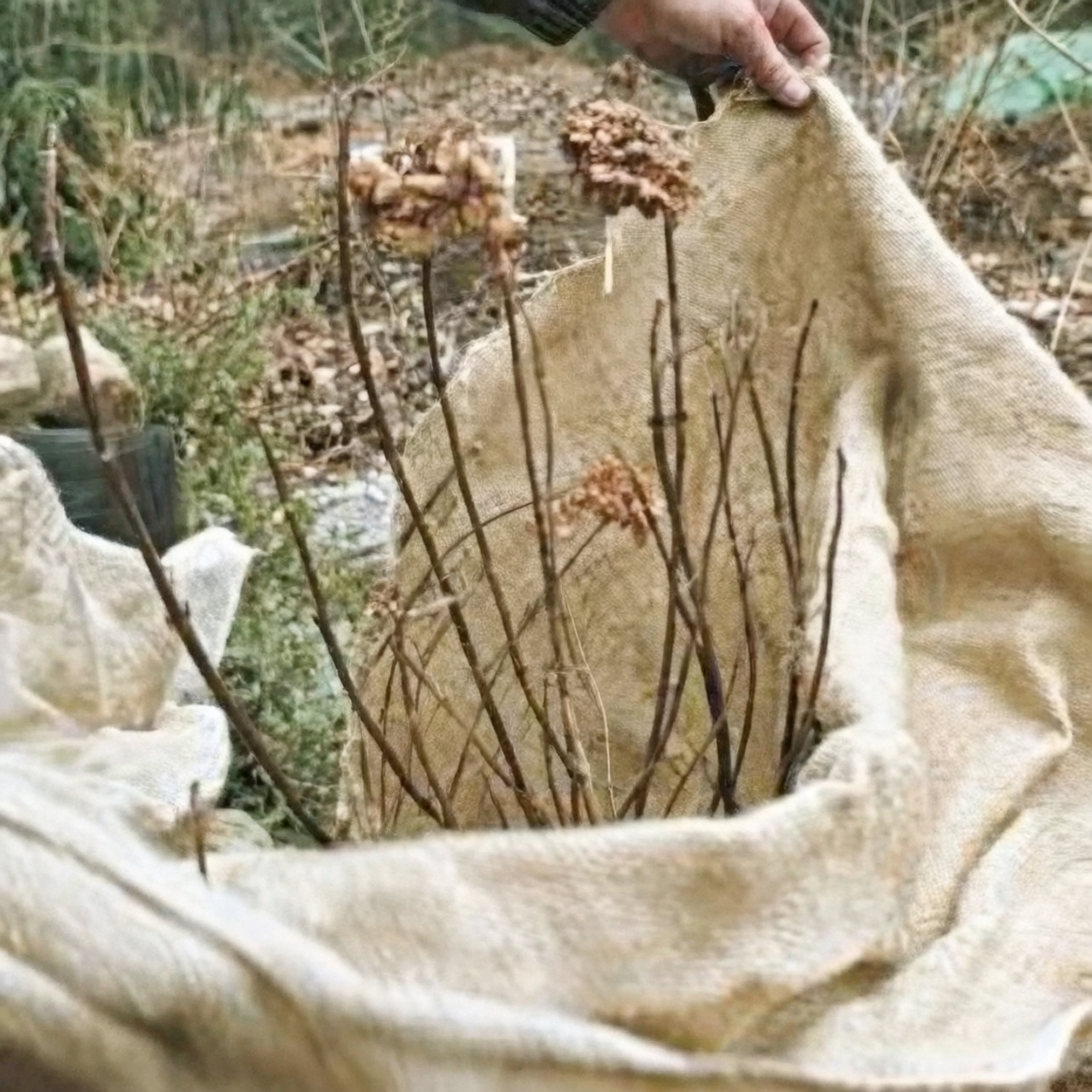
- In colder sites, loosely tie stems together and build a simple burlap cylinder around the plant. Fill lightly with dry leaves or straw to insulate buds. Remove gradually in spring.
- Water sparingly through winter—never bone-dry, never waterlogged.
Containers:
- Buds are extra vulnerable in pots. Move containers to an unheated, bright-sheltered location (protected porch, cold frame, or unheated garage) where temperatures hover just above freezing and generally below 10°C/50°F.
- Check monthly; water lightly so the root ball doesn’t fully dry.
- Avoid bringing pots into a warm room—too cozy, and buds break dormancy prematurely.
Pro tip: A cool winter rest actually favors reliable bud set. Aim for consistently cold but not brutal conditions.
What if you pruned at the wrong time?
Don’t panic. You may miss a bloom season, but the shrub will recover. Focus on:
- Excellent moisture management in spring and summer (deep, even watering).
- Balanced feeding in spring and early summer; taper by midsummer.
- Good winter protection next go-round. Flowers should be back the following year.
Quick cultural cues that boost blooms
- Light: 3–6 hours of sun, ideally morning. In hot climates, give afternoon shade to prevent scorch and prolong bloom life.
- Water: Deeply 1–2 times weekly in summer; more often in heat waves or small containers. Avoid soggy soil.
- Soil and color: Organic-rich, well-drained. Lower pH with available aluminum encourages blue; higher pH pushes pink/red. Changes are gradual; white cultivars typically stay white.
- Feeding: Balanced fertilizer in spring and early summer (e.g., 10-10-10). Scale back after about July so growth can mature before winter.
Common pruning pitfalls to avoid
- Cutting in fall or winter on old-wood bloomers—say goodbye to next summer’s flowers.
- Treating bigleaf like panicle or smooth hydrangeas (those bloom on new wood and tolerate late-winter reductions).
- Shearing into a ball, which removes bud-bearing nodes and invites disease by thickening the canopy.
- Neglecting airflow—thin for space and remove congested growth to reduce leaf spot and mildew pressure.
Health and safety side notes
- Keep an eye out for aphids, spider mites, thrips, Japanese beetles, powdery mildew, and leaf spots. Improve airflow, water at the base, and escalate controls only as needed.
- Mildly toxic if ingested; keep petals and leaves away from curious pets and children.
Flower language and the story behind it
Hydrangeas are loaded with symbolism: gratitude, heartfelt emotion, grace, and abundance—all inspired by those generous clusters. In Japan, an old tale tells of an emperor gifting blue hydrangeas in apology, cementing their association with remorse and understanding. Victorian floriography added a twist, sometimes casting hydrangeas as “boastful” for showing off more sepals than seeds. Put together, the flower language reflects a plant that can say “I’m sorry,” “thank you,” and “look at this bounty” all at once—a fitting mirror of a shrub that, with the right prune-and-protect routine, repays you lavishly.
—
Bottom line: For Hydrangea macrophylla, think “light and early.” Shape right after bloom, renew a fraction of the oldest canes each year, protect buds through winter, and let steady moisture do the rest. Do that, and the only drama in your garden will be those glorious, color-shifting blooms.