

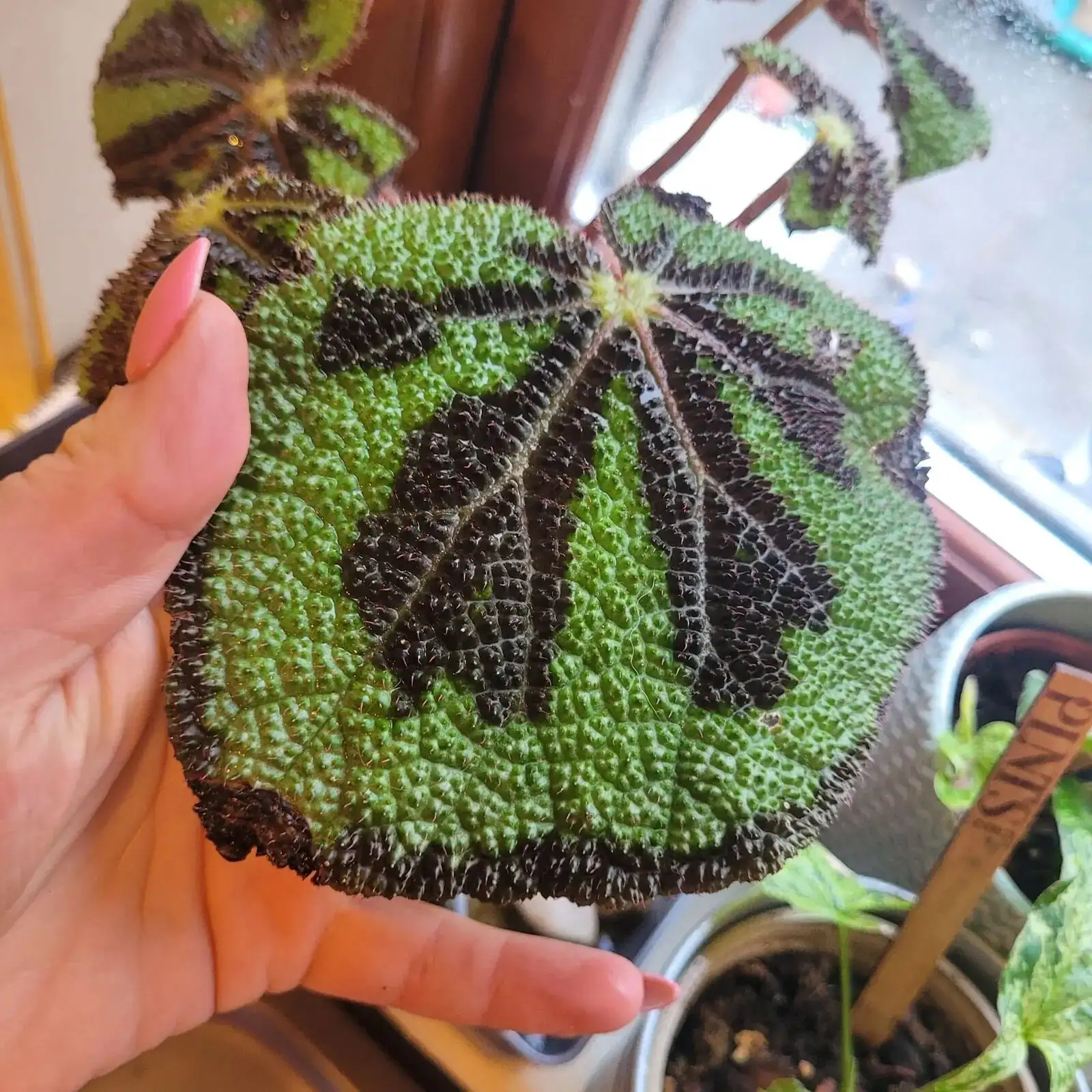
If you’ve ever wanted an easy win in plant propagation, Begonia masoniana—better known as Iron Cross Begonia—was made for you. Its bold, sandpapery, heart-shaped leaves and dark “iron cross” pattern draw all eyes, but the real magic is how readily this rhizomatous begonia multiplies from simple divisions and even single leaves. Follow this confidence-boosting tutorial to master rhizome division and leaf-cutting methods, plus pro-level tips on humidity, medium, and temperature for fast, healthy roots.
Meet your plant partner
- Botanical name: Begonia masoniana
- Also called: Iron Cross Begonia, Mason’s Begonia, Brazilian Begonia
- Origin: Southern China to Vietnam; now a global foliage favorite
- Growth habit: Compact, clump-forming rhizomatous perennial that spreads more than it climbs
- Why it’s perfect for propagation: Rhizomes naturally branch. Leaves root and form new plantlets with the right humidity, warmth, and a clean medium.
Before you start: The fast-rooting setup
- Light: Bright, indirect light (no harsh direct sun). Near an east or bright north window is ideal.
- Temperature for rapid rooting: 21–24°C (70–75°F). Keep the overall space within 18–27°C (64–81°F). Avoid anything below 13°C (55°F).
- Humidity sweet spot: General growing: 50–70%. For rooting cuttings, a covered propagation container temporarily gives you higher humidity; just vent it daily to prevent mildew.
- Rooting media that speed success:
- Sterile perlite or a 1:1 perlite:vermiculite blend (airy, clean, resists rot)
- Long-fiber sphagnum moss (lightly moist, not sopping)
- For potting up later: a loose houseplant mix based on peat/coco coir amended with perlite and a little fine bark for fast drainage
- Tools and supplies:
- Clean, sharp pruners or a knife (sanitize with 70% isopropyl alcohol or a 10% bleach solution)
- Clear lidded container or humidity dome (even a takeout box with air holes works)
- Labels, rooting hormone (optional), and small, shallow pots
H2: Rhizome division (the quickest route to a new, vigorous plant)
This is the “sure thing” method—great for boosting confidence and numbers fast.
H3: When to divide
- Best in spring to early summer when growth is active and warmth is steady.
H3: Step-by-step
1) Unpot and reveal: Water lightly the day before. Gently slide the plant out and tease away mix to expose the rhizome (thick, creeping stem).
2) Choose sections: Identify firm rhizome pieces each with at least 1–2 growth points (“eyes”) and, ideally, a leaf or two.
3) Sterile cuts: With sanitized tools, cut the rhizome into sections. Trim away any mushy or blackened bits.
4) Callus briefly: Let cut surfaces air-dry 1–3 hours so they’re tacky, not wet—this helps prevent rot.
5) Pot shallowly: Place each section on the surface of a moist, airy mix. Press in so the bottom half touches the medium and the top half is exposed. Rhizomatous begonias resent being buried deep.
6) Set conditions for speed:
- Temperature: 21–24°C (70–75°F)
- Light: Bright, indirect; no direct sun
- Humidity: Aim for 60–70% room humidity; a loose cover for the first week is optional, but always allow airflow.
7) Watering: After potting, water to settle the medium and drain well. Then wait until the top 2–3 cm (1 in) dries before watering again—never soggy.
8) Timeline: Expect new roots in 2–3 weeks and fresh leaves in 3–5 weeks under warm, bright conditions.
H3: Pro tips for divisions
- Shallow, wider pots accommodate creeping rhizomes and reduce overwatering risk.
- A heat mat set to ~22°C (72°F) can shave a week off rooting in cool homes.
- Dusting cut edges lightly with a rooting hormone is optional but can help in cooler conditions.
H2: Leaf cuttings (full leaf or wedges for multiples)
Iron Cross Begonia leaf blades are wonderfully cooperative. Root the entire leaf by its petiole or multiply your chances using leaf wedges pinned along the veins.
H3: Method A — Whole-leaf with petiole
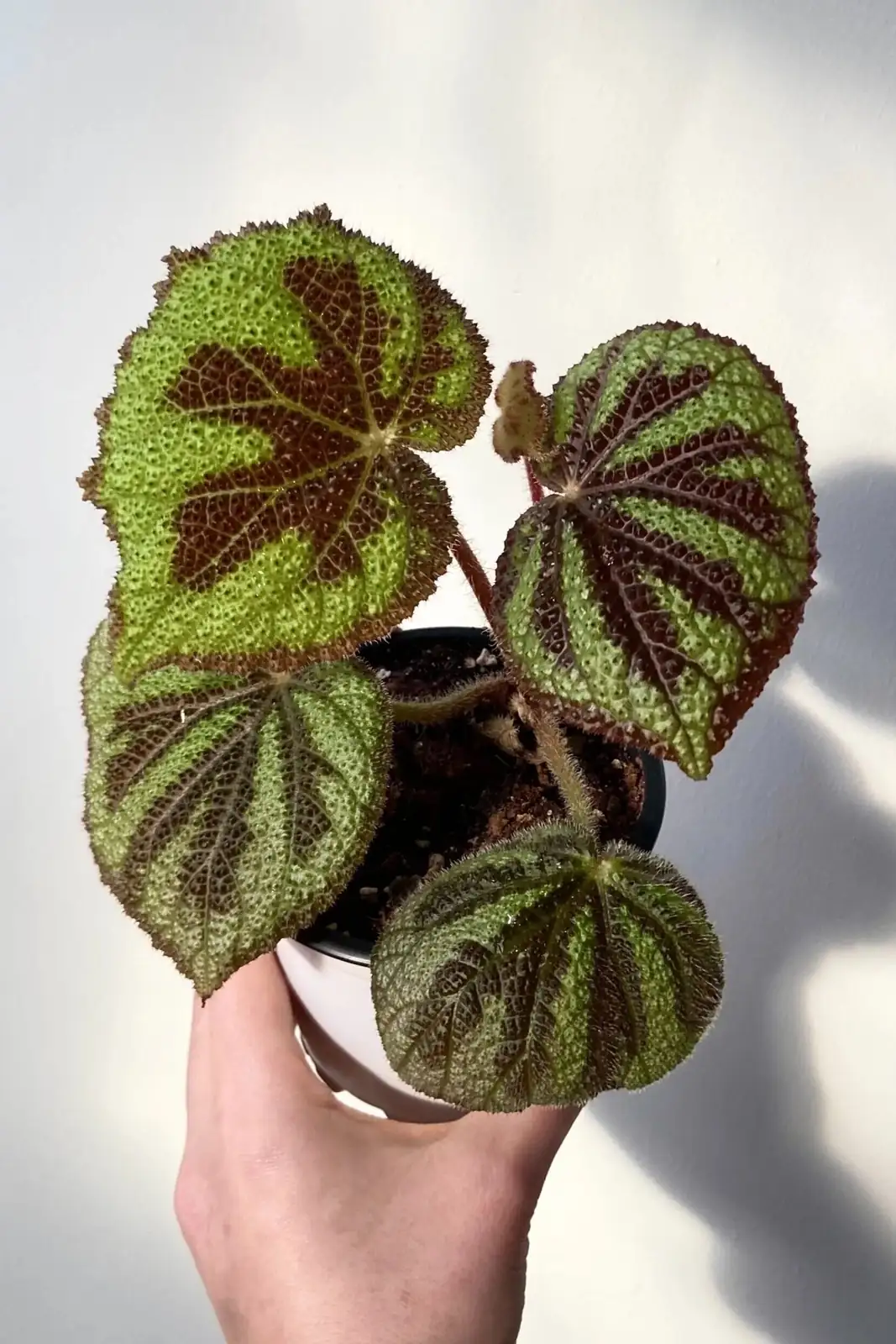
1) Select a mature, unblemished leaf. Cut it cleanly with 2–4 cm (¾–1½ in) of petiole.
2) Medium: Insert the petiole into sterile perlite, perlite:vermiculite (1:1), or lightly moist long-fiber sphagnum. Firm gently.
3) Create a mini-greenhouse: Place in a clear, lidded container. You’re aiming for a steady, gently humid environment—not dripping condensation.
4) Conditions for rapid rooting:
- Temperature: 21–24°C (70–75°F)
- Light: Bright, indirect; 8–12 hours daily. Avoid sunbeams on the box.
- Humidity: Inside the box, humidity naturally rises—vent daily for 10–20 minutes to prevent mildew.
5) Watering: Keep the medium barely moist. If in perlite/vermiculite, moisten with distilled or clean water. No standing water.
6) Timeline: Tiny roots in 2–4 weeks; plantlets forming at the base of the petiole in 4–8+ weeks.
H3: Method B — Leaf wedges for lots of babies

1) Prepare the leaf: Remove the petiole. With a sanitized blade, cut the leaf into 3–6 wedges, each with a section of main vein.
2) Lay and pin: Lay each wedge flat on pre-moistened perlite:vermiculite or sphagnum, vein side down. Pin gently with hairpins or toothpicks so the veins touch the medium.
3) Dome and care: Cover with a clear lid. Vent daily. Maintain the same warm, bright, indirect light.
4) Timeline: Roots in ~3–5 weeks. New plantlets typically emerge along the pinned veins in 6–10+ weeks.
H3: Speed boosters that protect against rot
- Sterility matters: Use fresh, clean medium and sanitized tools to keep fungi at bay.
- Air + humidity: High humidity without airflow invites mildew. Vent daily and wipe excess condensation.
- Light warmth, not heat: Overheating a closed box in direct sun can cook cuttings. Bright light, no direct sun.
H2: Potting up your new begonias
- When to transplant: Once each division or leaf cutting has a small cluster of roots and 2–3 new leaves, move to a “real” pot.
- The ideal mix: A peat or coco-based houseplant mix lightened with perlite and a pinch of fine bark for fast drainage.
- Pot choice: Go shallow and slightly wider than the root ball to suit creeping rhizomes.
- Watering after transplant: Water thoroughly, let all excess drain, then wait until the top 2–3 cm (1 in) dries before the next drink.
- Feeding: In spring through early autumn, begin a balanced fertilizer at 1/4–1/2 strength every 2–4 weeks. Pause in winter.
H2: Light, temperature, and humidity—dialed for thriving
- Light: Bright indirect is your friend. Harsh direct sun can scorch and fade the iconic markings.
- Temperature: Keep between 18–27°C (64–81°F) year-round; protect from drafts and sudden chills. Never below 13°C (55°F).
- Humidity: 50–70% is ideal for everyday growth. Use a humidifier or a pebble tray (keep the pot above water). Skip heavy daily misting—wet leaves can spot or mildew.
H2: Troubleshooting for fast, healthy roots
- Cuttings collapsing or turning mushy:
- Cause: Overly wet medium, cool temps, or poor airflow.
- Fix: Squeeze excess moisture from sphagnum, or switch to perlite:vermiculite. Warm to 21–24°C and vent the dome daily.
- No roots after 4–6 weeks:
- Cause: Too cool, too dark, or dry medium.
- Fix: Add gentle bottom heat, move to brighter indirect light, and keep the medium barely moist.
- Brown, crispy leaf edges on mother plants:
- Cause: Low humidity, under-watering, or hot sun.
- Fix: Increase ambient humidity to 50–70%, water when the top 1 in dries, and shift to bright indirect light.
- Mildew or leaf spots:
- Cause: Stagnant, wet leaves and poor ventilation.
- Fix: Improve airflow, avoid wetting foliage late in the day, and consider an insecticidal soap or horticultural oil if pests are present.
H2: Safety, pests, and easy care reminders
- Toxicity: Keep away from pets and small children—ingestion can cause mouth irritation due to insoluble calcium oxalates.
- Common pests: Watch for spider mites, mealybugs, thrips, and fungus gnats. Catch issues early; treat with insecticidal soap or horticultural oil and improve airflow.
- Routine care: Prune damaged leaves at the base, repot every 1–2 years in spring, and remember—this plant prefers even moisture, not soggy soil.
H2: A note on symbolism and story
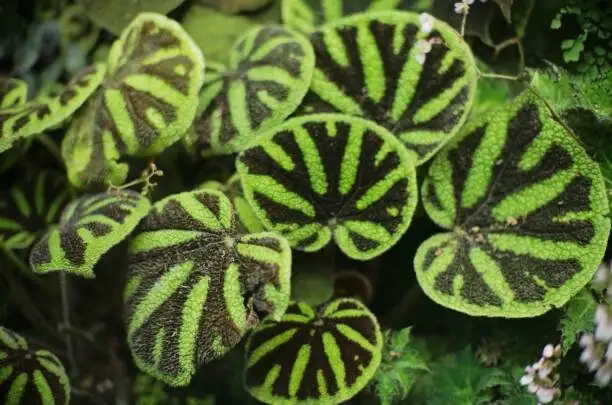
Nicknamed Iron Cross Begonia for its dramatic dark cross at the leaf’s center, this plant wears its individuality on its sleeve—literally. Its “language of flowers” moment? A quiet celebration of unique beauty and character. While not rooted in ancient lore, the symbolism resonates with today’s collectors who prize one-of-a-kind foliage and the tactile, sandpapery charm you just have to touch.
H2: Quick-reference checklists
H3: Rhizome division at a glance
- Best season: Spring to early summer
- Medium: Airy potting mix; rhizome half-exposed
- Temp: 21–24°C (70–75°F)
- Humidity: 60–70% with good airflow
- Light: Bright, indirect
- Watering: Let top 1 in dry; never waterlog
- Roots/new growth: 2–5 weeks
H3: Leaf cuttings at a glance
- Medium: Sterile perlite:vermiculite (1:1) or long-fiber sphagnum
- Container: Clear, lidded with daily venting
- Temp: 21–24°C (70–75°F)
- Light: Bright, indirect
- Moisture: Barely moist, no standing water
- Plantlets: 4–10+ weeks
With the right warmth, a clean, airy medium, and balanced humidity, Iron Cross Begonia rewards your efforts quickly—and abundantly. Start with one rhizome, end with a small forest of patterned, touchable leaves. You’ve got this.