
Snake plants, more formally known as Dracaena trifasciata, have captured the hearts of houseplant enthusiasts worldwide, and for good reason. Their architectural elegance and hardy nature make them a standout in any indoor garden. Whether you’re a seasoned plant parent or a green-thumbed newbie, learning to propagate these beauties is a rewarding venture. Let’s embark on this propagation journey and explore how to maintain their striking variegation along the way.
Propagate Like a Pro: Division and Leaf Cuttings
The Division Method: Ensuring Variegation
For those looking to preserve the stunning variegation of snake plants like the popular ‘Laurentii’ with its yellow-edged leaves, division is your best bet. This method maintains the genetic makeup of the plant, ensuring your new plants mirror the parent.

Steps for Division:
- Timing is Everything: The ideal time for division is during the spring when the plant is entering its growth phase.
- Prepare Your Tools: A clean, sharp knife or garden spade will do the trick. Sanitize your tools to prevent any infections.
- Remove the Plant: Gently take the plant out of its pot. This step is like uncovering buried treasure as you reveal the network of rhizomes below.
- Separate the Rhizomes: Identify sections where the rhizomes naturally separate. Each new section should have both roots and shoots. Aim for divisions that include 3-4 leaves.
- Potting: Place your divisions in fast-draining soil, like a cactus or succulent mix. Remember, drainage is more crucial than soil richness. Choose pots with drainage holes to prevent waterlogging.
- Aftercare: Position your new plants in bright, indirect light. Water sparingly until you see signs of new growth, indicating that roots have established.
Leaf Cuttings: A Fun Experiment
While leaf cuttings can be a gratifying method to multiply your collection, they often lose the original variegation, reverting to green. However, it’s a fun experiment and a great way to create more plants!
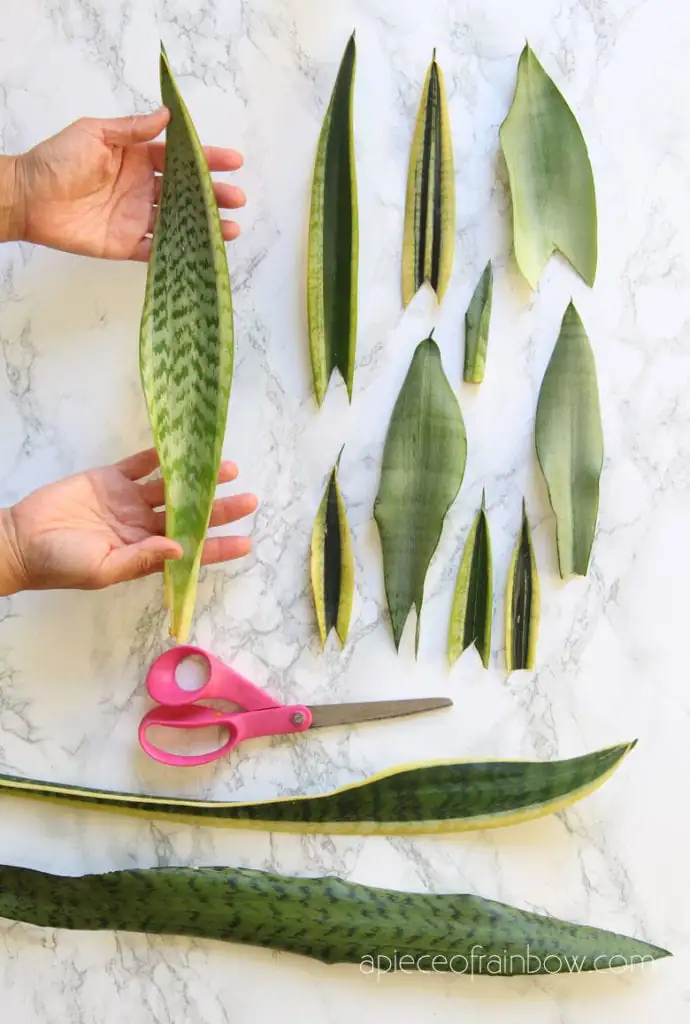
Steps for Leaf Cuttings:
- Select a Healthy Leaf: Choose a mature, healthy leaf free from blemishes.
- Cut the Leaf: Slice the leaf into sections about 5-10 cm (2-4 inches) long. The cut should be clean and precise.
- Callous Time: Allow the leaf sections to callous over for 1-3 days. This step is crucial to prevent rot when they are planted.
- Planting Options:
- In Soil: Insert the calloused ends into a gritty mix. Water lightly and keep in indirect light.
- In Water: Alternatively, place the cuttings in a jar with about an inch of water. Ensure the water level remains consistent, and change it weekly to keep it fresh.
- Rooting Time: Patience is key here. Rooting can take around 4 weeks or longer in cooler conditions.
Cultivating Success: Light, Water, and Love
Light and Placement
Snake plants are versatile with light requirements but thrive best in bright, indirect light. Avoid harsh, direct sunlight that can scorch the leaves. If you have a spot with gentle morning sun, your snake plant will thank you with robust growth.

Water Wisely
The golden rule with snake plants is to underwater rather than overwater. Allow the soil to dry out almost completely between waterings. A typical schedule might be every 2-4 weeks in warmer months and less frequently in winter. Always adjust based on the plant’s environment and pot size.
Preserving Variegation
To maintain the beautiful variegation in your snake plants, remove any fully green leaves that may appear. This encourages the plant to focus energy on producing variegated growth.
A Word on Safety
While snake plants are generally low maintenance, it’s worth noting that they’re mildly toxic if ingested. Keep them out of reach of curious pets and small children.
Conclusion
Propagating snake plants is a delightful and fulfilling endeavor, allowing you to share their beauty with friends or expand your own green oasis. Whether you choose division to preserve those eye-catching yellow edges or explore the leaf-cutting route, you’re sure to enjoy the process. So, get your hands dirty and start propagating! Your future self, surrounded by a lush jungle of snake plants, will thank you.