

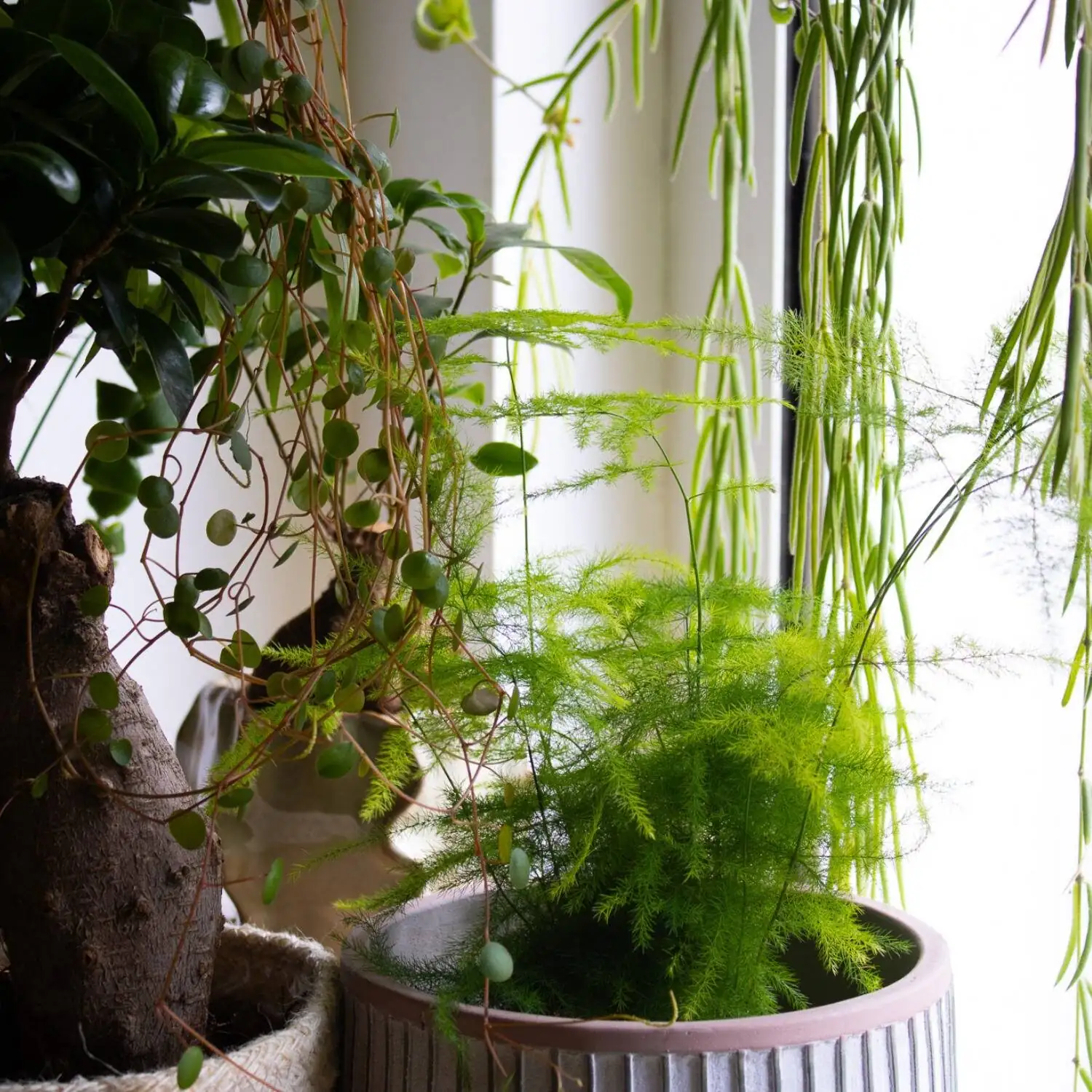
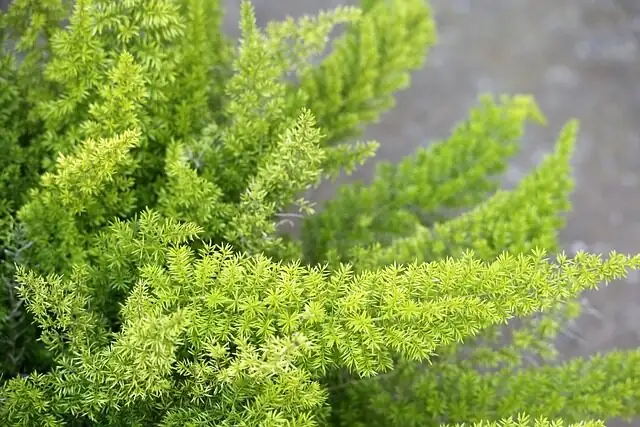
Feathery, fresh, and cascading like a green waterfall, Asparagus densiflorus (the classic “Asparagus Fern”) is a heart-stealer—just not for curious cats or snack-hunting dogs. The good news: with smart placement, a few easy precautions, and a plan for “just in case,” you can enjoy this plant’s lush look without risking your pets or your skin.
Meet the plant (and why it fools everyone)
- What it is: Asparagus densiflorus, often sold as Asparagus Fern, Foxtail Fern, Plume Asparagus, or Sprenger’s Asparagus. Fun twist: it isn’t a true fern—its “soft needles” are actually tiny modified stems called cladodes.
- Where it comes from: Southern Africa, where it learned to be tough and drought-smart.
- The vibe: Arching, trailing sprays that spill from hanging baskets and tall planters.
- Light and mood: Bright, indirect light to partial shade; gentle morning or late-afternoon sun is fine.
- Indoor ease: It has water-storing roots, so it’s more forgiving than many ferny look-alikes—as long as you avoid soggy soil and cold.
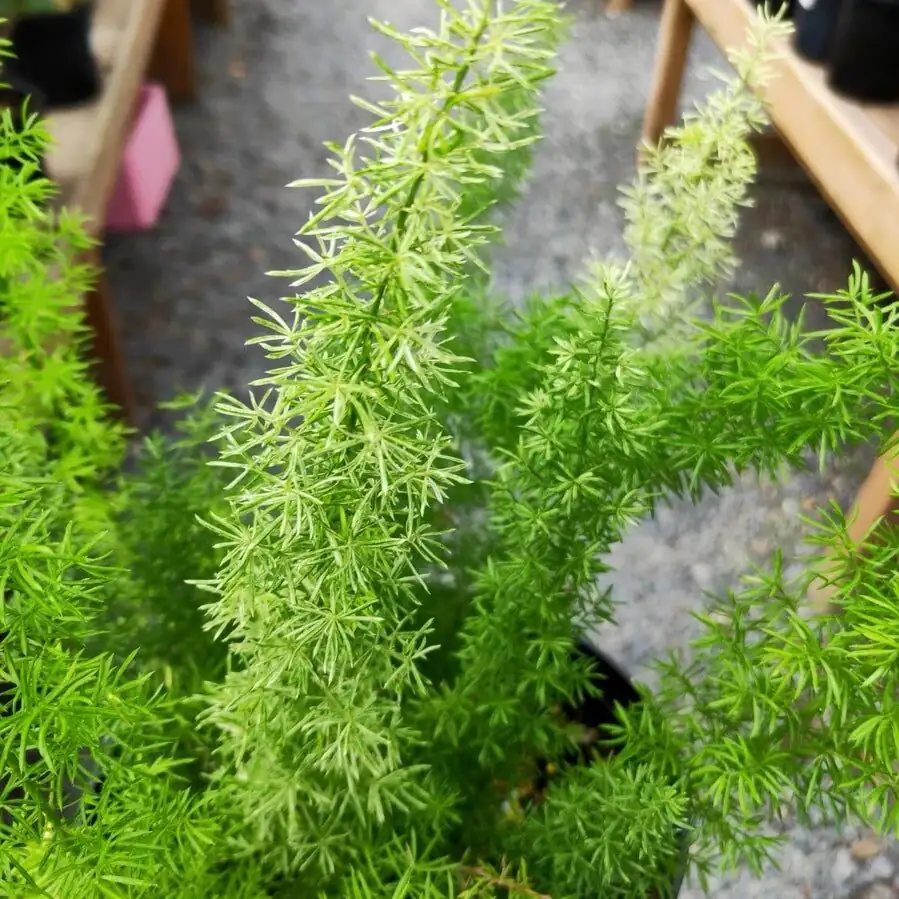
Pet-safe placement that works in real homes
Think of placement as prevention. Keeping the plant out of paw-range beats any aftercare.
Best spots
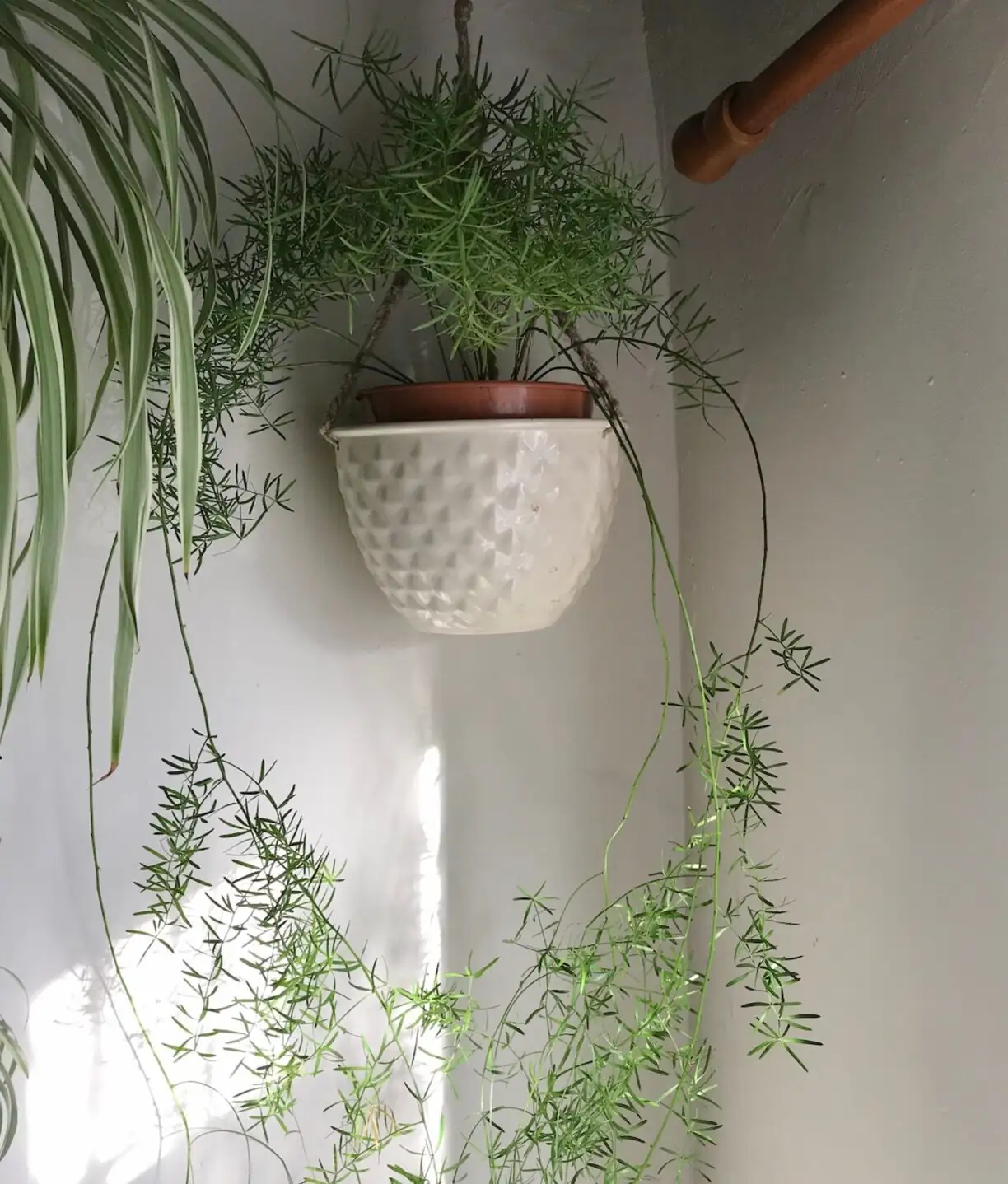
- High and handsome:
- Hanging baskets near east- or north-facing windows.
- Wall-mounted planters or shelves that pets can’t reach from adjacent furniture.
- Inside a glass-fronted “greenhouse cabinet” or on a high plant shelf with doors.
- Set back from bright south/west windows with filtered light so you avoid scorch but keep the plant happy.
Spots to avoid
- Window perches, bookcases, or mantels that double as cat highways.
- Low stands where trailing fronds brush the floor—pets read these as invitations.
- Balconies or porches without barriers; wind can drop berries and fronds right into pet zones.
Simple safety upgrades
- Create a “no-climb zone” by moving jump-assist furniture (chairs, side tables) 3–4 feet away.
- Use ceiling hooks and S-hooks to get baskets high and centered—no swinging into nearby shelves.
- Top-dress soil with decorative pebbles to deter digging.
The berry issue: small, bright, and not for pets
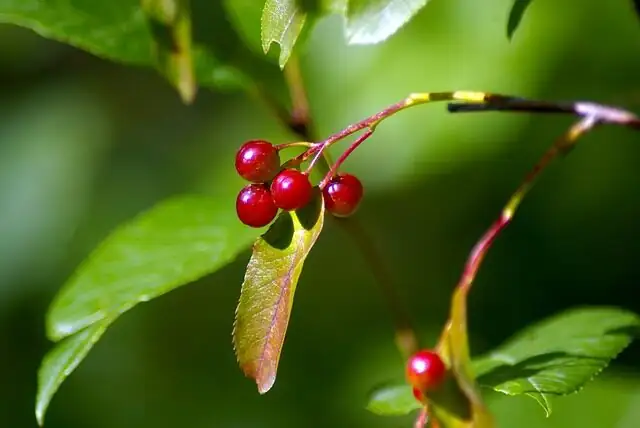
Mature plants may produce tiny white flowers and then small berries (often red). Indoors, fruiting is occasional and variable—but when it happens:
- Risk: Berries and foliage are mildly toxic if ingested and may cause vomiting, abdominal pain, or diarrhea in pets; repeated skin contact can irritate sensitive skin.
- Prevention:
- Pinch off flowers before they set fruit if pets are extra curious.
- If berries appear, snip them promptly and bag-tr ash them; vacuum or sweep any that drop.
- During fruiting, be extra strict about height and access.
Skin-smart care: gloves on if you’re sensitive
Asparagus Fern sap can irritate sensitive skin, especially with repeated exposure.
- Wear gloves for pruning, dividing, or repotting; add long sleeves if you’ve reacted before.
- Rinse any sap off skin with cool water and mild soap; avoid touching eyes.
- After pruning, bag trimmings immediately to avoid stray contact.
Deterrents that actually help (and what to skip)
Combine barriers, training, and safe taste cues.
Physical and layout barriers
- Clear cloches or greenhouse-style cabinets for smaller plants.
- Motion-activated air puff near plant shelves to discourage jump-ups.
- Aluminum foil or crinkly mats on launch points (but never on hot or sunbaked sills).
Taste and scent nudges
- Use pet-safe bitter sprays on surrounding surfaces (not on delicate plant tissue).
- Avoid essential oils, coffee grounds, citrus peels, cayenne, or pepper-based mixes—these can be harmful to pets and/or your plant.
Train and distract
- Offer “legal greens” like cat grass in an easy-access pot.
- Reward pets for ignoring the plant; redirect with toys or puzzle feeders.
- Provide alternative climb zones (cat trees) placed far from your plant display.
If a pet nibbles or swallows berries: your calm, clear plan
- Remove any plant bits from the mouth and gently wipe the lips/gums with a damp cloth.
- Offer fresh water; do not induce vomiting unless a veterinarian instructs you to do so.
- Watch for signs: drooling, vomiting, diarrhea, abdominal discomfort, or unusual lethargy.
- Call your veterinarian or a poison hotline for guidance:
- ASPCA Animal Poison Control: 888-426-4435
- Pet Poison Helpline: 855-764-7661
- Note what was eaten, when, and how much; keep a photo of the plant for ID.
For people (including kids) who chew a berry or mouth the plant: rinse the mouth, drink water, and contact your local medical provider or a poison control center (U.S.: 1-800-222-1222) if symptoms arise.
Quick care that supports safety and reduces mess
A thriving plant drops fewer fronds and is less likely to stress-flower or fruit indoors.
- Light: Bright, indirect to partial shade; avoid harsh midday sun.
- Water: Spring–autumn, water when the top 1–2 cm (0.4–0.8 in) of mix begins to dry; in winter, let the surface dry a bit more between waterings.
- Soil and pot: Loose, well-draining potting mix in a pot with good drainage.
- Temperature: 13–24°C (55–75°F); protect from drafts and cold snaps.
- Feeding: Monthly at half-strength in spring through autumn; pause in winter.
- Tidy-ups: In spring, prune brown or leggy sprays at the base; immediately bag trimmings and any berries.
Mini FAQ for pet households
- Are the berries more risky than the “needles”? Yes. Both can cause mild gastrointestinal upset if eaten, but berries tend to be the bigger temptation—and the bigger trigger.
- If I keep it in a hanging basket, is that enough? Only if pets can’t reach it from nearby furniture. Do a “cat-path” audit from every angle.
- What if my skin gets itchy after pruning? Switch to nitrile gloves, long sleeves, and rinse promptly after handling; consider pruning outdoors for better airflow.
A note on symbolism
Asparagus Fern is often linked to resilience and enduring affection—soft to the eye, surprisingly tough in practice. While not a classic of Victorian “flower language,” modern décor culture embraces this contrast: a plant that brings a gentle look while withstanding real-life homes, pets and all—provided we give it smart placement and a dash of care.
Enjoy those airy green plumes confidently: hang it high, prune in gloves if you’re sensitive, stay berry-aware, and keep your vet’s number handy just in case. With that, Asparagus densiflorus becomes the pet-inclusive, low-drama statement plant it’s meant to be.