

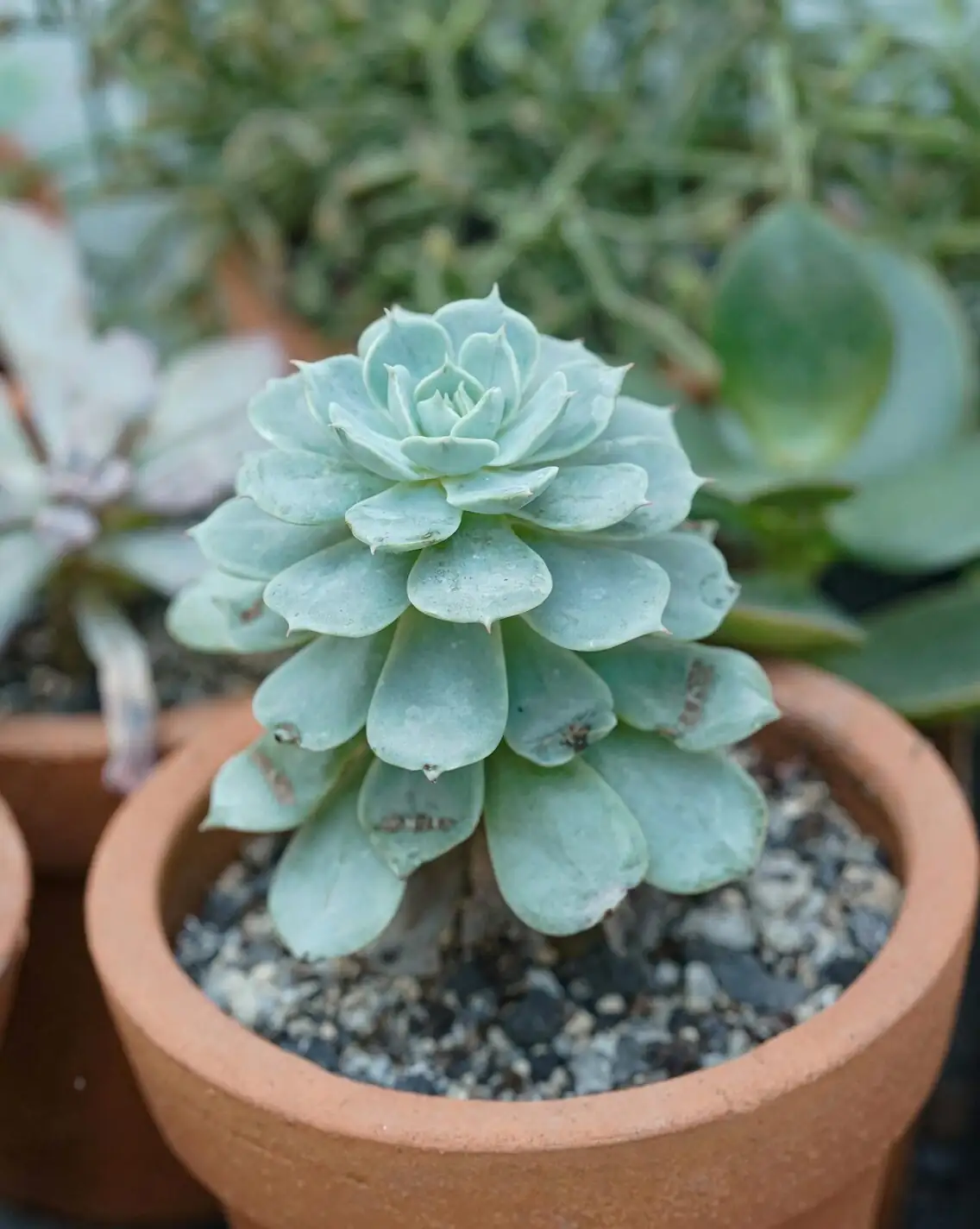
Echeveria elegans wears its own couture: a soft, powdery farina that turns each blue‑gray rosette into a living seashell. Treat it like a design element as much as a plant, and your trays, windowsills, and shelves will look effortlessly curated year-round. Here’s how to choose pots and palettes that flatter those glaucous rosettes, stage them like sculpture, dial in light to perfect the silhouette—and keep that precious farina fingerprint‑free.
Meet the Mexican Snowball, your powder‑matte muse
- Botanical muse: Echeveria elegans, a compact, lotus‑like rosette succulent from Mexico.
- Signature look: thick, symmetrical leaves cloaked in silvery blue‑gray farina, sometimes with a faint pink blush in bright conditions.
- Habit: stays tidy at 3–6 inches wide, gradually forming offsets (pups) into a clumping colony. In spring to summer, it sends up slim stalks with nodding, bell‑shaped blooms—pink/red outside, yellow within.
- Design DNA: thrives in bright light and a gritty, fast‑draining mix—perfect for small pots, low bowls, trays, and sunny shelves.
Pot materials that flatter—and function
The right vessel both complements the palette and protects the plant’s clean geometry by promoting fast drainage and airflow.
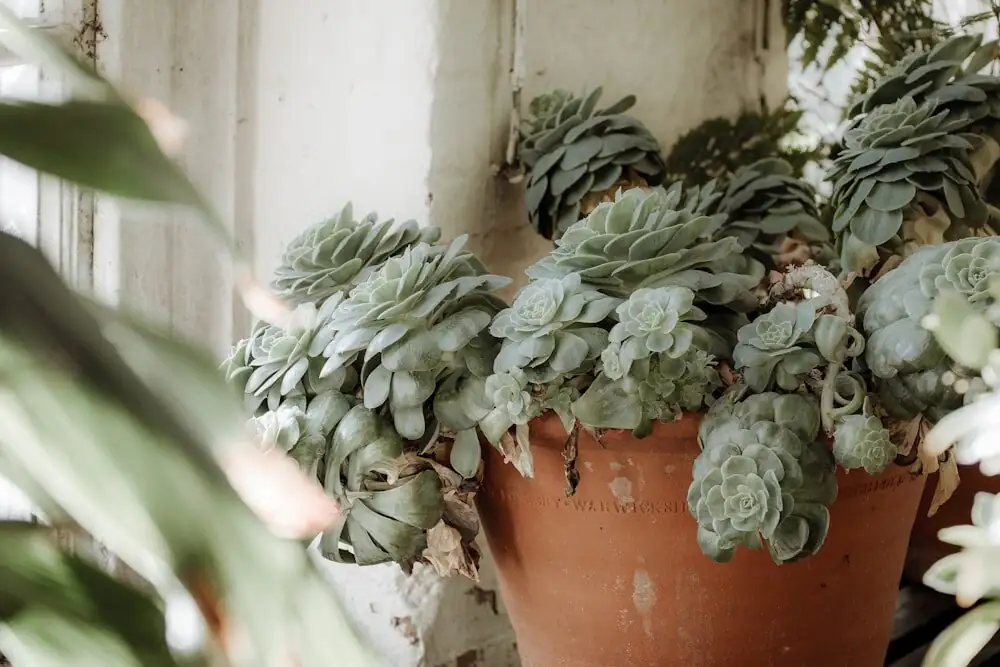
Terracotta: warm counterpoint to cool leaves
- Why it works: the earthy orange warms and intensifies blue‑gray leaves through complementary contrast.
- Horticultural bonus: breathable walls help avoid overwatering.
- Tip: unsealed terracotta wicks quickly—great if you tend to water generously. Use a saucer with pot feet for airflow and to avoid tabletop rings.
Matte ceramic and stoneware: refined and farina‑friendly
- Why it works: matte glazes echo the plant’s satin finish better than glossy ones.
- Colors to try: soft white, cream, dove gray, charcoal, ash green, pale blush.
- Horticultural note: glazed interiors hold moisture longer; choose drainage holes and a very gritty mix.
Concrete or cast stone: sculptural minimalism
- Why it works: cool, architectural neutrality spotlights the rosette.
- Use case: stable outdoors, modern indoors. If concerned about alkalinity, slip a plastic nursery pot inside or seal the interior.
Lightweight options (plastic/fiberglass): clean lines, easy on shelves
- Why it works: sleek forms in matte finishes; great for wall shelves where weight matters.
- Design tip: pick muted tones (fog, sand, slate) to harmonize with the plant’s cool palette; always ensure drainage.
Treat these as cachepots, not planters
- Metal: can overheat in sun; use only as outer covers. Always remove the inner pot to drain after watering.
- Wood: charming but prone to rot—line well and reserve for short‑term styling.
- Glass: beautiful but typically lacks drainage; best as a cover or cloche (vented) for very brief displays.
Size and shape
- Low bowls, shallow cylinders, or bonsai‑style trays complement the low rosette profile and encourage offset clusters.
- Leave a finger’s width around the rosette for growth; step up to a 4.7–5.9 in pot as it matures.
- Always include drainage holes—non‑negotiable for a tight, healthy rosette.
Color palettes that make blue‑gray sing
Think of the rosette as your hero hue; pots and topdressings are the supporting cast.
- Powder on powder (monochrome calm): matte white, chalk, or light cement with pale granite or white pumice topdressing for a gallery look.
- Warm–cool contrast (eye‑catching): classic terracotta or rusty clay with neutral pumice—instant Mediterranean chic.
- High drama (gallery noir): charcoal or soft black stoneware with basalt or black lava rock; the rosette appears to glow.
- Blush accent (elevates pink edges): shell pink or ballet‑slipper glazes subtly echo the plant’s occasional pink tint.
- Stone‑speckled modern: flecked gray or oatmeal stoneware with tan pumice—earthy yet minimal.

Topdressing matters
- Use 1/8–1/4 in (3–6 mm) grit: pumice, granite, or lava. It prevents soil splash (protecting farina) and gives a crisp, finished edge.
- Note outdoors: bright white gravel reflects heat; in very hot sun, switch to pale gray/tan to avoid excess glare.
Composition tips for trays, windowsills, and shelves
Style with the plant’s architecture in mind: symmetry, repetition, and room to breathe.
Trays and low bowls
- Play to its clumping habit: start with a central rosette and allow offsets to form a natural ring over time.
- Odd‑number rule: arrange 3 or 5 rosettes at varying sizes; anchor with the largest and step down.
- Negative space is design: leave pockets of exposed grit for a modern, intentional layout.
- Rhythm through repetition: repeat one pot color or topdressing across the tray to unify the scene.
Shelves and ledges
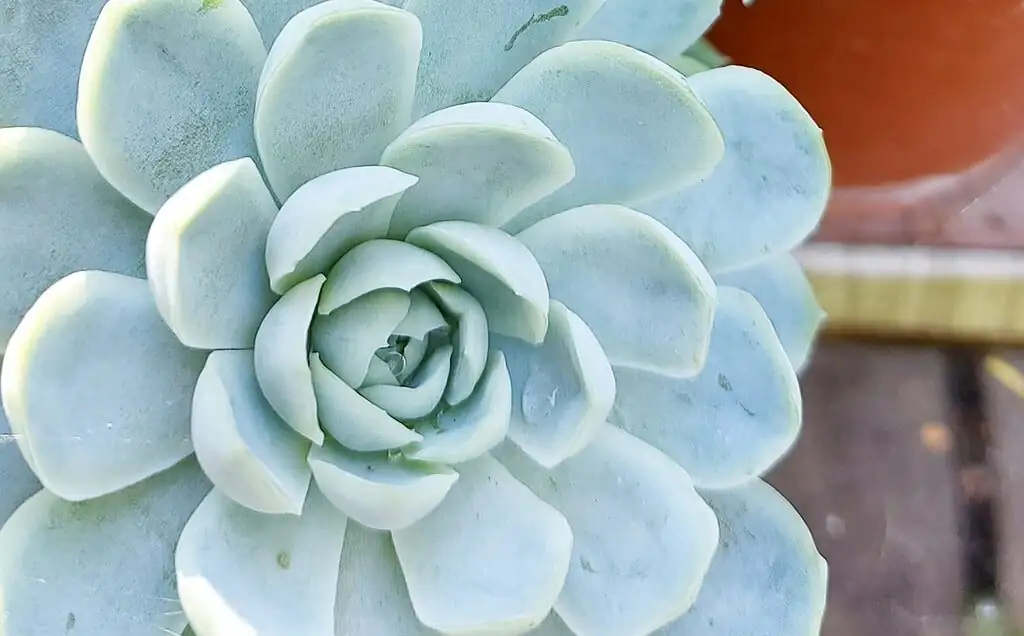
- Show the top view: place E. elegans slightly above eye level or tilt pots forward with discreet shims.
- Keep airflow: space plants at least one rosette’s width apart; use open‑grid stands to prevent stagnant air.
- Mix heights: intersperse low rosettes with taller, airy companions (e.g., slim cacti) to add vertical punctuation without crowding.
Compatible companions (same bright, dry preferences)
- Other sun‑loving, drought‑tolerant succulents with clean forms: Graptopetalum, Sedum, Crassula, and small cacti. Avoid shade-preferring species that would push you to under‑light your snowball.
Light‑for‑look styling: sculpt the silhouette
Light is your stylist. It dictates rosette tightness, color depth, and that coveted powder‑matte glow.
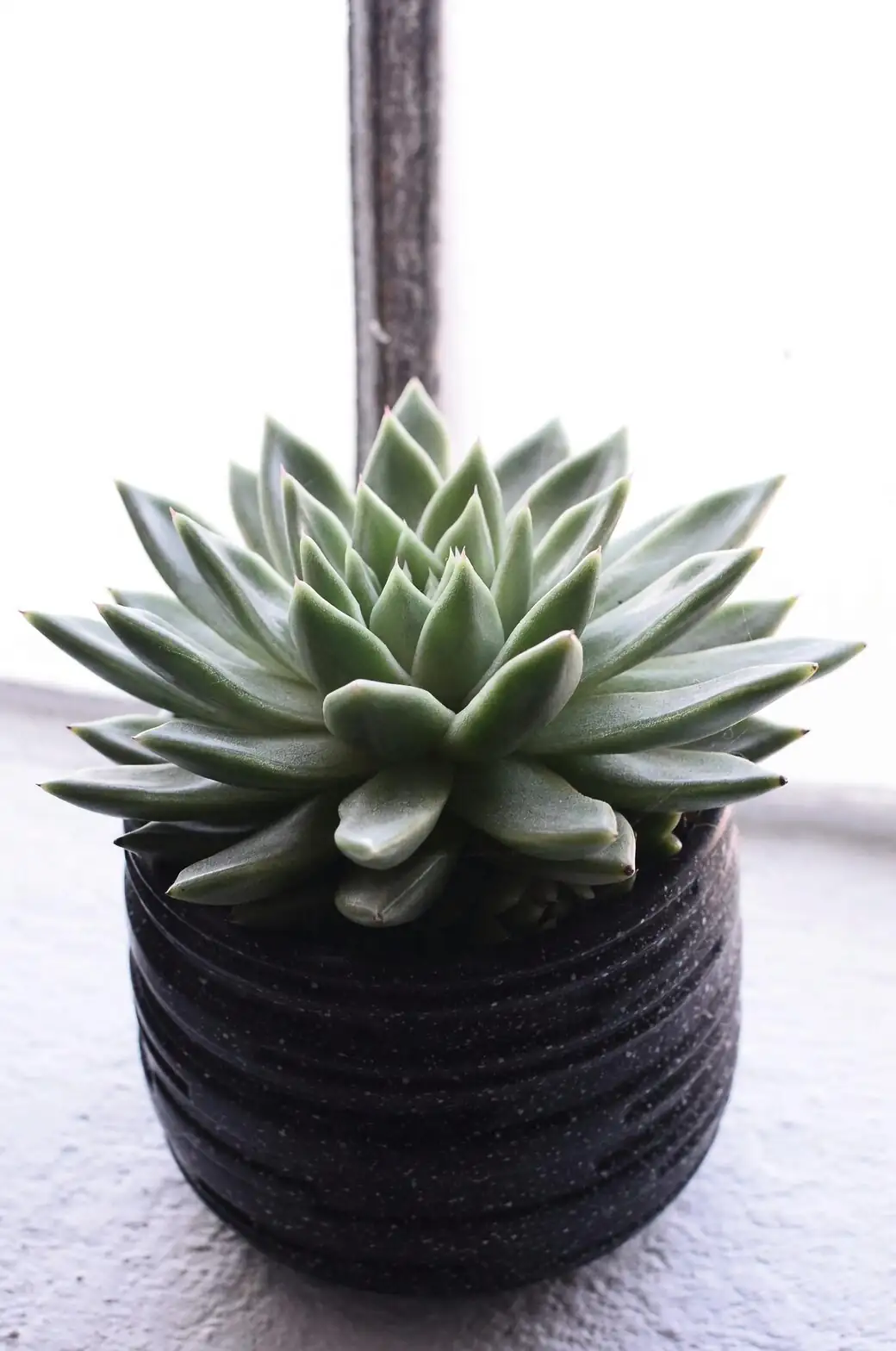
- Bright light to full sun: aim for 4–6+ hours to keep the rosette tight and compact. Too little light = stretching and a flattened, open look.
- Windows: south or east is ideal. In very hot climates, give light afternoon shade or filter midday sun with a sheer curtain.
- Grow lights: use bright, daylight‑balanced LEDs; hold enough intensity to cast a sharp shadow. 12–14 hours daily keeps color and form on point; adjust distance if leaves look bleached.
- Seasonal tweaks: rotate the pot weekly for symmetry. In lower winter light, move it closer to the brightest window or supplement with LEDs.
- Air and dryness complete the look: strong airflow and dry air keep leaves clean and crisp.
The farina factor: keep it pristine, avoid fingerprints
That chalky coat is natural armor—and part of the aesthetic. Once smudged, it won’t “polish out.”
Do
- Handle by the pot, not the leaves. When repotting, wrap a paper collar around the rosette and hold the paper, not the plant.
- Use tools: long tweezers or chopsticks to remove dried leaves; a squeeze bottle or narrow‑spout watering can to target the soil line.
- Shield during potting: a paper or plastic funnel over the rosette keeps grit out.
- Clean gently: use a bulb air blower or soft puffs to dislodge dust. Avoid brushes and cloths—they strip farina.
Don’t
- Don’t touch leaves with bare or gloved fingers—any contact can leave permanent marks.
- Don’t mist the rosette or splash fertilizer on leaves. If you must raise humidity in extreme heat, mist the air nearby, not the plant.
- Don’t try to “fix” a smudge. Simply rotate that leaf to the back; new growth will be flawless.
Pro watering tip to protect farina
- Water with a controlled pour right at the soil, then let the mix dry completely. If you occasionally bottom‑water to avoid splashing, drain thoroughly and don’t let the pot sit in water.
Style maintenance: grooming, watering, and bloom choices
Keep your display crisp with light, regular touch‑ups—no heavy hands needed.
- Watering rhythm (soak, then dry):
- Spring–Summer: roughly every 7–14 days, depending on heat, pot size, and airflow.
- Autumn: slow to about every 2–3 weeks if growth eases.
- Winter: much drier—every 3–5+ weeks indoors, or as little as 1–2 times total if kept cool and bright.
- Always avoid water pooling in the rosette.
- Feeding: low and light—about 1/4 strength cactus/succulent fertilizer every 4–8 weeks in active growth; skip in winter.
- Grooming: lift away dried lower leaves with tweezers; snip spent flower stalks once they finish to restore the clean silhouette.
- Repotting: refresh the gritty mix every 1–2 years in early spring; step up only slightly to maintain compactness.
- Climate notes: ideal at 64–77°F (18–25°C); protect from frost and keep above about 41–50°F (5–10°C) in winter. Cold + wet is the risky combo.
Bloom styling
- Keep for color accents: arching stalks with pink/red bells and yellow interiors bring a soft, airy contrast.
- Or cut for minimalism: removing stalks channels energy back to the rosette and preserves the sculpture‑forward vibe.
Quick specs for stylists
- Rosette: typically 3–6 in wide; low, tidy habit; offsets readily into a clump.
- Light: bright light to full sun (4–6+ hours) for best color and shape; protect from scorching midday sun in extreme heat.
- Soil: very fast‑draining, gritty cactus/succulent mix; always use drainage holes.
- Placement: sunny windowsill (east/south), bright balcony/patio, or under strong LEDs.
- Topdress: pumice, granite, or lava to prevent splash and finish the look.
- Pet safety: generally low‑toxicity; still keep out of nibbling range.
Symbolism and quiet charisma
In modern “flower language,” Echeveria elegans is often linked to resilience, enduring love, and quiet beauty—fitting for a plant that stays composed through dry spells and keeps offering offsets to share. While not rooted in ancient lore, this contemporary symbolism reflects the plant’s real character: steady, generous, and serenely elegant.
Design summary
- Choose matte, breathable or well‑drained vessels that echo or contrast the rosette’s cool palette.
- Compose with repetition and negative space in low trays and airy shelves.
- Style with strong light for a tight, sculptural form—and never touch the powder. Your Mexican Snowball will do the rest.