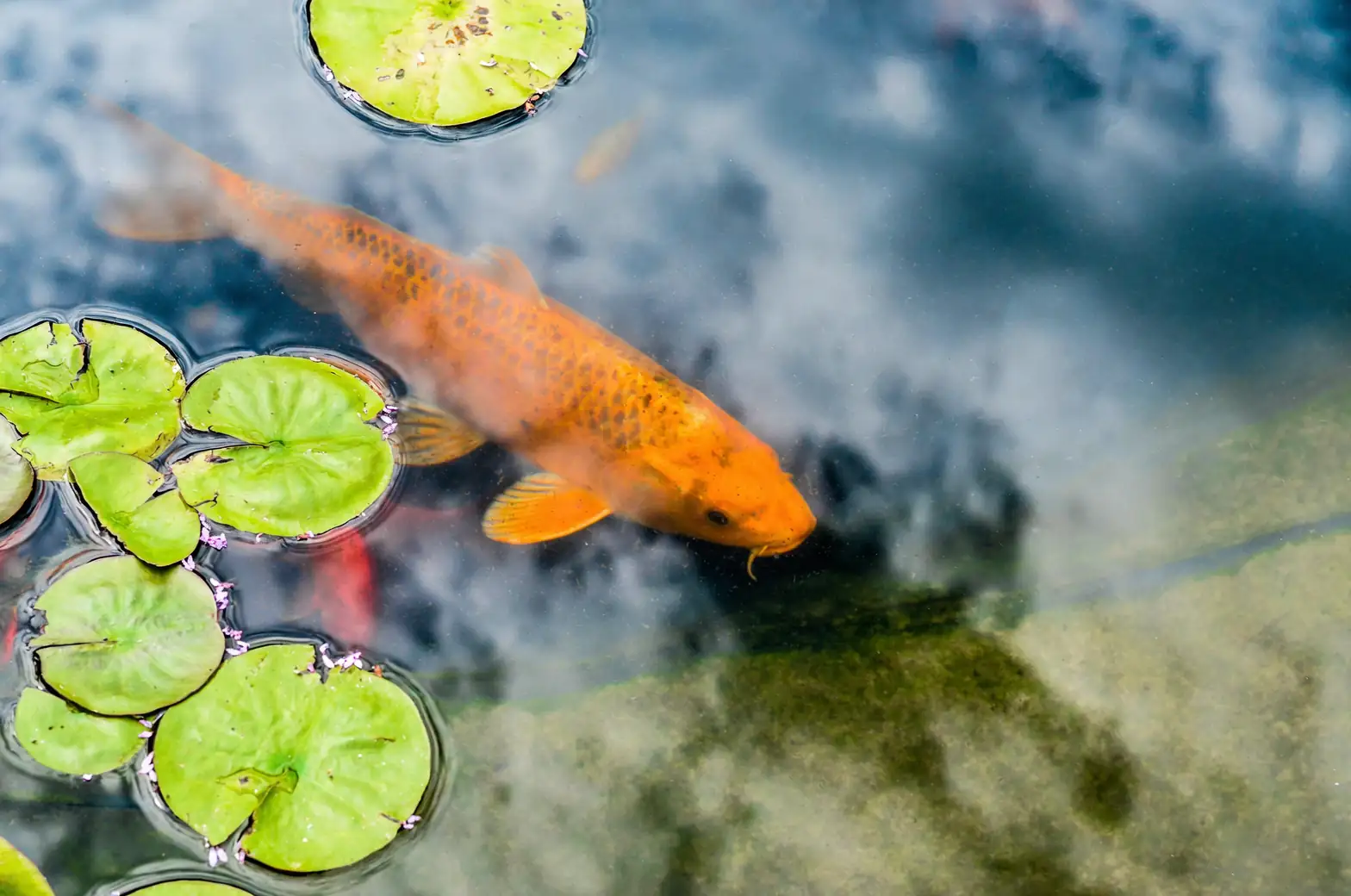
Water lilies (Nymphaea) are the living canopy of a healthy pond—cooling the water, softening the glare, and throwing a velvet shade that starves algae of sunlight. But lilies don’t work alone. Pair them with the right fish and submerged “oxygenators” and you get a self-balancing trio: pads for shade, plants that sip excess nutrients, and fish that complete the cycle. Here’s how to build that harmony—and what to do if your koi treat every plant like a salad bar.
Meet Nymphaea, the star of the show
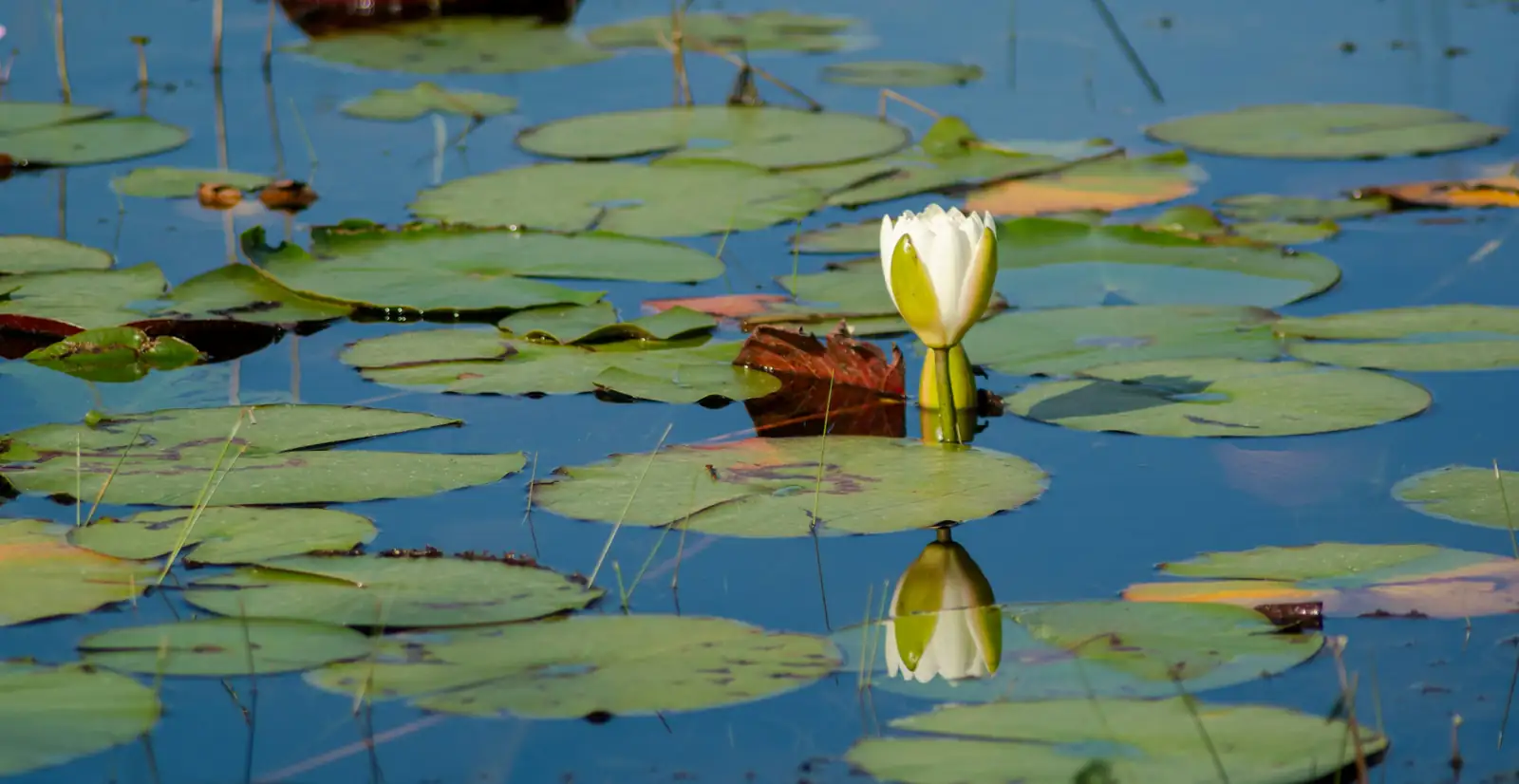
- What they look like: Round floating leaves with a signature notch; many-petaled blooms in white, yellow, pink, red, orange, purple—and among tropical types, even blue. Many are fragrant.
- Habit: Perennial aquatics from chunky rhizomes (tubers in some tropical types).
- Sun and depth: Full sun is best (6–8 hours). Typical planting depth is 5–30 cm (2–12 in) of water above the crown; robust cultivars can sit deeper (up to ~80 cm/31 in).
- Season: Flowers typically from late spring to early autumn; individual blooms open by day and close at night for 3–5 days.
- Hardy vs. tropical:
- Hardy water lilies: Tough in cool water, generally USDA Zones 4–10 (cultivar-dependent).
- Tropical water lilies: Heat lovers, frost-tender (USDA 9–11). Reward with fragrance and sometimes blue or night-blooming flowers.
Pro tip: Place lilies away from strong turbulence, waterfalls, or constant splashing—battered pads flower poorly.
The clear-water trio: lilies + oxygenators + fish
Think of your pond as a small city with jobs to fill:
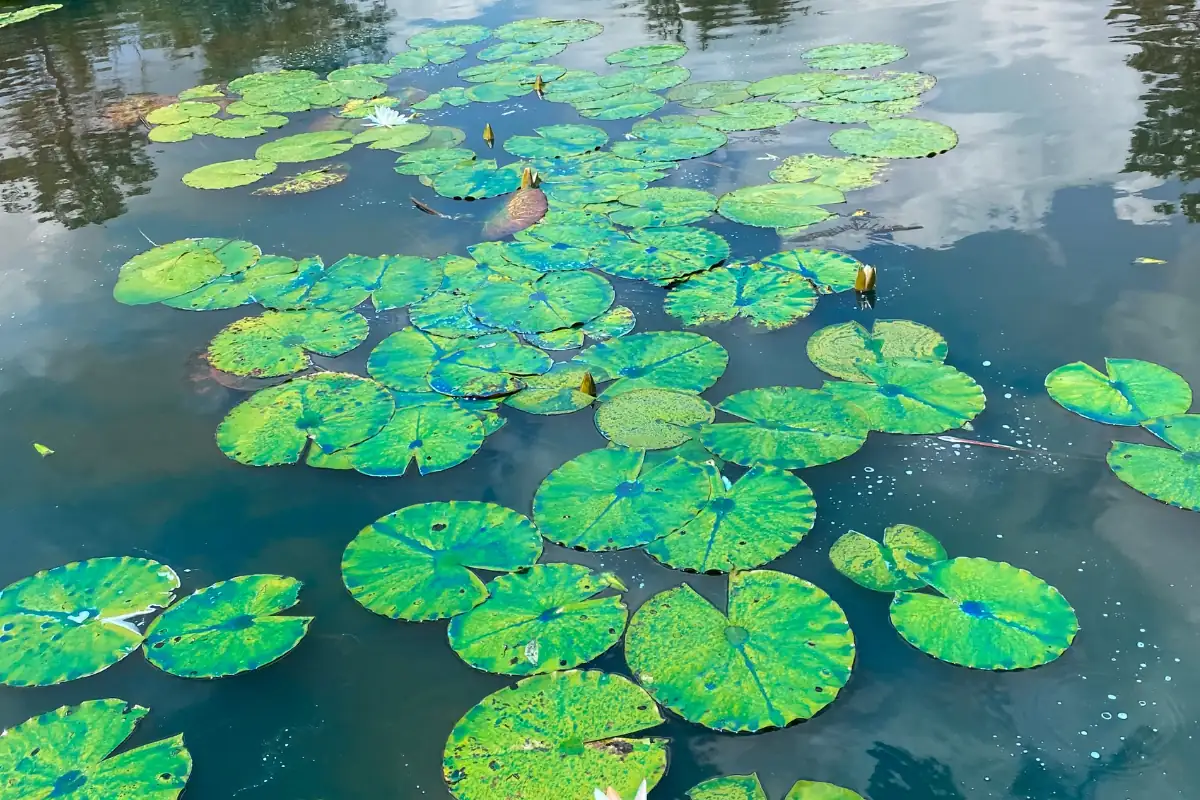
- Water lilies: Shade 50–70% of the surface at midsummer noon to deny algae its light and moderate water temperature. Pads also shelter fish and fry.
- Submerged oxygenators: Fast-growing aquatics (often rooted or free-floating below the surface) that gobble dissolved nutrients, release oxygen during the day, and compete with algae.
- Fish: Convert uneaten food and detritus into nutrients plants can use; graze some algae and insect larvae; stir just enough to keep things lively—if not overstocked.
Balance is the magic: strong light for lilies, nutrient uptake by oxygenators, moderate fish numbers, and open water left for gas exchange.
The best companions: fish that play nicely with lilies
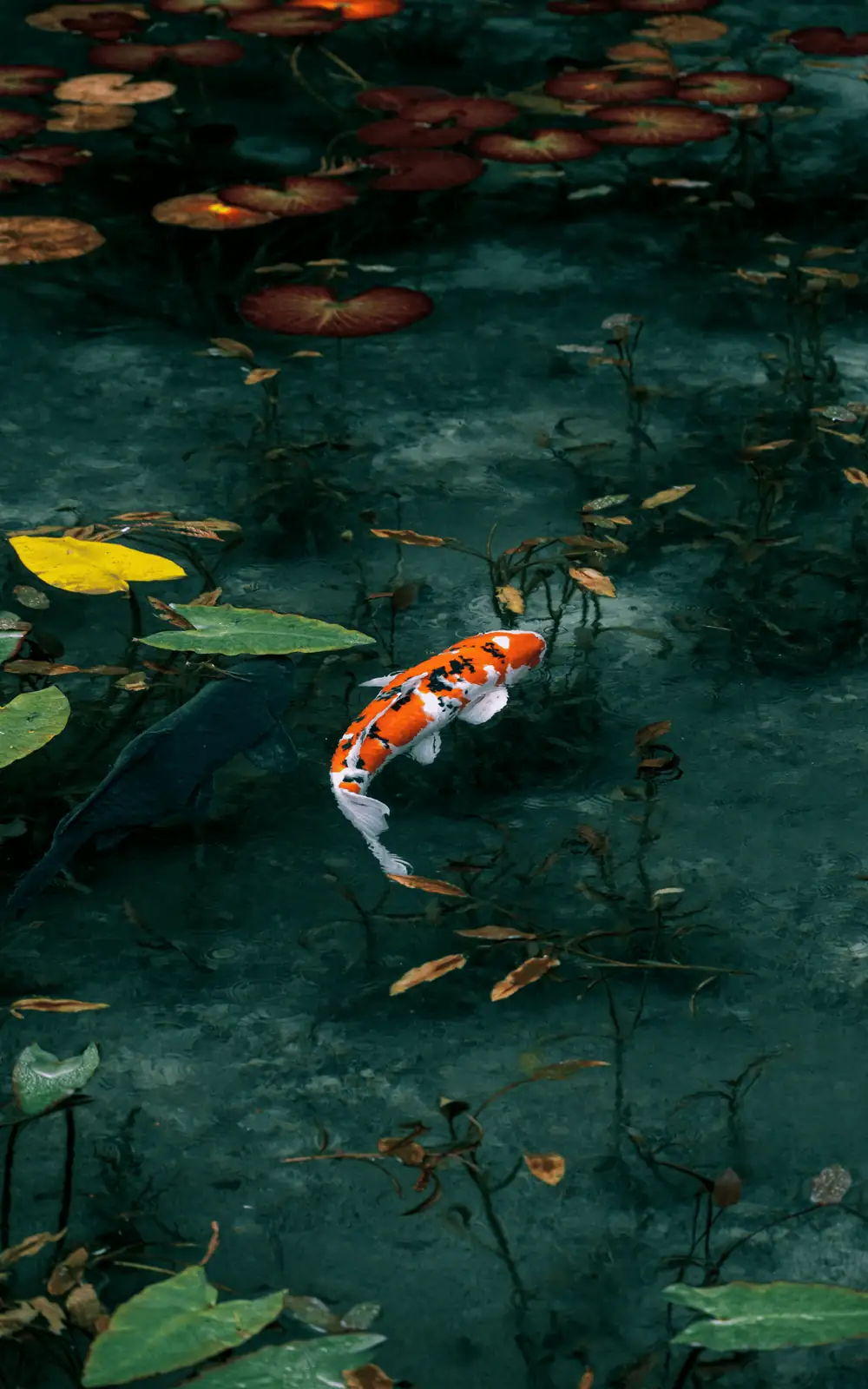
- Goldfish and shubunkins
- Why they work: Generally gentler on plants than koi. They appreciate lily shade, will pick at algae, and use pads as cover.
- Watch-outs: Can still nibble new growth; avoid crowding.
- Golden orfe (in larger, well-aerated ponds)
- Why they work: Active insect hunters, typically easy on plants; enjoy the open lanes between lily clumps.
- Watch-outs: Prefer high-oxygen water—pair with abundant oxygenators and ensure some open, moving water away from lily zones.
- Koi (special case)
- Why they’re tricky: Superb diggers and enthusiastic grazers. Koi often chew lily roots, buds, and young pads.
- When they work: In large ponds with robust, well-protected lilies and strong plant zoning (see “If koi chew everything” below).
Tip: Keep stocking moderate. Overcrowded fish accelerate plant damage and algae blooms.
Oxygenating partners that pair beautifully with lilies
Choose legal, non-invasive species for your region and mix rooted with free-floating types.
- Hornwort (Ceratophyllum demersum)
- Free-floating or loosely anchored; excellent nutrient uptake; fine fish refuge. Doesn’t root, so koi can’t uproot it.
- Vallisneria (eelgrass)
- Rooted rosettes that weave long ribbons; great at stabilizing bottoms and soaking nutrients. Plant in baskets and cap with gravel to deter digging.
- Elodea/Anacharis (Egeria densa, Elodea canadensis—region-dependent)
- Classic oxygenators; fast growers in sunny, cool-to-moderate water. Check local regulations—some species are restricted.
- Guppy grass (Najas guadalupensis)
- Fast, feathery sink for nutrients; stellar for fish fry refuge. Best in quieter coves or within protective cages in koi ponds.
- Native pondweeds (Potamogeton spp., region-appropriate)
- Excellent ecology and nutrient uptake; select locally native species through a reputable nursery.
Fast floaters as “nutrient sponges”
- Duckweed (Lemna spp.)
- A swift nutrient sink and koi snack. Helpful in moderation; harvest or let fish graze so it doesn’t blanket the surface.
Note: Many trendy floaters (e.g., water hyacinth, water lettuce) are invasive or restricted in some areas. Always check your local rules.
Planting layout recipes
A balcony tub or patio bowl (container pond)
- One compact hardy lily in a wide container (30–60 cm/12–24 in), with 5–20 cm water over the crown.
- Add a small bundle of hornwort or a handful of guppy grass.
- A few snails or a pair of small, compatible fish (where temperatures allow) help graze film algae.
- Keep away from splashing features; provide 6+ hours of direct sun for blooms.
A small backyard pond
- 1–2 lilies spaced so pads cover about half the surface at midsummer.
- 2–3 species of oxygenators (mix rooted and free-floating).
- A fringe of marginal filters (e.g., sweet flag, pickerel rush, water mint) to intercept nutrients.
- A modest school of goldfish; leave calm corners for lilies and oxygenators.
A large koi pond with lilies
- Group lilies in “islands” planted in heavy baskets and ringed with stone or mesh exclosures.
- Establish protected oxygenator beds behind low rock walls or inside submerged mesh frames.
- Keep vigorous surface coverage by lilies, but maintain clear lanes for swimming and oxygen exchange.
Potting and feeding lilies for strength
- Soil: Heavy, nutrient-rich loam or clay-based aquatic soil; avoid peat-heavy or perlite mixes that float and foul water.
- Containers: Wide, shallow baskets. Set rhizomes with the growing tip angled up and out from the pot’s edge.
- Depth: Start shallow (5–15 cm of water above the crown). As leaves reach the surface, lower to 20–30 cm; robust cultivars may eventually sit deeper.
- Cap: Add 2–5 cm of rinsed pea gravel to deter fish from rooting in the pot.
- Fertilizer: Push slow-release aquatic tablets near the roots during active growth:
- Hardy lilies: about once monthly (May–September).
- Tropical lilies: about every 2 weeks in warm months.
- Grooming: Remove yellowing leaves and spent flowers promptly, cutting stalks near the base.
How to protect pads—and your sanity
- Start lilies in a separate nursery tub until each has 4–6 strong pads, then move to the fish pond.
- Use protection:
- Mesh plant guards: Surround baskets with rigid plastic mesh (about 1 cm openings) forming a cylinder that fish can’t enter.
- Milk-crate method: Slip the pot inside a crate, wrap with mesh if needed, and anchor.
- Rock collars: Stack smooth river stones around baskets to block digging and make handsome lily “islands.”
- Feed koi and goldfish away from plant zones so they don’t associate lilies with feeding time.
- Keep waterfalls and splashing features on the far side; lilies resent constant spray.
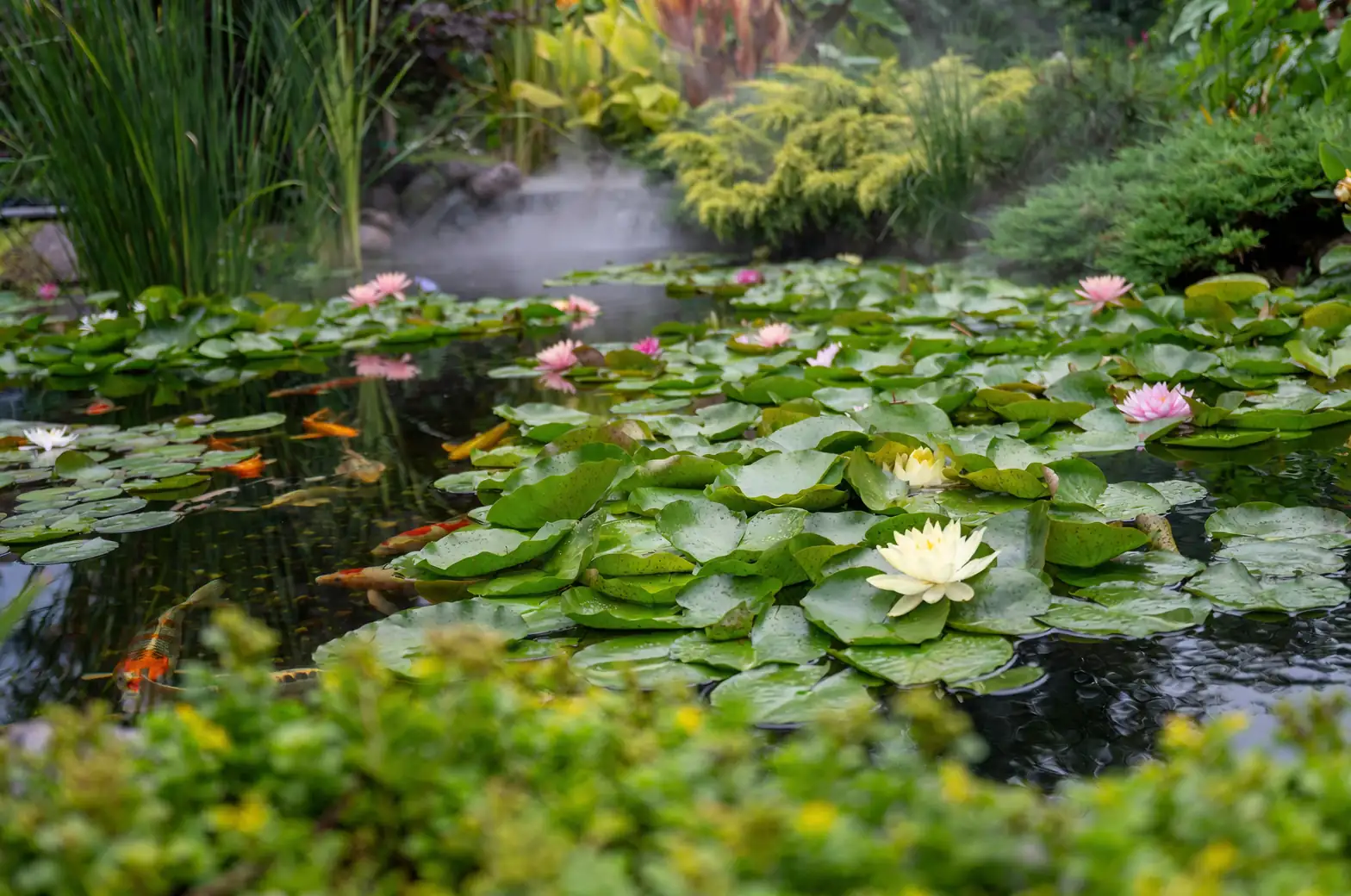
If koi chew everything: your action plan
1) Upgrade the armor
- Double-pot lilies in heavy baskets, cap thickly with gravel, and wrap the sides with plastic mesh. Give each pot a protective ring at least 30–45 cm across so pads can surface safely.
2) Create no-fish sanctuaries
- Build low, stable rock walls on shelves to form plant coves, or install semicircular mesh fences staked into the liner shelf. Fish stay out; water flows through.
3) Float the garden
- Use floating island planters or hinged mesh rings that let pads emerge while shielding crowns below.
4) Offer distraction and roughage
- Provide greens (e.g., romaine leaves, duckweed), high-quality koi food, and regular feeding away from lily zones. Well-fed koi are still mischievous—but less destructive.
5) Choose tougher companions
- Some pond keepers find lotus (Nelumbo) less palatable to koi than lilies. In plant-only zones, mix vigorous marginals and protected oxygenators to do the nutrient work even if lilies take a beating.
6) Rethink the layout
- If it’s a true “show koi” pond, consider separating your lily-and-plant pond from the koi pond via a shared filtration stream. You’ll get botanical beauty and pristine koi water—without daily plant triage.
Seasonal rhythm with fish and oxygenators
- Spring (Mar–May): Plant or divide lilies; restart fertilizing as growth begins. Add oxygenators in batches so fish don’t uproot fresh plantings all at once.
- Summer (Jun–Aug): Peak bloom—feed on schedule, thin oxygenators, and keep about half the surface shaded by pads. Top up water and maintain clarity.
- Autumn (Sep–Nov): Taper fertilizer and groom foliage. Prepare tropical lilies for indoor care if frost threatens.
- Winter (Dec–Feb): Hardy lilies rest. Ensure rhizomes remain below the ice line; move container lilies deeper if needed. Tropical lilies must be overwintered warm indoors or kept as stored tubers.
Troubleshooting the trio
- Lilies not flowering?
- Common causes: Not enough sun (aim for 6–8 hours), planted too deep, cool water, low nutrition, or overcrowded rhizomes. Move to brighter light, adjust depth, feed, and divide if packed.
- Algae surge despite lilies?
- Increase oxygenator mass, harvest duckweed/algae regularly, reduce fish feeding, and confirm pads are shading at least half the surface by midsummer. Keep some open water for gas exchange.
- Chewed pads and buds?
- Likely fish, turtles, or waterfowl. Add plant guards, deploy decoy greens for fish, and net vulnerable areas if birds are visiting.
- Pests on pads?
- Aphids: Dunk or hose leaves; fish often eat the fallout. Caterpillars: Hand-pick. Remove affected leaves; keep water clean to deter disease.
The deeper meaning: why lilies captivate us
Water lilies have long symbolized purity, serenity, and renewal—the striking idea of rising clean from murky water. The day–night rhythm of many blooms echoes cycles of retreat and return, of rest and revelation, which is why ancient cultures, from Egypt to Asia, wove them into art and ceremony. The name Nymphaea nods to Greek nymphs—spirits of fresh water—while modern eyes know them through Monet’s luminous canvases. In a pond, that symbolism feels literal: when lilies find balance with their companions, the whole water garden clears, breathes, and shines.
Quick checklist: set your trio up for success
- Sun: 6–8 hours daily for strong lily bloom.
- Depth: 5–30 cm of water over the crown (deeper for vigorous cultivars).
- Soil: Heavy loam/clay aquatic mix; gravel cap to deter digging.
- Shade goal: About 50–70% midday cover by pads in summer.
- Oxygenators: Mix 2–3 species; anchor some in baskets if koi are present.
- Fish: Keep stocking moderate; feed away from plant zones.
- Splash control: Site lilies away from waterfalls and diffusers.
Build this simple partnership—lilies for shade, oxygenators for nutrient balance, fish for life—and your pond will reward you with clear water, cool depths, and blooms that open like quiet fireworks all summer long.