
Imagine the first warm day of late winter: honeybees wobble out of hibernation, queen bumblebees cruise low, and the garden is still mostly asleep. That’s when sweet violet—Viola odorata—steps in like a tiny lantern in the leaf litter. Its perfumed flowers feed early pollinators, its evergreen-to-semi-evergreen rosettes hold soil on shady slopes, and its gentle runners stitch together a living understory carpet. Now team those violets with snowdrops, lungwort, and shade-loving woodland herbs, and you’ve designed a shady garden that wakes up early, hums with life, and stays lovely for months.
Below is a complete, practical plan to plant, layer, and care for Viola odorata as the backbone of an ecologically rich, long-blooming, shade garden.
Meet Sweet Violet at a Glance
- Botanical name: Viola odorata (aka Sweet Violet, English Violet, Common Violet, Florist’s/Garden/Wood Violet)
- Family: Violaceae
- Origin: Native to Europe, North Africa, and West Asia; widely grown across temperate regions
- Form: Low, mat-forming perennial (about 5–15 cm tall) with heart-shaped leaves; spreads gently by stolons and short rhizomes
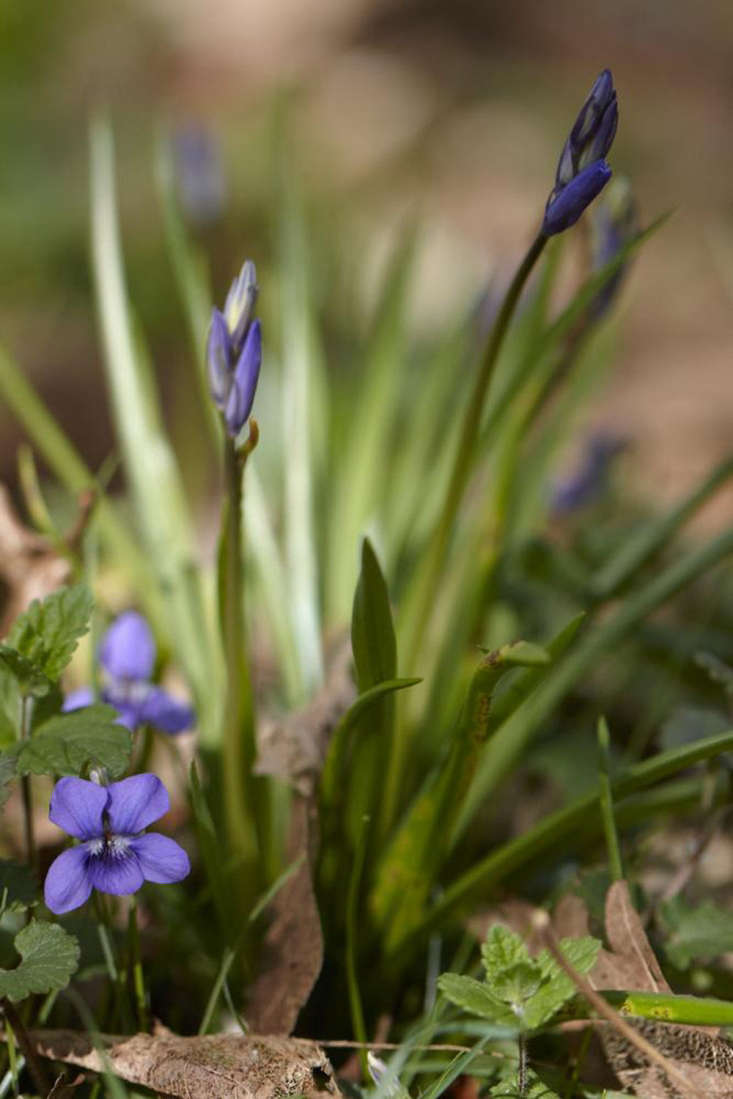
- Flowers: Dainty, nodding, five-petaled blooms—typically deep purple to violet-blue with a sweet perfume; white and pale lavender forms exist
- Bloom season: Early spring (often March–May), with possible autumn rebloom
- Habitat fit: Partial to full shade; thrives in dappled woodland light
- Soil: Humus-rich, well-drained, evenly moist; neutral to slightly acidic (pH 6.0–7.0)
- Hardiness: USDA Zones 3–9
Why Sweet Violet Belongs in Ecological Shade Designs
- Early pollinator pantry: Offers nectar and pollen just as bees and hoverflies are waking; pairs perfectly with snowdrops and lungwort to cover late-winter through mid-spring.
- Living mulch and soil net: Dense leaf rosettes and creeping runners knit the topsoil, slow runoff, and cool roots—ideal for stabilizing shady slopes under trees or along woodland edges.
- Shade resilience: Tolerates low light, leaf litter, and root competition better than many ornamentals; great under shrubs and canopies.
- Edible + fragrant: Flowers and young leaves are edible; the perfume is famously romantic. Non-toxic to people and pets. Avoid roots.
Design Recipes: Layered Plantings That Feed, Stabilize, and Bloom for Months
1) The “Leaf-Litter Lantern” Under-Tree Circle
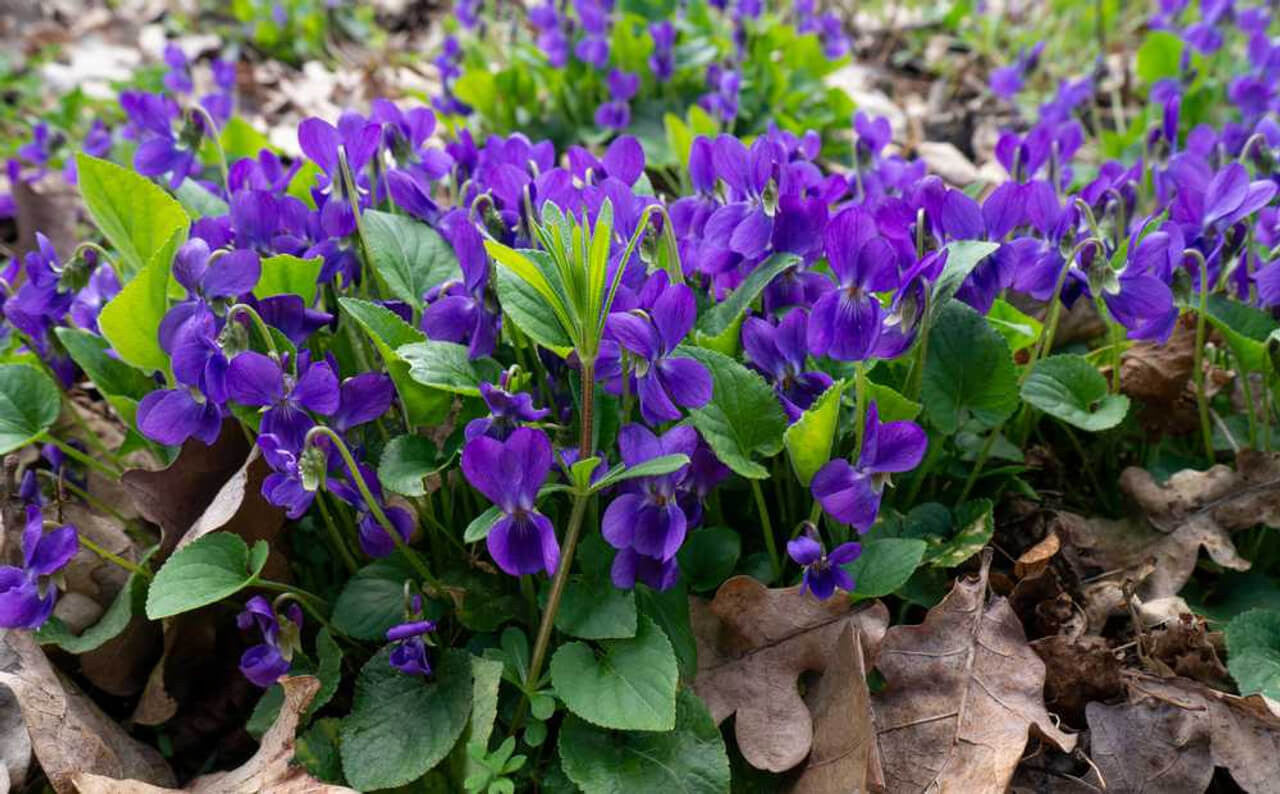
For a mature deciduous tree where grass fails but leaves collect naturally.
- Structure
- Inner ring: Snowdrops (Galanthus nivalis) in clumps between tree roots for very early bloom.
- Matrix layer: Sweet violet as the living carpet, planted 8 inches apart to close gaps within one season.
- Accent clumps: Lungwort (Pulmonaria officinalis or P. ‘Blue Ensign’) every 45–60 cm for speckles of blue/pink and nectar-rich flowers.
- Optional woodland herbs
- Sweet woodruff (Galium odoratum) for May-blooming stars and scented foliage.
- Ramsons/wild garlic (Allium ursinum) for a culinary, pollinator-friendly spring white.
- Ecological benefits: Continuous forage from late winter to late spring; violet mats hold soil and buffer trunk flare; leaf litter becomes humus, supporting a stable, moist microclimate.
2) Shady Slope Stabilizer
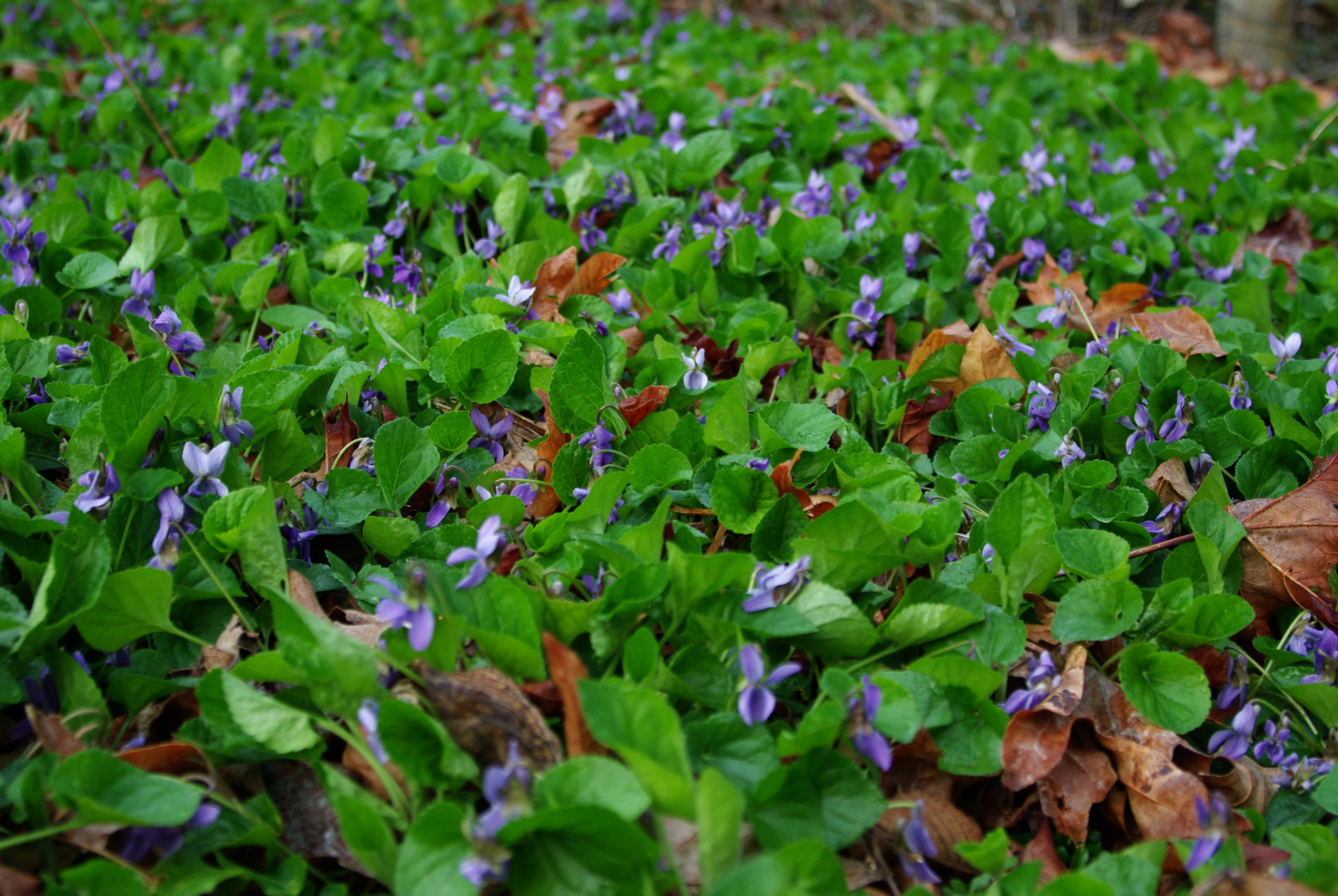
A gentle-to-moderate bank under shrubs or a north-facing hedge.
- Soil prep: Lightly terrace or add micro-swales; work in leaf mold and compost for moisture retention and drainage.
- Planting grid
- Sweet violet plugs at 20–25 cm spacing (8–10 inches) in a staggered pattern for fast soil cover.
- Interplant drifts of lungwort for early nectar and summer speckled foliage that cools soil surface.
- Tuck snowdrop bulbs high on the slope so flowers show above violets.
- Add a few woodland herbs
- Sweet cicely (Myrrhis odorata) or chervil (Anthriscus cerefolium) toward the base where moisture lingers.
- Ecological benefits: Violet roots knit the top layer, lungwort leaves act as living mulch, and bulbs exploit vertical soil niches—together reducing erosion and runoff.
3) Woodland Pathway Ribbon
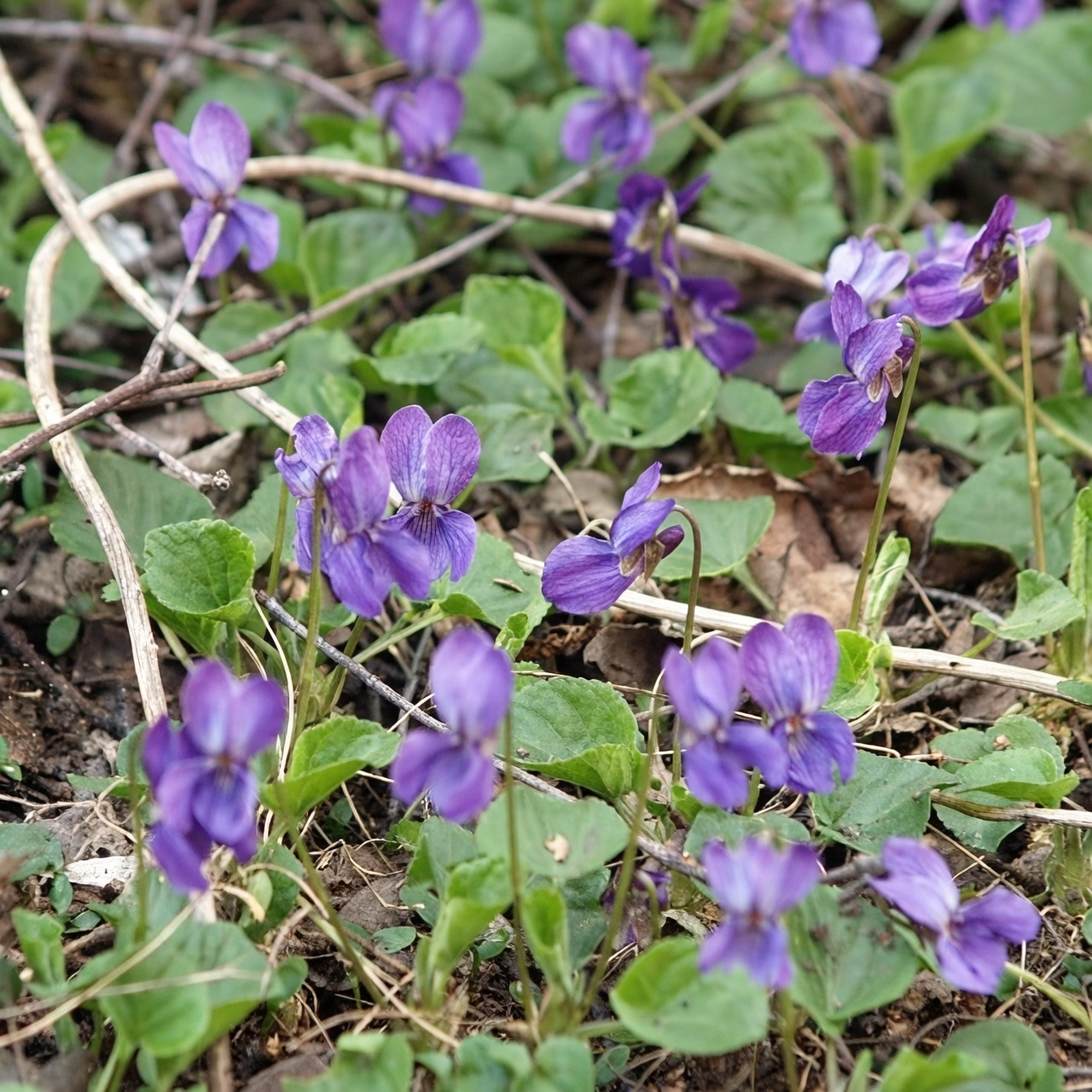
A narrow planting that guides feet and pollinators along shady edges.
- Repeating trio every meter:
- 3 snowdrop clumps (offset), 5–7 violet plants as the green thread, 1–2 lungwort for color blocks.
- Herb sprinkles
- Self-heal (Prunella vulgaris) for later-season pollinator flowers in part shade.
- Maintenance note: Deadhead violets where you want tighter control; allow a few to self-seed for a natural look.
4) Shady Container or Courtyard Bowl
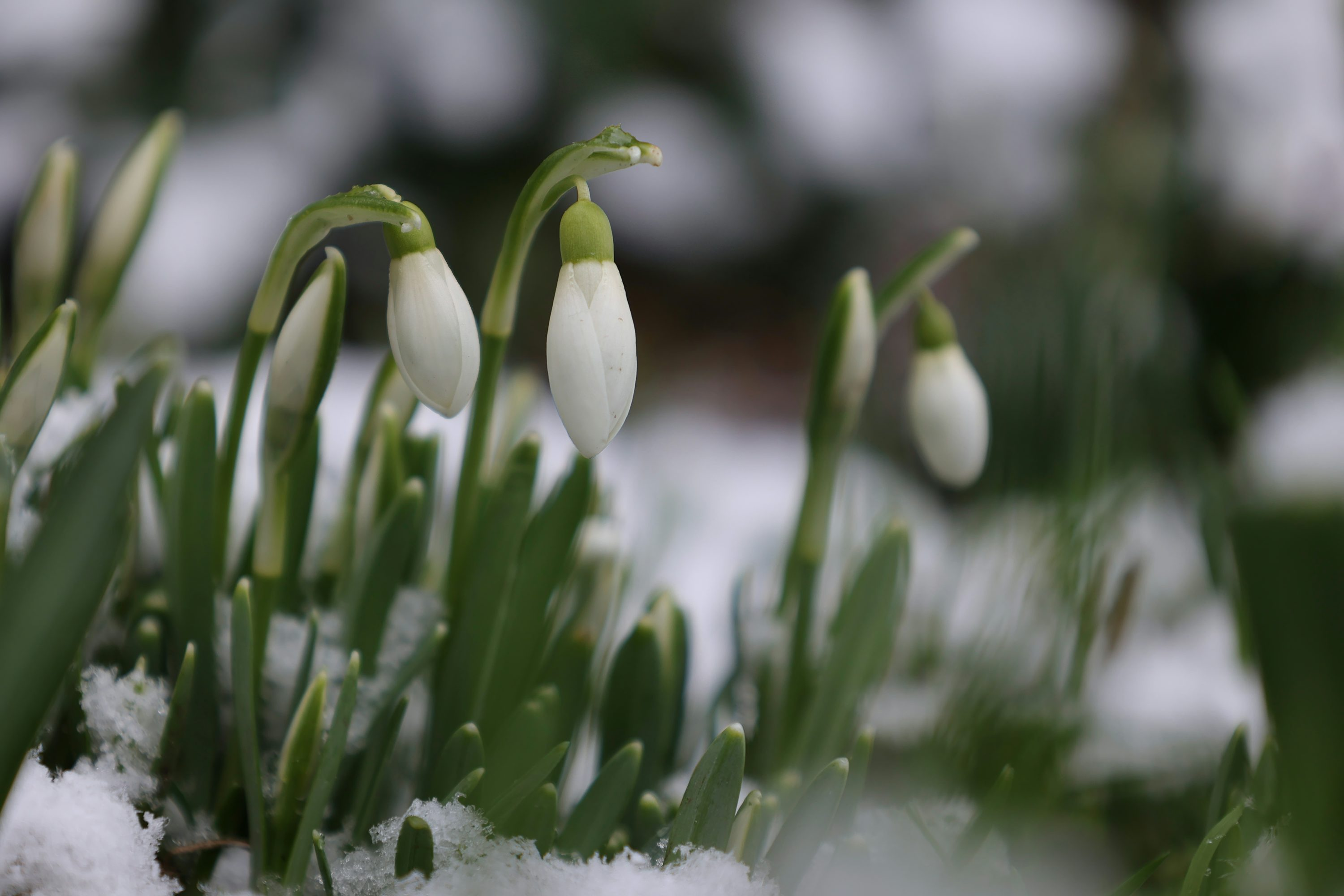
For patios or balcony shade—perfume at nose level.
- Recipe (30–40 cm wide, with drainage):
- Base: Humus-rich, well-drained mix with added leaf mold or compost.
- Plant: 1 lungwort center, 4–6 sweet violets around, then nestle 5–7 snowdrop bulbs among the roots for early pops each year.
- Tip: Water at the soil line to reduce mildew; rotate the container for even light in dappled shade.
Extend the Bloom Window: A Simple Timeline
- Late winter: Snowdrops open first, feeding earliest foragers.
- Early to mid-spring: Sweet violets and lungwort overlap—scent and nectar together draw bees and hoverflies.
- Late spring into early summer: Woodland herbs like sweet woodruff and ramsons carry the white-and-green torch.
- Autumn encore: In cool regions or after a mild summer, violets may rebloom—light deadheading helps.
Planting and Establishment
Site and Soil
- Light: Partial to full shade; dappled sun is perfect. Avoid hot, direct afternoon sun.
- Soil: Fertile, humus-rich, and well-draining with steady moisture; pH 6.0–7.0.
- Bed prep: Mix in compost and leaf mold. In heavy clay, add fine grit and organic matter; in sandy soils, boost organic content to hold moisture.
Spacing and Planting
- Spacing for coverage: About 20–25 cm (8–10 inches) apart.
- Watering-in: Soak to settle soil around roots; keep evenly moist (not waterlogged) while plants establish.
Starting from Seed (for enthusiasts)
- Cold stratify for stronger germination: Mix seed with moist peat or vermiculite in a sealed bag; refrigerate ~6 weeks.
- Sowing: Surface-sow or cover very lightly (~3 mm/1⁄8 inch). Germination is happiest around 15–20°C (60–70°F).
- Light: After sprouting, provide bright, indirect light; 16 hours under fluorescents is a classic setup.
- Harden off: Gradually acclimate seedlings outdoors for a week before planting out.
- Note: Viola odorata also sets self-pollinated, closed (cleistogamous) flowers—expect gentle naturalizing.
Care: Low Effort, High Payback
- Water: Keep soil consistently moist, especially in spring growth; let the surface dry slightly between waterings. In heat, plants may pause—don’t let roots bake.
- Feeding: Top-dress with compost in spring; a balanced, slow-release fertilizer is welcome. During bloom, a light liquid feed with slightly higher P and K can boost flowers.
- Grooming: Deadhead to keep mats tidy and prolong bloom. In autumn, thin crowded patches and trim old foliage to improve airflow.
- Mulch: Leaf mold or shredded leaves keep roots cool and moisture steady—keep mulch off crowns.
- Containers: Repot every 1–2 years in early spring to refresh soil and avoid root congestion.
Pests, Diseases, and Eco-Friendly Fixes
- Common visitors: Aphids, spider mites, slugs, and snails.
- Management
- Rinse or use insecticidal soap/neem for aphids.
- Encourage predators (ground beetles, birds); use slug traps and hand-picking.
- Prevent powdery mildew with airflow, morning water at soil level, and avoidance of overhead irrigation; remove spotted leaves promptly.
- Tip: Dense shade gardens benefit from periodic thinning to keep air moving.
Safe and Delicious
- Edible: Flowers and young leaves are lovely in salads, teas, syrups, and as old-fashioned candied garnishes.
- Safety: Generally non-toxic to people and pets. Avoid eating roots.
Propagation That’s Practically Effortless
- Division: Split clumps in early spring or autumn; replant divisions immediately.
- Runners: Pin a rooted stolon into a pot of mix; snip from the mother once established.
- Seed: As above—easy once you learn their cool, moist preferences.
Companion Spotlights
Snowdrops (Galanthus)
- Role: First nectar and morale boost of the year; slim bulbs weave between violet roots without competing heavily.
- Pairing tip: Plant in clumps just beyond trunk flare and between violet rosettes.
Lungwort (Pulmonaria)
- Role: Nectar-rich early flowers for bees; handsome, spotted foliage suppresses weeds and cools soil all season.
- Pairing tip: Use as punctuation—small clumps repeated every few feet for rhythm.
Woodland Herbs
- Sweet woodruff (Galium odoratum): Fragrant ground cover with starry spring flowers; loves humus and shade.
- Ramsons/wild garlic (Allium ursinum): White umbels for pollinators and flavorful leaves (harvest with care; confirm ID).
- Chervil or sweet cicely: Edible, lacey, and surprisingly shade-tolerant, extending interest as violets rest.
The Scent That “Disappears”
If you’ve ever sniffed a violet and then—poof—couldn’t smell it, you’re not imagining things. Sweet violets contain beta-ionone, which briefly “switches off” parts of your scent receptors. Step away, return in a few minutes, and the perfume comes back like a secret whispered twice.
Flower Language, History, and Meaning
- Symbolism: Long associated with modesty, faithfulness, remembrance, and pure love. Purple tones often suggest loyalty; white forms lean into innocence.
- Origins of the “language”: In Victorian floriography—the code where bouquets spoke feelings—violets were discreet declarations of devotion. The plant’s habit of nesting low in leaf litter likely fed the “modesty” theme.
- Deep cut from myth: In Greek lore, spring flowers (violets among them) colored the story of Persephone—beauty with an undertow of longing and return. That seasonal rhythm resonates in the way violets herald spring, then sometimes gift us with a quiet autumn encore.
A Simple, 1–2–3 Starter Plan
1) Prep the bed: Spread 3–5 cm of compost and leaf mold; fork lightly into the top 10–15 cm. Lay snowdrop bulbs in clumps.
2) Plant the matrix: Tuck sweet violet plugs every 20–25 cm; water to settle. Add lungwort clumps every 45–60 cm.
3) Mulch and monitor: Top with shredded leaves. Keep evenly moist. Deadhead violets to tidy; thin lightly in autumn.
Design with these small, fragrant powerhouses, and you don’t just get charm—you build a shady ecosystem that wakes early, feeds bees and hoverflies, knits soil, and lingers beautifully into the year. In other words, a garden that works as sweetly as it smells.