

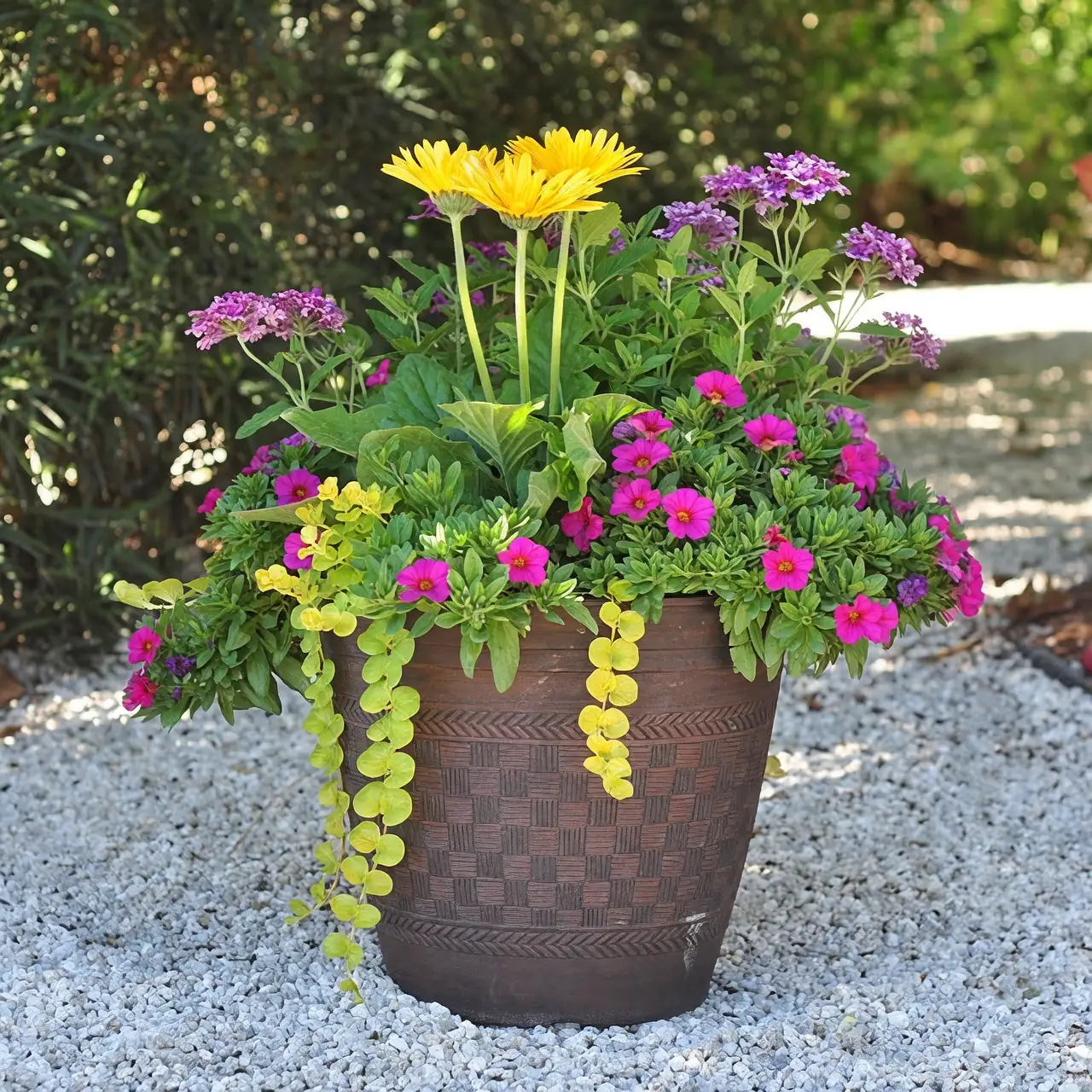
Gerbera jamesonii (Gerbera Daisy) loves bright light, fresh air, and a little personal space. Pair it with equally sun-hungry, breeze-friendly companions—sweet alyssum, verbena, and compact salvias—and you’ll get a vibrant, pollinator-magnet planting that stays dry at the crown, resists mildew, and blooms for months.
Why companions matter for Gerbera Daisies
Gerberas are stars of the sunny border and balcony: big, bold blooms on tall, leafless stems above a neat rosette of leaves. They thrive with:
- Strong light (about 6+ hours daily)
- Evenly moist, well-drained, slightly acidic soil
- Excellent ventilation around the crown (that central rosette)
They’re also prone to Botrytis (gray mold) and crown rot if crowns stay damp or crowded. Smart companions can help by:
- Attracting beneficial insects that suppress aphids, thrips, and whiteflies
- Filling space without smothering the rosette
- Moving air through the planting to keep leaves and buds dry
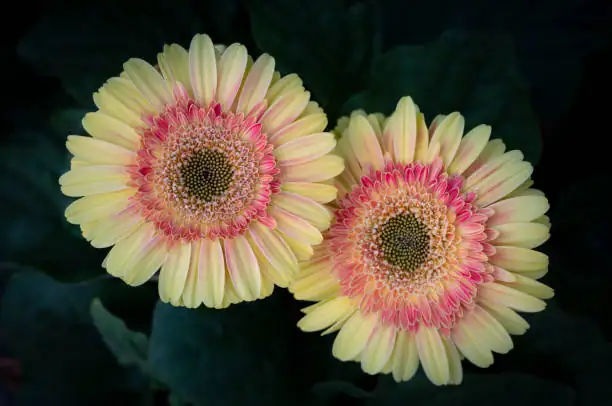
The A-team: companions that flatter without fuss
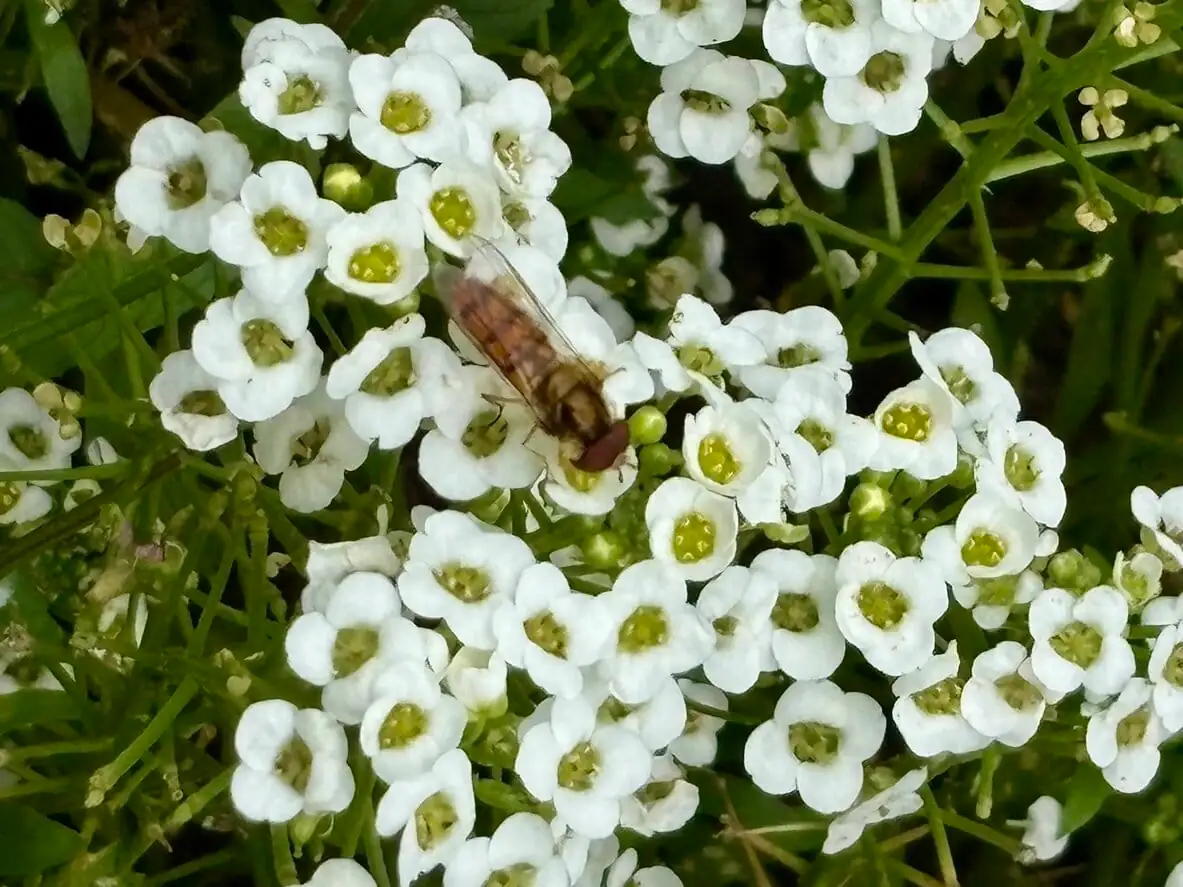
Sweet alyssum (Lobularia maritima)
- Role: Low, lacy edge plant that invites hoverflies, tiny parasitic wasps, lady beetles, bees, and butterflies. These allies help keep soft-bodied pests in check.
- Growth habit: Soft mounds or trailing skirts; flowers for a long season with minimal fuss.
- Extra: Heat-tough modern selections like Snow Princess and Easy Breezy series can keep blooming well into summer.
- Why it works with gerbera: Sits below the foliage canopy, perfumes the air, and stays out of the crown zone when trimmed—great airflow, great allies.
Verbena (upright or trailing types)
- Role: Color echo and pollinator lure with open, nectar-rich florets.
- Growth habit: Trailing forms spill over edges; compact uprights add airy clusters without boxing in the gerbera.
- Why it works: Fine-textured stems and widely spaced flowers don’t trap humidity. Trailing edges keep the gerbera’s center open if you nip back runners that wander toward the rosette.
Compact salvias (e.g., dwarf Salvia nemorosa or S. farinacea types)
- Role: Vertical spikes for structure; powerful bee and butterfly draw.
- Growth habit: Upright, clump-forming; choose compact varieties that top out below or just at gerbera bloom height.
- Why it works: Upright architecture pushes air up and through the planting. Sparse basal foliage means less crowding at soil level.
Tip: Avoid companions that mound densely over the gerbera crown (think heavy petunia domes) or that cast deep shade at midday. Your goal is sunshine and moving air.
Spacing and airflow: the non-negotiables
Gerbera daisies reward gardeners who leave room to breathe. Use these spacing rules whether you’re planting beds or containers:
- Crown clearance: Keep a saucer-sized open ring—about 10–15 cm (4–6 in)—completely free of foliage and mulch around each crown. Never bury the rosette.
- Plant-to-plant spacing: Set gerberas 25–35 cm (10–14 in) apart on center. Give vigorous varieties up to 45 cm (18 in).
- Companion distance: Start companions 15–20 cm (6–8 in) from the gerbera crown, then shape by light trimming to maintain that gap through the season.
- Air lanes: Stagger plants so you can “see daylight” between clumps. You want 360-degree airflow around each gerbera.
Practical maintenance that boosts airflow:
- Deadhead spent flower stems at the base.
- Regularly remove older, yellowing leaves from the rosette.
- Shear alyssum lightly if it bulks toward the crown; tip-prune verbena and salvias to keep them upright and off the rosette.
Two easy layouts that just work
Sun-splashed container (12–14 in / 30–35 cm wide)
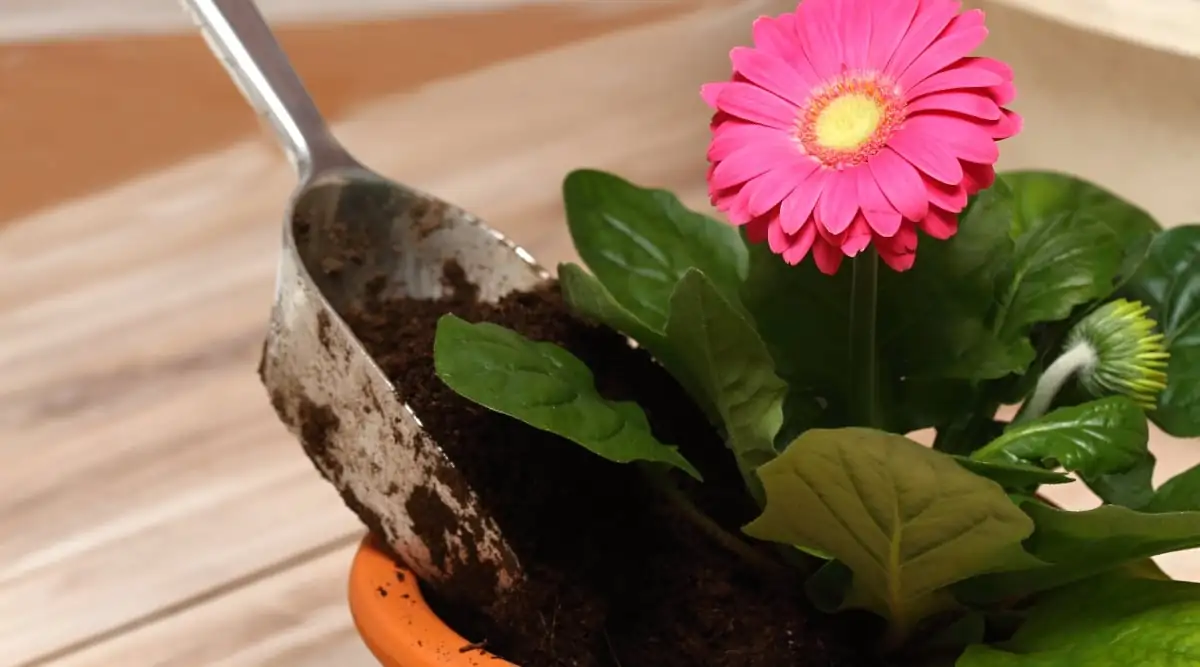
- Center: 1 Gerbera jamesonii planted with its crown at or slightly above the mix.
- Rim: 3–5 plugs of sweet alyssum evenly spaced near the edge.
- Accent: 1–2 trailing verbenas on opposite sides for a soft cascade.
- Back/side: 1 compact salvia tucked toward the rear if the container faces one direction.
Key container notes:
- Mix: Rich but free-draining potting blend with added perlite or grit; pH around 5.5–6.5 is ideal.
- Watering: Water the soil, never the center of the rosette. Let the top 2–5 cm (1–2 in) of mix dry slightly before watering again.
- Light: Full sun to very bright light; in peak summer heat or behind hot glass, give light midday shade.
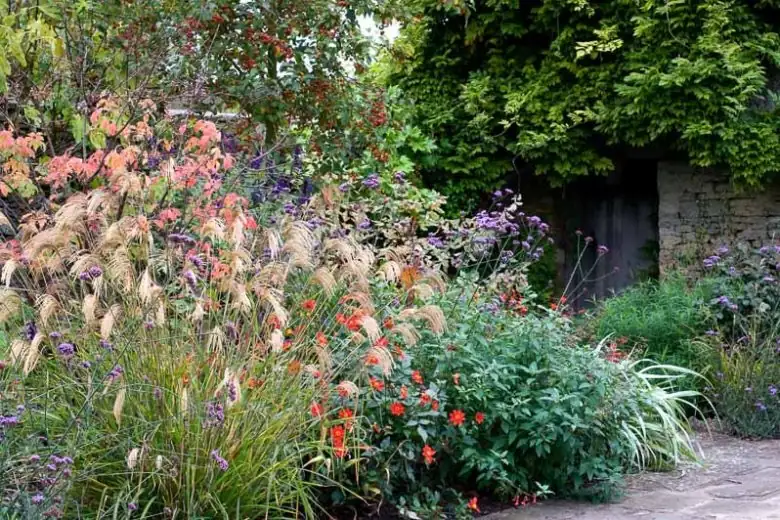
Breezy border strip
- Row spacing: Gerberas at 30 cm (12 in) centers, offset in a zigzag.
- Front edge: A ribbon of sweet alyssum 15–20 cm (6–8 in) in front of each gerbera.
- Mid-layer: Compact salvias interplanted every 45–60 cm (18–24 in) for vertical rhythm.
- Pockets: Trailing verbena tucked at the front corners to spill over edging stones.
Soil and site:
- Drainage is everything—raised beds or berms shine.
- Aim for morning sun and light afternoon shade in hot climates to prevent scorch and heat stress.
Water, light, and the “dry crown” rule
- Light: Bright light to full sun, about 6+ hours. In hot zones, morning sun with dappled afternoon shade reduces stress.
- Temperature sweet spot: 18–24°C (64–75°F) for best flowering. Keep above ~10°C (50°F); not frost-tolerant.
- Humidity: Average is fine; prioritize ventilation to deter powdery mildew and gray mold.
- Watering rhythm: Thorough soaks followed by a short dry-down at the surface. Always water early in the day and keep foliage and the crown dry.
Season-by-season tune-up
- Spring: Plant, feed lightly every two weeks, and start shaping companions to protect the crown space.
- Summer: Increase watering frequency as needed; trim alyssum and verbena to maintain airflow; provide light midday shade in heat waves.
- Autumn: Often a second bloom flush—keep deadheading and ease off feeding as nights cool.
- Winter: Above 10°C (50°F) with bright light if overwintering indoors; water sparingly and keep the rosette dry.
Quick troubleshooting with companions
- Buds browning or flowers rotting? Open the planting (thin leaves, trim companions), water the soil only, and improve drainage. Provide a touch of midday shade in extreme heat.
- Aphids or thrips building up? Alyssum and salvias help recruit hoverflies and parasitic wasps, but scout regularly. Spot-treat early, and avoid overhead watering that favors disease.
- Leaves yellowing? Check for over/under-watering, low light, or nutrient imbalance. Slightly acidic, free-draining mix supports iron uptake and steady color.
Cutting a few for the vase
Harvest in the cool of morning when outer florets are mature. Use clean tools and place stems in shallow, clean water; refresh frequently. Keeping plants well-spaced and crowns dry outdoors translates into sturdier, longer-lasting cuts.
A note on symbolism
Gerbera daisies are widely gifted as emblems of cheer, admiration, and warmth—a modern floriography that blossomed with the popularity of cut flowers and Victorian “flower language.” While meanings vary by culture and color (reds for love, yellows for joy, pinks for gentle admiration, whites for purity, oranges for enthusiasm), the universal thread is happiness—exactly what a well-aired, companion-planted gerbera bed radiates.
Bottom line: Pair Gerbera jamesonii with sweet alyssum, verbena, and compact salvias that love the same light, and keep an honest gap around each crown. Your reward is a long, lively bloom season with pollinators, predators, and breezes all working on your side.


