

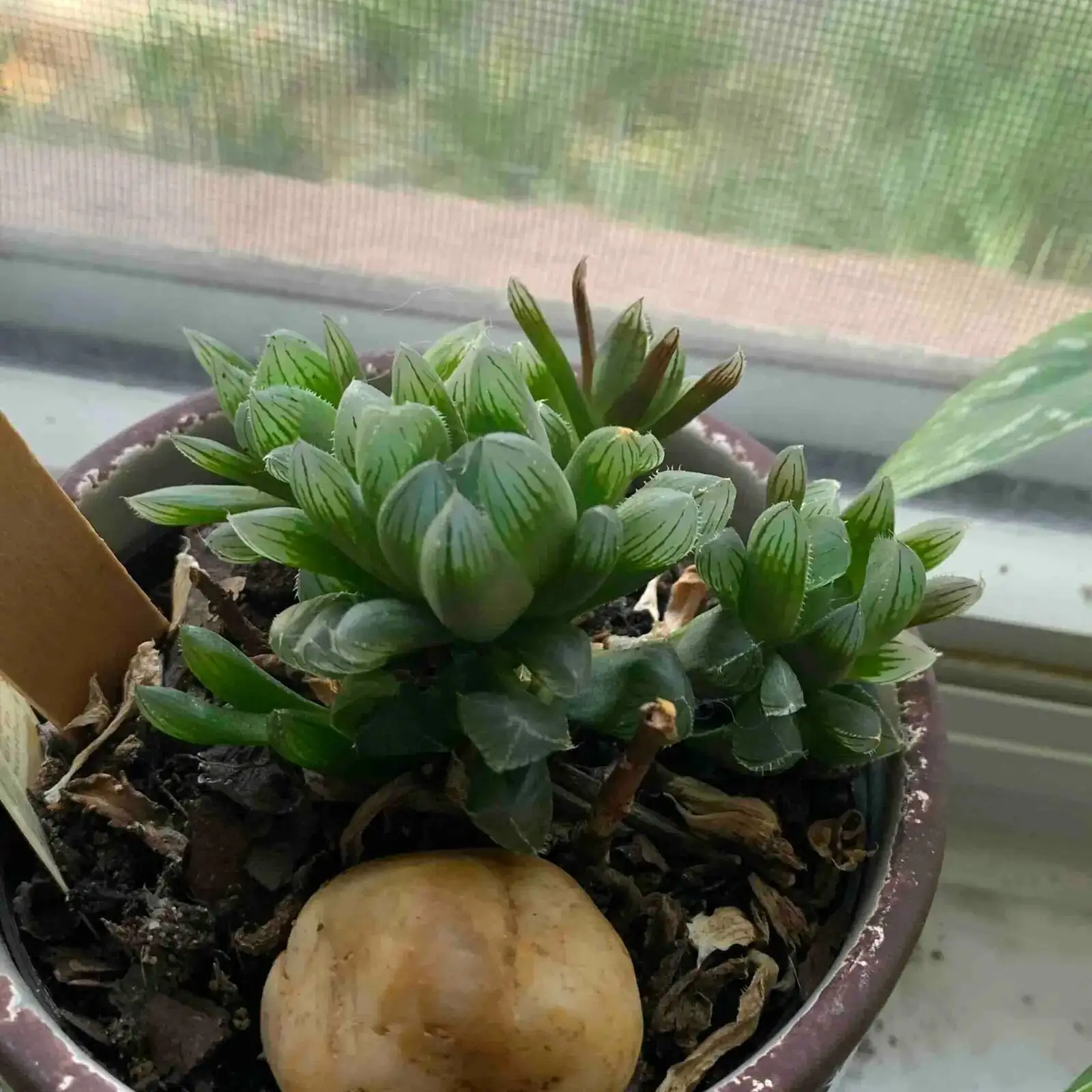
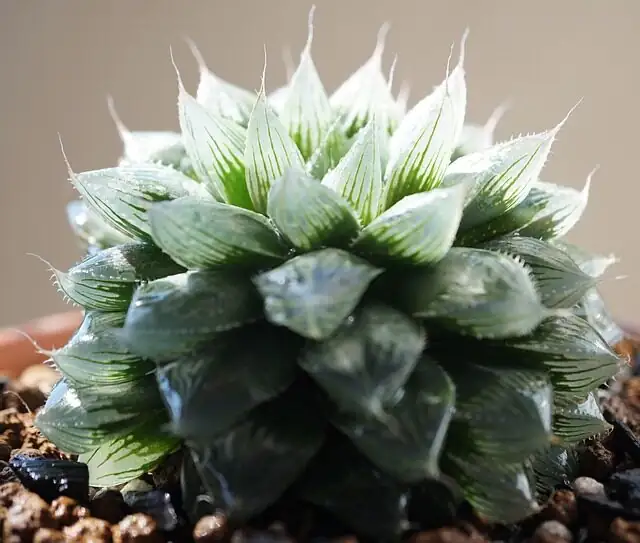
Imagine a tiny landscape where crystal rosettes glow like drops of morning dew. That’s the magic of Haworthia cooperi—a petite, South African “window plant” whose translucent leaf tips catch and channel light. In a shallow dish garden, those glassy rosettes become the star of the show, especially when you pair them with compatible companions, gritty textures, and an airflow-savvy layout that keeps everything pristine.
Meet the Star: Haworthia cooperi
- Common names: Cooper’s Haworthia, Window Haworthia, Crystal Haworthia (玉露)
- Origin: Southern Africa (especially South Africa’s Eastern Cape)
- Habit and look: Compact, clump-forming rosettes about 10 cm (4 in) across, with plump, green leaves capped by translucent “windows.” It may bloom in spring on a slender spike with small, pale tubular flowers—pretty but subtle compared to its jewel-like foliage.
- Best light: Bright, filtered light to partial shade. Think an east-facing window or a lightly shaded south window. Avoid harsh midday sun that can scorch those clear-tipped leaves.
Why it shines in a dish: H. cooperi has a shallow root system, thrives in a breathable, gritty mix, and loves the bright-but-gentle light that a windowsill dish garden can offer.
The Shallow Dish Concept
A good dish garden is a stage set for texture, light, and airflow.
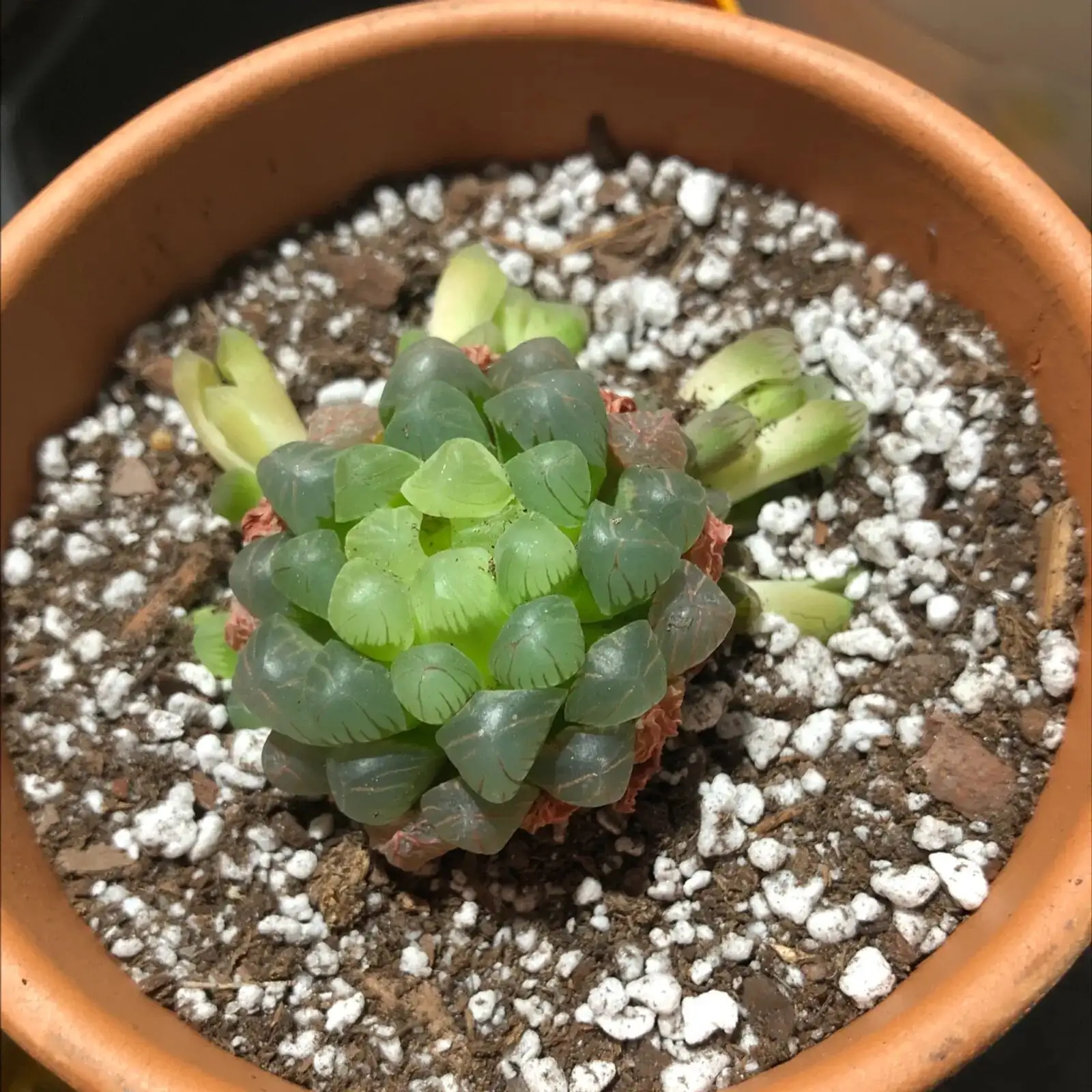
- Size and depth: Aim for a shallow container (often 12–15 cm / 4.7–5.9 in across for a mature clump). Avoid deep pots; H. cooperi’s roots stay shallow.
- Material: Unglazed clay or ceramic with drainage holes promotes evaporation and reduces the risk of rot.
- Color palette: Pale stone or white quartz top-dress makes the leaf windows gleam; black lava rock adds drama if you want the rosettes to pop.
Gritty Layers That Keep Rosettes Crystal-Clear
Your soil is the difference between luminous and languishing.
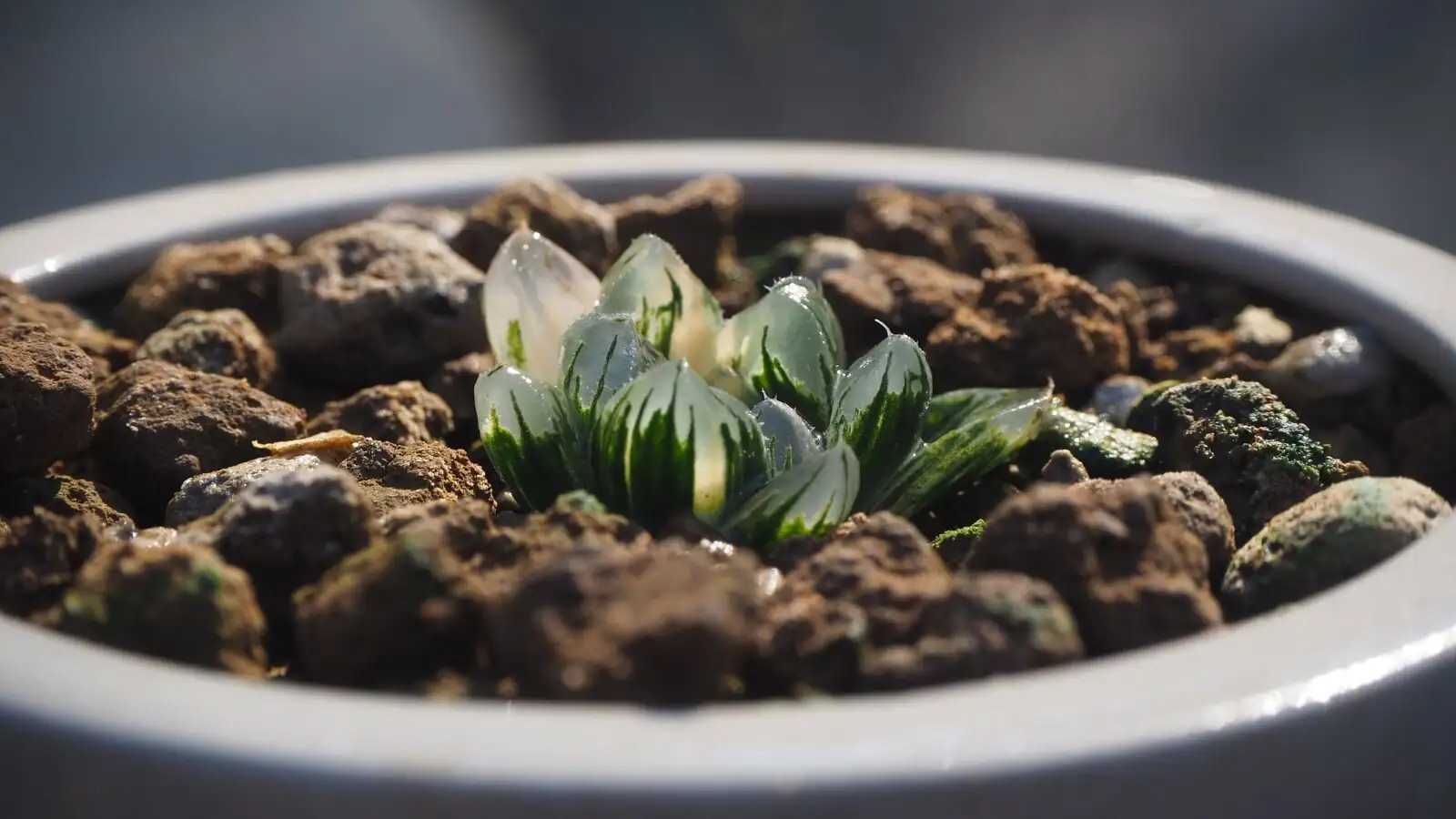
- The mix: Use a very free-draining succulent blend—think cactus soil amended liberally with coarse sand, pumice, or grit. A simple recipe: equal parts cactus mix, coarse sand, and pumice. You’re aiming for a largely mineral medium that dries fast and resists compaction.
- Sift and size: If possible, screen out fine dust from your mineral components (target 2–6 mm particles) to avoid mushy zones.
- Drainage details:
- Always use a pot with drainage holes.
- Place mesh over the holes to keep the mix from escaping; add just a thin scatter of larger stone over the mesh if needed. Don’t build a thick “drainage layer” that reduces rootable space—let the entire profile be evenly gritty.
- Top-dressing: Finish with 0.5–1 cm of decorative gravel (quartz, granite grit, or lava). It spotlights the rosette, prevents algae and fungus gnats, and keeps moisture from wicking into leaf bases.
Do:
- Keep the entire profile mineral-rich and airy.
- Repot in spring if the clump fills the dish.
Don’t:
- Use water-retentive, peaty mixes.
- Bury the crown. Plant slightly proud so water can’t linger at the leaf bases.
Airflow-Friendly Layout (The Secret to Long-Term Health)
H. cooperi dislikes prolonged dampness. Good ventilation is non-negotiable—especially in a low, broad dish.
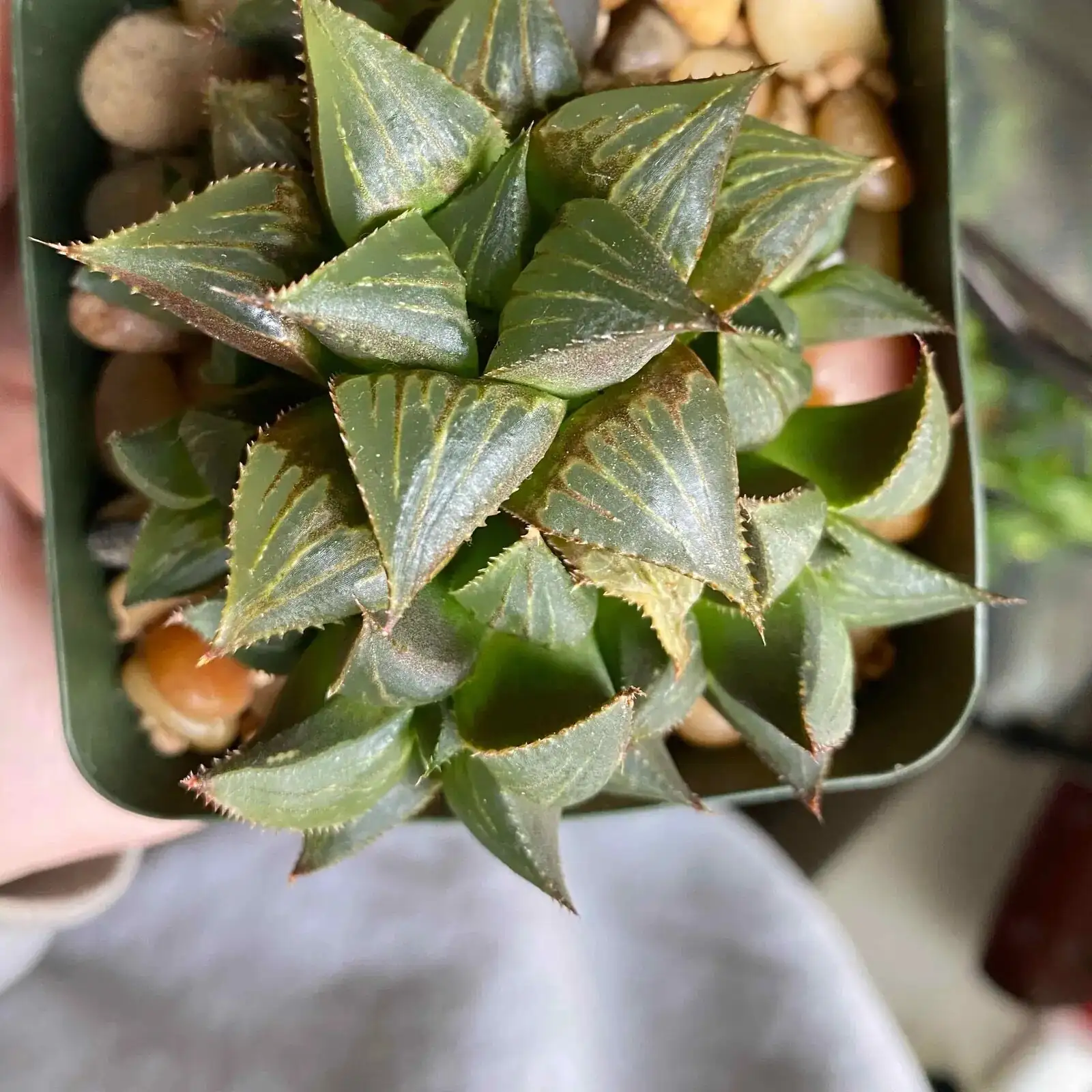
- Spacing: Leave 2–3 cm between rosettes and any stones. This breathing room helps prevent crown and basal rot.
- Gentle mounding: Build a slight slope so water drains away from the rosette centers. A subtle tilt (2–5 degrees) keeps droplets moving.
- Stone “wind channels”: Place accent rocks to frame (not hug) the plants; let them guide airflow rather than trap pockets of humidity.
- Elevation: Use pot feet or a stand to allow air under the dish. On a porch, set it where breezes pass but sun is filtered (shade cloth is your friend).
- Skip cloches: A clear cover can briefly raise humidity for display, but it must be well-ventilated and never used in hot weather—overheating and rot can follow fast.
Compatible Companions That Won’t Steal the Spotlight
Choose plants that share Haworthia cooperi’s love of bright, indirect light, lean soil, and measured watering. Aim for modest growers so the jewel stays center stage.
Great matches
- Fellow Haworthias: Haworthia cymbiformis or H. retusa for a soft, glassy chorus; H. attenuata/fasciata (zebra types) for sculptural contrast. They thrive in similar filtered light.
- Gasteria (e.g., Gasteria ‘Little Warty’): Strap-like leaves, shade-tolerant, and happy in the same gritty mix.
- Compact Aloe (e.g., Aloe brevifolia): Works if positioned at the brighter edge of the dish where light is strongest, while H. cooperi occupies the gentler interior.
- Select Sedum (ground-hugging, not thirsty): If your site offers a brighter rim, a tiny, slow Sedum can edge the dish—just keep it sparse and monitor growth so it doesn’t crowd.
Use caution or avoid
- Thirsty companions (ferns, mosses, humidity-lovers): They push the dish toward wet, stagnant conditions—an invitation to rot.
- Aggressive creepers or fast shrubs (mint-like growers): They’ll outcompete your rosette in no time.
- Spiky, sun-hungry cacti: Different light/water rhythm, and they can overshadow the star.
- Lithops: Charming, but their watering schedule and light needs aren’t ideal alongside H. cooperi in one dish.
Tip: If mixing species with slightly different light appetites, place the brighter-needing plant toward the light source and H. cooperi in the softened, indirect zone.
Step-by-Step: Build the Dish Garden
- Gather materials
- Shallow container with drainage holes, mesh, gritty succulent mix, top-dressing gravel, your plants, chopsticks/tweezers, and a soft brush.
- Prep the dish
- Cover drainage holes with mesh; add your gritty mix to just below the rim.
- Dry-run the layout
- Position H. cooperi slightly off-center as the focal point. Stage companions with 2–3 cm breathing room and leave pathways for air to flow.
- Plant
- Tease roots gently, set each rosette slightly proud, and give H. cooperi a tiny tilt so water won’t sit in the crown.
- Add accents
- Nestle a few stones without pressing against leaves. Top-dress with fine gravel to lock everything in and enhance that “crystal” effect.
- Pause watering
- Wait 3–7 days before the first drink to let any disturbed roots callus.
- First watering
- Water thoroughly around the perimeter until it drains from the holes; never splash into the crown. Then let the mix dry completely before watering again.
Light, Water, and the Seasonal Rhythm
- Light
- Indoors: Bright, filtered light is ideal—an east-facing window or lightly shaded south window. Avoid harsh, direct midday sun that can scorch the windows.
- Outdoors (warm climates): Provide bright shade or use shade cloth; shelter from rain.
- Temperature
- Ideal: 18–22°C (64–72°F). Keep above 5°C (41°F) in winter; not frost-hardy (best indoors except in USDA 10–11 when kept dry).
- Watering
- Water only after the mix is dry. In active growth (often spring and autumn), this can be about once per week in warm, bright indoor conditions—adjust to your home, pot size, and airflow.
- Summer heat pause: Growth can slow; keep drier and boost ventilation to prevent basal or crown rot.
- Winter: Maximize light and water very sparingly.
- Humidity
- Prefers dry to average room humidity. If air is extremely dry, lightly mist the surrounding air—never into the rosette—and focus on airflow so moisture doesn’t linger.
Feeding, Grooming, and Repotting
- Fertilizer: During active growth, feed about once a month with a diluted balanced or low-nitrogen succulent fertilizer. Don’t let fertilizer sit in leaf bases.
- Grooming: Gently remove shriveled lower leaves; cut the flower stalk if you prefer the rosette to conserve energy (blooms are modest).
- Repotting: Refresh the mix when the clump fills the dish (often annually in spring). Keep the container shallow—this plant doesn’t want a deep pot.
- Propagation: Separate offsets in spring. Let cut surfaces dry before potting into a new gritty mix; water lightly at first.
Troubleshooting at a Glance
- Leaves turning yellow/transparent mush: Overwatering or poor airflow. Dry out thoroughly, improve ventilation, and check roots.
- Scorched tips: Too much direct midday sun. Shift to filtered light.
- Stretched rosette (etiolation): Not enough light. Move closer to a bright window with gentle sun.
- Pests: Mealybugs and whitefly may show up. Remove affected tissue, increase airflow, and treat with insecticidal soap or a labeled systemic if needed.
Safety note: H. cooperi is generally considered non-toxic to humans and pets, though nibbling any plant can cause mild stomach upset. Keep out of reach of curious mouths.
Three Design Recipes to Try
- Glass & Shadow
- Center: Haworthia cooperi
- Companions: Gasteria ‘Little Warty’ + a tiny, slow Sedum at the brighter rim
- Top-dress: Black lava grit to make the windows glow
- Accent: One pale quartz stone set a few centimeters away for contrast
- Soft Geometry
- Center: Haworthia cooperi
- Companions: Haworthia cymbiformis and H. attenuata for varied leaf forms
- Top-dress: Silver granite chips
- Accent: A low drift of pea gravel forming subtle “wind lanes” for airflow
- Desert Deskscape
- Center: Haworthia cooperi (slightly tilted)
- Companion: Compact Aloe brevifolia at the brighter edge
- Top-dress: Warm-toned sandstone grit
- Accent: Two flat stepping-stones that create a dry riverbed illusion (and ventilation channels)
Meaning, Origin Story, and Why It Resonates
There’s a quiet poetry to this plant. Those translucent “windows” are evolutionary skylights—letting sunshine penetrate into leaves while the plant shelters from harsh conditions. That’s why Haworthia cooperi is often associated with resilience and quiet determination: it thrives with minimal fuss, conserving resources and shining when the light is right.
No grand legends trail this species, but its “window” adaptation has inspired collectors for generations. If you see references to flower language, consider them modern interpretations rather than historical lore—the message is simple and contemporary: steadfast beauty under gentle care.
Quick Care Recap
- Light: Bright, indirect; gentle morning sun okay. Avoid harsh midday rays.
- Soil: Very gritty, fast-draining succulent mix.
- Water: Thoroughly only when completely dry; much less in summer heat and in winter.
- Air: Ventilation is vital—space plants, avoid enclosed displays, and elevate the dish.
- Temperature: 18–22°C ideal; keep above 5°C.
- Feeding: Dilute monthly in active growth.
- Growth: Compact rosette; offsets form small clumps—perfect for shallow dishes.
Design with space to breathe, layer with mineral textures, and let the light play through those glassy tips. Your shallow dish garden won’t just be beautiful—it’ll be a masterclass in how elegant restraint keeps succulents at their sparkling best.