Plant Features
- Size: Mature size about 60 × 45 cm (24 × 18 in) (height × spread).
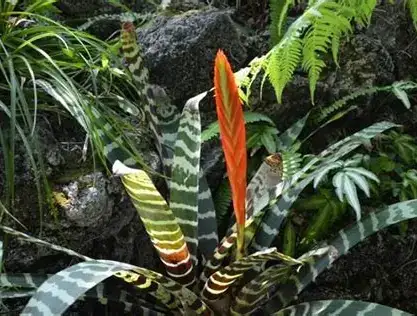
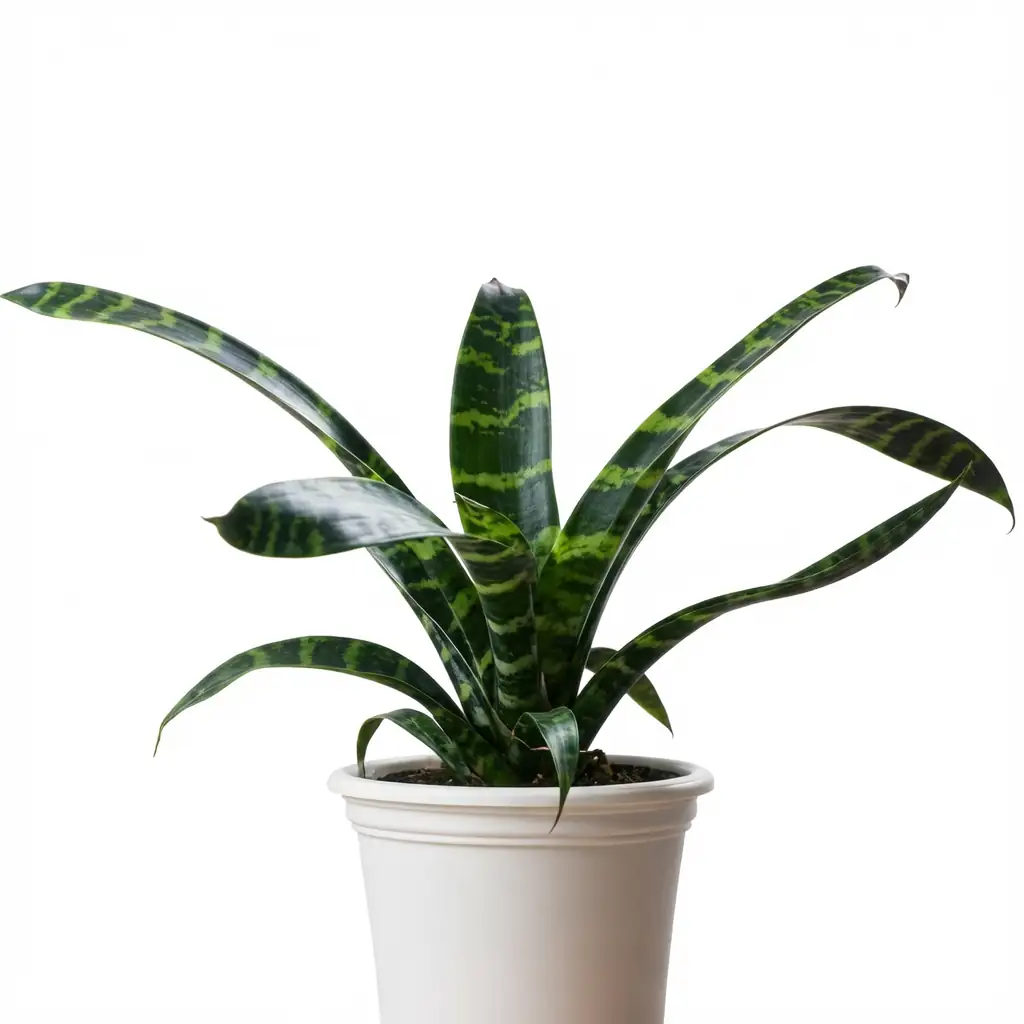
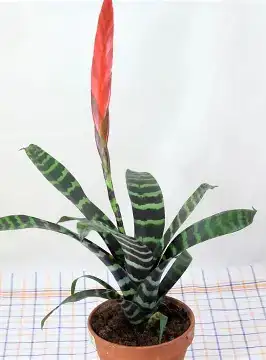
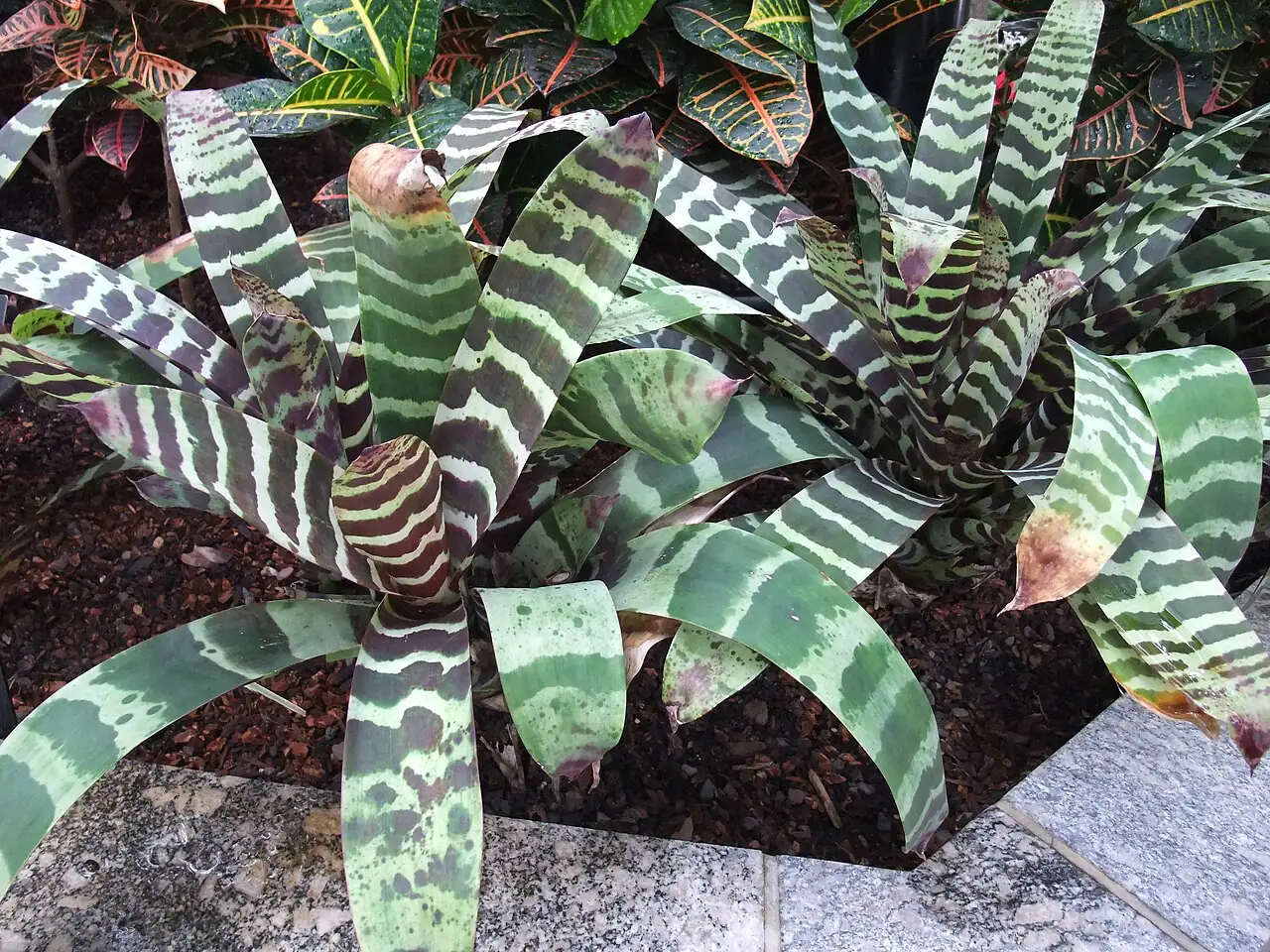
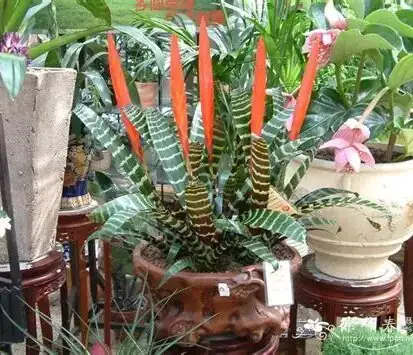
- Foliage: Arching, strap-like leaves arranged in a tight rosette; deep green with bold reddish-brown horizontal banding (the classic “zebra” pattern). Leaf edges can feel a bit sharp.
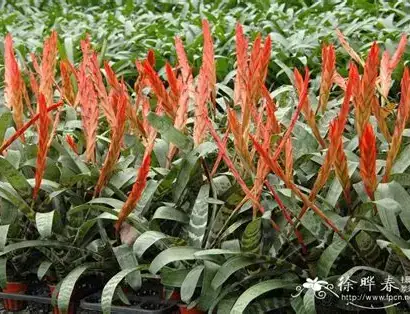
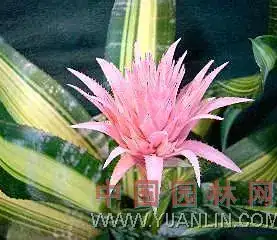
- Flower: An upright, flat, sword-shaped spike with vivid red bracts; small yellow tubular flowers emerge from between the bracts. The bracts remain ornamental far longer than the short-lived true flowers.
- Flowering Season: Indoors it may bloom at almost any time of year; flowering is often irregular, and each rosette flowers only once.
- Growth Habit: Evergreen, rosette-forming bromeliad that can grow as an epiphyte or terrestrially in a pot; produces offsets (pups) after flowering.
Environment
Sunlight
Bright, indirect light is ideal. It can take gentle morning sun, but avoid harsh midday or strong afternoon sun which can scorch leaves.
Temperature
Prefers 18–26°C (64–79°F). Avoid prolonged cold; try not to let it sit below about 12°C (54°F), especially if the mix stays damp.
Humidity
Moderate to high humidity (about 50–70% is excellent). In dry homes, occasional misting with low-mineral water helps.
Soil
Very free-draining, airy bromeliad/orchid-style mix (for example: equal parts orchid bark, perlite, and coconut coir; or 1:1 orchid mix and all-purpose potting mix). Use a small, snug pot—about 12.5–15 cm (5–6 in) is typical.
Placement
Indoors near a bright east window or bright north window, or set back from a sunny south/west window. A bright bathroom or kitchen is great if it offers extra humidity and airflow.
Hardiness
Not frost-hardy. Outdoors year-round only in warm climates, roughly USDA Zones 10–11 (and sometimes sheltered Zone 9 with protection).
Care Guide
Difficulty
Easy. The keys are bright filtered light, warmth, an airy potting mix, and keeping the central cup supplied with clean water without turning the potting mix soggy.
Buying Guide
Pick a plant with a firm, upright rosette and crisp, high-contrast banding. Avoid soft or collapsing bases, blackened centers, sour smells (possible rot), or visible scale/mealybugs. A forming red spike is a bonus, but healthy foliage and a solid crown matter most.
Watering
Use rainwater or distilled water when possible. Keep the central rosette “cup” topped up in warm conditions, and refresh/replace the cup water regularly so it doesn’t stagnate (often about every 2–3 weeks in typical homes, with an occasional flush). Water the potting mix only when the surface dries; in winter keep it just barely moist rather than wet. If humidity is low, mist the leaves every few days with rain/distilled water.
Fertilization
Feed lightly. Use a foliar fertilizer diluted to about 1/4 strength and spray the leaves once a month from spring through autumn. Avoid heavy feeding—it can scorch leaves and may reduce blooming quality.
Pruning
Trim away dead or damaged leaves at the base. After the red bracts fade, cut the spent flower spike close to the rosette, taking care not to injure any new pups.
Propagation
By offsets (pups). When pups are about 1/3–1/2 the size of the mother rosette, separate them with a clean cut and pot into an airy bromeliad mix. Keep warm and slightly humid until established.
Repotting
Bromeliads prefer snug pots. Repot mainly to refresh the mix or make room for pups. Young plants can be moved up one pot size in early spring; a 12.5–15 cm (5–6 in) pot is commonly suitable.
📅 Seasonal Care Calendar
Year-round: maintain and regularly refresh the cup water; water the mix only after the surface dries. Winter: reduce watering, keep the mix only slightly moist, and protect from cold drafts; keep less water sitting in the cup if your home is cool. Every few days: mist if air is dry. Spring–autumn: monthly foliar feeding at 1/4 strength. Early spring: repot if needed to refresh mix or accommodate pups.
Pests, Diseases & Safety
Common Pests & Diseases
Common pests include mealybugs and scale (often tucked near leaf bases) and spider mites in dry air. Prevent rot by using an airy mix, avoiding waterlogged soil, maintaining airflow, and refreshing the cup water. Treat infestations with insecticidal soap or horticultural oil and repeat as needed.
Toxicity
Generally considered non-toxic to people and pets. However, the leaf edges can be sharp and may cause minor irritation or scratches—place it out of reach of small children and pets that like to chew.
Culture & Symbolism
Symbolism: Often linked with boldness and tropical vitality—its bright red “sword” reads like a little flag of energy and confidence indoors.
History & Legends: A long-loved ornamental bromeliad, celebrated in houseplant collections and conservatories for its zebra-striped foliage and unusually long-lasting red inflorescence.
Uses: Primarily grown as an ornamental houseplant for dramatic foliage and a long-lived splash of color when it blooms. Compact enough for small spaces, and forgiving for newer plant parents when given the right light and water.
FAQ
Does the plant die after it flowers?
Each rosette blooms once, then slowly declines over the following months—but it usually produces pups (offsets) as it winds down. Keep caring for the plant and pot up the pups to continue growing it.
Why are the leaf tips turning brown?
Most often it’s low humidity, mineral-heavy tap water, or too much direct sun. Try boosting humidity, switching to rain/distilled water, and moving it to bright indirect light.
Should I keep water in the center cup all the time?
In warm conditions, yes—just refresh it regularly so it stays clean. In cooler winter conditions, keep less water sitting in the cup and focus on warmth and airflow to reduce the risk of rot.
Fun Facts
- The dramatic red “sword” is made of bracts; the true flowers are the small yellow blooms that pop out from between them.
- In the wild, bromeliad rosettes can hold rainwater and form tiny ‘ponds’ that shelter insects and other small organisms.