

Plant Features
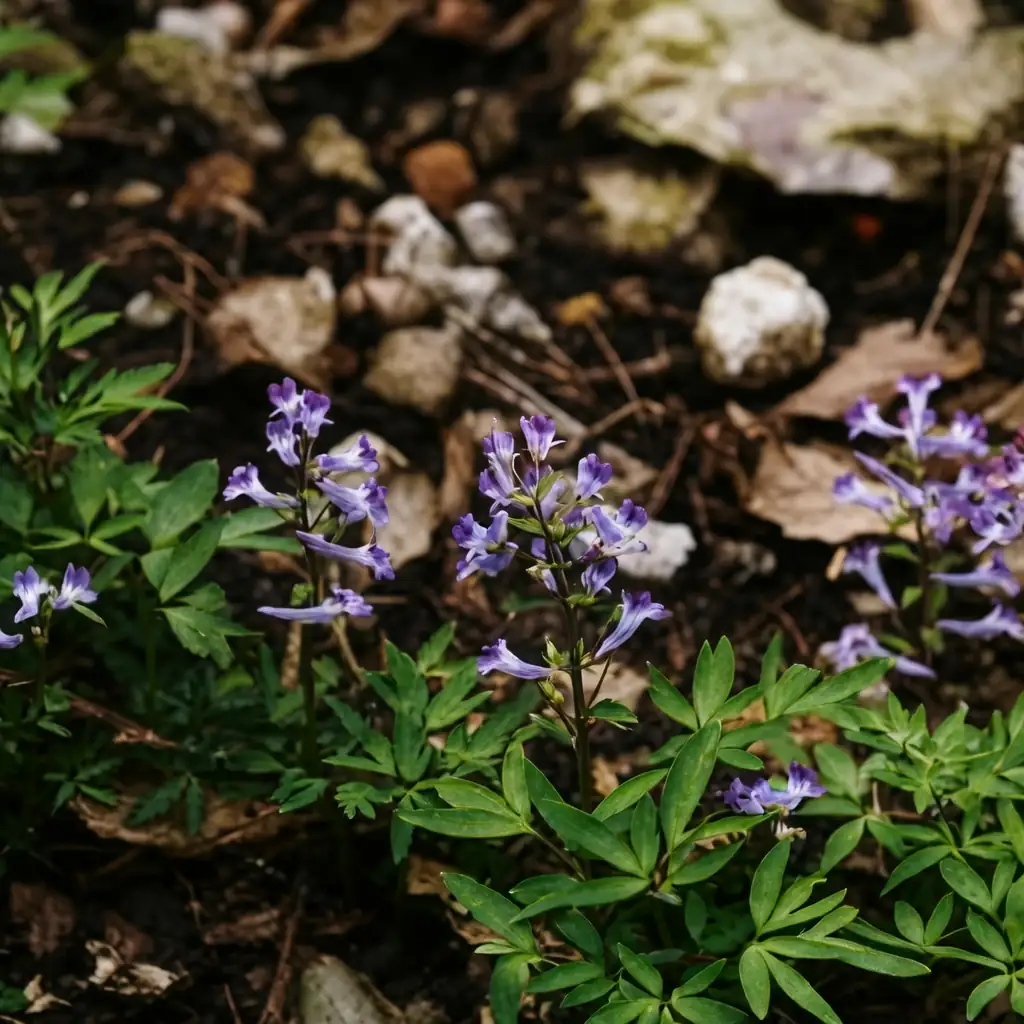
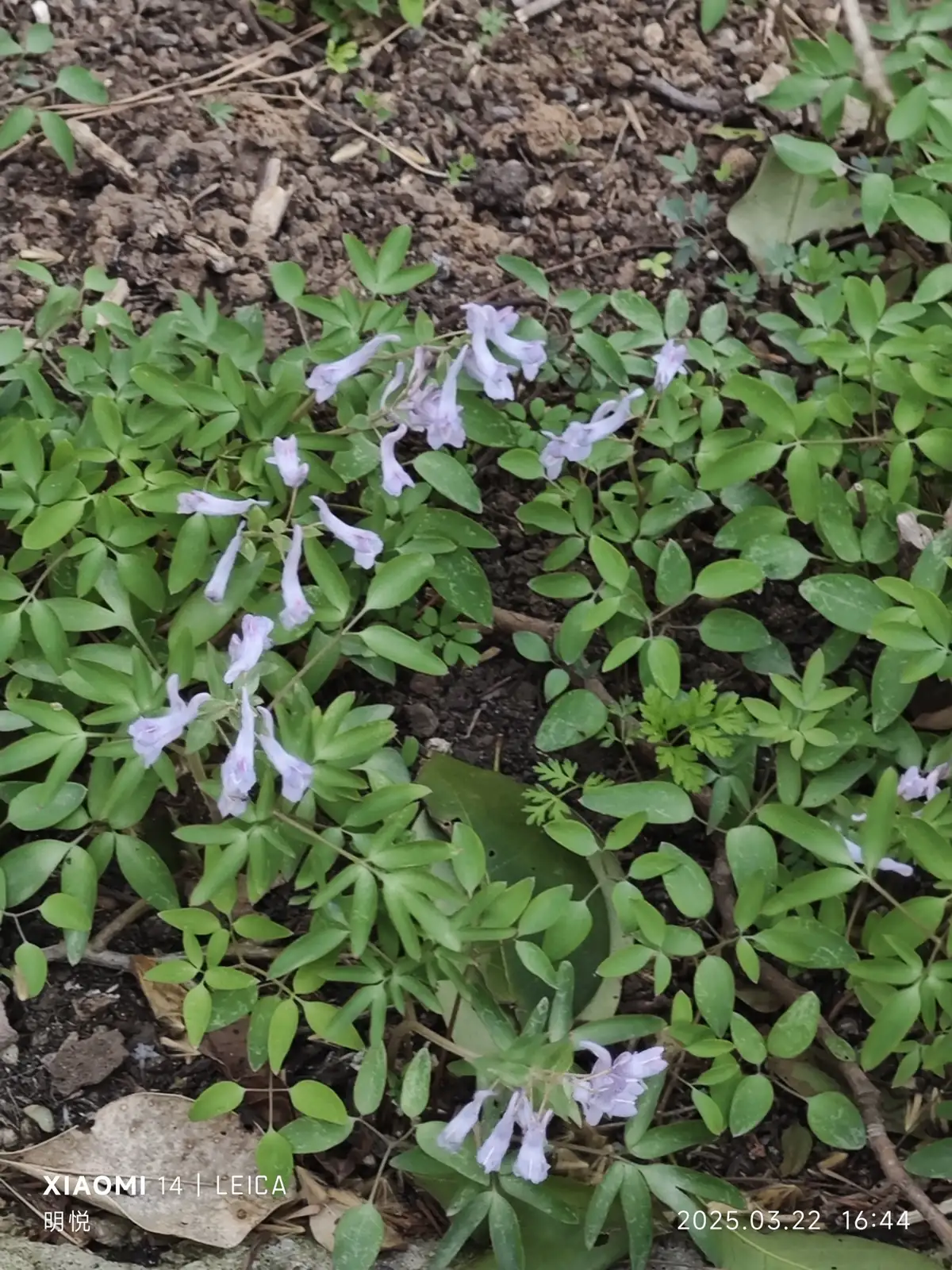
- Size: Typically 10–30 cm (4–12 in) tall; forms a low clump arising from a rounded tuber.
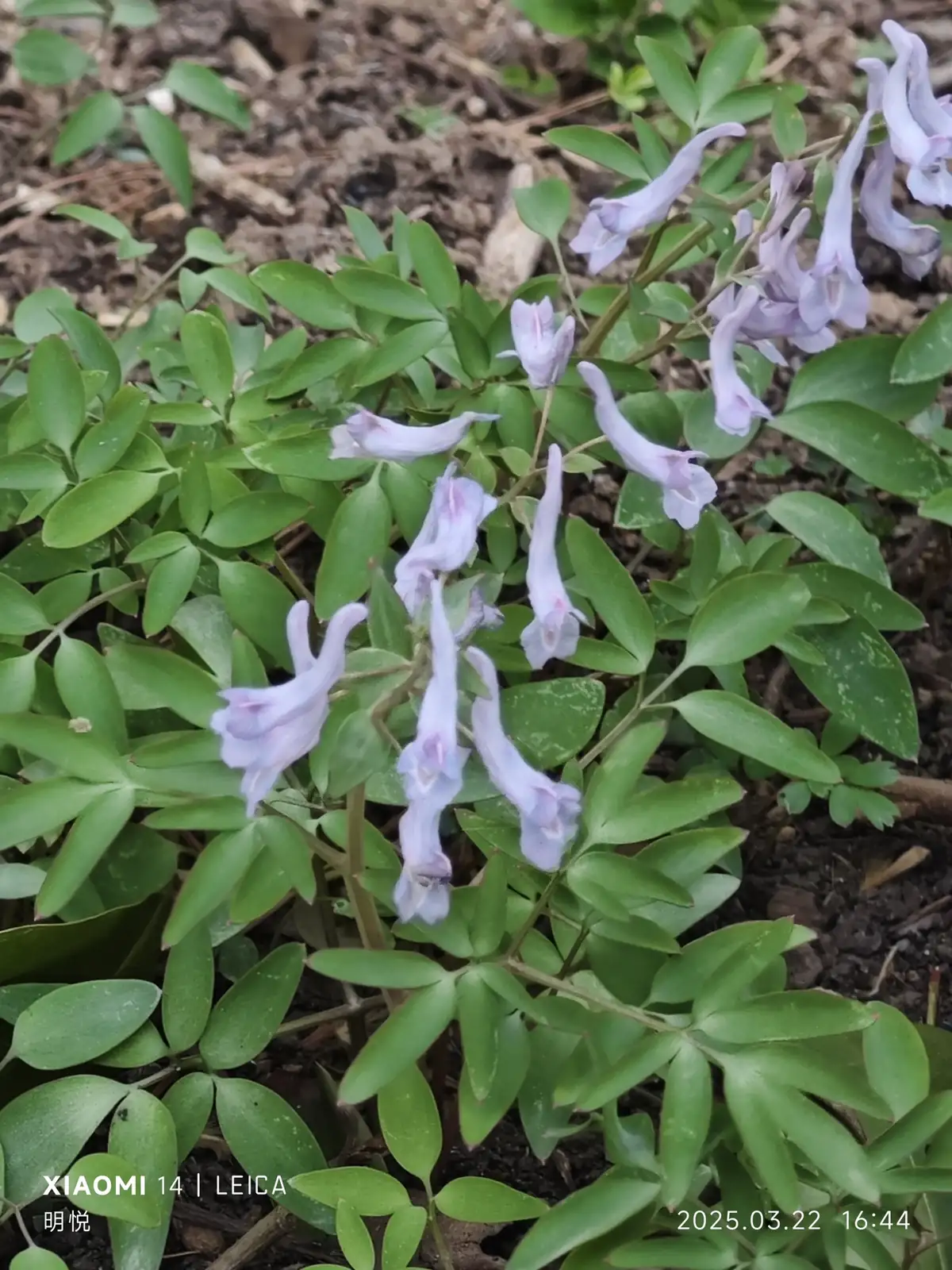
- Foliage: Leaves are finely divided (usually two- to three-times compound) with small leaflets that are often 3-lobed. The lobes can narrow into lance-like segments and are generally smooth-edged, giving the plant a soft, lacy look.
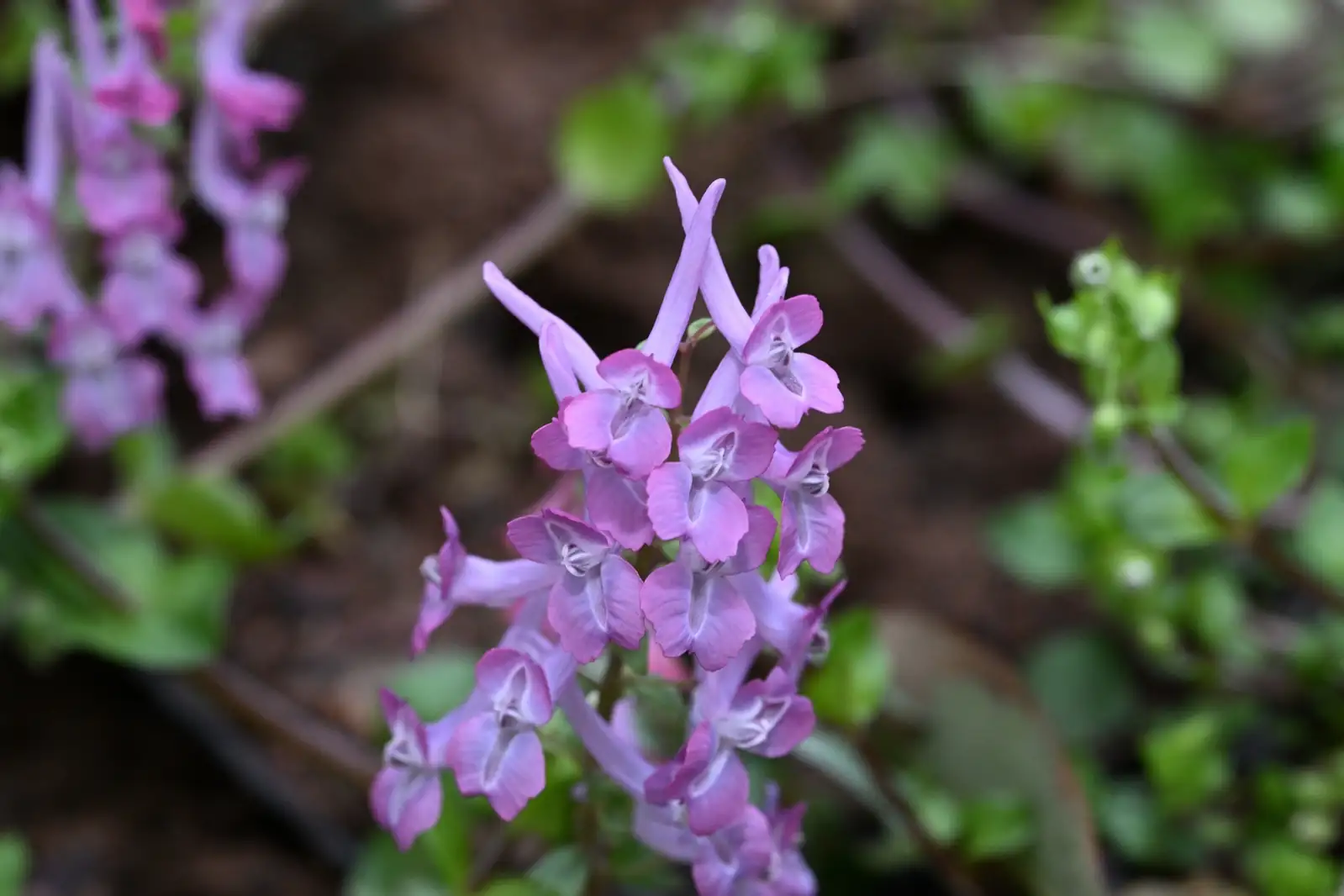
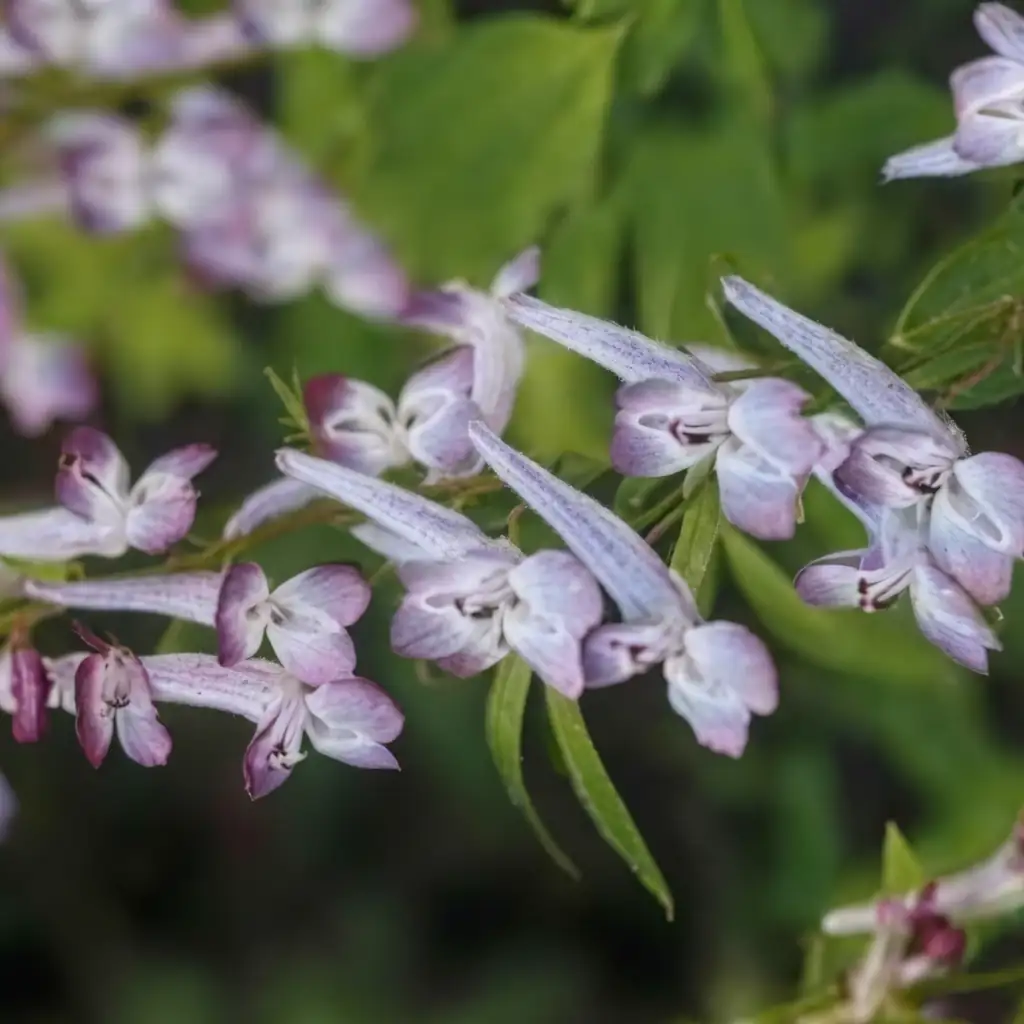
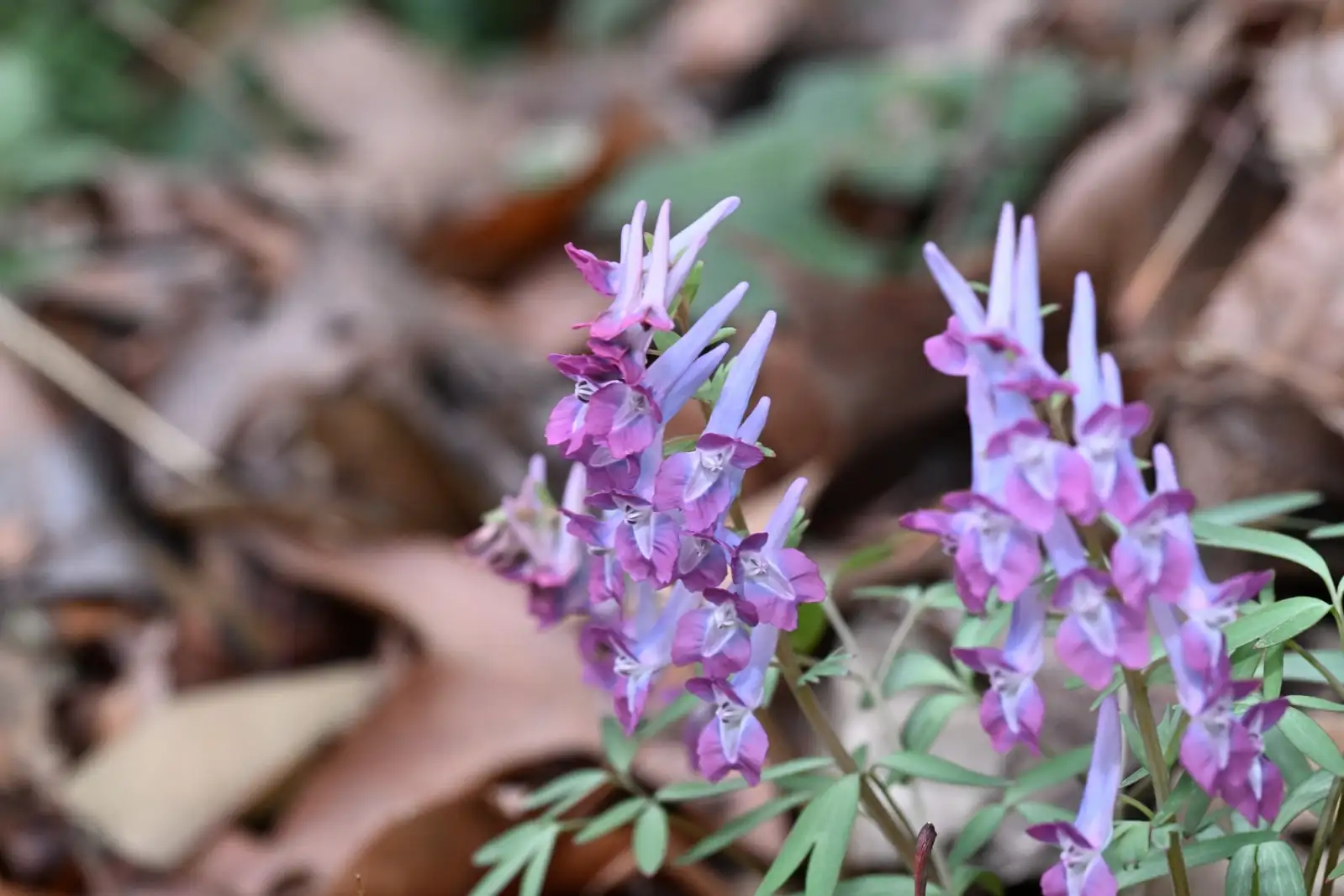
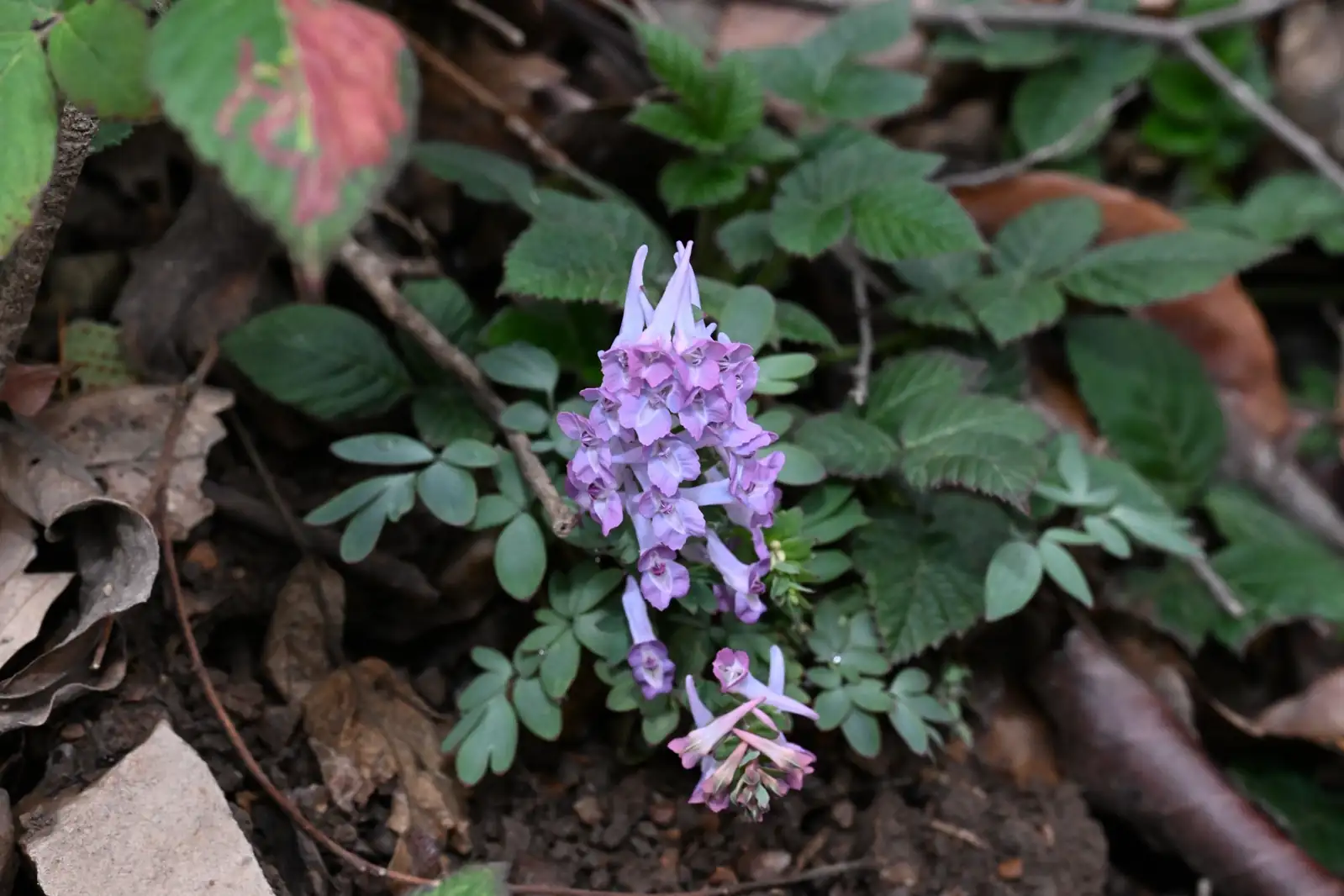
- Flower: Flowers are borne in loose racemes of about 5–15 blooms. Each flower is purple to purplish red and has the classic Corydalis spurred shape. Bracts are small and drop early. After flowering, it forms slender, linear capsules; the seeds are arranged in a single row inside the fruit.
- Flowering Season: March–May
- Growth Habit: Low, upright, often branched perennial herb that grows from a rounded, yellowish tuber and typically goes dormant after the spring season.
Environment
Sunlight
Partial shade to dappled sun is ideal. It can take more sun during a cool, moist spring, but benefits from protection from hot afternoon sun.
Temperature
Prefers mild warmth while actively growing; generally does best around 10–25°C (50–77°F). When dormant, it tolerates colder conditions better than heat and drought.
Humidity
Likes consistent moisture and is drought-sensitive. Keep evenly moist during spring growth, especially while the tuber is swelling; avoid prolonged dry spells.
Soil
Loose, well-aerated sandy loam enriched with humus/leaf mold—moisture-retentive but free-draining. On flat sites, improve drainage or plant in raised ground to prevent waterlogging and tuber rot.
Placement
Outdoors in a well-drained, humus-rich bed (woodland edge, raised border, or grassy hillside-style planting). Also suitable for pots if drainage is excellent and spring moisture is monitored.
Hardiness
Approx. USDA Zone 6–9. Not fond of prolonged drought; winter survival and vigor improve with well-drained soil and a natural dormant period.
Care Guide
Difficulty
Moderate: it’s straightforward once you understand its rhythm—steady spring moisture without soggy soil, then drier rest as it goes dormant.
Buying Guide
Select firm, healthy tubers with no soft spots, mold, or shriveling. Choose clearly labeled stock with the full scientific name to avoid confusion with other Corydalis species.
Watering
Water for consistent, even moisture during active growth and flowering. Do not let the soil dry out, especially in early to mid-spring (around early April) when tubers enlarge. After seed set and as foliage yellows and dies back, gradually reduce watering.
Fertilization
In early spring, top-dress with compost or leaf mold, or use a light, balanced fertilizer. Avoid heavy nitrogen, which can lead to weak, overly lush growth and poorer tuber development.
Pruning
No regular pruning needed. Deadhead if you want to reduce self-seeding, but allow the foliage to yellow and die back naturally so it can recharge the tuber for next season.
Propagation
Mostly by seed. Capsules mature roughly April–July; sow fresh seed when ripe for best germination. It can also be increased by careful tuber division during dormancy where practical (handle gently to avoid damage and rot).
Repotting
For container plants, repot during dormancy (after dieback) into a fresh, humus-rich but sharply drained mix. Always use a pot with strong drainage holes.
📅 Seasonal Care Calendar
Spring (March–May): main growth and flowering—keep evenly moist. Early to mid-spring (around early April): critical tuber-enlargement window—avoid drought stress. Late spring to summer (April–July): fruiting/seed maturation—reduce water as foliage fades. Dormant period: keep on the dry side and avoid waterlogged soil.
Pests, Diseases & Safety
Common Pests & Diseases
Not specifically noted in the source, but in gardens it may be nibbled by slugs/snails on tender spring growth. The biggest risk is tuber or crown rot in poorly drained, overwatered conditions—prevent with airy soil, raised planting, and careful watering.
Toxicity
Not stated explicitly in the source. Because it contains bioactive alkaloids and is used medicinally, do not ingest casually. Keep tubers and any preparations away from children and pets unless used under qualified professional guidance.
Culture & Symbolism
Symbolism: Not documented in the source; often appreciated simply as a gentle sign of spring and renewal due to its early-season bloom and summer dormancy.
History & Legends: Not documented in the source.
Uses: A traditional Chinese medicinal plant: the tuber is the primary medicinal part, traditionally associated with promoting blood movement, resolving stagnation, and easing pain. Also grown ornamentally as a petite spring-flowering plant for lightly shaded beds and pots.
FAQ
When does Yanhusuo flower?
Typically from March to May.
When are fruits and seeds produced?
Usually from April to July, as the seed capsules mature.
What is it traditionally used for?
The tuber is used in traditional Chinese herbal practice in formulas associated with circulation-related goals and pain relief.
What soil does it prefer?
A loose, humus-rich sandy loam that stays evenly moist in spring but drains well—raised beds or improved drainage help prevent rot.
How much water does it need?
It likes steady moisture during spring growth and is drought-sensitive—especially in early to mid-spring when the tuber is swelling—then needs less water as it dies back.
Fun Facts
- The plant grows from a rounded, yellowish tuber—the same part most often used in traditional preparations.
- It’s native to multiple provinces in eastern and central China and is often found on grassy hillsides and low uplands.
- A typical flower cluster carries around 5–15 blooms, giving the plant a light, airy look.
- Early to mid-spring is the make-or-break time for tuber enlargement—consistent moisture then can noticeably improve vigor.
- Its fruit is a slender capsule with the seeds lined up in a single row.


