

Plant Features
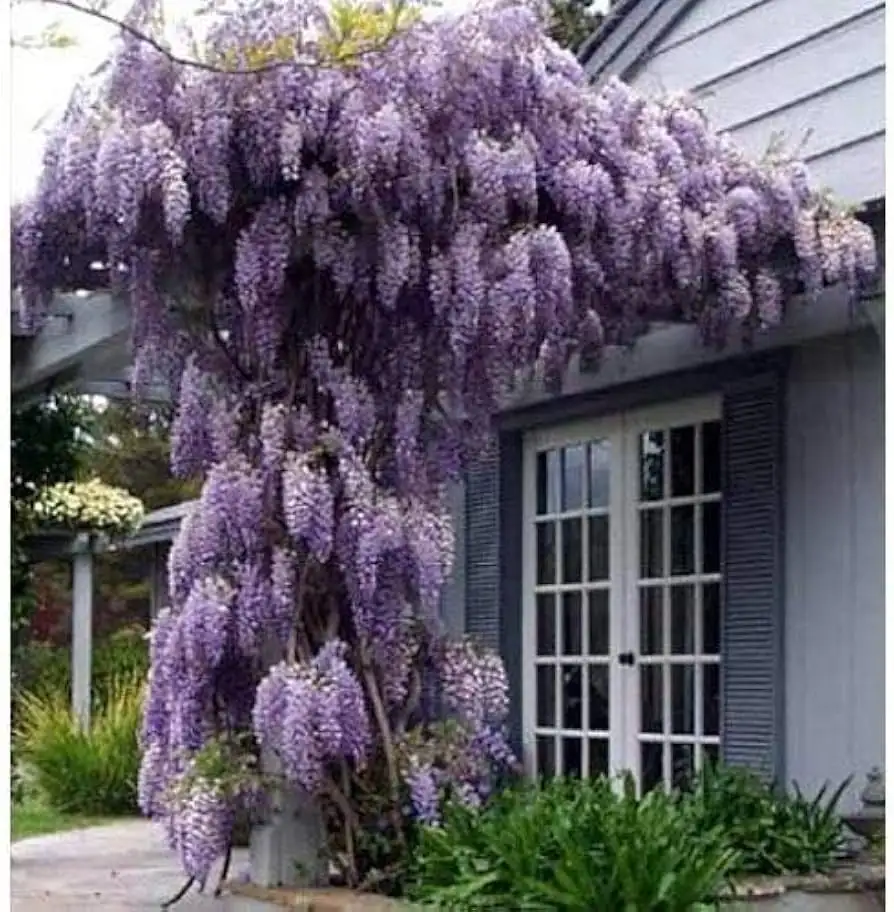
- Size: Typically 3–9 m (10–30 ft) long with a spread around 3–6 m (10–20 ft). Mature plants can become very massive, developing heavy, woody stems that may feel almost trunk-like.
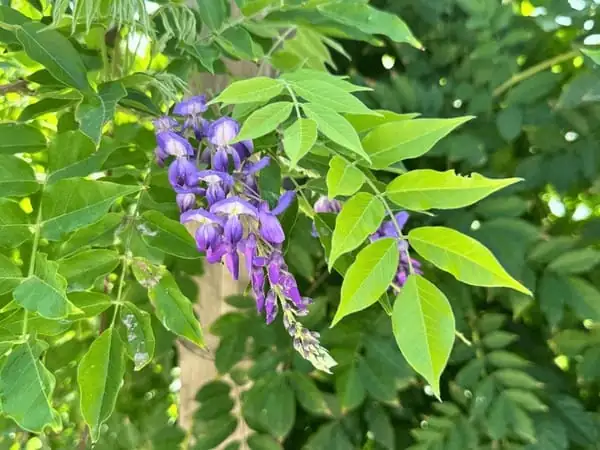
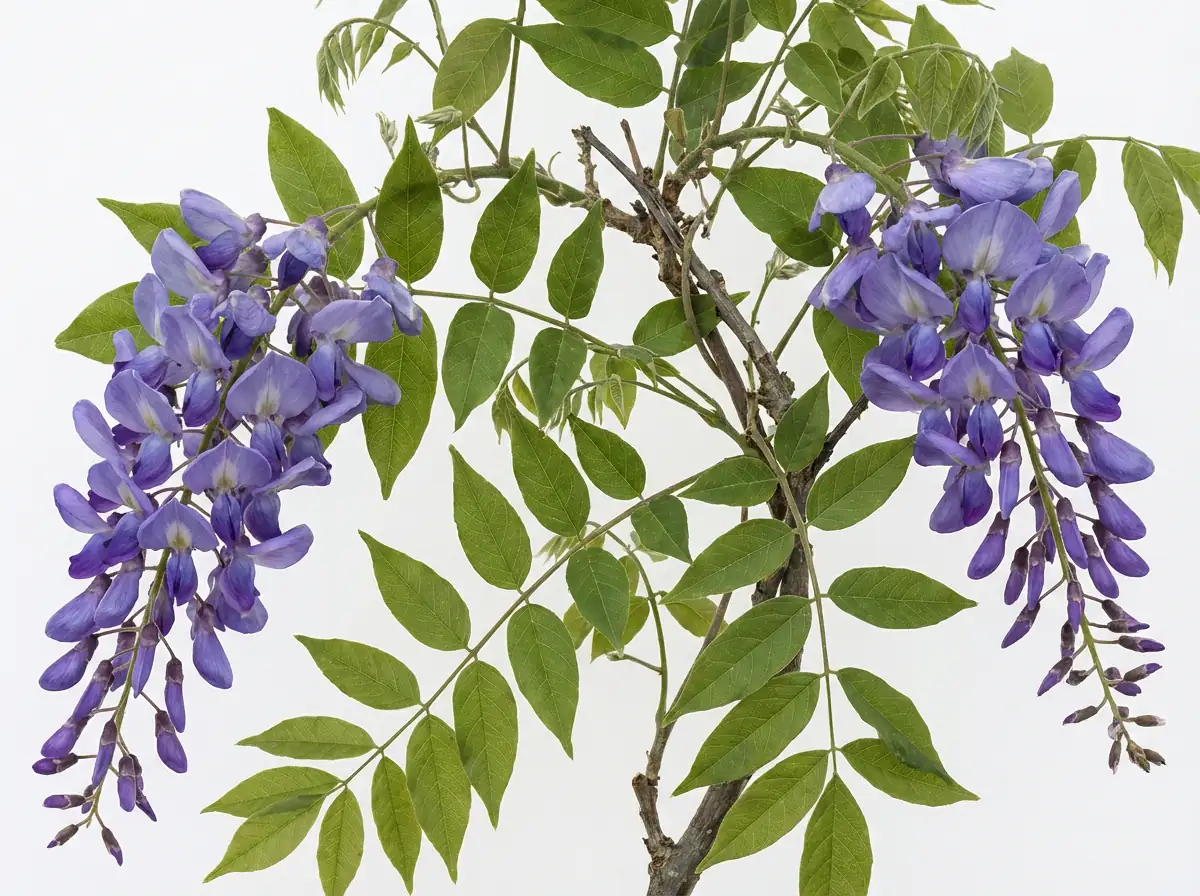
- Foliage: Pinnate compound leaves are medium green with about 7–13 leaflets. Leaflets are ovate to elliptic and roughly 5–8 cm (2–3 in) long. Foliage often turns yellow in autumn before dropping.
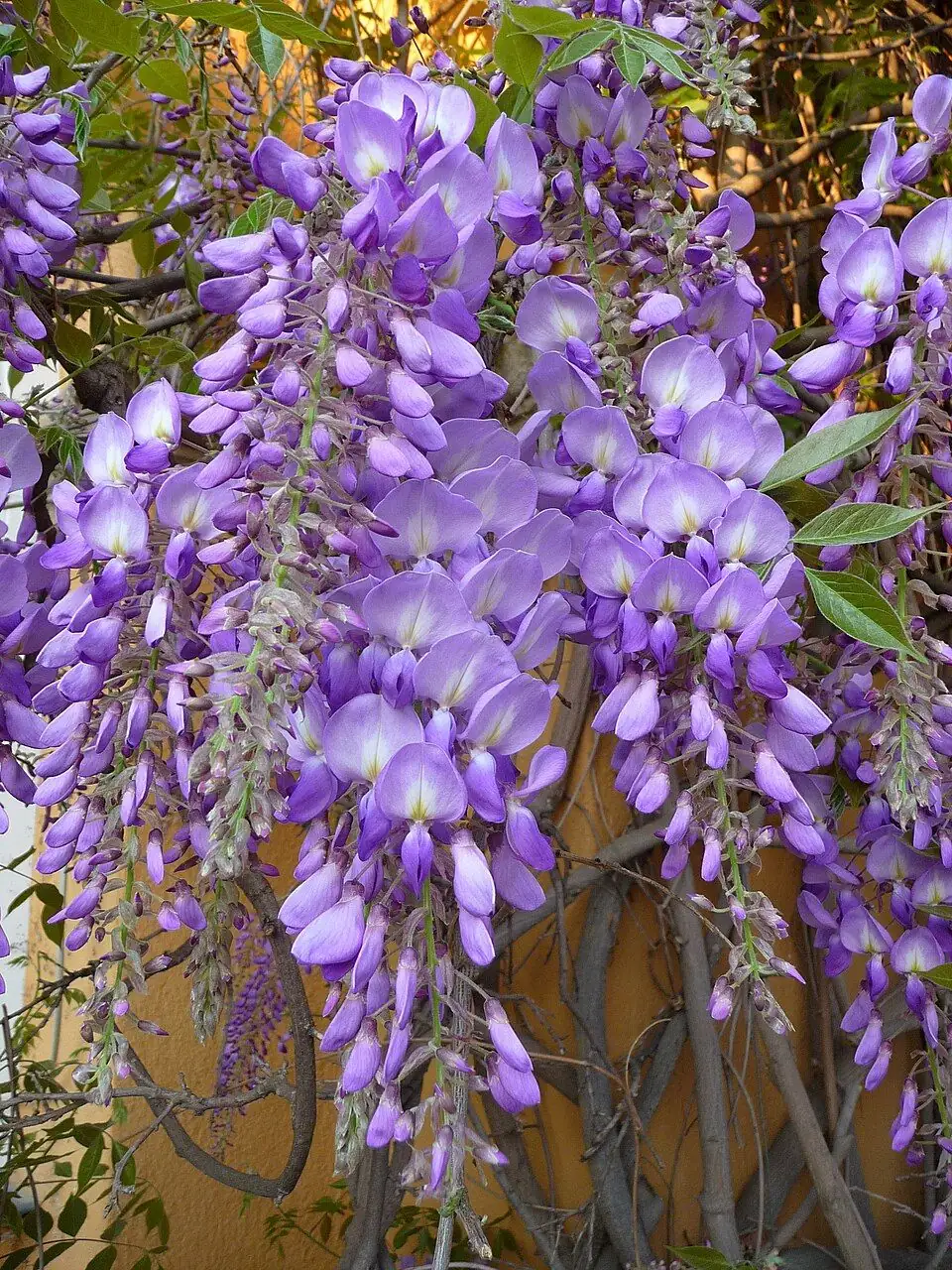
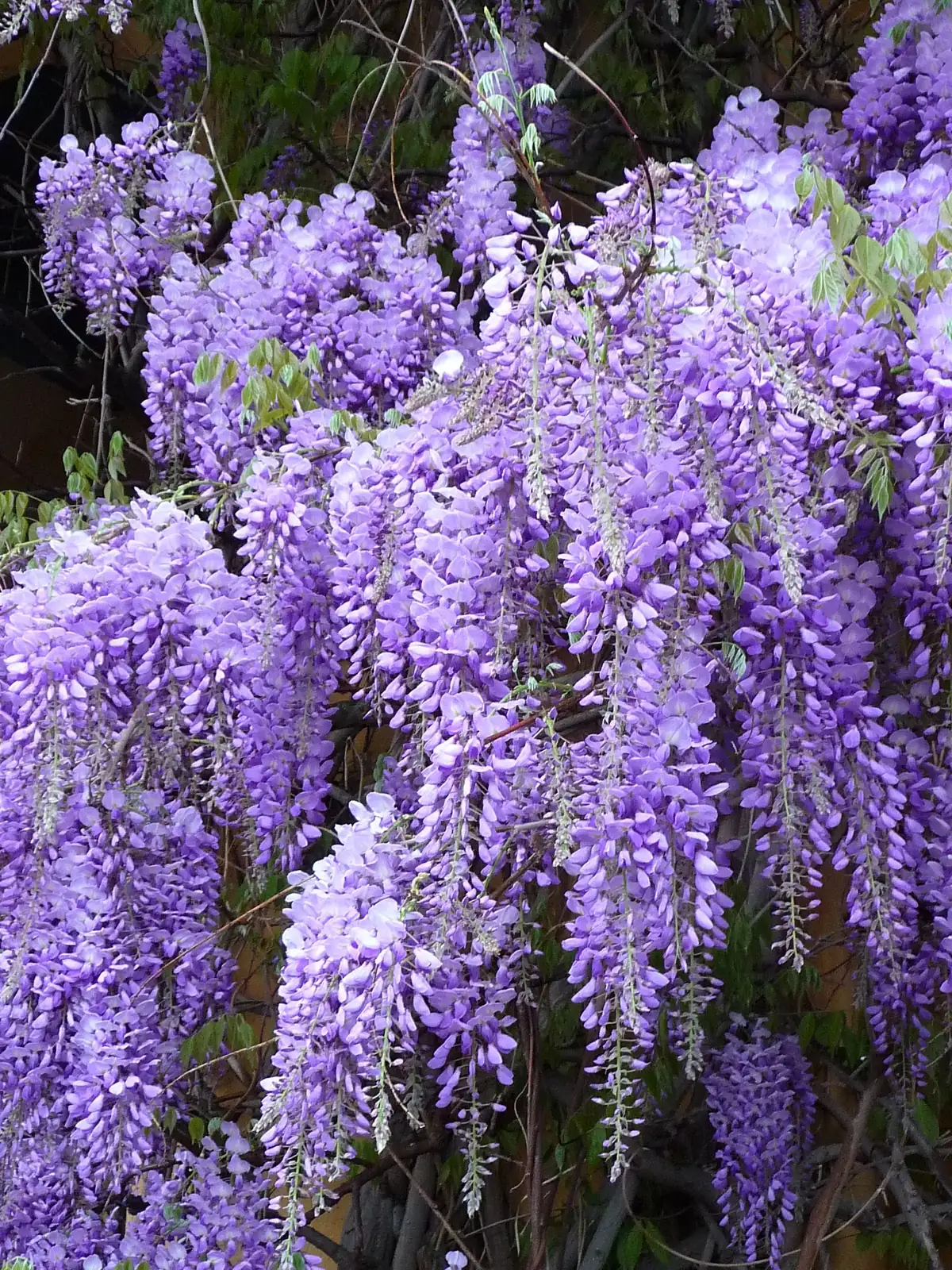
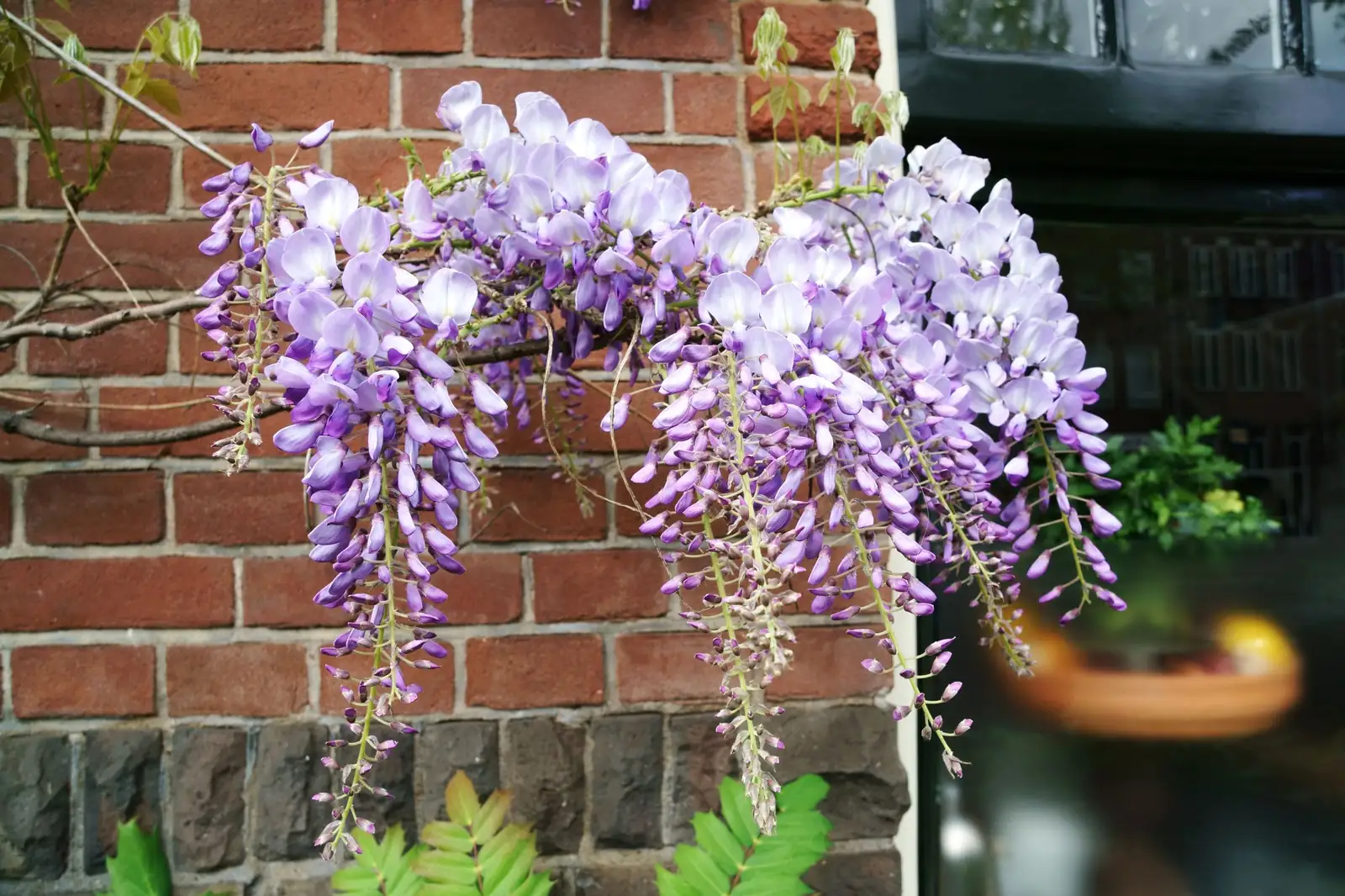
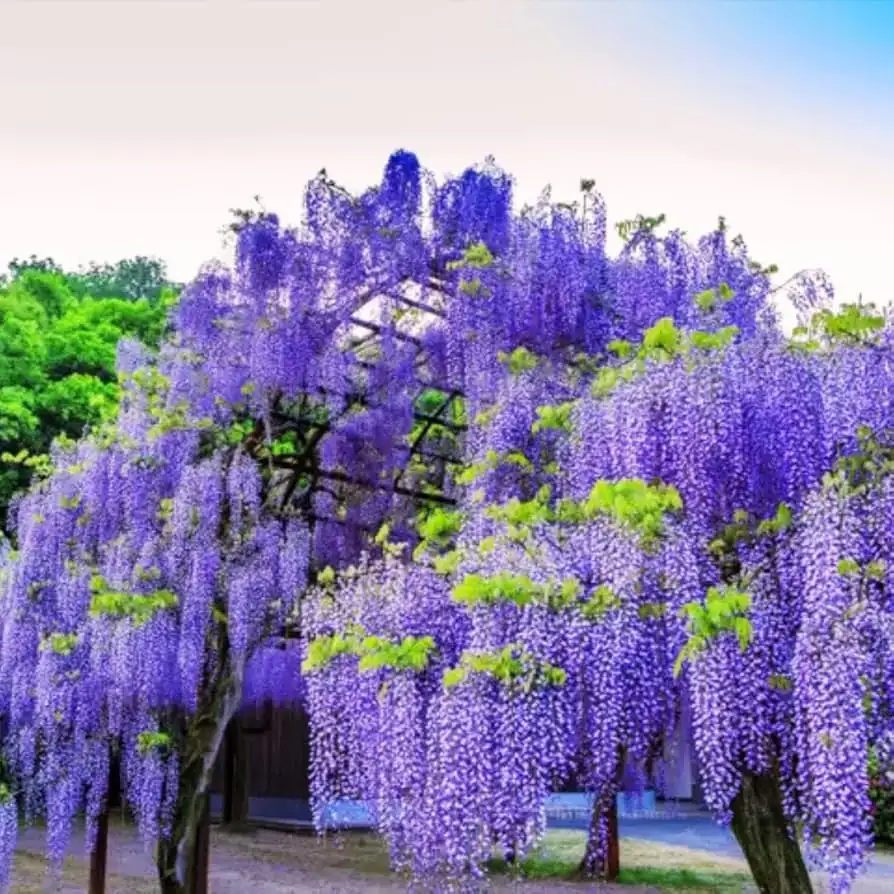
- Flower: Produces long, hanging racemes about 30–45 cm (12–18 in) long, each packed with many butterfly-shaped, pea-family flowers (often 20–80 per raceme). Colors are usually purple to bluish-purple, with some cultivars in pink or white. The blooms are notably fragrant and create a classic cascading, waterfall effect.
- Flowering Season: Spring (commonly late April to early May). Individual bloom periods often last around 2 weeks; some varieties may rebloom lightly in late summer.
- Growth Habit: A vigorous, fast-growing twining vine that wraps counterclockwise. Strongly climbing and best trained onto very sturdy supports.
Environment
Sunlight
Full sun for best flowering (aim for at least 6 hours of direct sun). Will tolerate partial shade, but flowering can be reduced.
Temperature
Prefers temperate conditions and handles both cold winters and hot summers once established. Commonly grown in USDA Zones 5–9.
Humidity
Likes evenly moist conditions during establishment and growth, but is adaptable. Avoid persistently soggy, waterlogged situations.
Soil
Best in fertile, well-drained soil, but adaptable to many soil types (including poorer soils). Generally prefers slightly acidic to neutral conditions. Deep soil is helpful because wisteria develops a deep root system.
Placement
Ideal for arbors, pergolas, trellises, fences, and walls—always with a very sturdy structure. Keep well away from buildings and gutters; mature vines are powerful and can pry into cracks and cause damage.
Hardiness
USDA Zones 5–9; established plants can tolerate winter lows around −29°C (−20°F). Not fond of severe, repeated freeze damage when young or newly planted.
Care Guide
Difficulty
Moderate. Generally tough once established, but it needs consistent pruning and training to keep it tidy and to encourage reliable flowering.
Buying Guide
Choose grafted plants or those grown from cuttings/layering if you want flowers sooner. Seed-grown wisteria can take 10+ years to bloom. Look for a healthy plant with a robust root system, good stem structure, and no obvious pests, spotting, or mildew.
Watering
Water regularly during the first year to help establish deep roots. After establishment, it becomes fairly drought-tolerant, but performs best with consistent moisture during active growth. Keep soil evenly moist—not soggy. Reduce watering in fall and winter after leaf drop.
Fertilization
A light feeder. Use a high-phosphorus fertilizer in early spring to support blooming (e.g., bone meal or rock phosphate). Avoid nitrogen-heavy feeds, which can push lots of leafy growth at the expense of flowers (wisteria, as a legume, can contribute to its own nitrogen). If feeding through the season, keep it modest—about 2–3 light applications during active growth is plenty.
Pruning
Essential for both control and blooms. Prune twice a year: (1) Late winter while dormant—remove at least half of the previous year’s growth, leaving a few buds per stem to form flowering spurs. (2) After flowering in late spring/early summer—cut back new shoots to about 15 cm (6 in) to maintain spurs and shape. Remove suckers from the base and any dead/damaged stems whenever you see them. (Note: Many garden wisterias flower on short spurs; good pruning helps concentrate energy into those spurs.)
Propagation
Can be propagated by softwood cuttings in early summer (about 10–15 cm / 4–6 in), hardwood cuttings in winter (about 30 cm / 12 in), layering (burying part of a flexible stem until it roots), or grafting (commonly done in winter). Seeds can be grown after soaking overnight, but flowering is usually delayed for many years.
Repotting
In containers, repot about every 2–3 years. Because wisteria roots are strong and deep, transplanting can be stressful—disturb the root ball as little as possible and use a large, stable pot with excellent drainage.
📅 Seasonal Care Calendar
Spring: Feed lightly before new growth, train and tidy, then enjoy the main bloom show. Summer: Prune after flowering and keep trimming to manage size. Fall: Ease off watering as growth slows; seed pods may form. Winter: Dormant season—do major structural pruning while leafless.
Pests, Diseases & Safety
Common Pests & Diseases
Common pests include aphids, Japanese beetles, scale insects, spider mites, and mealybugs—often managed with horticultural oil or insecticidal soap plus good monitoring. Possible diseases include powdery mildew, leaf spot, and crown gall. Prevention focuses on airflow, avoiding frequent overhead watering, cleaning up fallen debris, and promptly removing affected growth; use appropriate fungicides when needed.
Toxicity
Toxic to humans and pets. All parts can be poisonous, with seeds and pods especially dangerous (contains compounds such as lectins and wisterin). Ingestion may cause nausea, vomiting, diarrhea, abdominal pain, and dehydration; severe cases can be serious. Keep seed pods away from children and animals, and consider removing pods after flowering.
Culture & Symbolism
Symbolism: Often associated with devoted love, longing, and romance—plus endurance and longevity, fitting for a vine that can thrive for generations.
History & Legends: Wisteria has been cultivated in China since ancient times and celebrated by poets and artists. In Japan, wisteria viewing is a long-standing seasonal tradition. One romantic legend tells of star-crossed lovers whose bond lived on as a wisteria vine entwining a tree—an emblem of enduring love.
Uses: Primarily ornamental, prized for dramatic spring bloom and for shading arbors and pergolas. Flowers have been eaten in some cultures, but great caution is required due to toxicity. Wisteria also appears in traditional medicinal contexts, but should only be used under professional guidance. In landscape design it adds vertical interest and can provide cooling shade when well-managed.
FAQ
Why isn’t my wisteria blooming?
Most often it’s one (or more) of these: (1) The plant is too young—grafted plants may bloom in 2–3 years, while seed-grown vines can take 10+ years. (2) Not enough sun—aim for 6+ hours of direct light. (3) Pruning at the wrong time or not pruning enough to create flowering spurs. (4) Too much nitrogen fertilizer, which boosts leaves over flowers. (5) General stress or inconsistent watering. Try improving sun, switching to a phosphorus-forward feed, and following a consistent twice-yearly pruning routine.
Is wisteria invasive?
Chinese and Japanese wisteria can be invasive in parts of the United States and may smother trees and native vegetation. If you garden in North America and want a calmer choice, American wisteria (Wisteria frutescens) is a native alternative that’s typically less aggressive and has shorter flower clusters.
Can wisteria damage my house?
Yes—mature wisteria is extremely strong and can work into cracks, lift trim, and overwhelm gutters or roof edges. Plant it well away from buildings (about 3–4.5 m / 10–15 ft) and give it a dedicated, heavy-duty support structure.
Fun Facts
- Some wisteria vines become so thick they resemble small tree trunks, and they can live for 100+ years.
- Japan’s famous wisteria displays (such as in large flower parks) are part of a longstanding springtime tradition.
- Wisteria is in the pea family (Fabaceae) and, like many legumes, can associate with nitrogen-fixing bacteria.
- Chinese wisteria often blooms before the leaves fully expand, while American wisteria typically blooms after foliage emerges.
- Japanese wisteria is famous for especially long flower clusters compared with many other commonly grown types.


