Plant Features
- Size: Trailing/climbing stems commonly to 5 m+ (16 ft+) when supported; leaves about 2 cm (0.8 in) long.
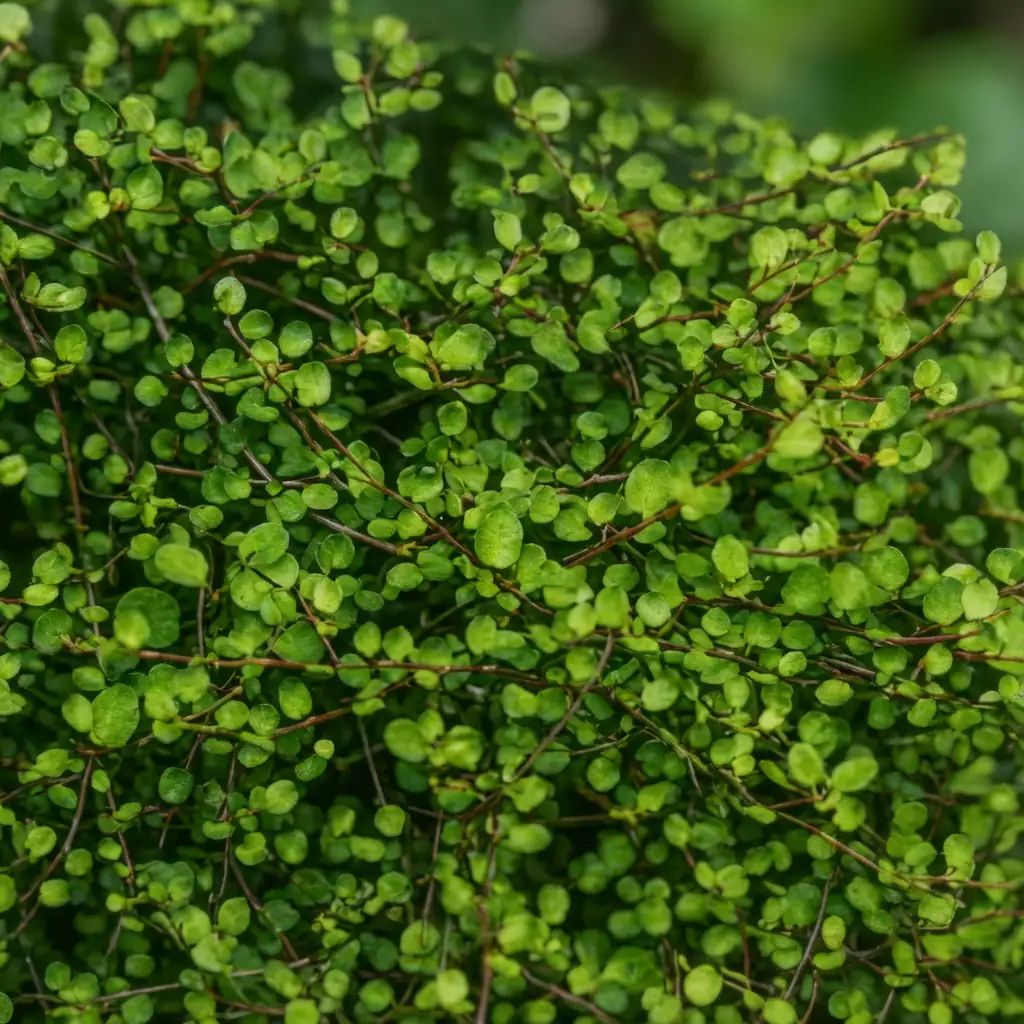
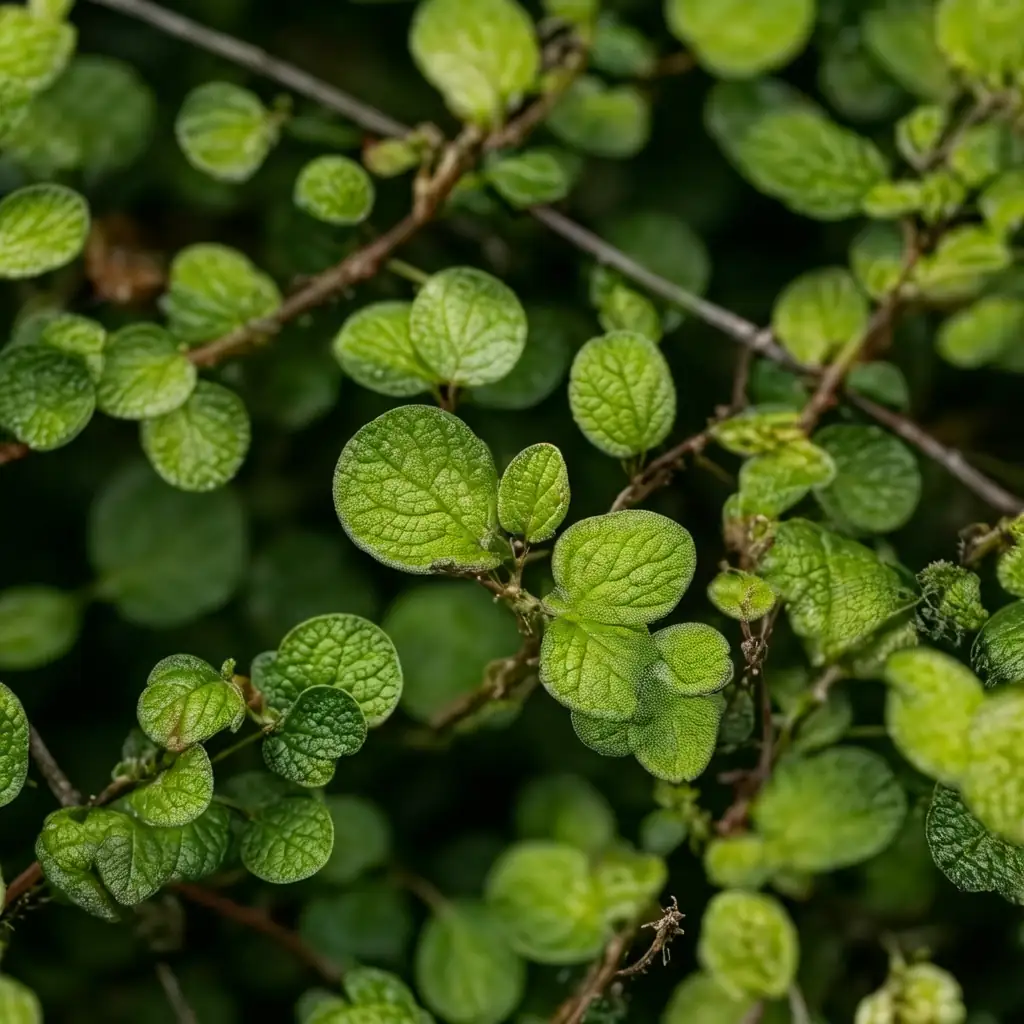
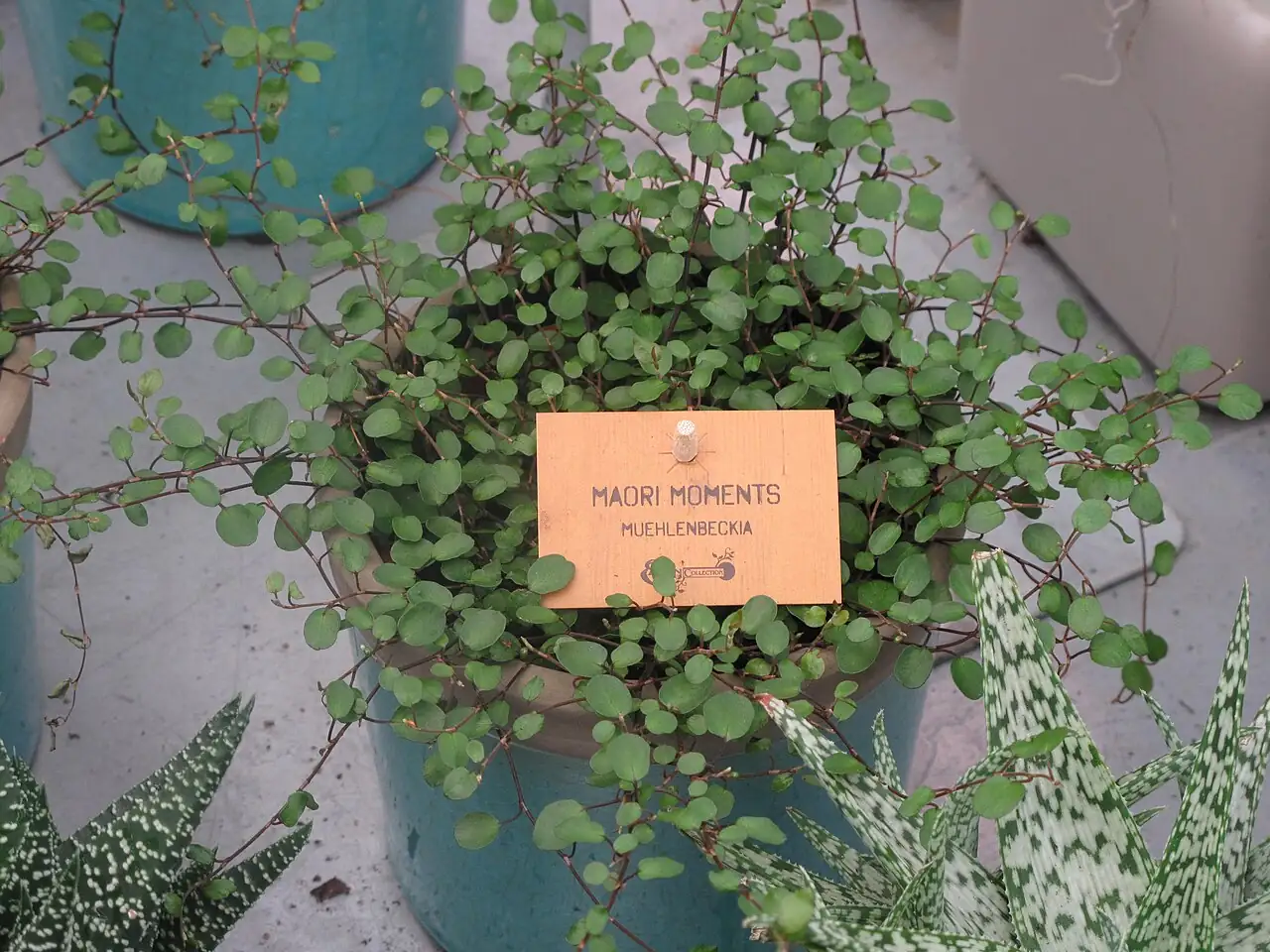
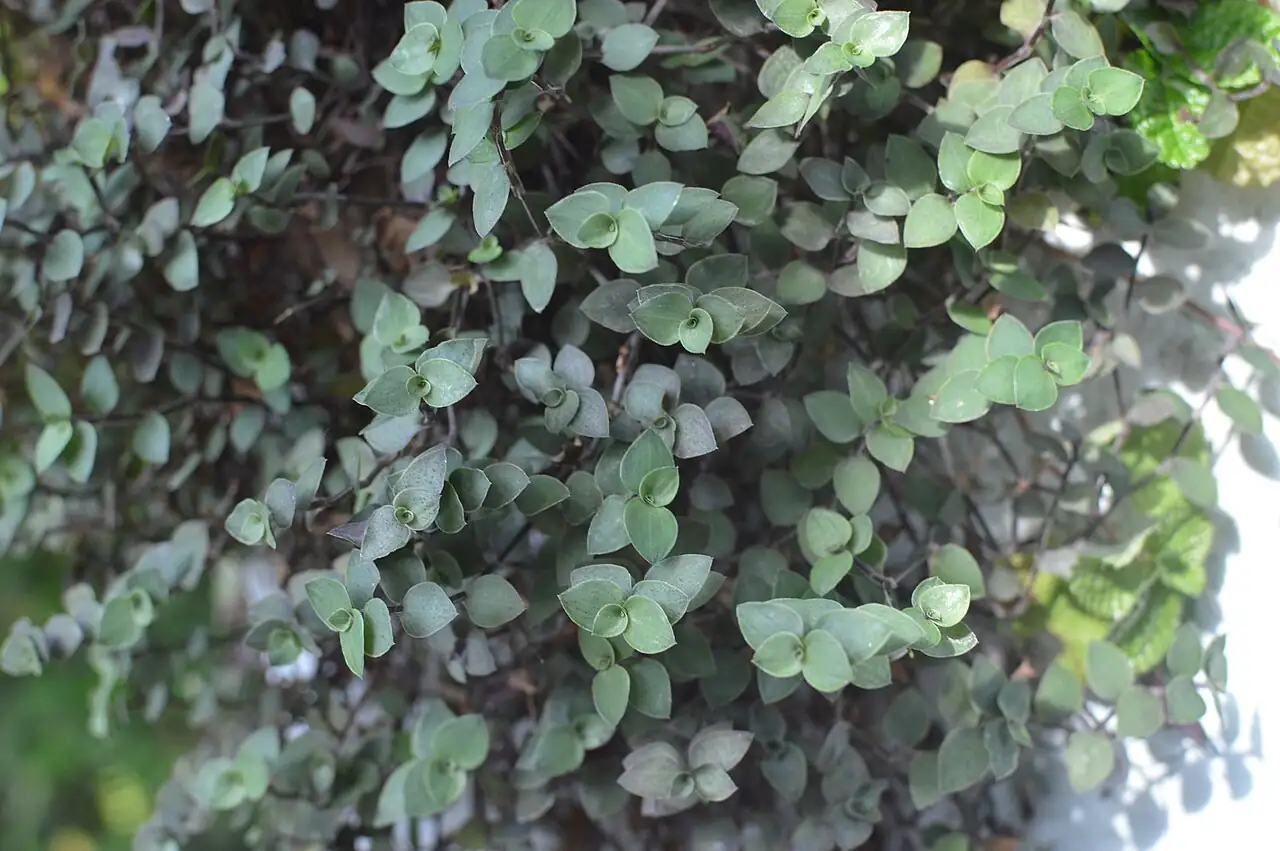
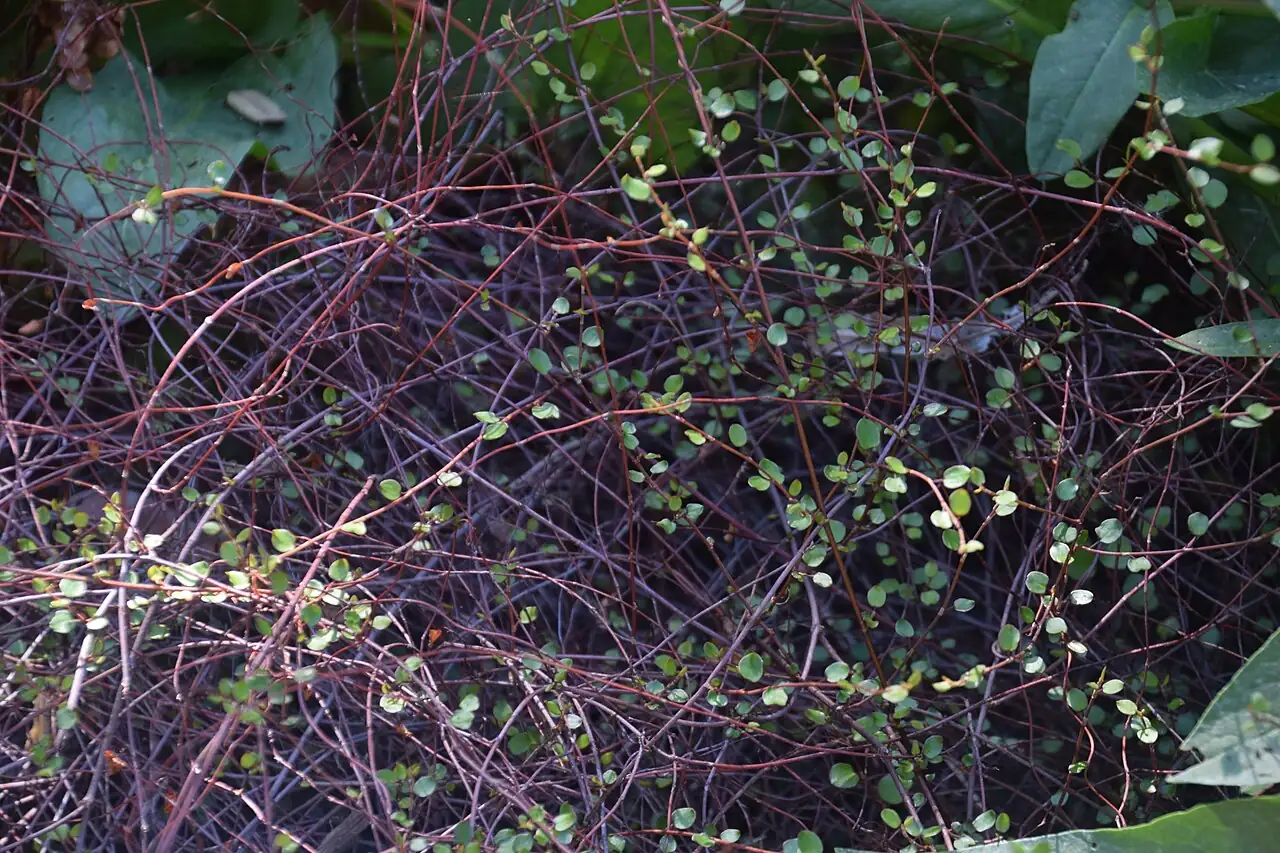
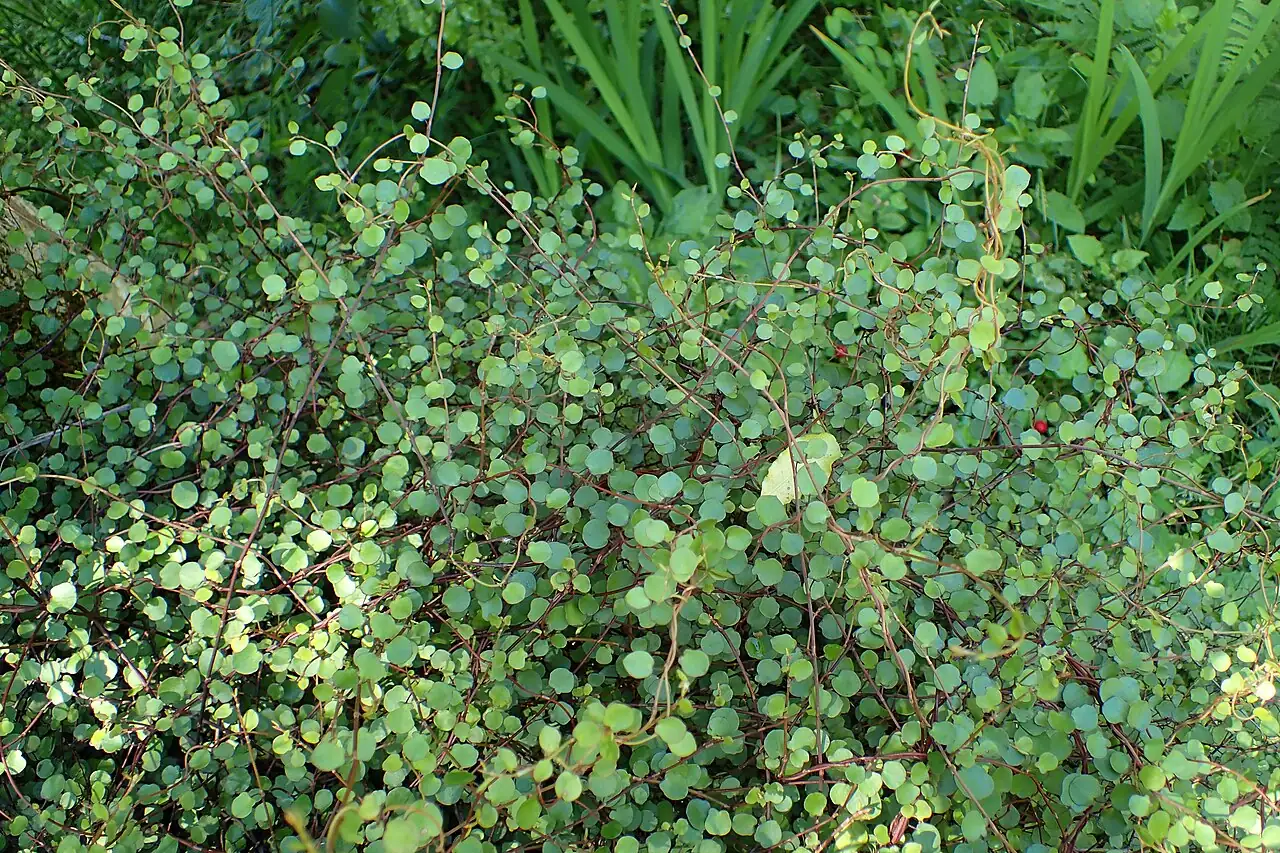
- Foliage: Small, alternate leaves that are rounded to heart-shaped (sometimes nearly circular) with a slight pointed tip. Usually around 2 cm (0.8 in) long, they create a fine-textured, airy mat over the distinctly wire-like stems.
- Flower: Tiny, inconspicuous yellow-green flowers; after flowering, it may produce small dark fruits (often black).
- Flowering Season: May–June (late spring to early summer)
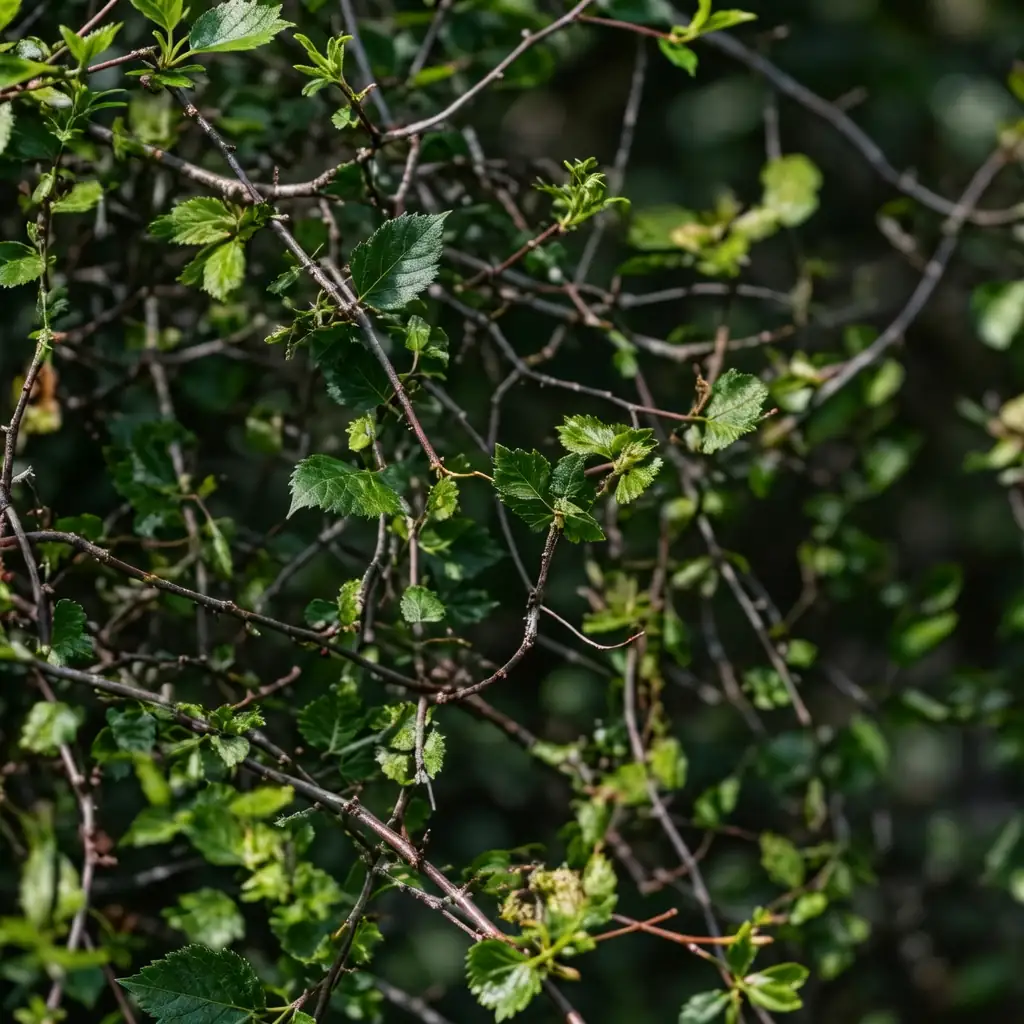
- Growth Habit: Evergreen perennial with creeping, trailing, and scrambling growth. Stems are reddish-brown to dark brown/black and become more “wire-like” with age; easily forms dense coverage when pinched and trained.
Environment
Sunlight
Full sun to partial shade. Indoors, bright indirect light is ideal; it tolerates lower light but tends to grow looser and leggier.
Temperature
Best around 15–25°C (59–77°F). Tolerates cool conditions and light frost once established outdoors, but protect container plants from hard freezes below about -5°C (23°F).
Humidity
Average indoor humidity is usually fine. Prefers moderate humidity with good airflow; avoid constantly stagnant, overly damp conditions.
Soil
Loose, fertile, well-drained soil. A sandy/loamy potting mix amended with perlite works well; avoid waterlogged or heavy mixes.
Placement
Indoors: bright windows, shelves, and hanging baskets. Outdoors (mild climates): borders, raised beds, groundcover, or spilling over walls and containers.
Hardiness
USDA Zones 7–10 (approx.). Not reliably hardy in severe winters—best as a container plant or protected from prolonged hard frost.
Care Guide
Difficulty
Easy. Very adaptable and forgiving, but looks its best with steady light and evenly moist (never soggy) soil.
Buying Guide
Pick plants with lots of firm, springy stems and evenly leafed growth. Avoid pots with many bare/brittle stems, sour-smelling soil, standing water, or signs of pests (fine webbing, sticky residue, cottony clusters).
Watering
Water when the top 2–3 cm (0.8–1.2 in) of potting mix feels dry. Water thoroughly until it drains, then empty the saucer. In winter, water less. Constantly wet soil can lead to root rot.
Fertilization
In spring and summer, feed with a balanced liquid fertilizer at half strength every 2–4 weeks. Reduce or pause feeding in autumn and winter.
Pruning
Pinch tips or trim regularly to encourage branching and a fuller, denser look. Cut back leggy growth during active growth; remove dead, weak, or tangled stems any time.
Propagation
Very easy from stem cuttings. Take 8–12 cm (3–5 in) tip cuttings, remove lower leaves, and root in water or a lightly moist, well-drained mix at 18–24°C (64–75°F). Layering also works well: pin a stem to soil and it will root where it touches.
Repotting
Repot every 1–2 years in spring, or when roots circle the pot. Move up one pot size, refresh with a fast-draining mix, and ensure drainage holes are clear.
📅 Seasonal Care Calendar
Spring: repot, prune, start feeding. Summer: keep evenly moist, pinch tips for fullness. Autumn: reduce feeding and slightly reduce watering. Winter: give bright light, water sparingly, and protect from cold drafts and hard frost.
Pests, Diseases & Safety
Common Pests & Diseases
Can attract spider mites, aphids, and mealybugs (especially indoors). Treat early with insecticidal soap or horticultural oil and improve airflow. Overwatering is the main cause of trouble—root rot is prevented by fast drainage and letting the top layer dry slightly between waterings.
Toxicity
Not widely listed as toxic to people or pets in major houseplant references, but chewing/ingestion can still cause mild stomach upset. Best kept away from pets that like to nibble plants.
Culture & Symbolism
Symbolism: Often linked with resilience and connection—its intertwining, wire-like stems feel like a living weave.
History & Legends: A New Zealand native that became popular worldwide as an ornamental for its distinctive dark, wiry stems and delicate texture. It’s grown both as a garden groundcover in mild climates and as a trailing indoor plant.
Uses: Ornamental: edging, raised beds, and groundcover outdoors; trailing accent in mixed planters; hanging baskets and pots indoors. It’s sometimes marketed as an air-improving plant, though real home air-cleaning effects are generally modest without good ventilation.
FAQ
When does it flower?
Usually May–June (late spring to early summer), with tiny yellow-green blooms that are easy to miss.
When does it set fruit?
Often August–October (late summer to autumn), depending on climate and growing conditions.
Where is it native to?
It is native to New Zealand and is also cultivated in parts of eastern China, including the Yangtze River Delta.
What growing conditions does it prefer?
Well-drained soil, moderate watering, and bright light (full sun to partial shade). It’s more tolerant of cool conditions than many trailing houseplants.
Where is it best displayed or planted?
In hanging baskets or pots indoors, or outdoors as a groundcover and spiller over walls/containers in mild climates.
Fun Facts
- Its stems often darken as they age, which enhances the classic “wire vine” look.
- With support, it can scramble to 5 m+ (16 ft+)—surprisingly vigorous for such a delicate-looking plant.
- Because it responds well to trimming, it’s often trained over small frames and simple topiary forms.
- In mixed planters, it’s prized as a “softener” plant that drapes and stitches different textures together.