


Plant Features
- Size: Typically 2–3 m (6.6–9.8 ft) tall; often with a similar spread at maturity.
- Foliage: Leaves are narrow obovate to elliptic with fine, sharp serrations. They’re smooth (hairless) on both sides and sit on very short leaf stalks. Young shoots are stiff and angled outward, typically showing 2–4 prominent corky wings along the twigs.
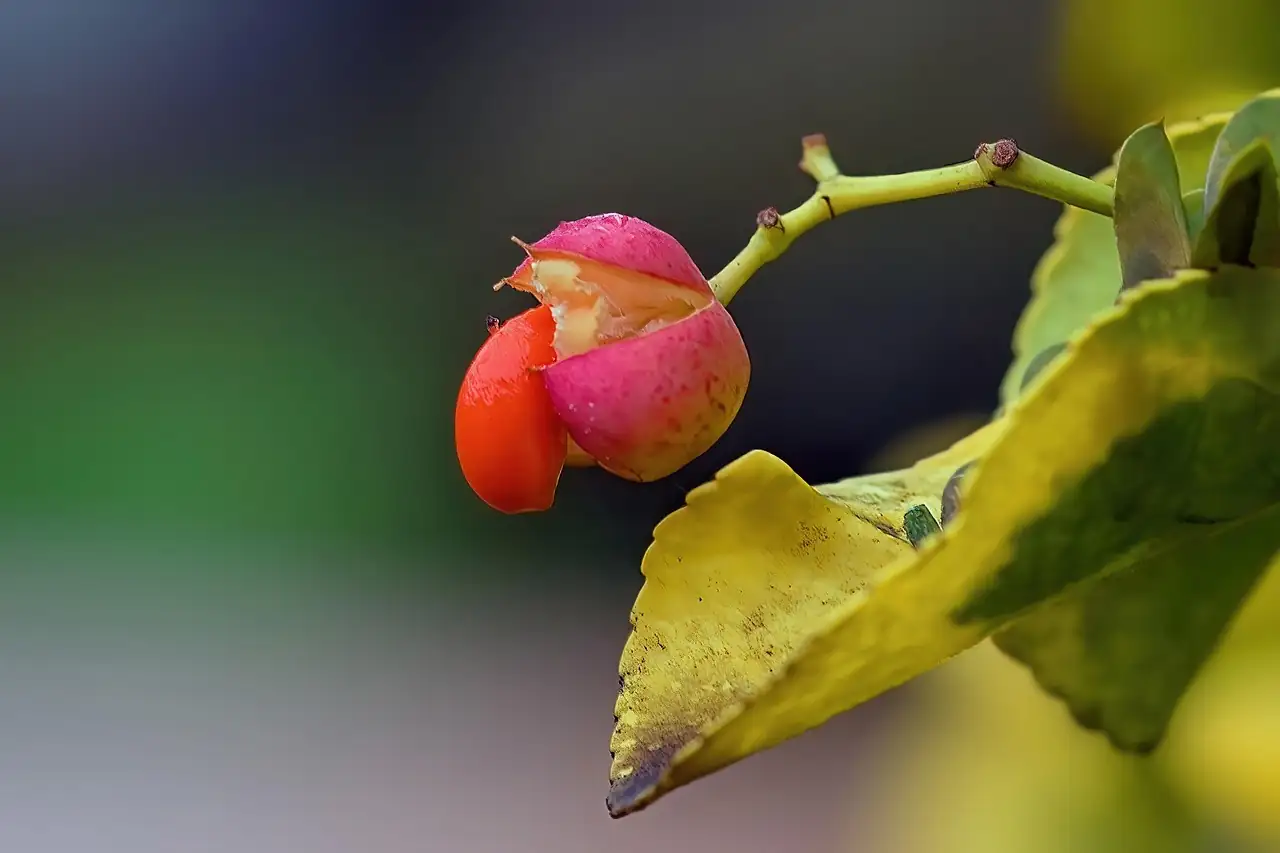
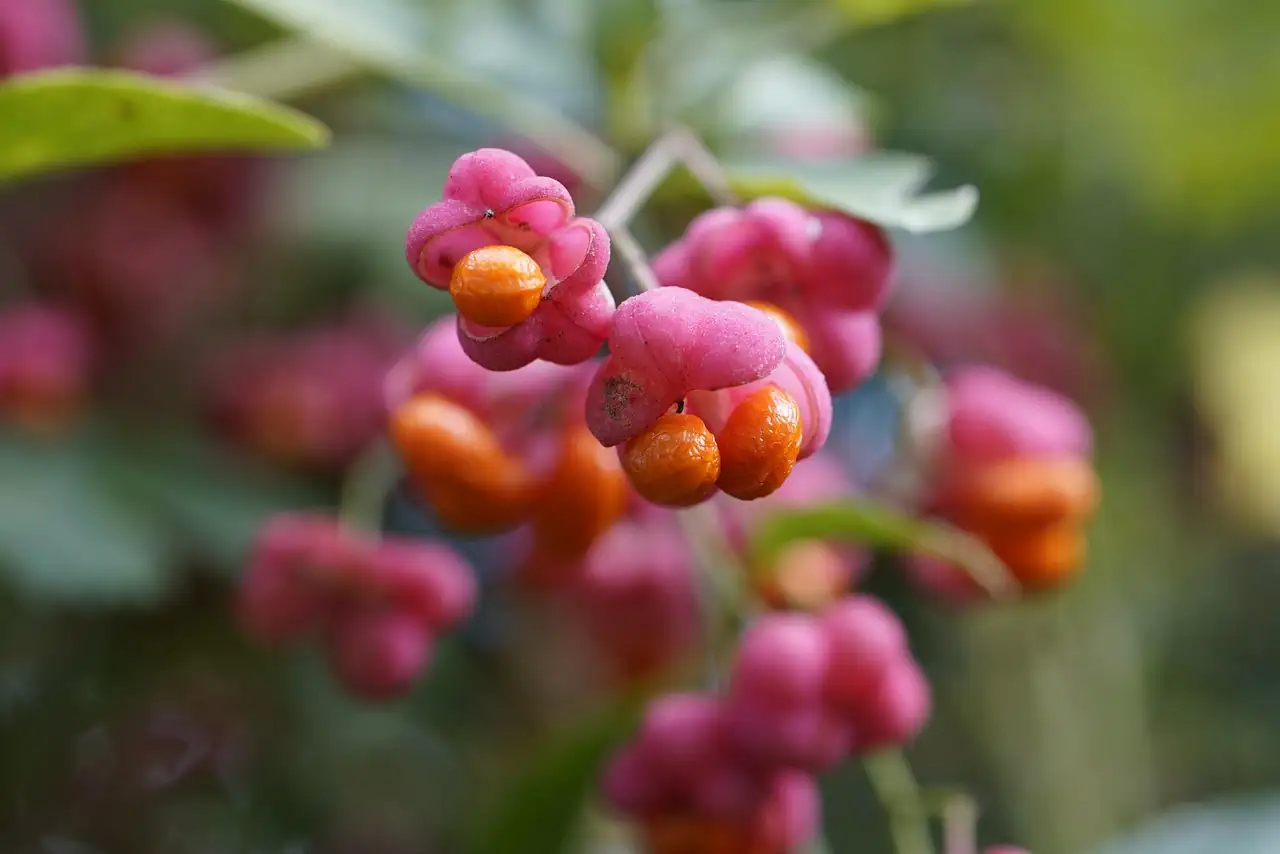
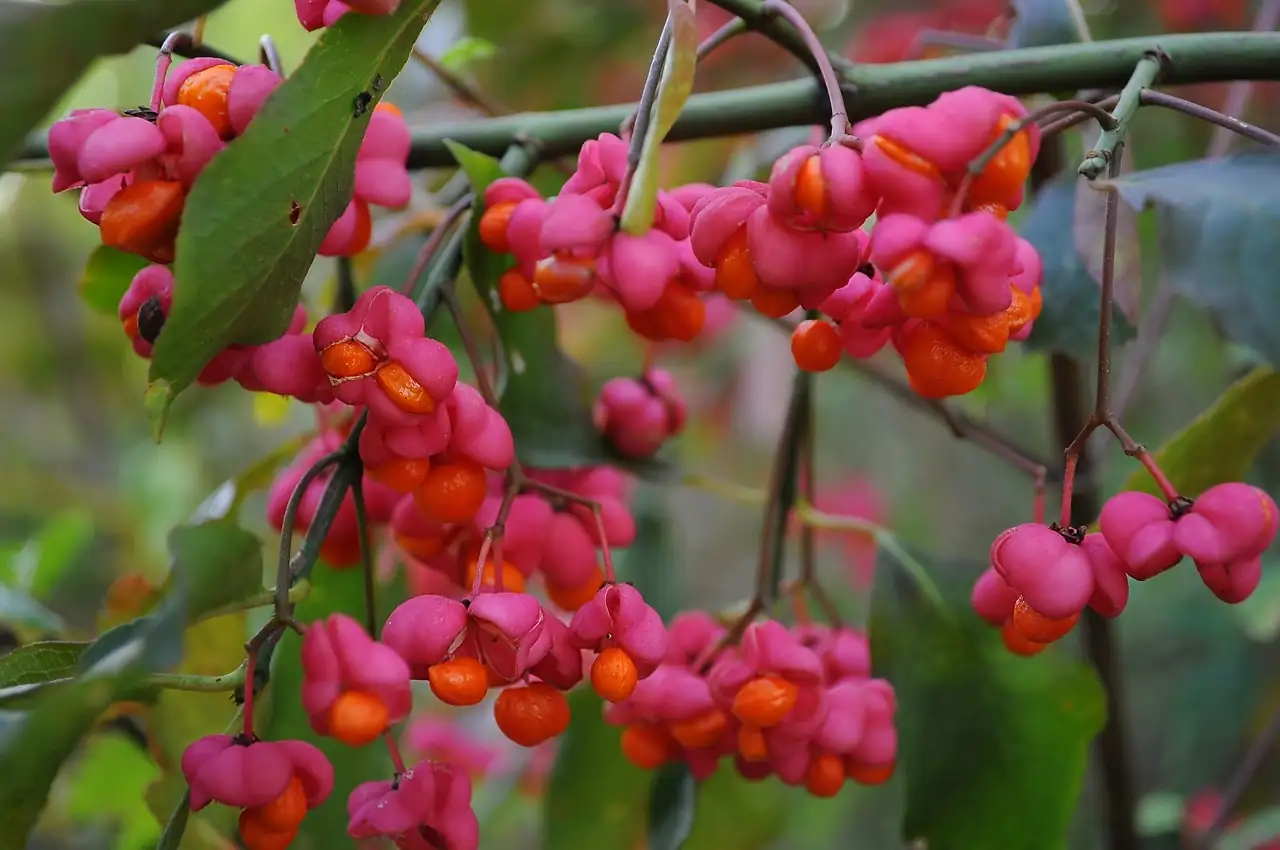
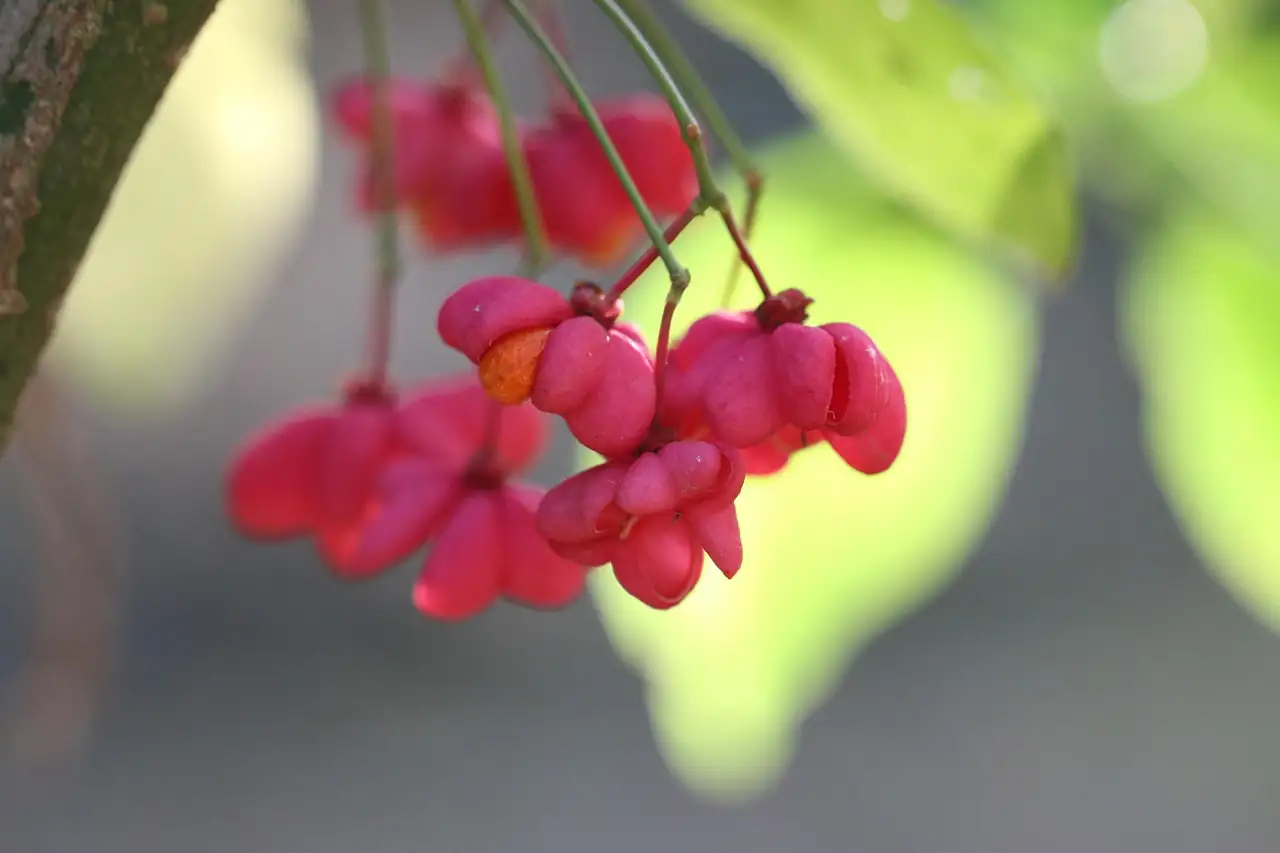
- Flower: Flowers are small and yellow‑green, often appearing in small clusters (commonly around three). The fruit is a purple capsule that splits deeply into four segments, revealing bright orange‑red arils.
- Flowering Season: May–June
- Growth Habit: Deciduous, upright to spreading shrub with characteristically winged twigs formed by corky ridges.
Environment
Sunlight
Full sun to partial shade; brighter light generally gives the best overall look and encourages better fruiting.
Temperature
Cold-hardy; once established it generally tolerates about -30 to 30°C (-22 to 86°F).
Humidity
Adaptable to typical outdoor humidity levels in temperate climates; not especially fussy.
Soil
Tolerant of many soil types, from acidic to alkaline/limy. Best growth is usually in well-drained loam, but it copes with poorer soils too.
Placement
Great as a landscape shrub for borders, hedges, woodland edges, and mass planting; especially useful in urban or industrial sites where air pollution can be an issue.
Hardiness
USDA Zone 4–8 (approx.). Drought tolerant once established and very resilient, including good response to renovation pruning.
Care Guide
Difficulty
Easy and resilient—handles sun or shade, drought (once established), and a wide range of soils. It also resprouts strongly and tolerates shaping and hard pruning well.
Buying Guide
Look for plants with firm, healthy stems (with intact corky wings), plump buds, and no dieback. Avoid severely pot-bound specimens with circling roots, and inspect stems for scale insects.
Watering
Water consistently through the first growing season to help roots establish. After that, it usually only needs watering during prolonged dry spells. For in-ground plants, allow the top few centimeters of soil (about 1 in) to dry before giving a deep soak.
Fertilization
Often needs little to no fertilization. If growth is weak, apply a balanced slow-release fertilizer in spring, following label directions.
Pruning
Very pruning-tolerant. Prune in late winter to early spring (before leaf-out) to shape and build structure, or do light trimming after flowering. It can also be clipped into a hedge; remove dead, damaged, or crossing branches whenever noticed.
Propagation
Semi-hardwood cuttings in summer or hardwood cuttings in winter. Seed propagation is possible but slower and may require cold stratification.
Repotting
If container-grown, repot every 2–3 years in early spring into a well-draining mix; root-prune if necessary to keep it compact.
📅 Seasonal Care Calendar
Spring: optional light feeding; structural pruning before leaf-out. Summer: watch watering for young plants; take semi-hardwood cuttings. Autumn: enjoy the fruit display; reduce watering as temperatures fall. Winter: dormant pruning; take hardwood cuttings.
Pests, Diseases & Safety
Common Pests & Diseases
May attract scale insects, aphids, and spider mites. Powdery mildew or leaf spot can appear in humid, crowded conditions. Improve airflow, avoid frequent overhead watering, and treat pests with horticultural oil or insecticidal soap as appropriate.
Toxicity
Toxic if ingested—fruits and foliage can be poisonous to people and pets. Keep fruiting branches out of reach of children and animals, and seek medical/veterinary help if ingestion is suspected.
Culture & Symbolism
Symbolism: Often linked with resilience and protection—an easy-to-live-with shrub that bounces back strongly even after heavy pruning.
History & Legends: Long valued and widely planted in East Asia for its distinctive winged stems and decorative fruit capsules, and later used broadly as a dependable landscape shrub.
Uses: Primarily ornamental (foliage, winged stems, and especially the colorful fruit display). Also used for urban/industrial greening thanks to notable tolerance of air pollution (including sulfur dioxide) and general toughness.
FAQ
What are the “wings” on the stems?
They’re corky ridges that form along young twigs—one of the easiest, most reliable ID features of Euonymus alatus.
Will it grow in shade?
Yes. It tolerates partial shade, but fuller sun typically improves plant density and encourages better fruiting.
Fun Facts
- The stiff young twigs often develop 2–4 corky wings—its signature “look-at-me” feature even in winter.
- Its purple capsules split into four sections to reveal orange‑red arils, creating a dramatic color contrast.
- It shows relatively strong tolerance to air pollution (including sulfur dioxide), which is why it’s used in tough urban and industrial plantings.
- Because it resprouts vigorously, it can be shaped into hedges or clipped forms without much fuss.


