
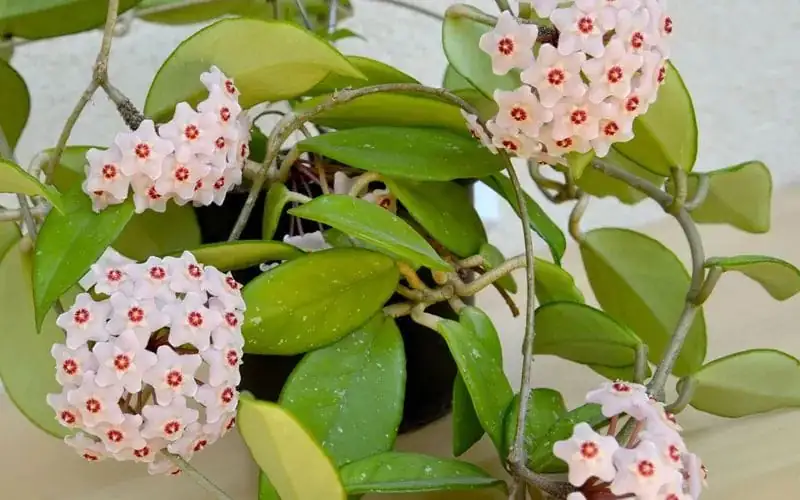
Plant Features
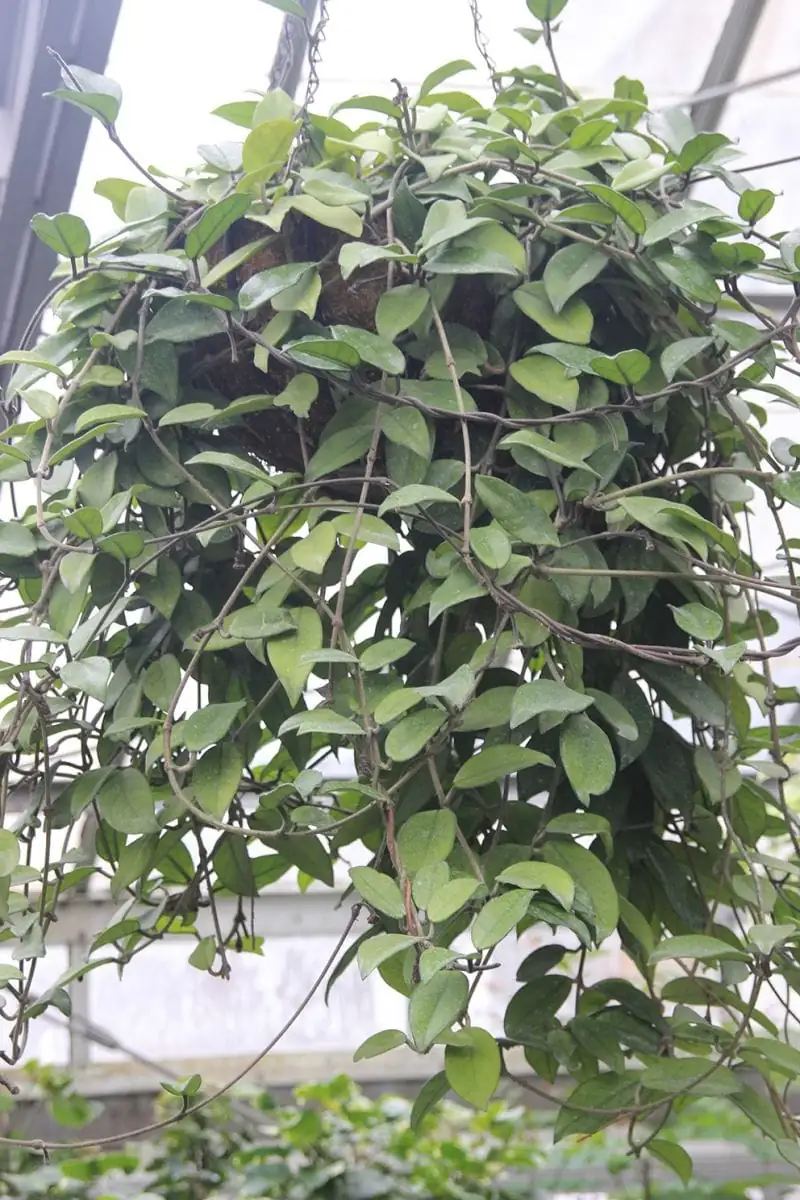
- Size: Indoors, vines commonly reach 0.9–1.8 m (3–6 ft) and can extend to 1–3 m (3–10 ft) with time; when trained in very warm conditions, stems may reach about 3.6–6 m (12–20 ft). As a trained houseplant, overall spread/length is often up to ~4 m (13 ft). Typical pot size is 15–20 cm (6–8 in) across, often planted with 3–5 cuttings for a fuller basket.
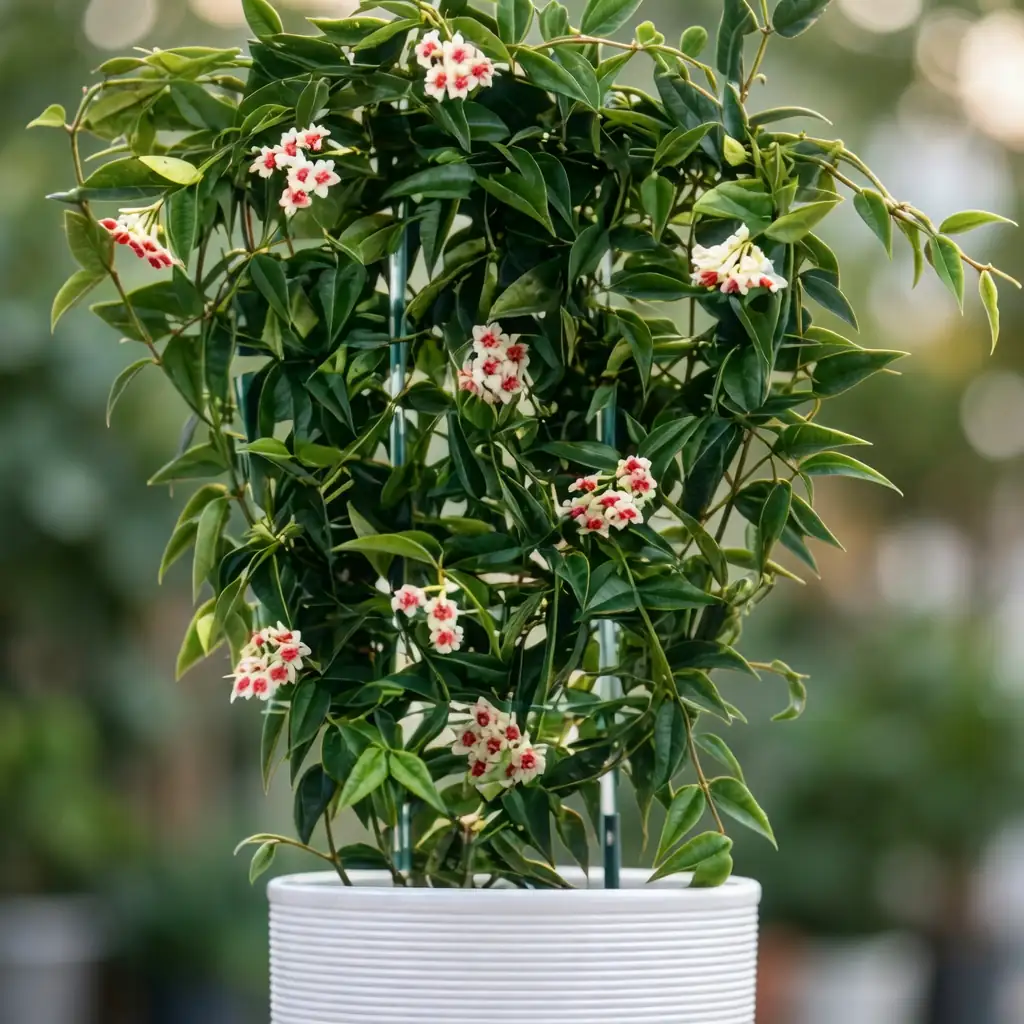
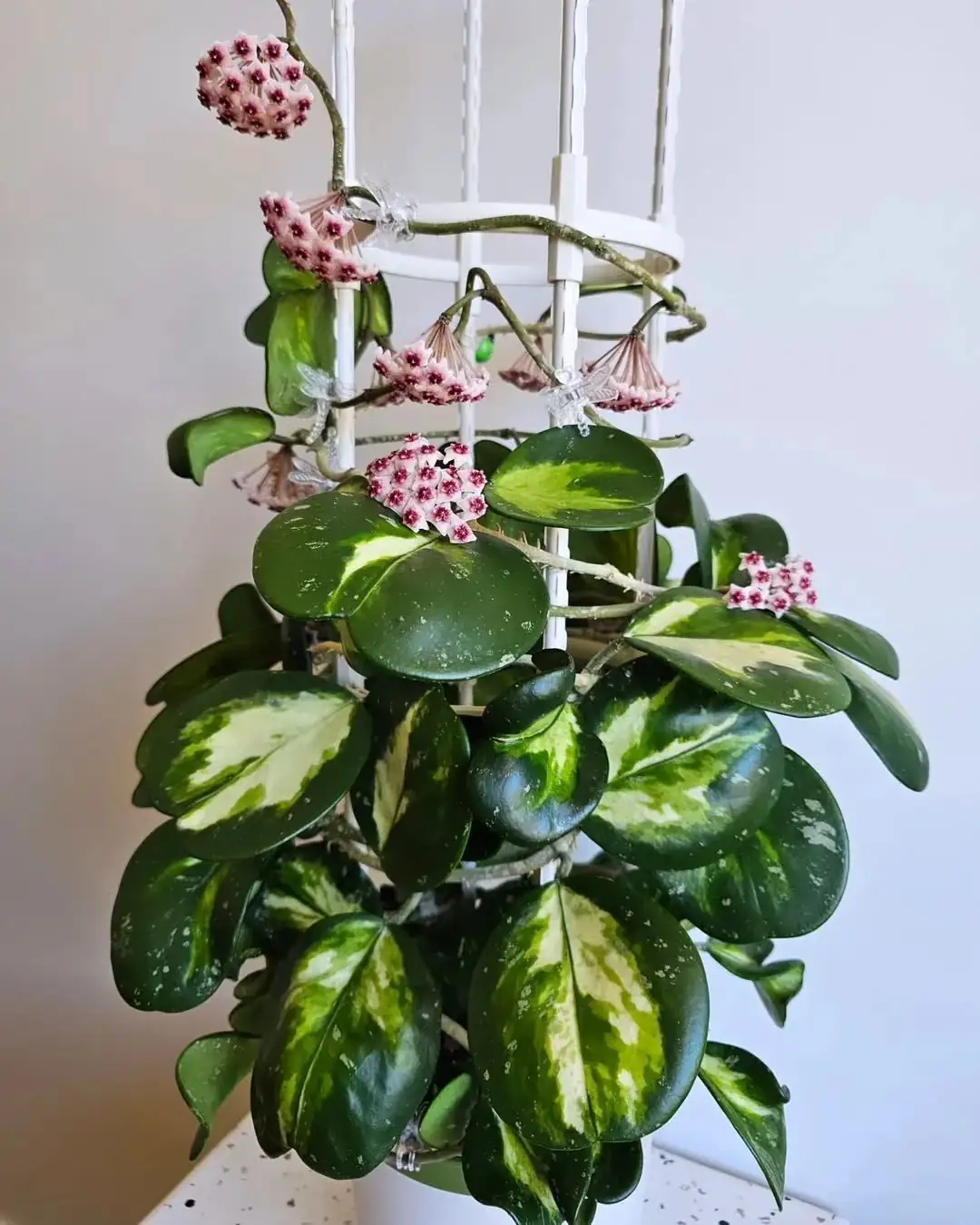
- Foliage: Leaves are thick, leathery, and succulent-like—usually deep green and naturally glossy, often elliptical to oval and about 5–10 cm (2–4 in) long. Many cultivars show cream, yellow, or pink-tinged variegation. The stems and leaves store water, helping the plant tolerate short dry spells. When cut, stems exude a milky latex sap (best rinsed off and allowed to dry/callus when making cuttings).
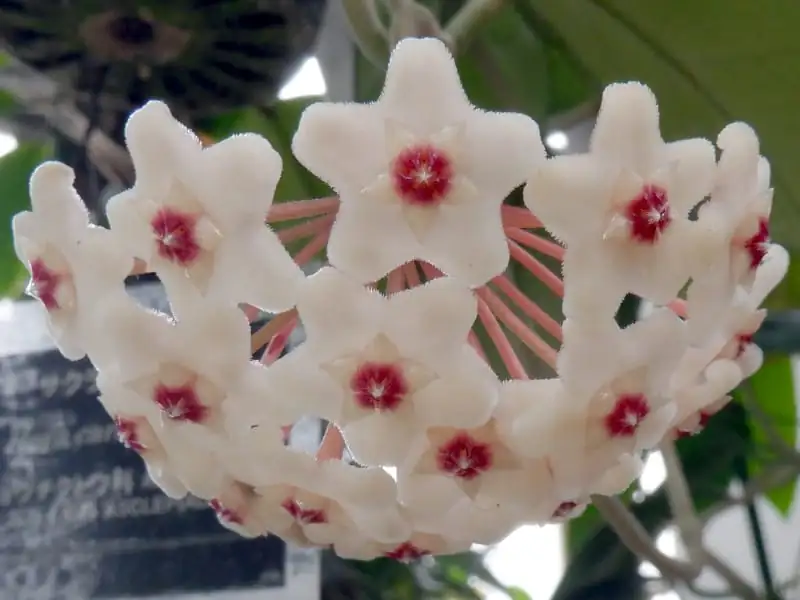
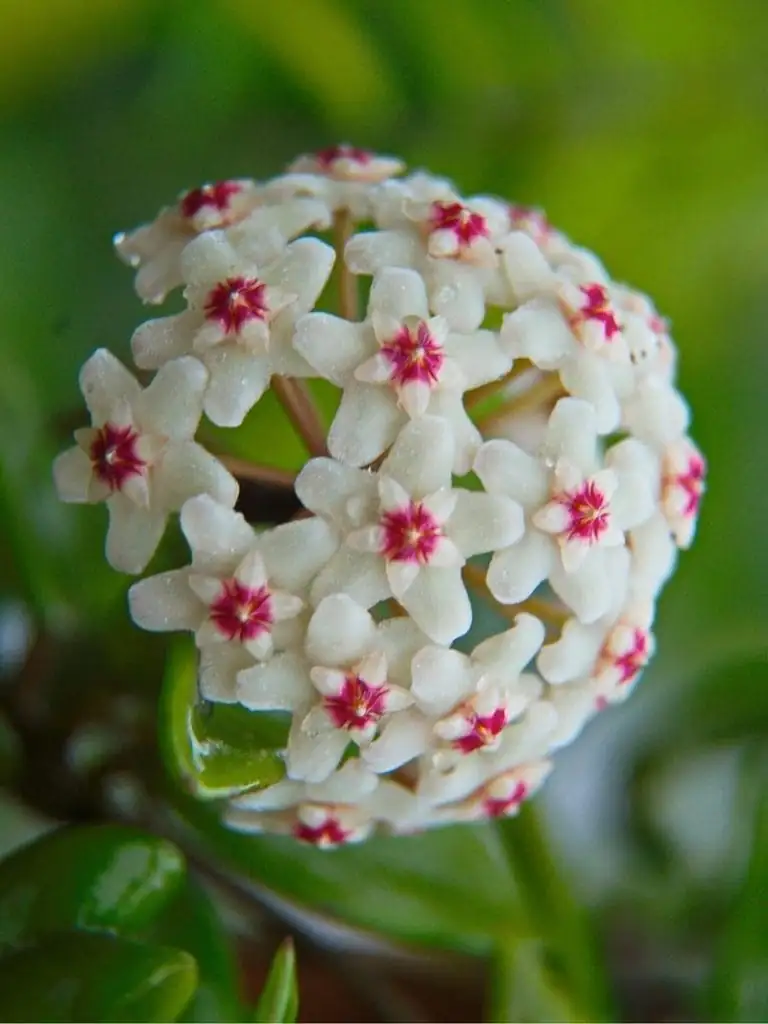
- Flower: Flowers appear in rounded umbels (spherical clusters) that can hold roughly 30–50 waxy, star-shaped blooms. Color is typically white to pale pink with a darker pink/red central crown; blooms may have a soft fuzzy look. The scent is sweet and strongest at night (often described as vanilla-like or chocolatey). Flowers can produce abundant sticky nectar that may drip—pretty, but sometimes messy. Avoid misting buds or open flower clusters, as spotting and bud/flower drop can happen.
- Flowering Season: Late spring through summer (often extending into early autumn indoors with good light and warmth).
- Growth Habit: Evergreen trailing-to-climbing vine; often epiphytic or lithophytic in nature, with roots forming at nodes. Grows as a cascading hanging plant or can be trained onto hoops, trellises, and supports.
Environment
Sunlight
Bright, indirect light is best. It tolerates partial shade, but flowers more reliably with stronger light. Gentle morning sun is usually fine; avoid harsh midday sun that can scorch leaves. A practical placement is near an east window, or a bright filtered south/west window; sitting about 50 cm (20 in) back from hot glass can help prevent stress.
Temperature
Prefers warmth: roughly 16–29°C (61–85°F), with best growth often around 18–24°C (64–75°F). Protect from cold drafts and frost. Minimum tolerance is commonly around 10°C (50°F), though some guidance suggests it can be kept a bit cooler (down to about 5°C / 41°F) if kept drier—warmer is safer for long-term health.
Humidity
Enjoys moderate to higher humidity. Aiming around 40–70% works well (many homes sit in the 40–60% range). It’s adaptable, but in dry winter air it appreciates a pebble tray or humidifier. If you mist, do it in the morning and avoid wetting buds and open blooms.
Soil
A very free-draining, airy, chunky mix is key. Good blends include orchid bark + perlite + potting mix (often close to equal parts), or a cactus/succulent mix boosted with bark and perlite. Slightly acidic to neutral pH is fine. Use pots with drainage, and avoid waterlogged, heavy mixes. If your tap water is very hard, rainwater or filtered water can help reduce mineral buildup over time.
Placement
Bright windowsills with filtered light, shelves, hanging baskets, or on a trellis/hoop support. Keep away from scorching glass and very dark corners. If you’re sensitive to scent, note the fragrance can be strongest at night when in bloom.
Hardiness
Not frost-hardy. Outdoors year-round mainly in warm regions (commonly cited USDA Zones 10–11; some sources place it closer to 11–12 depending on exposure). In most climates it’s grown as a houseplant.
Care Guide
Difficulty
Easy to moderate and very beginner-friendly once you learn its main rule: don’t keep it wet. Give it bright, steady light, a fast-draining mix, and patience, and it will often reward you for years (even decades).
Buying Guide
Look for firm, thick, glossy (not wrinkled) leaves and sturdy stems with no blackened, mushy sections. Check leaf undersides, nodes, and stem joints for mealybugs and scale. If buying a plant in bud, choose one with plump, healthy buds and avoid pots that smell sour or feel soggy. Variegated types should show clean, undamaged variegation.
Watering
Water thoroughly, then let the top of the mix dry before watering again. A common guide is to wait until the top 2.5–5 cm (1–2 in) feels dry. In spring/summer this is often about once a week to every two weeks; in autumn/winter, roughly every 2–3 weeks (adjust for light, pot size, and temperature). Never let the pot sit in water, and prioritize drainage to prevent root rot. You may lightly mist leaves for humidity in dry conditions, but avoid spraying buds and flower clusters.
Fertilization
Feed during active growth (spring through early autumn). Options that work well: a balanced liquid fertilizer at half strength about every 4 weeks, or a bloom-supporting/high-potassium feed about every 2 weeks at half strength. If you’re pushing for blooms, ease up on high-nitrogen feeding and consider a bloom formula (higher potassium/phosphorus) during the bud-building period. Reduce or stop feeding in winter.
Pruning
Minimal pruning is needed—mostly shaping and removing dead or damaged growth. You can trim long vines (often best in spring or after flowering) to encourage branching and a fuller plant. Crucial tip: never cut off the old flower spurs (peduncles). Those knobbly little stubs rebloom from the same spots for years. Once buds form, avoid moving the plant too much to prevent bud drop.
Propagation
Very easy from stem cuttings and also works well by layering.
– Stem cuttings: Take 10–15 cm (4–6 in) cuttings with at least 1–3 nodes. Remove the lowest leaves, rinse away the milky sap, and let the cut end dry/callus briefly. Root in water (refresh regularly) or in an airy mix (perlite + potting mix, or bark/perlite). Keep warm at about 20–25°C (68–77°F) with bright indirect light. Rooting commonly takes ~20–30 days, and can be ~4–6 weeks depending on conditions.
– Layering: In late spring to early summer, lightly wound a section of stem and wrap with moist moss/peat and cover, or pin a wounded node onto the surface of a small mound of mix about 10–15 cm (4–6 in) high; once rooted, sever and pot up.
For variegated cultivars, choose cuttings from strongly variegated growth to best preserve the pattern.
Repotting
Repot in spring (or after flowering) only when root-bound—wax plants often bloom better when slightly snug in their pot. Move up just one size (about 2.5–5 cm / 1–2 in wider). Refresh with a fast-draining mix and avoid oversized pots that stay wet too long.
📅 Seasonal Care Calendar
Spring: Resume feeding and more regular watering as growth starts; repot only if root-bound; great time to take cuttings. Summer: Peak growth and flowering—water when partially dry, maintain moderate humidity, feed regularly; avoid misting blooms; don’t move the plant once buds form. Late summer: Good window for semi-ripe cuttings. Autumn: Gradually reduce watering and feeding; light shaping prune if needed while keeping peduncles intact. Winter: Bright light, warmer is better; water sparingly after the surface dries; pause or greatly reduce fertilizer and avoid cold drafts.
Pests, Diseases & Safety
Common Pests & Diseases
Watch for mealybugs, scale, spider mites, and aphids (especially on tender new growth and at nodes). Treat early with insecticidal soap or horticultural oil; for mealybugs, dabbing with rubbing alcohol on a cotton swab can help. Root rot is the most common serious problem and nearly always traces back to heavy soil or overwatering—use an airy mix and let it dry partly between waterings. Fungal issues like leaf spot, powdery mildew, and botrytis/gray mold are more likely with stagnant air and persistently wet foliage; improve airflow, remove affected leaves, and avoid misting late in the day (and avoid misting flowers/buds).
Toxicity
The milky sap can irritate skin and eyes, so it’s wise to wear gloves if you’re sensitive and wash hands after pruning. On pet safety: some sources list Hoya carnosa as non-toxic to cats and dogs, while others advise caution because ingestion may still cause irritation or stomach upset. A practical approach is to treat it as “low risk but not for snacking”—keep out of reach of pets and small children.
Culture & Symbolism
Symbolism: Often linked with lasting affection and devotion—partly because the plant is long-lived and can rebloom from the same flower spurs year after year. It’s also commonly associated with endurance, protection, and steady prosperity among plant lovers.
History & Legends: The genus Hoya is named after English gardener and botanist Thomas Hoy (c. 1750–1822). Hoyas became especially popular as collectible glasshouse plants in the Victorian era, and Hoya carnosa remains one of the classic “heirloom” houseplants passed between friends and families.
Uses: Primarily ornamental—grown in hanging baskets, trained on hoops/trellises, or displayed on bright shelves for its glossy foliage and fragrant, waxy bloom clusters. The flowers also attract pollinators (often nocturnal moths in nature). The nectar is sweet and sticky; while some people taste it, it’s best approached with common sense (clean plant, no pesticides).
FAQ
Why won’t my wax plant bloom?
Usually it’s one (or a mix) of these: not enough bright light, the plant is too young, the pot is too large (overpotted), too much nitrogen fertilizer, frequent moving/temperature swings, or the old flower spurs (peduncles) were removed. Give brighter indirect light, keep it slightly root-bound, feed lightly with a bloom-supporting fertilizer, and never cut the peduncles.
Is it normal for nectar to drip from the flowers?
Yes. Healthy Hoya blooms often produce lots of sticky nectar, especially at night. Put a tray or paper under the plant if it’s over furniture, and avoid letting the nectar sit on leaves (it can spot).
Can I mist my Hoya?
Misting can help in very dry rooms, but keep it light and do it in the morning. Avoid misting when buds are forming or when flowers are open—water on blooms can cause spotting and sometimes bud/flower drop.
Why are the leaves turning yellow?
The most common causes are overwatering (leading to stressed roots) or too much harsh sun. Let the mix dry more between waterings, make sure the soil is airy and drains fast, and move the plant to bright indirect light if it’s getting scorched.
Fun Facts
- Those little knobbly flower spurs (peduncles) are reusable—keep them and the plant can bloom from the same spots for years.
- The blooms can look so waxy and perfect that people often assume they’re artificial.
- Many wax plants produce noticeably more fragrance at night, which helps attract nocturnal pollinators in nature.
- Cut stems release a milky latex sap; rinsing it off and letting the cut end dry briefly can improve cutting success.
- Hoya carnosa can live for decades with consistent, simple care—one reason it’s often shared as an “heirloom” houseplant.