

Plant Features
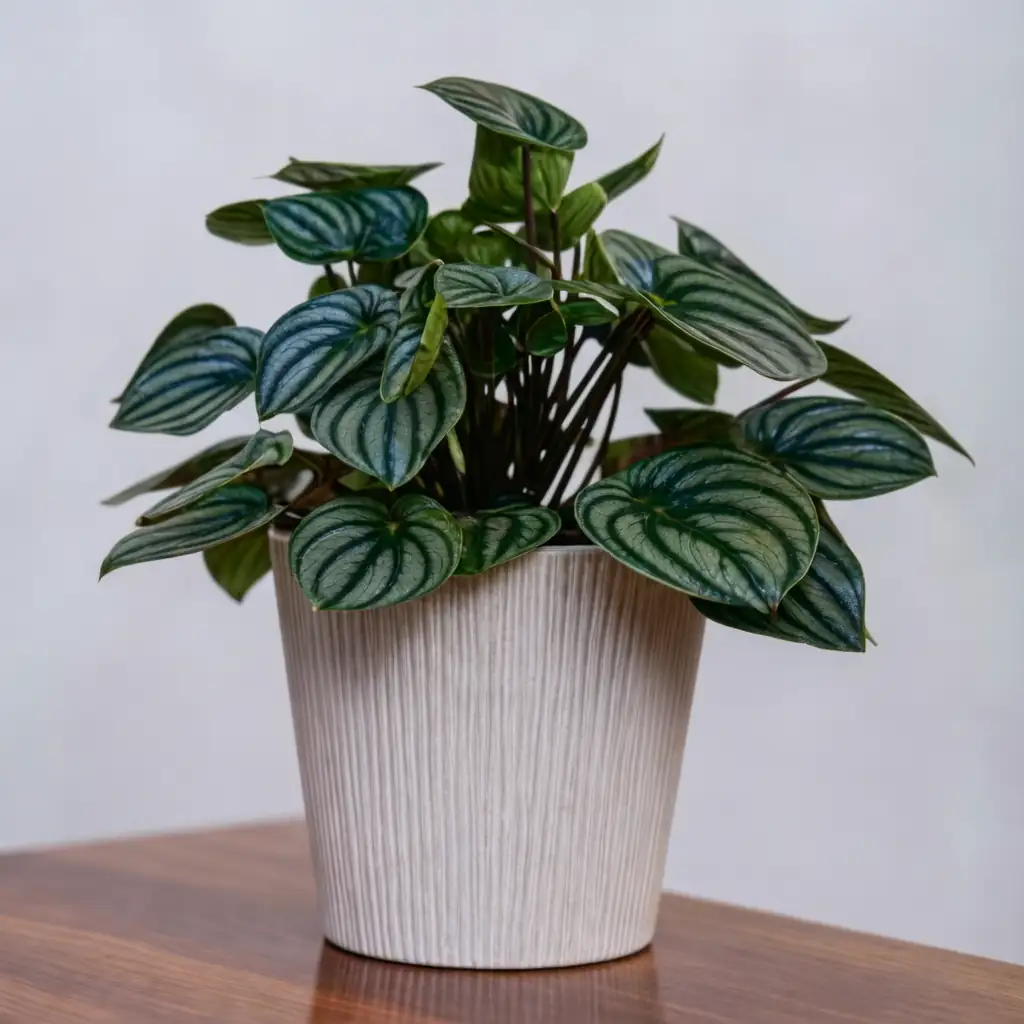
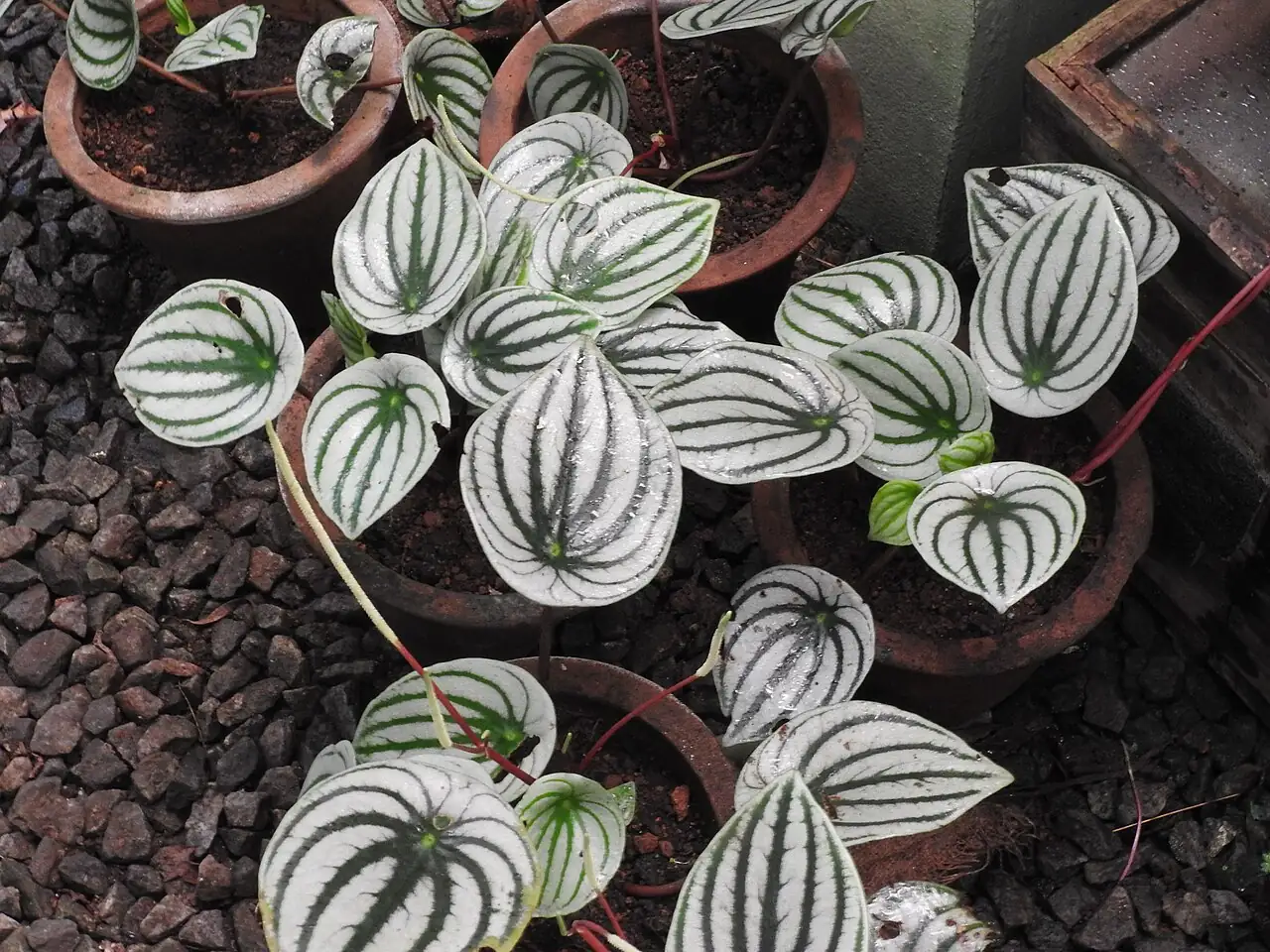
- Size: Small, compact houseplant; typically about 15–30 cm (6–12 in) tall with a similar spread. Many indoor plants sit around 20 × 20 cm (8 × 8 in) when mature in a pot.
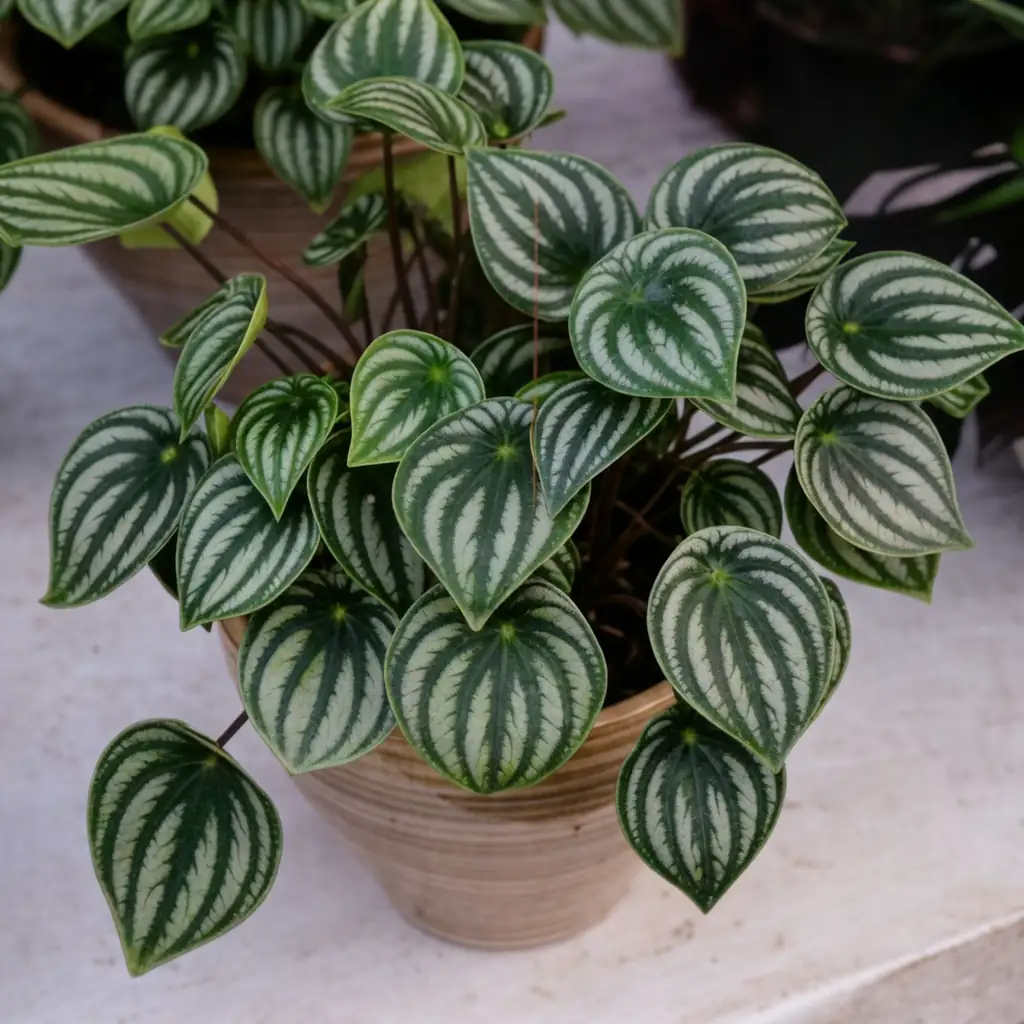
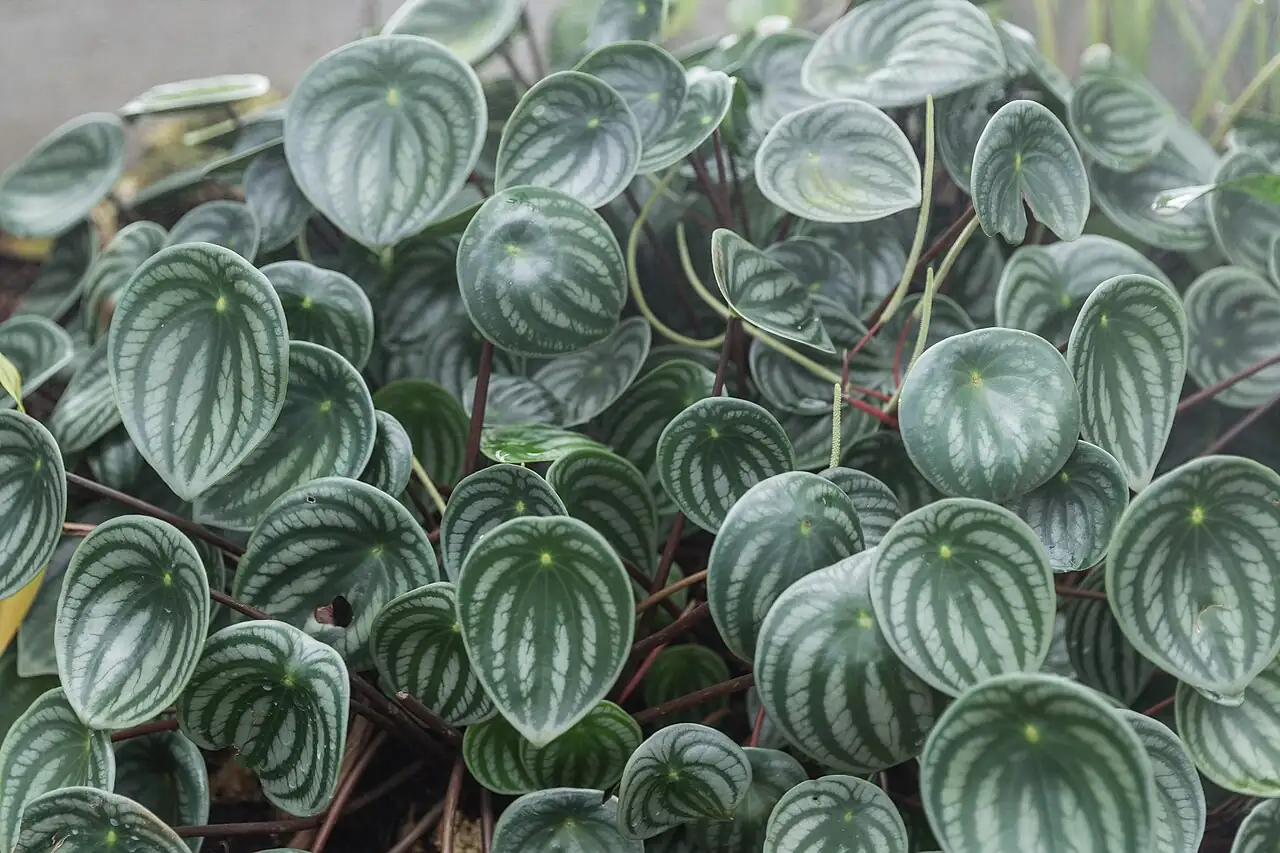
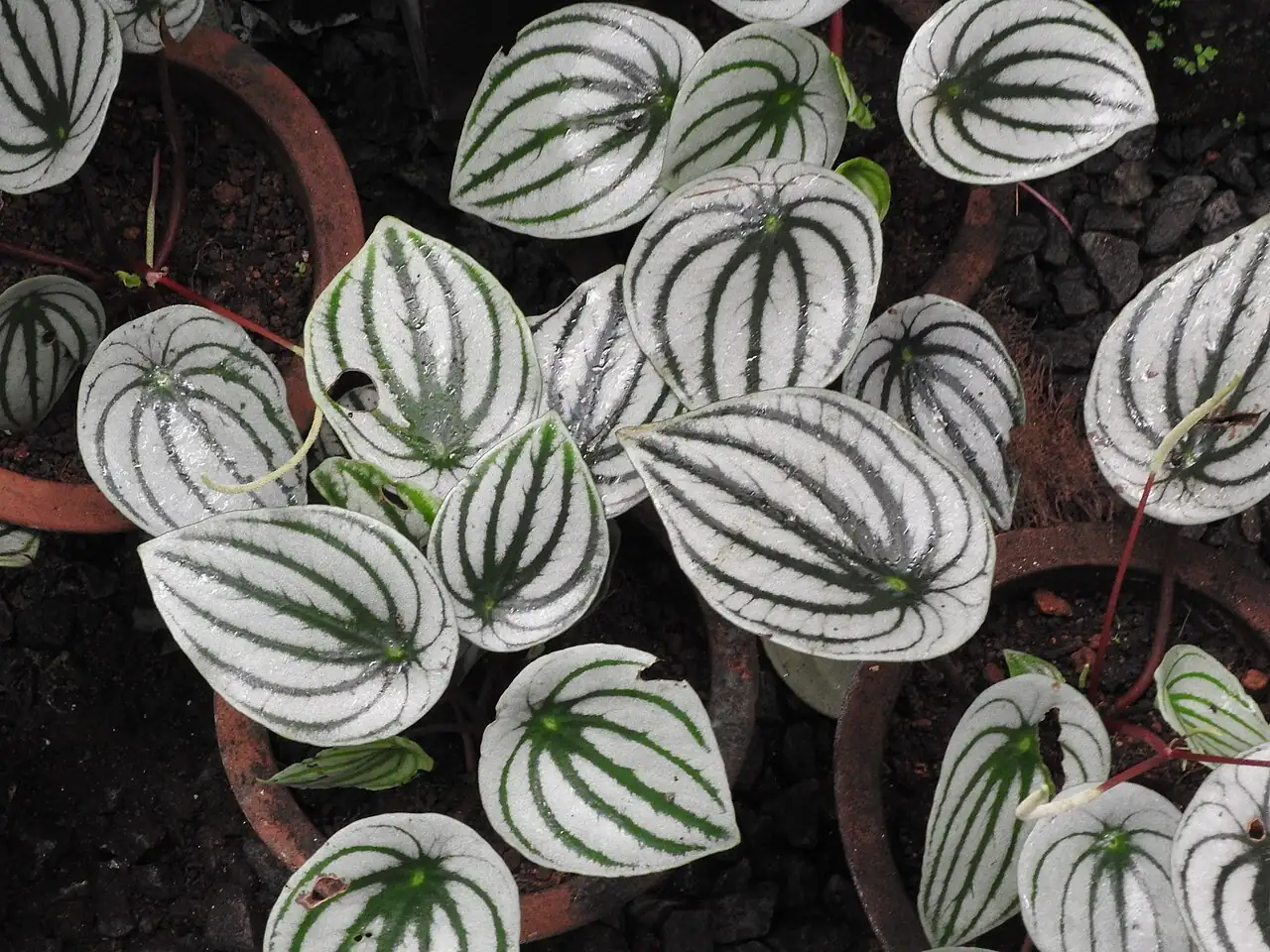
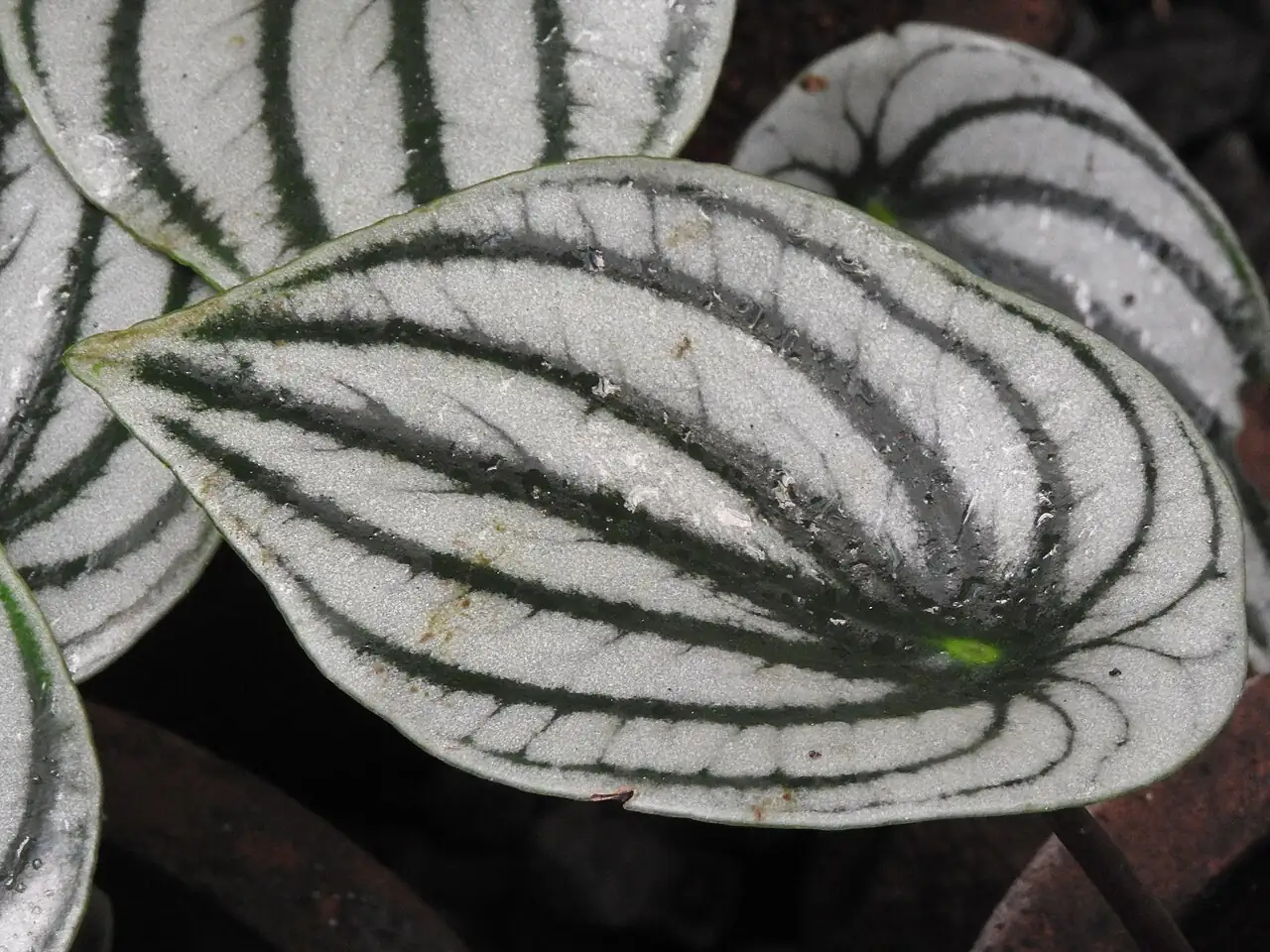
- Foliage: Leaves are thick and slightly succulent, round to oval, with bold silvery-green striping and darker green veins that mimic watermelon skin. They’re held on slender petioles that are often reddish. If conditions are off—too much direct sun, soggy soil, prolonged dryness, cold drafts, or chilling—leaves may yellow, lose their sheen, droop, or develop cold damage and rot.
- Flower: Produces thin, pale green to cream flower spikes (often described as “rat-tail” spikes), typical of peperomias. They’re interesting up close but not showy; this plant is grown mainly for its foliage.
- Flowering Season: Summer to late summer indoors (often variable/occasional).
- Growth Habit: Low-growing, clump- to mound-forming and naturally compact. It stays tidy, especially when kept slightly pot-bound, and can be shaped by removing crowded leaves or pinching back any leggy growth.
Environment
Sunlight
Bright, indirect light to partial shade. Avoid harsh direct sun (which can scorch and fade leaves) and very deep shade (which slows growth and dulls striping). In summer, keep in part shade or set back from hot south/west windows; in winter, a brighter spot is helpful, still avoiding strong direct midday sun.
Temperature
Best at 15–24°C (59–75°F). Protect from cold drafts; growth slows and stress increases above about 30°C (86°F) or below about 13°C (55°F). Avoid temperatures below about 10°C (50°F), and chilling injury may occur around 8°C (46°F) or lower. Not frost-hardy.
Humidity
Prefers moderate humidity but usually adapts well to average indoor levels. If your air is very dry, use a pebble tray or occasional light misting, and prioritize gentle airflow to discourage pests and leaf issues.
Soil
Loose, fast-draining mix in a pot with drainage—think quality houseplant mix (peat/coco-based) amended with perlite and/or coarse sand. Avoid waterlogged media; persistent wetness is a fast track to root rot.
Placement
Perfect for desks, shelves, and bright windowsills—especially near an east window, a bright north window, or set back from a south/west window with a sheer curtain. Also works in hanging planters in bright shade. Give it brighter winter light and cooler-summer protection from hot glass and midday sun.
Hardiness
Tender tropical; best as a houseplant. Outdoors only in warm climates (roughly USDA Zone 11–12; sometimes listed as 10–12 with protection). Keep above 10°C (50°F) and away from frost.
Care Guide
Difficulty
Easy to moderate. It’s forgiving overall, but it strongly dislikes two things: soggy soil and harsh direct sun. Cold drafts are the third common troublemaker.
Buying Guide
Pick plants with firm, plump leaves and crisp striping. Avoid yellowing foliage, mushy stems, blackened leaf bases, or a sour smell from the potting mix—classic rot warnings. Check leaf undersides and petioles for pests (mealybugs, scale, mites, whitefly). Don’t rush to up-pot unless it’s severely rootbound or the mix is staying wet too long; a fresh, airy, well-draining medium is more important than a bigger container.
Watering
Water thoroughly, then let the top portion of the mix dry before watering again. Spring to autumn: water when the surface dries (often about weekly, depending on light and heat). Summer: keep evenly moist but never soggy, and don’t leave it sitting in water. Winter: water sparingly (often about every 2 weeks), letting the mix dry a bit more. Overwatering causes yellowing, soft leaves, and root rot; letting it go bone-dry too often can lead to drooping and dull foliage.
Fertilization
Feed during active growth. A practical approach is either: (1) monthly at half-strength from spring to autumn, or (2) every 2 weeks with a more diluted balanced fertilizer during peak growth (roughly May–August). Ease off or stop feeding in winter. Avoid heavy nitrogen, which can soften growth, stretch petioles, and reduce the sharp contrast in the leaf pattern.
Pruning
Minimal. Remove yellowing or damaged leaves at the base. Thin crowded/overlapping leaves to keep a symmetrical clump, and pinch any leggy growth to maintain a compact shape. Healthy removed leaves can be used for propagation.
Propagation
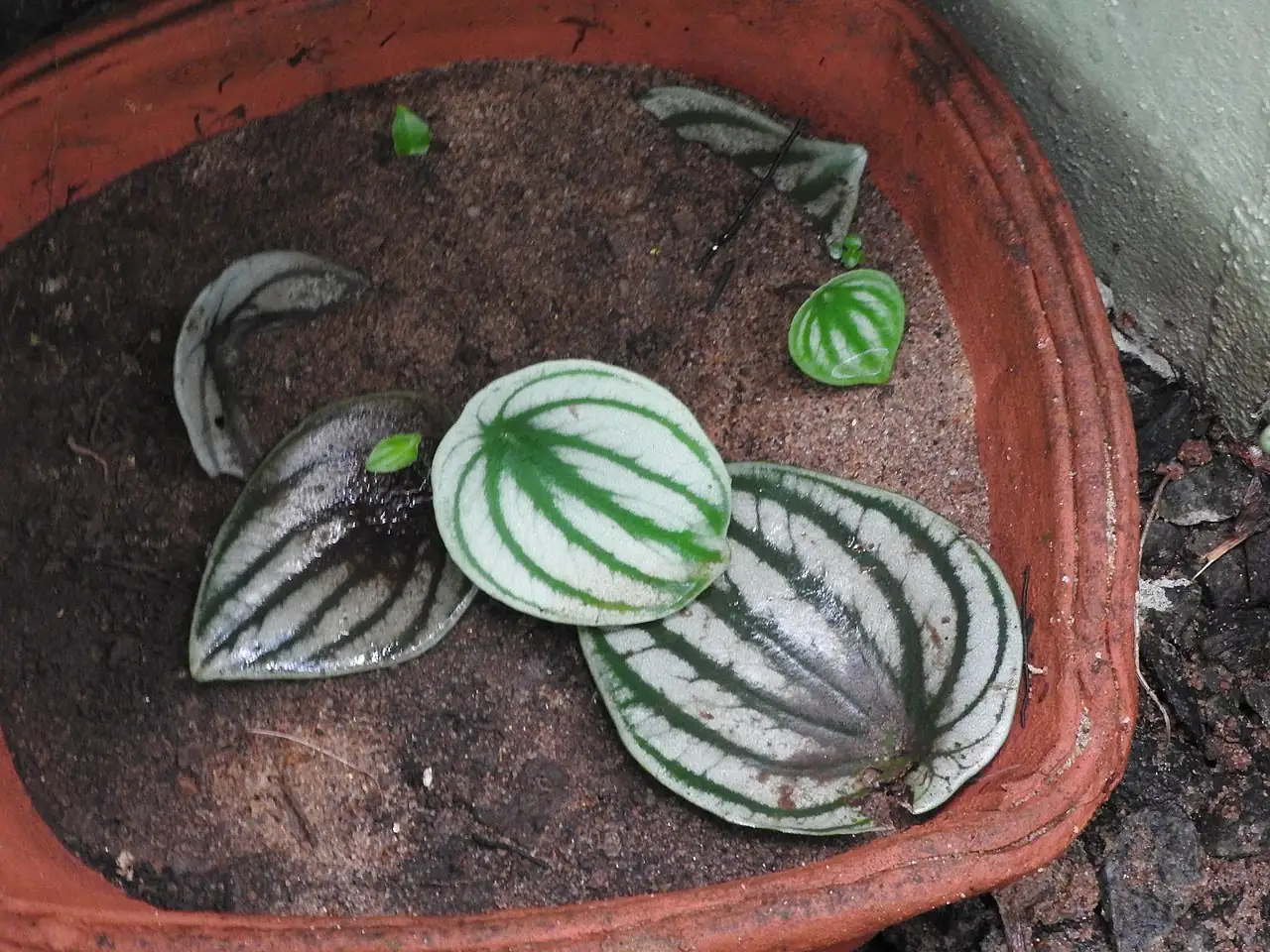
Very easy from leaf cuttings in spring and summer. Take a mature leaf with a short petiole about 1–2 cm (0.4–0.8 in). Insert the petiole and about 1/3 of the leaf into a lightly moist, airy medium (e.g., perlite/sand mix), keeping about 2/3 of the leaf above the surface. Roots often form in about 3–4 weeks, and small plantlets may appear after about 4–6 weeks. Stem cuttings can also root in water or a well-draining mix. Division is possible at spring repotting: split a crowded clump so each section has roots, then keep in bright shade while it re-establishes.
Repotting
Likes being slightly pot-bound. Refresh/top-dress the mix annually if needed, and repot about every 2–3 years (or when roots tightly fill the pot), moving up only one pot size. Typical indoor pots are around 10–12.5 cm (4–5 in) for many plants; established specimens may use roughly 12–15 cm (4.7–5.9 in) depending on root mass. Always prioritize drainage and an airy mix over a large container.
📅 Seasonal Care Calendar
Spring: brighter filtered light; water as the surface dries; best time to propagate, divide, or repot (only one size up). Summer: keep out of harsh sun and away from hot window glass; maintain even moisture without sogginess; ensure airflow to reduce pests. Autumn: continue bright-indirect light and moderate watering; reduce feeding. Winter: move to the brightest safe spot (no strong direct sun); water sparingly and pause feeding to prevent rot in cooler conditions; keep away from cold drafts.
Pests, Diseases & Safety
Common Pests & Diseases
Common indoor pests include mealybugs, scale insects, spider mites, and whitefly—more likely in warm, dry air. Treat early with insecticidal soap or horticultural oil and repeat as needed. Overwatering can cause root rot; use fast-draining soil and let the surface dry between waterings. It may also show leaf spot or ringspot-like issues (distortion/stunting); start with clean plants and sterile mix, improve airflow, remove badly affected leaves, and isolate if symptoms spread.
Toxicity
Generally considered non-toxic to cats, dogs, and people (often listed as pet-safe). Still, chewing any plant can cause mild stomach upset, so discourage nibbling.
Culture & Symbolism
Symbolism: Often linked with freshness and playfulness—those “watermelon” leaves look cheerful year-round.
History & Legends: Best known as a modern favorite in houseplant collections rather than a plant with deep folklore; it’s grown worldwide for its bold leaf pattern and compact habit.
Uses: Primarily an ornamental indoor foliage plant—great for desks, shelves, windowsills, and small apartments. Also popular in hanging planters for a light, airy look.
FAQ
Why are the leaves turning yellow and the leaf stalks drooping?
Most commonly: overwatering (or a mix that stays wet), poor airflow, and stress from too much direct sun or cold drafts. Let the top of the mix dry before watering again, switch to a faster-draining mix if needed, keep it in bright-indirect light, and thin crowded growth to improve airflow.
Why are the leaves curling or drooping even though the plant isn’t yellow?
Often underwatering or very dry air. Check the mix—if it’s dry, water thoroughly and drain well. If your home is very dry (especially near heaters), increase humidity slightly with a pebble tray and keep it away from heat vents and cold drafts.
Can watermelon peperomia handle low light?
It can tolerate lower light, but growth slows and the striping may fade. For the best crisp “watermelon” pattern, give it bright, indirect light.
How should I care for a newly purchased plant?
Start it in bright, filtered light and avoid direct sun while it adjusts. Water lightly at first (don’t keep the mix wet). Wait until you see new growth before feeding, and rotate the pot about a half turn weekly so it grows evenly.
How often should I repot it?
Usually every 2–3 years, or when roots tightly fill the pot. It prefers being slightly root-bound, so avoid frequent upsizing; move up only one pot size at a time.
Fun Facts
- The watermelon look is so convincing that people often remember it after seeing it just once—instant conversation starter on a desk or shelf.
- Its flowers are tiny “spikes” rather than showy blooms, which is why growers focus on perfect foliage instead.
- You can grow a whole new plant from a single healthy leaf—one of the most shareable houseplants around.
- Keeping it slightly pot-bound often helps it stay naturally compact and tidy.


