
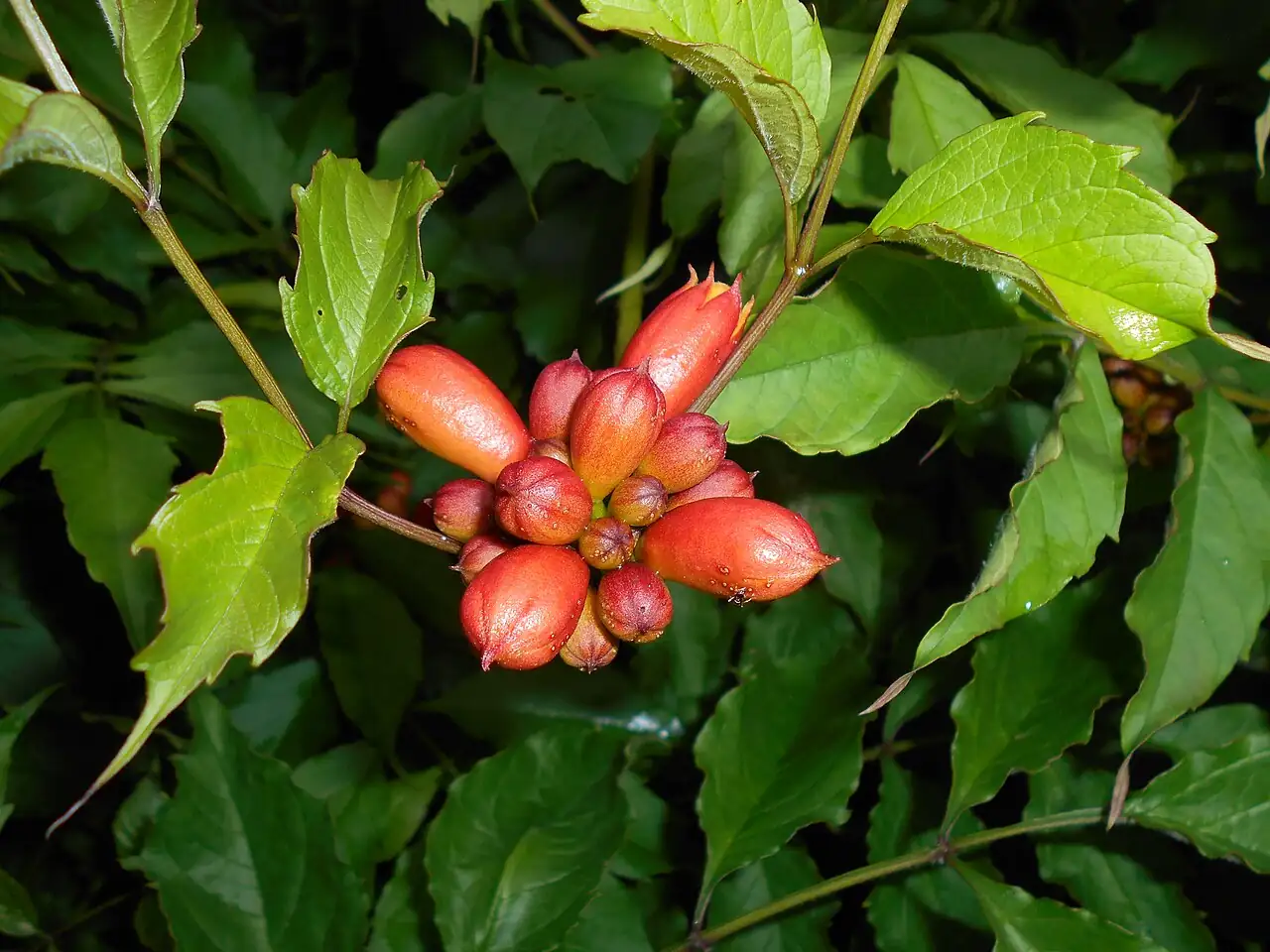
Plant Features
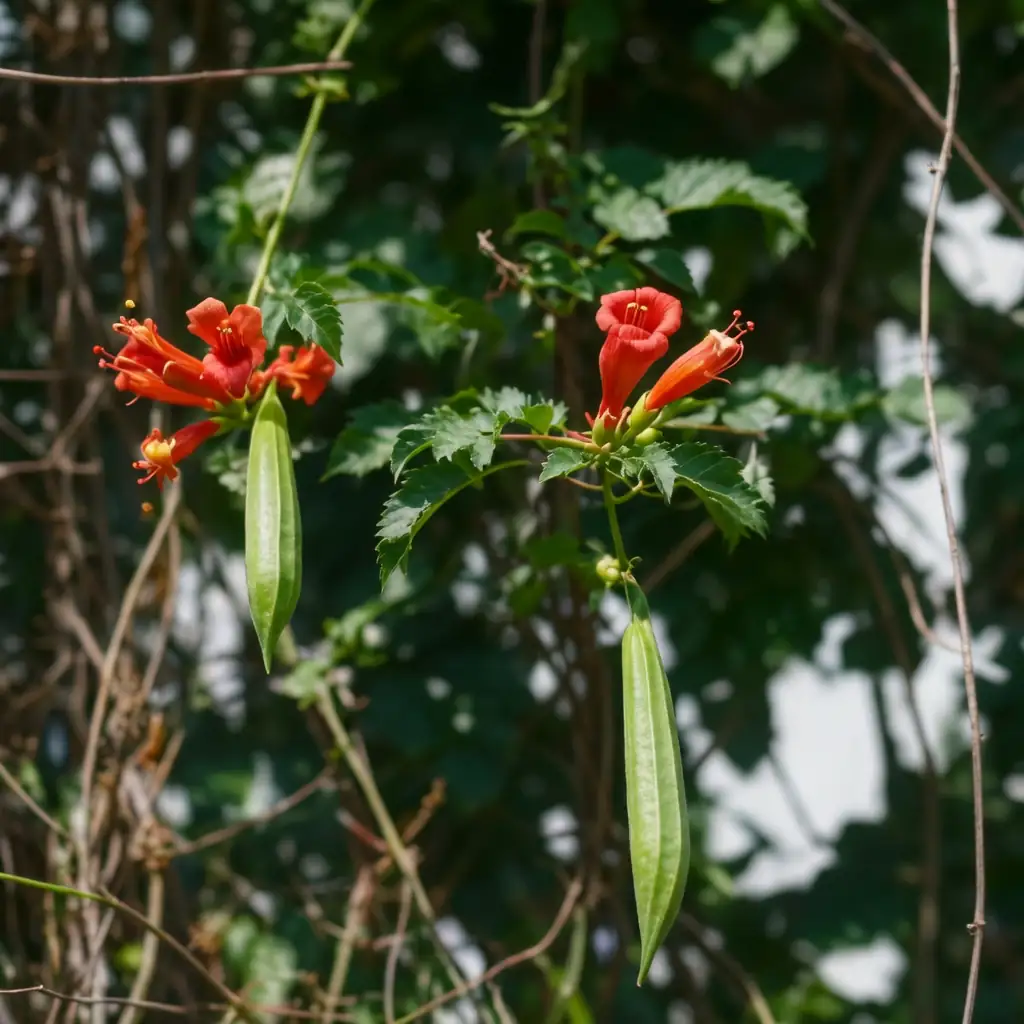
- Size: Produces long, slender, cylindrical seed pods typically 20–30 cm (8–12 in) long; overall plant size varies widely, but it is a vigorous vine that can cover large supports if allowed.
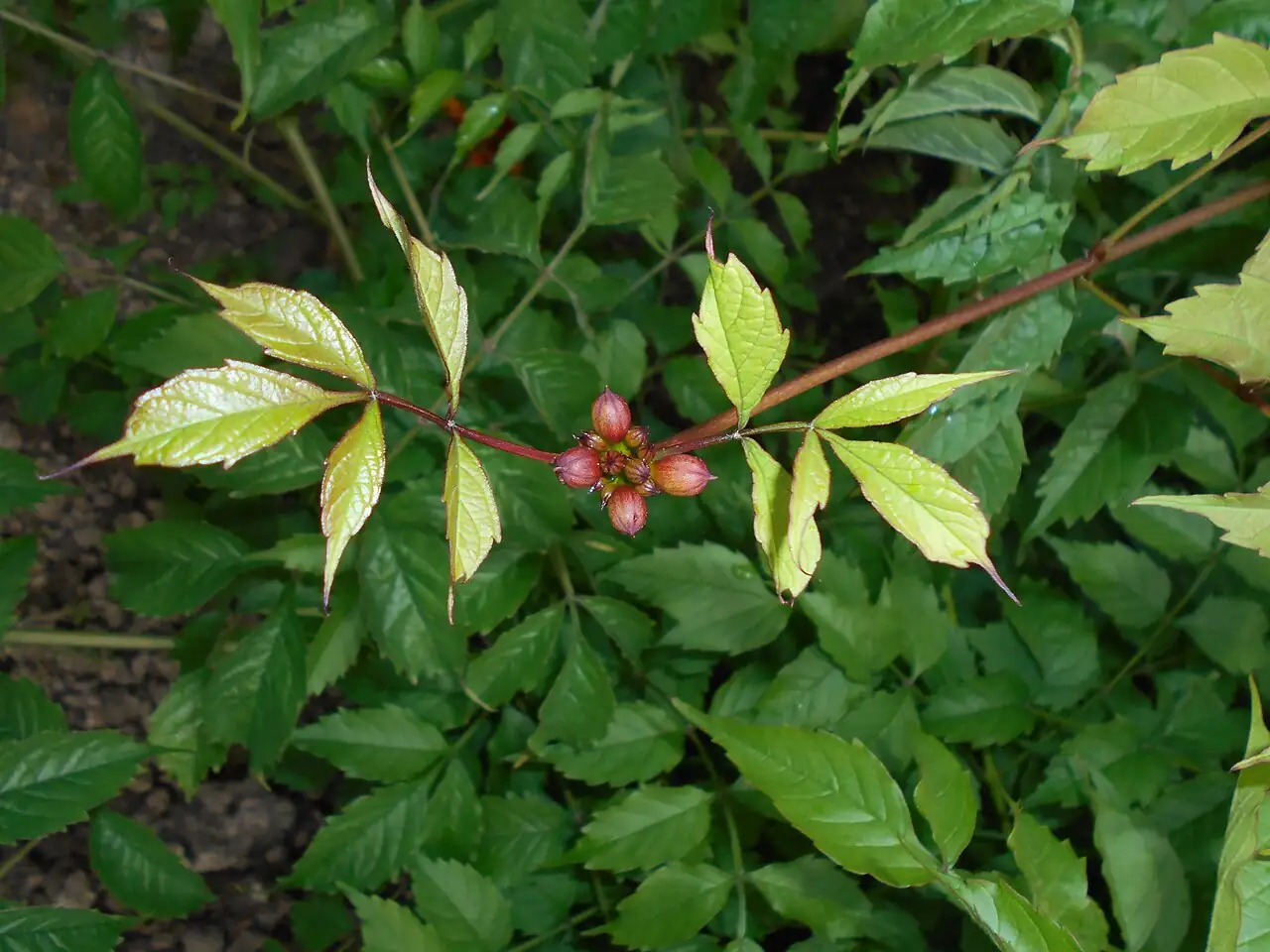
- Foliage: Leaves are opposite and pinnate, usually with 7–11 oval to ovate-elliptic leaflets; leaflet undersides may be slightly hairy.
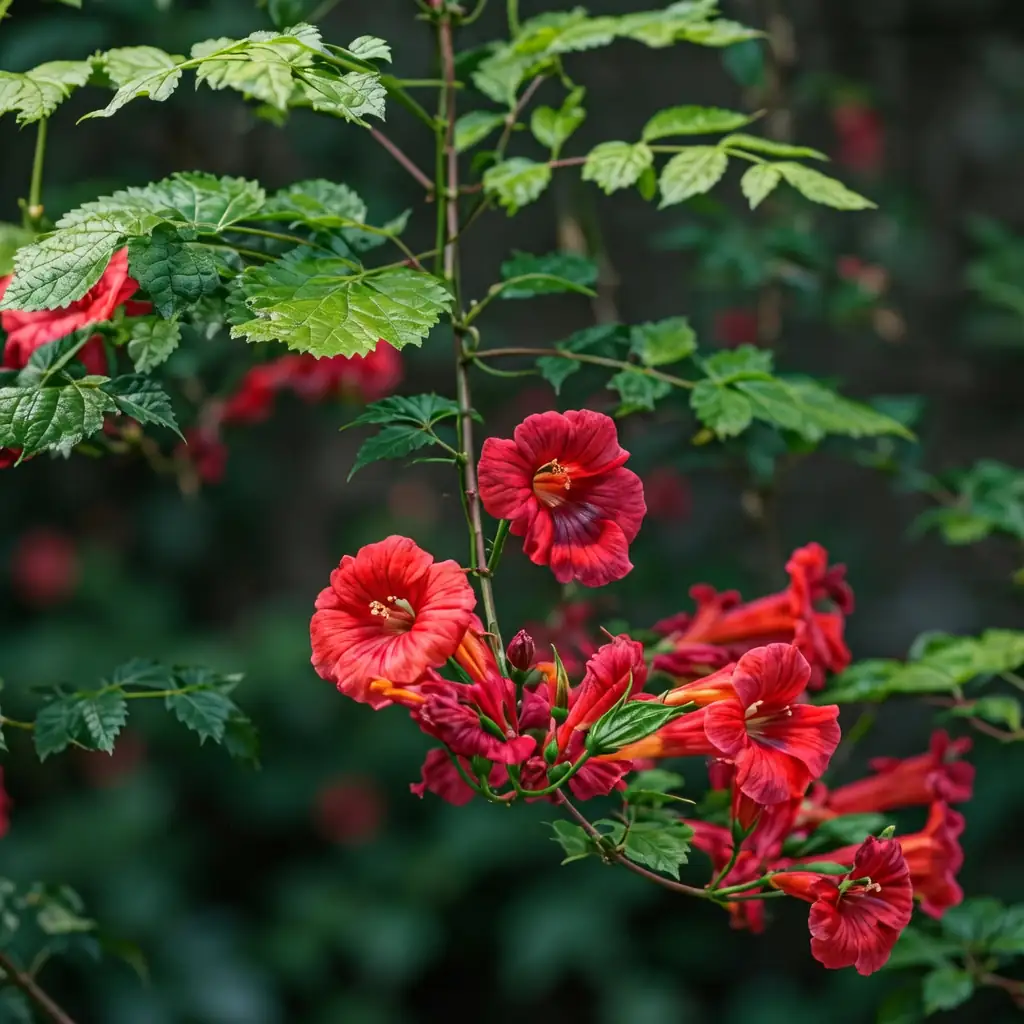
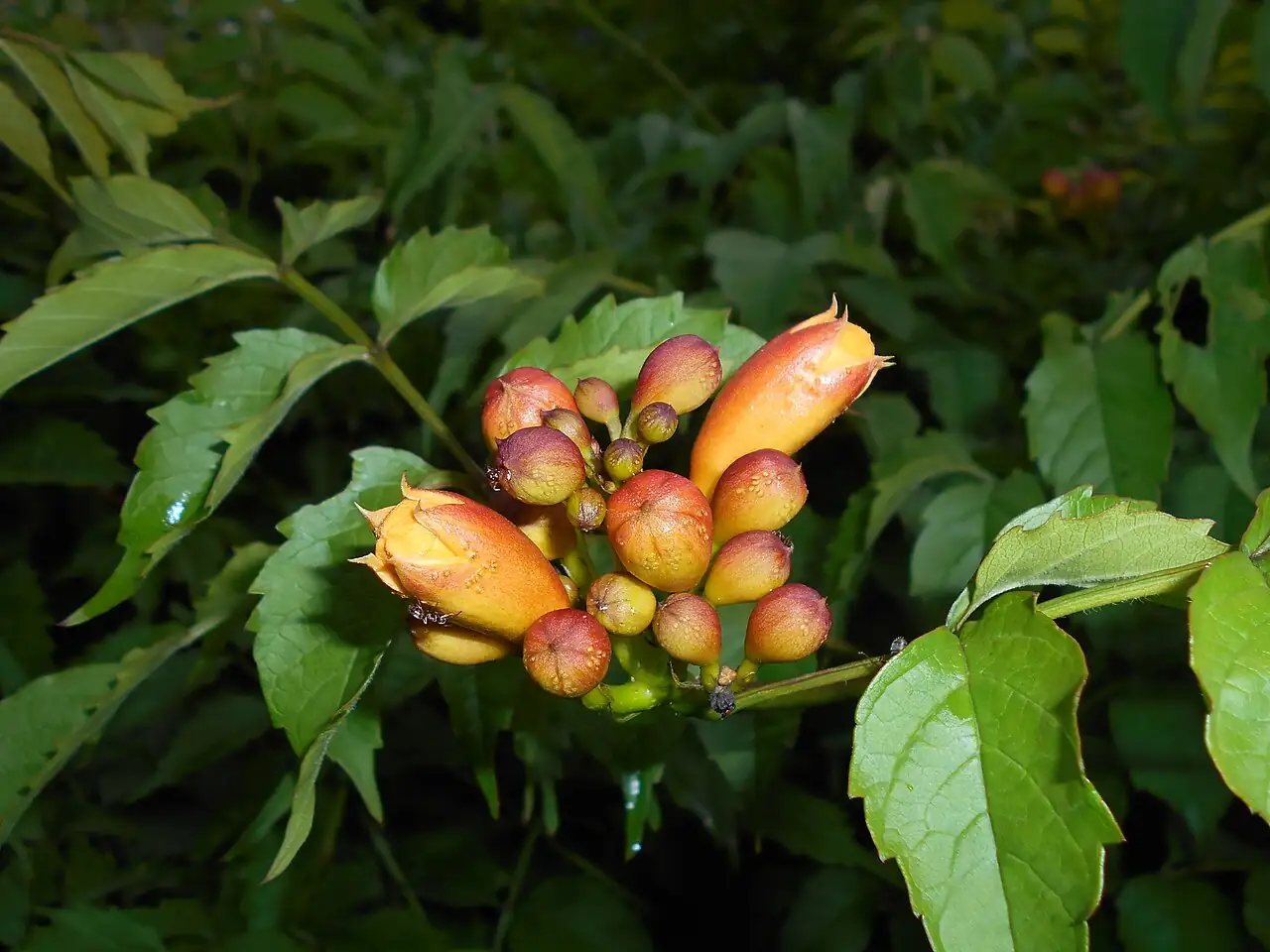
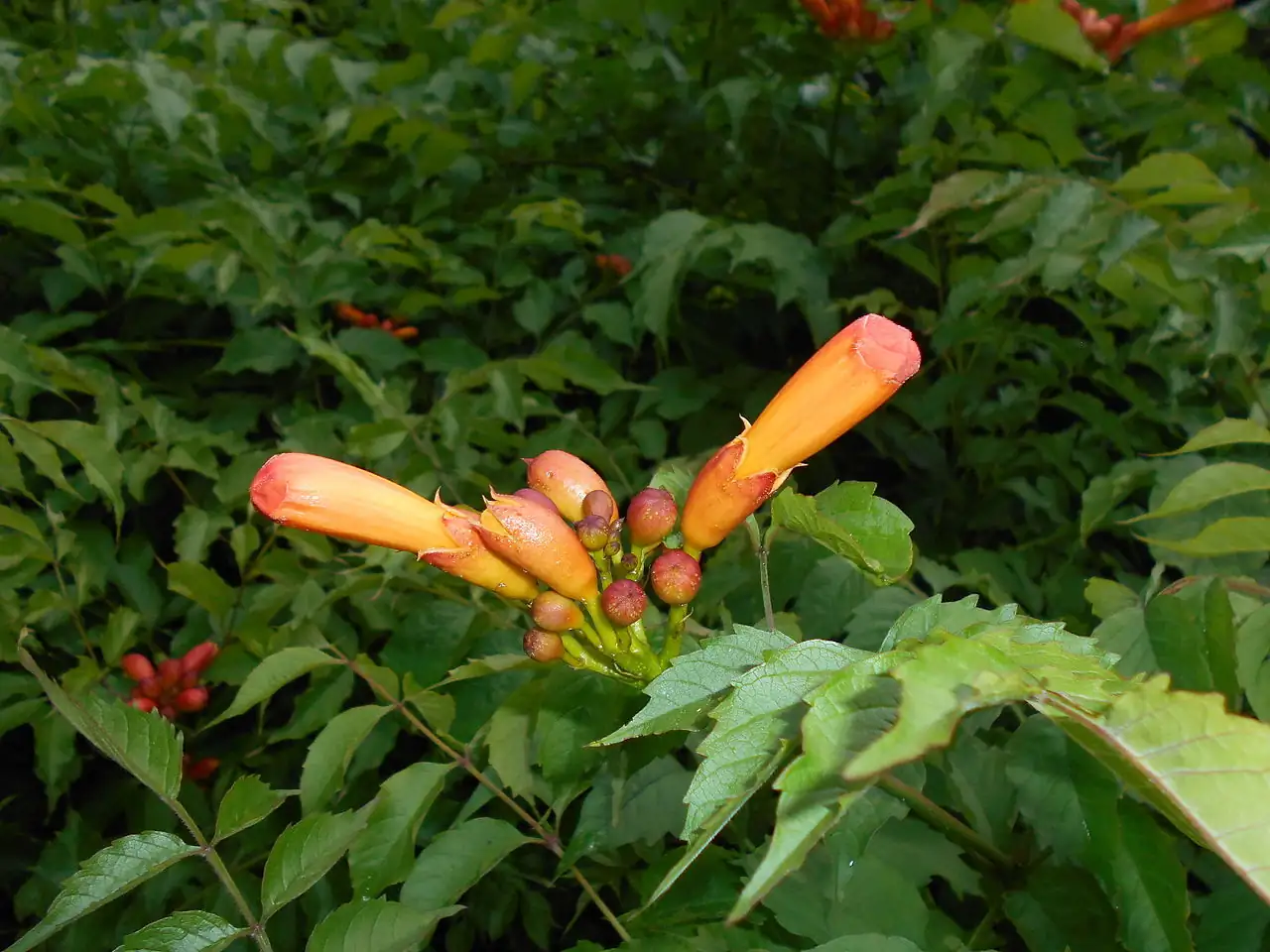
- Flower: Flowers appear in clusters and are trumpet-shaped with a tubular corolla that flares at the mouth; color ranges from orange to orange-red. The calyx is 5-lobed.
- Flowering Season: June–October (in warm-temperate climates)
- Growth Habit: Fast-growing, deciduous woody vine that climbs and clings using aerial rootlets that attach strongly to surfaces.
Environment
Sunlight
Full sun for the heaviest flowering; tolerates partial shade (but may bloom less).
Temperature
Prefers warm growing seasons; once established it tolerates significant winter cold, roughly −23 to −18°C (−10 to 0°F).
Humidity
Average outdoor humidity is fine; not fussy and does not require high humidity.
Soil
Highly adaptable: grows in many soils including poor, lean, and alkaline conditions; performs best in reasonably well-drained soil. Once established, it can tolerate some salinity/alkalinity.
Placement
Outdoors on a strong, permanent support such as a trellis, fence, pergola, or wall. Keep it away from delicate siding, gutters, and fragile structures because its clinging rootlets and vigorous growth can be hard to remove and may cause damage.
Hardiness
USDA Zone 4–9 (cold-hardy once established).
Care Guide
Difficulty
Easy and forgiving, but very vigorous—plan for strong support plus regular training and pruning to prevent it from taking over.
Buying Guide
Choose plants with clean, healthy green foliage and no obvious pests (aphids/scale) or leaf spotting. For smaller gardens, look for less aggressive cultivars and make sure you already have a sturdy support structure in place.
Watering
Water regularly during the first growing season to establish a deep root system. After it’s established, water mainly during extended drought; avoid soggy, constantly waterlogged soil.
Fertilization
Usually needs little feeding. If growth is weak, apply a balanced slow-release fertilizer in spring. Avoid high-nitrogen fertilizers, which can encourage lots of leafy growth at the expense of flowers.
Pruning
Prune in late winter to early spring before new growth begins: remove dead or weak stems and shorten last year’s shoots to promote flowering on new growth. Light summer trimming can help control spread and keep growth tidy.
Propagation
Propagate by softwood or semi-hardwood cuttings, layering, root suckers, or seed. Note that seedlings may vary from the parent plant.
Repotting
Not typically grown as a houseplant. If kept in a container, repot every 1–2 years into a larger pot with fresh, well-draining mix and provide a sturdy trellis/support.
📅 Seasonal Care Calendar
Spring: prune hard if needed and tie in/train new shoots. Summer: water in prolonged heat, and trim to control size. Autumn: reduce feeding; allow seed pods to mature if you want seeds. Winter: plant rests; do structural pruning before budbreak.
Pests, Diseases & Safety
Common Pests & Diseases
Generally robust. Possible issues include aphids, spider mites, and scale, plus occasional leaf spot or powdery mildew. Improve airflow, avoid late-day overhead watering, and treat early infestations with horticultural soap or oil if needed.
Toxicity
Sap and leaf hairs can irritate skin for sensitive people (the origin of the nickname “cow-itch vine”). Not commonly considered highly toxic to pets, but chewing may cause mild stomach upset—best to discourage nibbling.
Culture & Symbolism
Symbolism: Often linked with vitality, boldness, and exuberant summer energy—fitting for a vine that grows fast and blooms loudly.
History & Legends: A long-loved ornamental in North American gardens, valued for quickly clothing structures in greenery and bringing a long season of dramatic blooms that draw in pollinators.
Uses: Primarily an ornamental climber for covering trellises, fences, pergolas, and walls. Also widely planted to attract hummingbirds and other pollinators where they occur.
FAQ
How can I identify trumpet vine (Campsis radicans)?
Look for a vigorous woody vine that clings with aerial rootlets, opposite pinnate leaves with usually 7–11 leaflets, clusters of orange to orange-red trumpet-shaped flowers in summer, and long slender seed pods about 20–30 cm (8–12 in) long.
Where is trumpet vine native, and where is it cultivated?
It is native to North America and has been introduced and cultivated in various regions, including parts of China such as Guangxi, Jiangsu, Zhejiang, and Hunan.
What growing conditions does trumpet vine prefer?
It blooms best in full sun, tolerates partial shade, enjoys warm summers, and is cold-hardy once established. It adapts to many soils (even poor or alkaline ones) as long as drainage is reasonable.
What is trumpet vine mainly used for in gardens?
It’s mainly used as a showy ornamental climber to cover sturdy supports—trellises, fences, pergolas, and walls—offering a long season of bright trumpet flowers.
Fun Facts
- It climbs using aerial rootlets that can latch on tightly—great for coverage, but tricky to remove from delicate surfaces.
- In warm-temperate regions it can flower from June through October, giving a long run of color.
- Its seed pods are long and bean-like, typically 20–30 cm (8–12 in) long.
- Once established, it’s surprisingly tolerant of poor soils and short dry periods.
- The nickname “cow-itch vine” comes from the potential for skin irritation in sensitive people.