

Plant Features
- Size: About 20 cm (8 in) tall with a spread/trailing width around 60 cm (24 in).
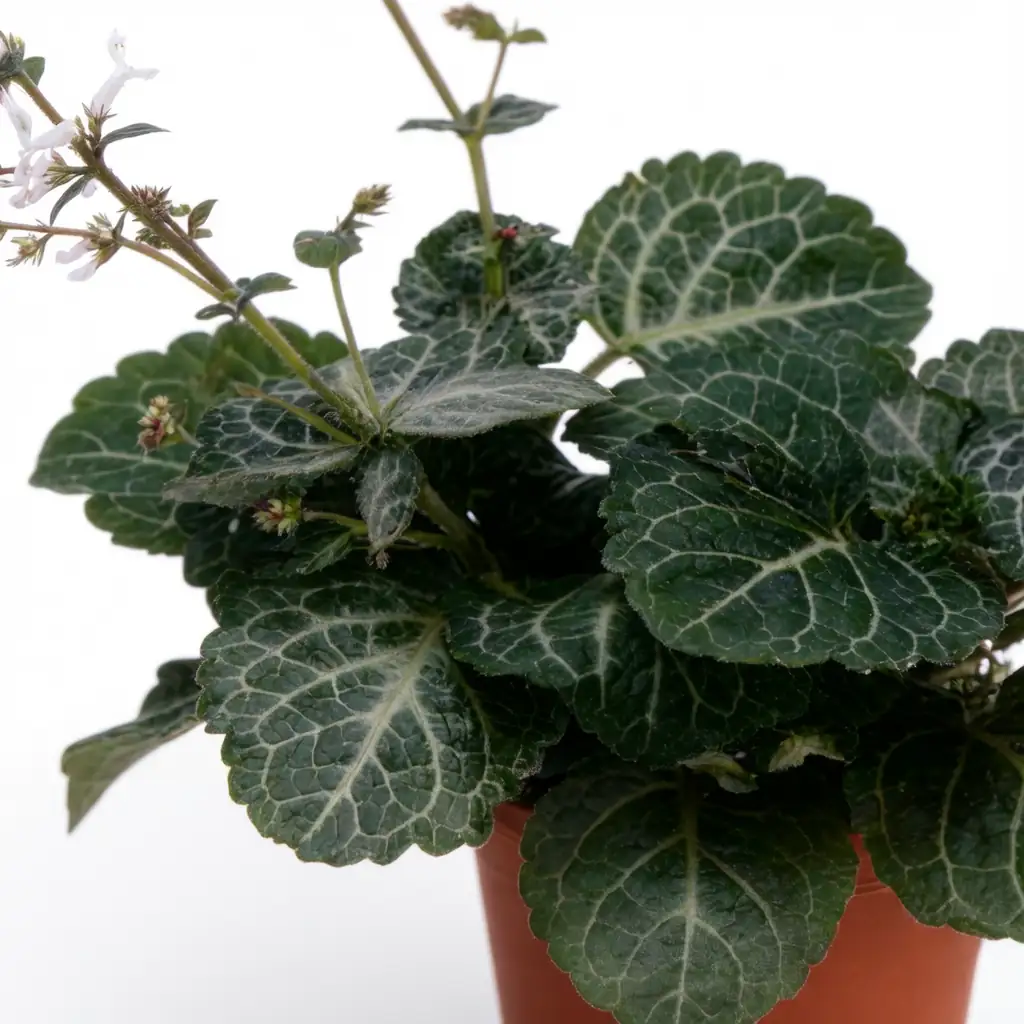
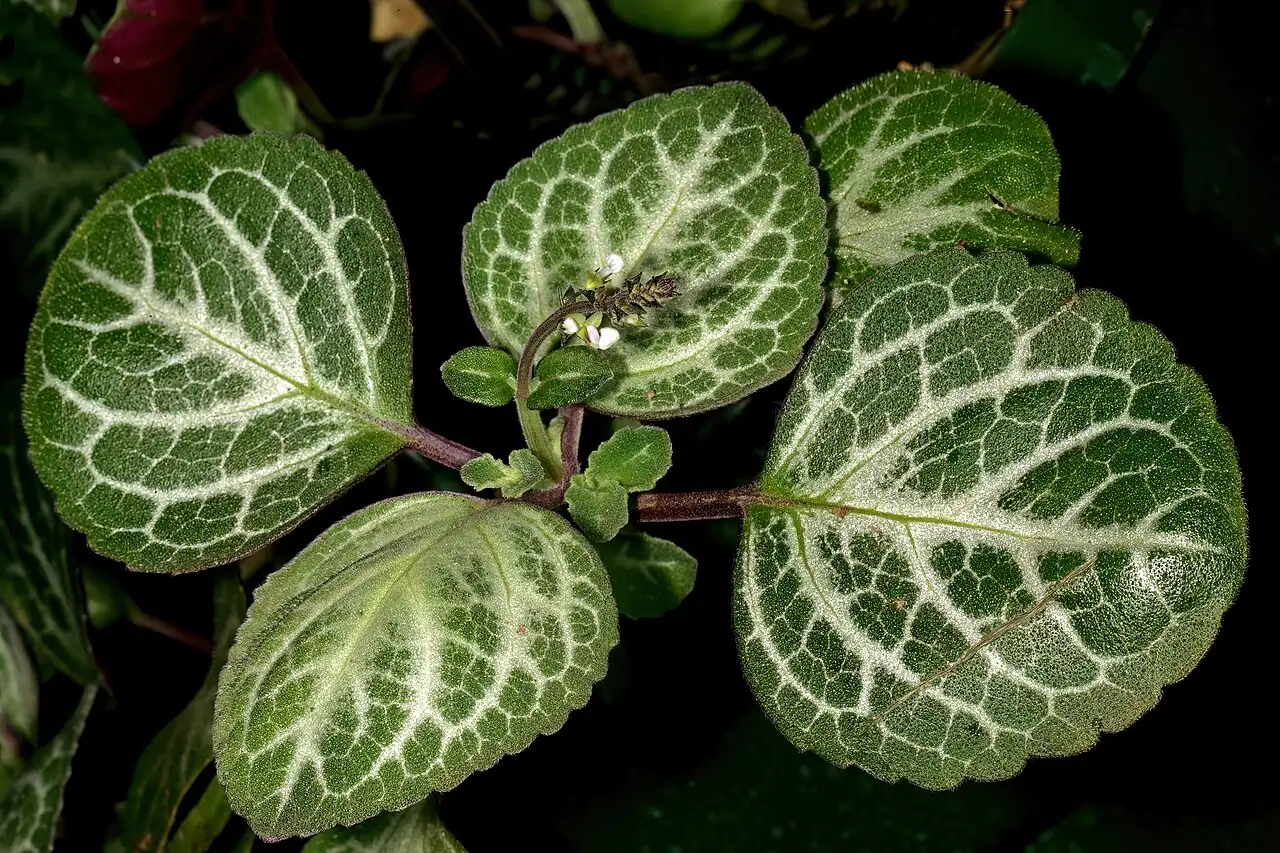
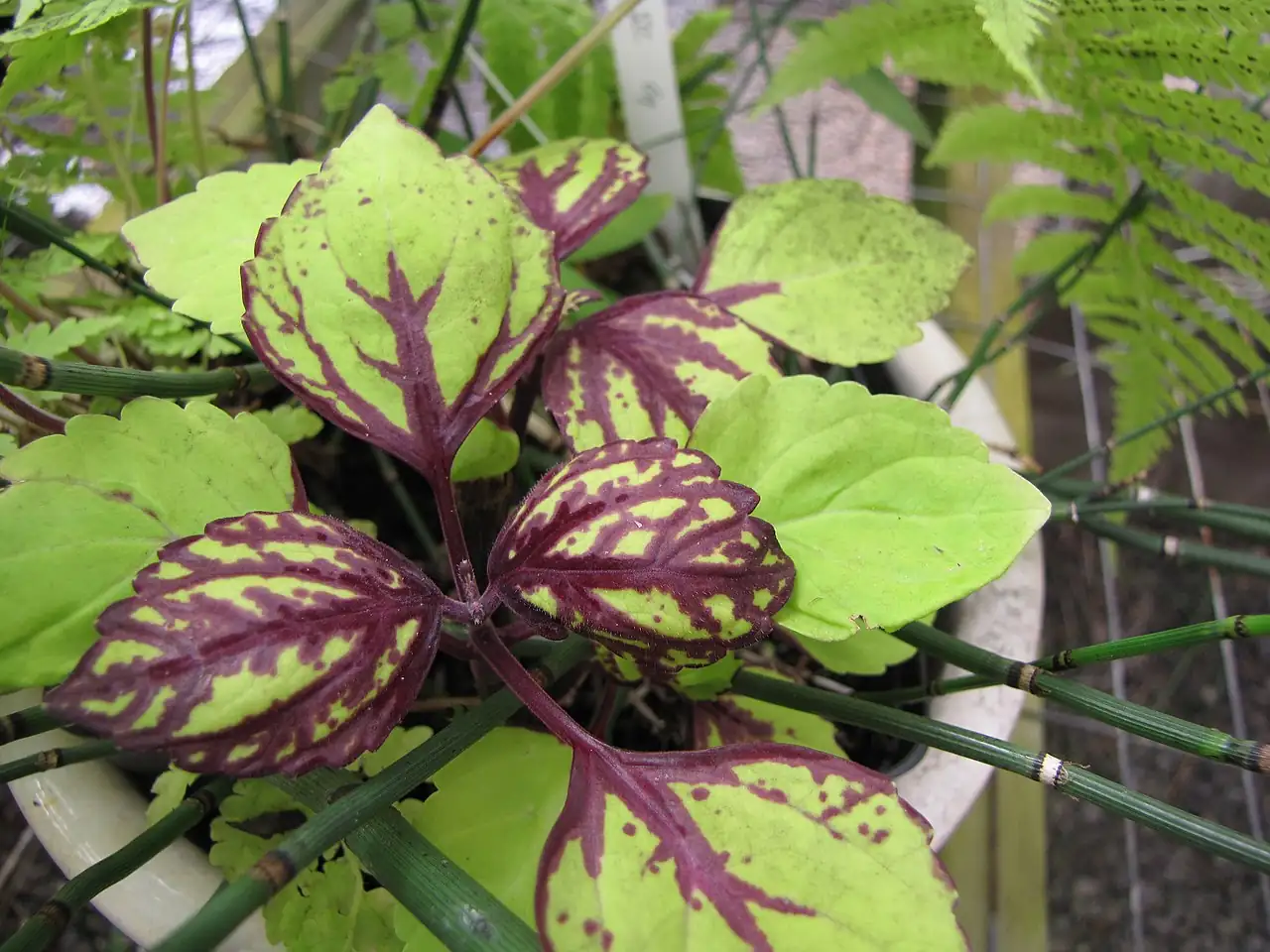
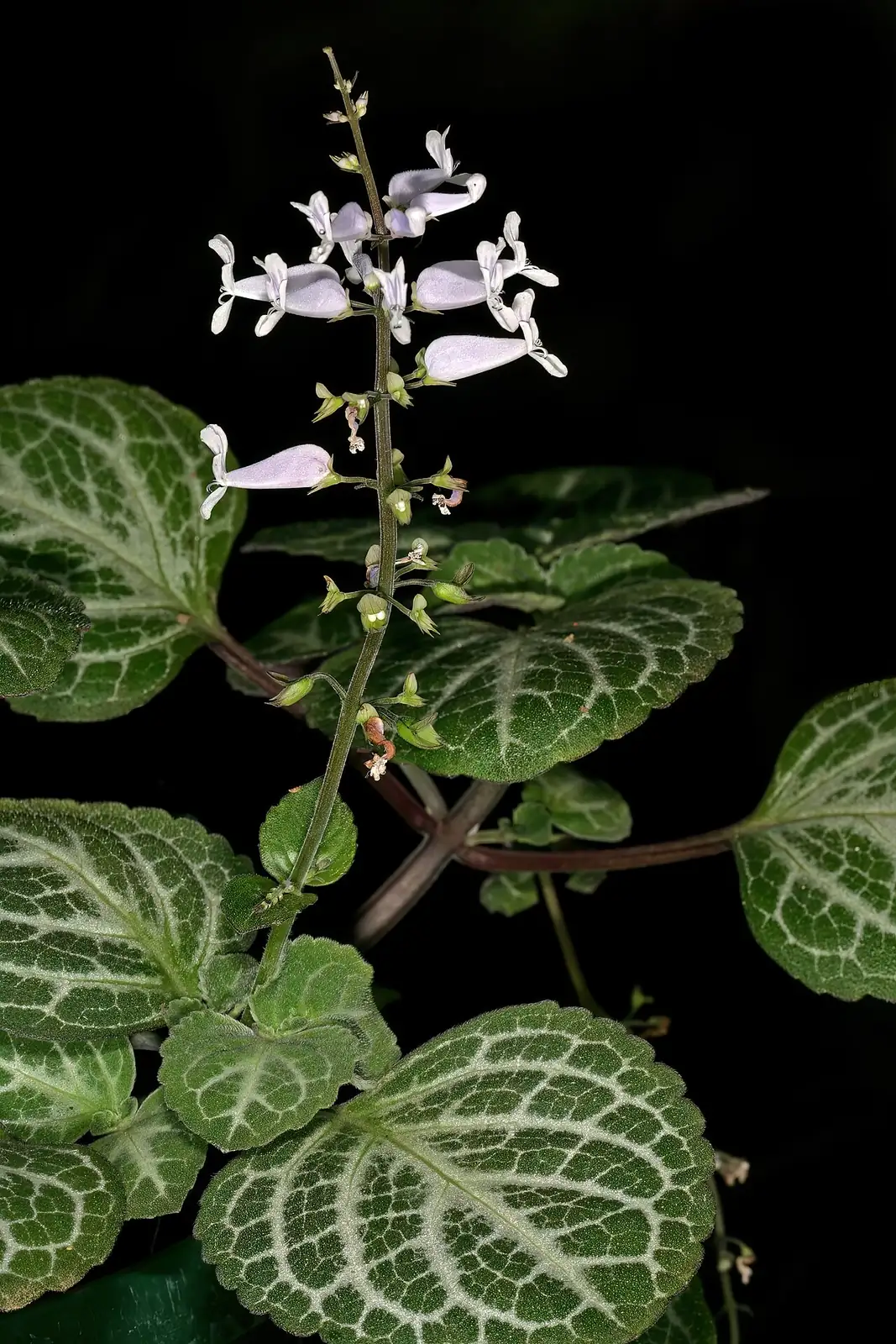
- Foliage: Rough-textured green leaves with decorative silvery veins that stand out strongly against the leaf surface.
- Flower: Small white flowers arranged in whorls; often a modest display compared with the foliage.
- Flowering Season: Spring
- Growth Habit: Trailing/cascading, with relaxed stems that spill over the edge of pots; easy to shape into a fuller plant by pinching back tips.
Environment
Sunlight
Bright, indirect light (bright shade) to shade; avoid harsh direct sun. Tolerates low-light rooms, though growth slows and stems may stretch.
Temperature
15–24°C (59–75°F); keep above about 10°C (50°F).
Humidity
Low to average indoor humidity; no special humidity needs.
Soil
Free-draining potting mix; a peat- or coco-based mix blended with perlite at about 2:1 (by volume) works well.
Placement
Hanging basket or tall planter near a bright window with filtered light, or a shadier indoor spot away from direct sun.
Hardiness
Tender; not frost-hardy. Best treated as a houseplant unless grown outdoors in warm, frost-free conditions.
Care Guide
Difficulty
Easy—great for beginners, especially if you’re careful not to keep it constantly wet.
Buying Guide
Choose plants with firm trailing stems and clean, healthy leaves. Avoid pots that feel waterlogged or show blackened, mushy stems near the soil line (a red flag for rot).
Watering
Spring to autumn: water when the top of the potting mix feels dry. Winter: water sparingly—aim for barely moist rather than wet. Good drainage is key to preventing stem/root rot.
Fertilization
Spring to autumn: feed every 2 weeks with a balanced liquid fertilizer at 1/2 strength. Reduce or stop feeding in winter when growth slows.
Pruning
Pinch or trim back leggy stems to encourage branching and a fuller cascade. Remove spent flowering stems after blooming to keep the plant tidy.
Propagation
Very easy from stem cuttings. Cuttings root readily in water or in a moist, airy mix; take them during the growing season for the quickest results.
Repotting
Repot every 2–3 years, or when root-bound. Refresh the mix and move up one pot size to keep growth steady.
📅 Seasonal Care Calendar
Spring–autumn: water when the surface dries, fertilize every 2 weeks at half strength, and pinch back for shape. Winter: keep just slightly moist and reduce feeding. Repot every 2–3 years if crowded.
Pests, Diseases & Safety
Common Pests & Diseases
Can attract spider mites, mealybugs, and aphids indoors. Overwatering is the most common problem and can cause root/stem rot—use a free-draining mix and let the surface dry between waterings.
Toxicity
Toxicity varies by species and this plant is listed only as Plectranthus sp., so treat it as potentially irritating if chewed. Keep away from pets and small children; seek veterinary/medical advice if ingestion occurs.
Culture & Symbolism
Uses: Mostly grown as an ornamental indoor foliage plant—especially for hanging baskets and tall planters where the trailing stems can cascade and show off the leaf veining, even in lower-light spaces.
FAQ
Can it grow without direct sunlight?
Yes. It prefers bright, indirect light but tolerates shade and rooms with little to no direct sun. In deeper shade it will grow more slowly and may become leggier.
Why are the stems getting long and sparse?
Usually it’s either not enough light or not enough pinching. Move it to brighter indirect light and pinch back the tips regularly to encourage branching.
Fun Facts
- Because it trails naturally, it looks best up high—on a shelf, in a hanging pot, or in a tall planter where the stems can spill and layer.
- Like many members of the mint family (Lamiaceae), it’s famously easy to propagate from cuttings—one plant can quickly become several.


