

Plant Features
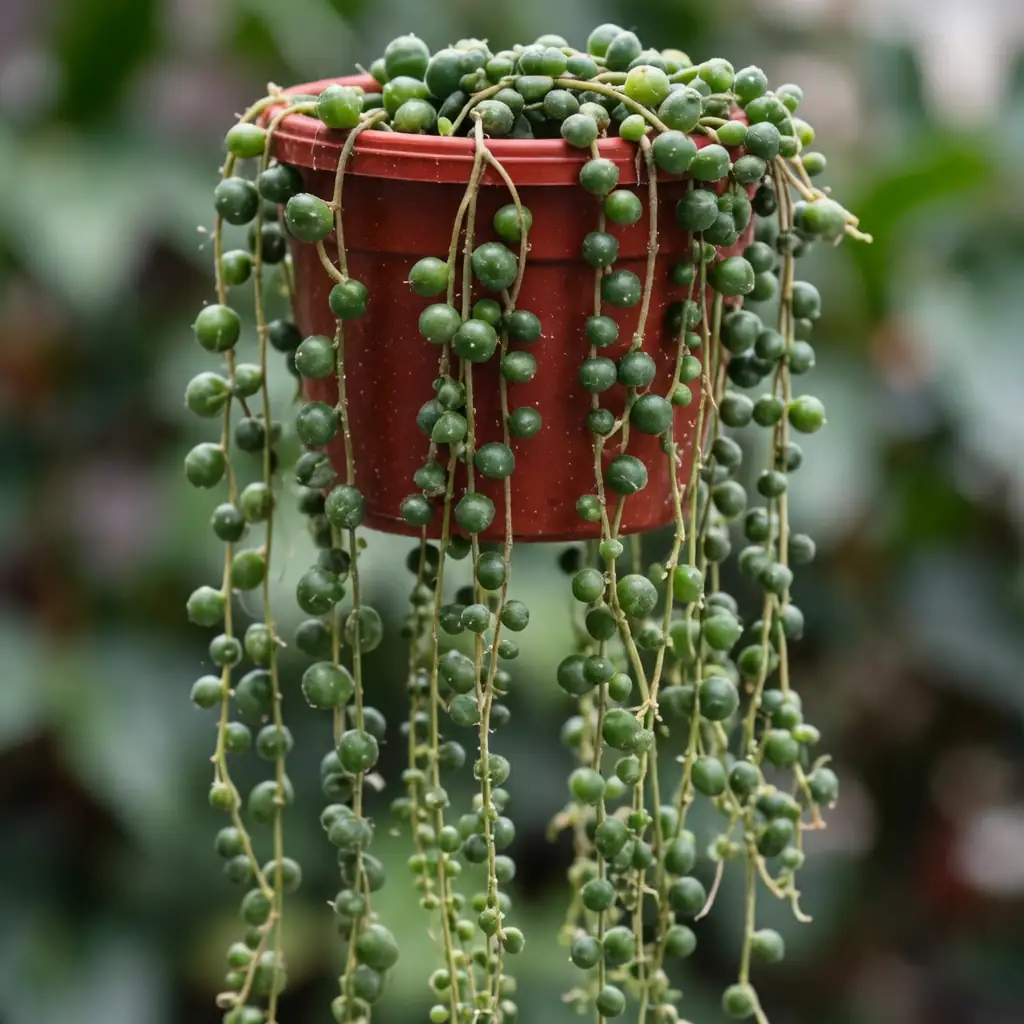
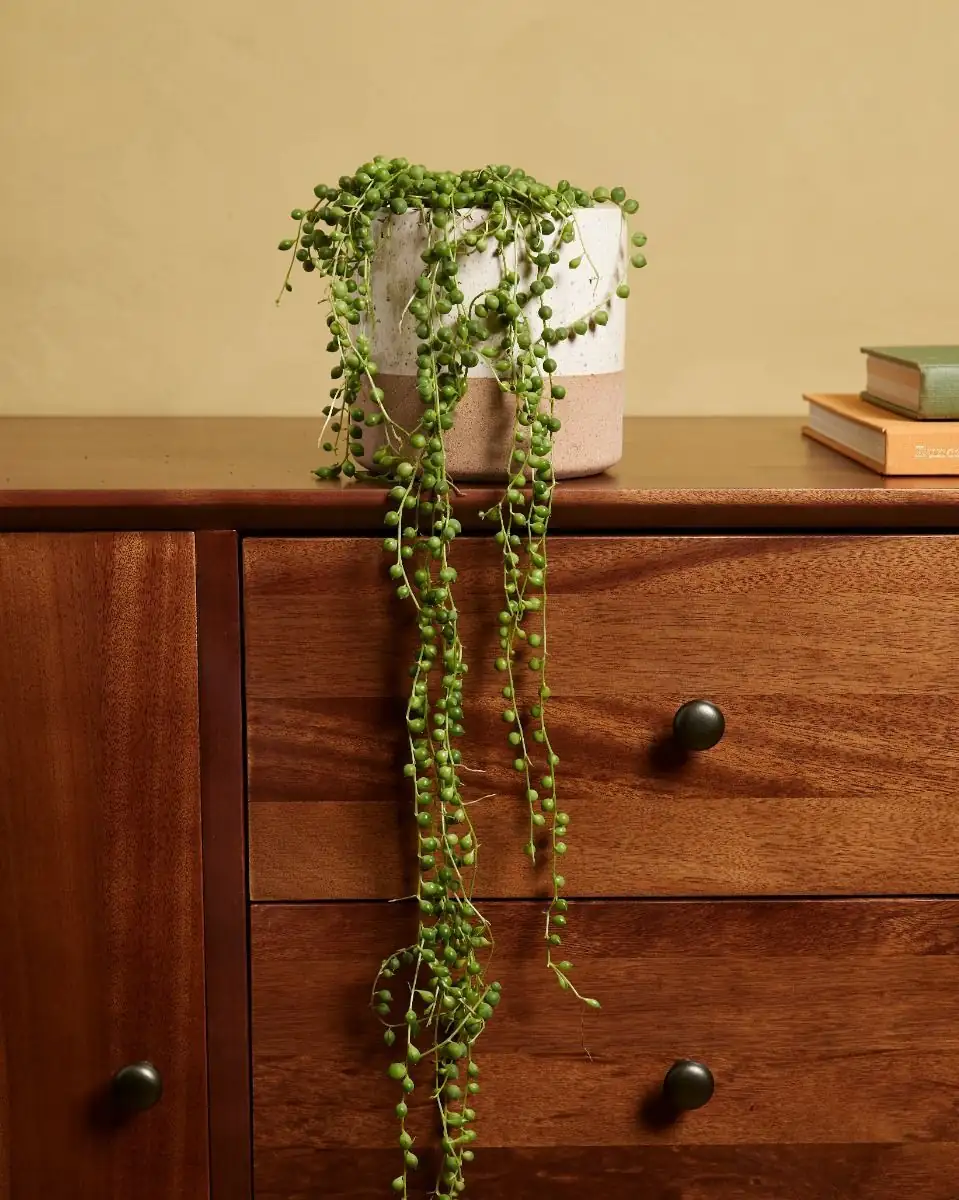
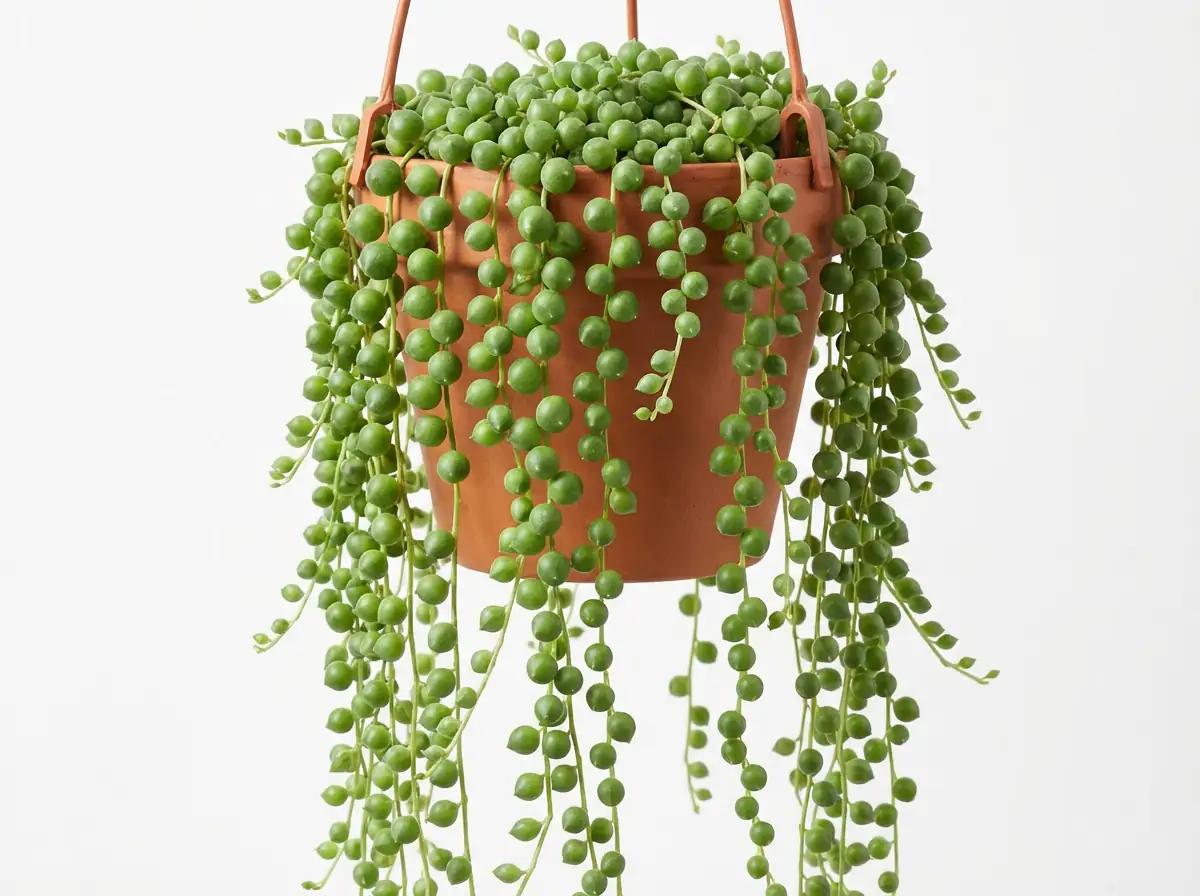
- Size: A low, shallow-rooted plant (often around 5 cm (2 in) tall at the crown) with trailing stems typically 60–90 cm (2–3 ft / ~24–35 in) long in containers, sometimes longer with age and ideal conditions.
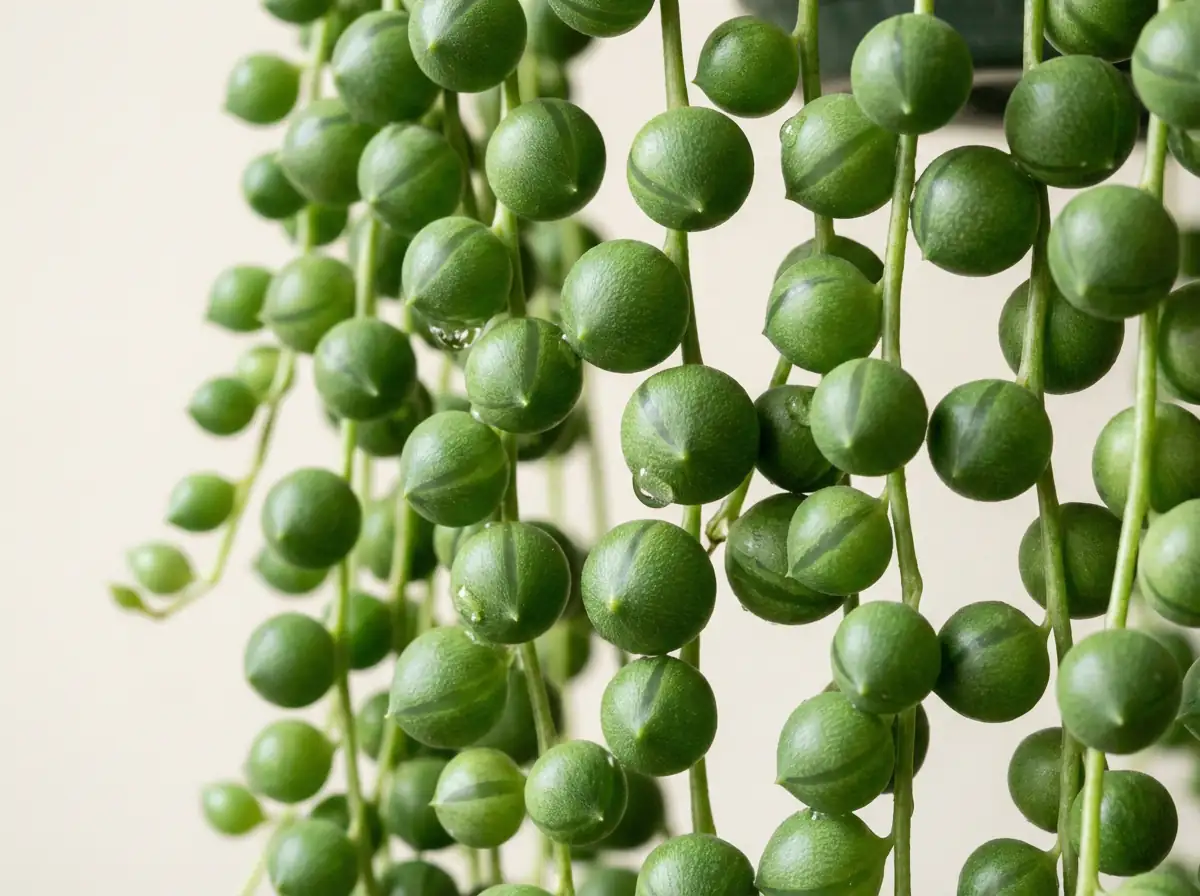
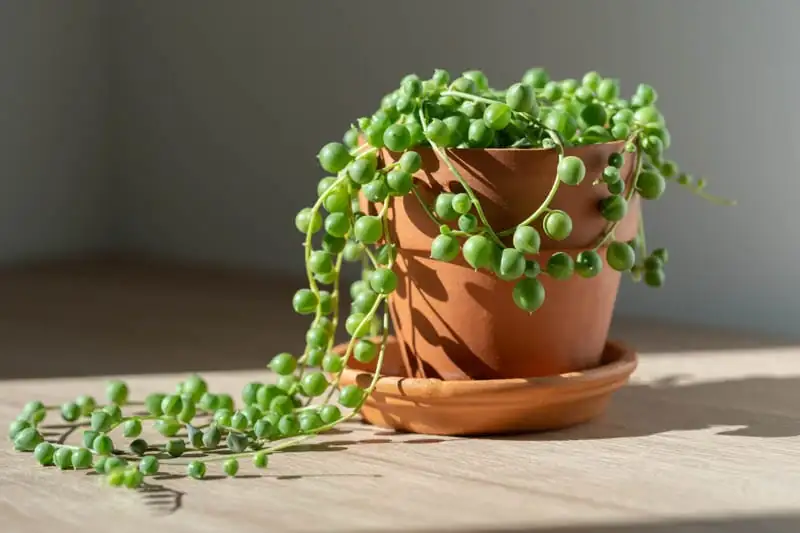
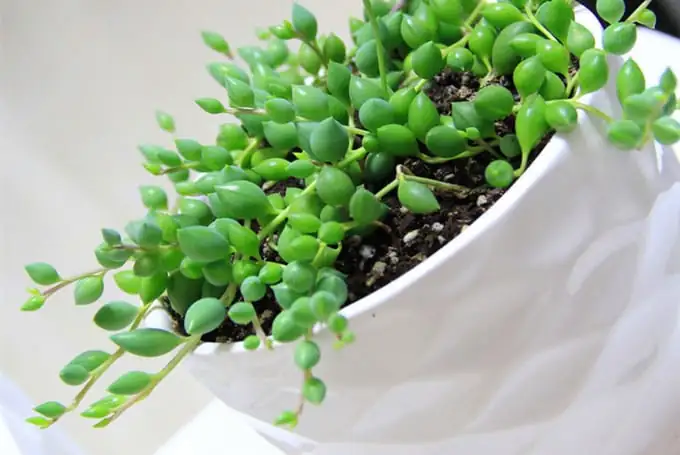
- Foliage: Slender, trailing stems lined with small, spherical, pea-like leaves about 0.6 cm (1/4 in) across. Each “pearl” is a succulent leaf that stores water and often shows a subtle translucent stripe (an “epidermal window”) that helps light reach inner tissues; the surface may look slightly powdery.
- Flower: Flowers are small and not the main show, but they’re a treat up close: creamy-white to white blooms that can appear tubular or daisy-like depending on how you describe the composite flowerhead, often with noticeable stamens. They’re lightly sized (around 2–2.5 cm (about 1 in) across when open) and can be surprisingly fragrant—sweet and spicy, often likened to cinnamon/vanilla.
- Flowering Season: Late fall to early spring (often winter indoors); sometimes reported in spring depending on conditions and climate.
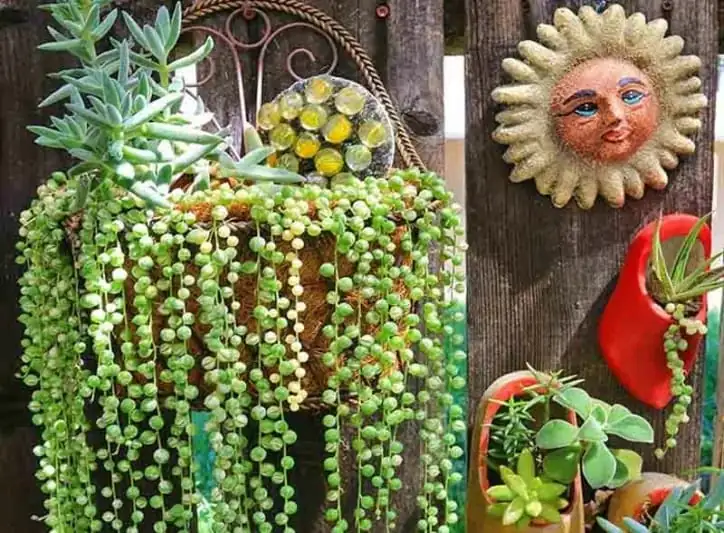
- Growth Habit: Cascading/trailing. Stems can root at nodes where they touch the potting mix, gradually forming a fuller curtain or even a mat in suitable conditions.
Environment
Sunlight
Bright light is key. Best in bright, indirect light with some gentle direct sun (morning/late afternoon). It can take more sun than many houseplants, but harsh midday sun—especially behind glass—can scorch the pearls. Too little light leads to stretched, leggy growth with bigger gaps between beads.
Temperature
Comfortable at 15–27°C (60–80°F). It tolerates cooler spells down to about 10°C (50°F) but is not frost-hardy; protect from temperatures near/below freezing. In very hot conditions above ~30°C (86°F), growth may slow and the plant benefits from light shade and good airflow.
Humidity
Prefers low to average indoor humidity and good ventilation. Avoid consistently humid, stagnant air (and skip misting) to reduce the risk of fungal problems.
Soil
Very free-draining cactus/succulent mix. A reliable DIY blend is potting mix cut with plenty of mineral grit such as perlite/pumice/coarse sand (commonly around 1:1; some growers use roughly 3:1 potting mix to coarse sand). Use a pot with drainage holes; shallow pots work well for its shallow root system.
Placement
Ideal for hanging baskets, high shelves, or a bright windowsill (east/west is often perfect; south can work with filtering or a step back from the glass). Keep away from cold drafts and blasting heat/AC vents.
Hardiness
USDA Zones 9–11 (sometimes listed as 9–12 depending on microclimate). Not frost-tolerant; in colder regions it’s best grown as a houseplant or brought indoors before cold weather.
Care Guide
Difficulty
Easy to moderate—wonderfully beginner-friendly as long as you master the one big rule: don’t overwater. Excellent drainage and bright light make everything easier.
Buying Guide
Pick a plant with plump, firm, evenly green pearls and healthy trailing stems. Avoid lots of shriveled beads (chronic thirst or heat stress) and especially mushy, translucent, or dropping pearls (often rot). If possible, check that the mix looks gritty and drains fast, not dense and soggy.
Watering
Water like a succulent: soak thoroughly, then let the mix dry well before watering again. In spring/summer (active growth), this is often about every 2–3 weeks indoors, but always go by dryness rather than the calendar. In fall/winter, water much more sparingly—just enough to prevent severe shriveling. A good cue is slightly deflated pearls: that’s the plant asking for a drink. Constantly wet soil is the fastest route to root/crown rot.
Fertilization
Feed lightly. Use a balanced liquid fertilizer diluted to 1/2 strength about once a month (or every 4–6 weeks) during spring through early autumn. Stop (or nearly stop) in winter. Overfeeding can push weak, leggy growth.
Pruning
Trim long, bare, or leggy trails—especially in spring—to encourage branching and a fuller look. Remove any dead, shriveled, or rotting sections promptly. Bonus: prunings are perfect for propagation.
Propagation
Very easy from stem cuttings or layering. Take 8–10 cm (3–4 in) cuttings, remove a few pearls near the cut end, let the cut callus for a couple of days, then place the bare nodes onto gritty mix (either tucked slightly in or laid on the surface). Keep in bright, indirect light; lightly moisten after a few days and then keep just barely damp until rooted (often 2–3 weeks). You can also pin a living strand onto the soil to root while still attached for a near-foolproof method.
Repotting
Repot about every 2–3 years or when crowded, ideally in spring. Choose a pot only slightly larger (many growers succeed in a 10–15 cm (4–6 in) pot for a modest plant). Use fresh, fast-draining mix and avoid oversized pots that stay wet too long.
📅 Seasonal Care Calendar
Spring: resumes growth—repot if needed, prune to shape, start gentle feeding, propagate easily. Summer: bright light with protection from harsh midday sun; water only after drying; watch for heat stress. Fall: slow down—reduce watering gradually and taper off fertilizer. Winter: keep bright and on the dry side; cooler conditions around 10–16°C (50–60°F) can help encourage flowering; protect from frost and cold drafts.
Pests, Diseases & Safety
Common Pests & Diseases
Most issues trace back to moisture. Overwatering and poor drainage can cause root/stem (crown) rot and may invite fungal problems (leaf spot, mildew) in still, humid air. Pests to watch for include mealybugs, aphids, and spider mites—especially indoors. Improve airflow, isolate infested plants, and treat with insecticidal soap or neem/horticultural oil; adjust watering to keep the plant on the dry side.
Toxicity
Toxic if ingested (to pets and people), and sap may irritate sensitive skin. Keep out of reach of children, cats, and dogs; wash hands after handling if you’re prone to irritation.
Culture & Symbolism
Symbolism: Often linked with enduring bonds, “strings” of connection, and a sense of continuous good fortune—like a little living necklace that keeps on growing.
History & Legends: This plant has long circulated in horticulture under the name Senecio rowleyanus, but modern taxonomy generally places it in Curio. In the wild it grows in dry South African landscapes, often tucked under shrubs or among rocks where it gets bright light with some protection from brutal sun—exactly the kind of microhabitat you’re trying to mimic at home.
Uses: Primarily ornamental. A standout for hanging baskets, shelves, and mixed succulent bowls where its trails can spill dramatically. Its drought tolerance makes it a great pick for busy plant lovers (provided the potting mix drains fast). It’s also commonly mentioned among plants that can contribute to fresher indoor air, though good ventilation is still the real secret to a healthy home jungle.
FAQ
Why are my pearls shriveling?
Most often it’s thirst: let the pot dry, then water thoroughly and allow it to drain completely. Pearls usually plump back up within a day or two. If the mix is staying wet yet pearls still shrivel, check the roots—rot can prevent water uptake.
Why are stems turning mushy or pearls falling off?
That’s the classic sign of overwatering and/or a heavy mix. Move it to brighter light, let it dry out, and repot into a gritty succulent mix. Save healthy strands by taking cuttings and rooting them.
How do I make it fuller instead of stringy?
Give brighter light (with gentle direct sun), prune leggy trails, and replant cuttings back into the same pot so new rooted sections fill in the top.
Can it grow in low light?
It can survive for a while, but it won’t look its best. Low light causes stretched growth with wider gaps between pearls. For a dense, “beaded necklace” look, aim for several hours of bright, filtered light daily.
Fun Facts
- Each little bead has a translucent “window” that lets light in while helping the leaf conserve water—an elegant desert-style adaptation.
- The spherical leaf shape isn’t just cute: it reduces surface area, which helps slow water loss in dry habitats.
- You’ll still see it sold everywhere as Senecio rowleyanus, even though Curio rowleyanus is now widely accepted.


