

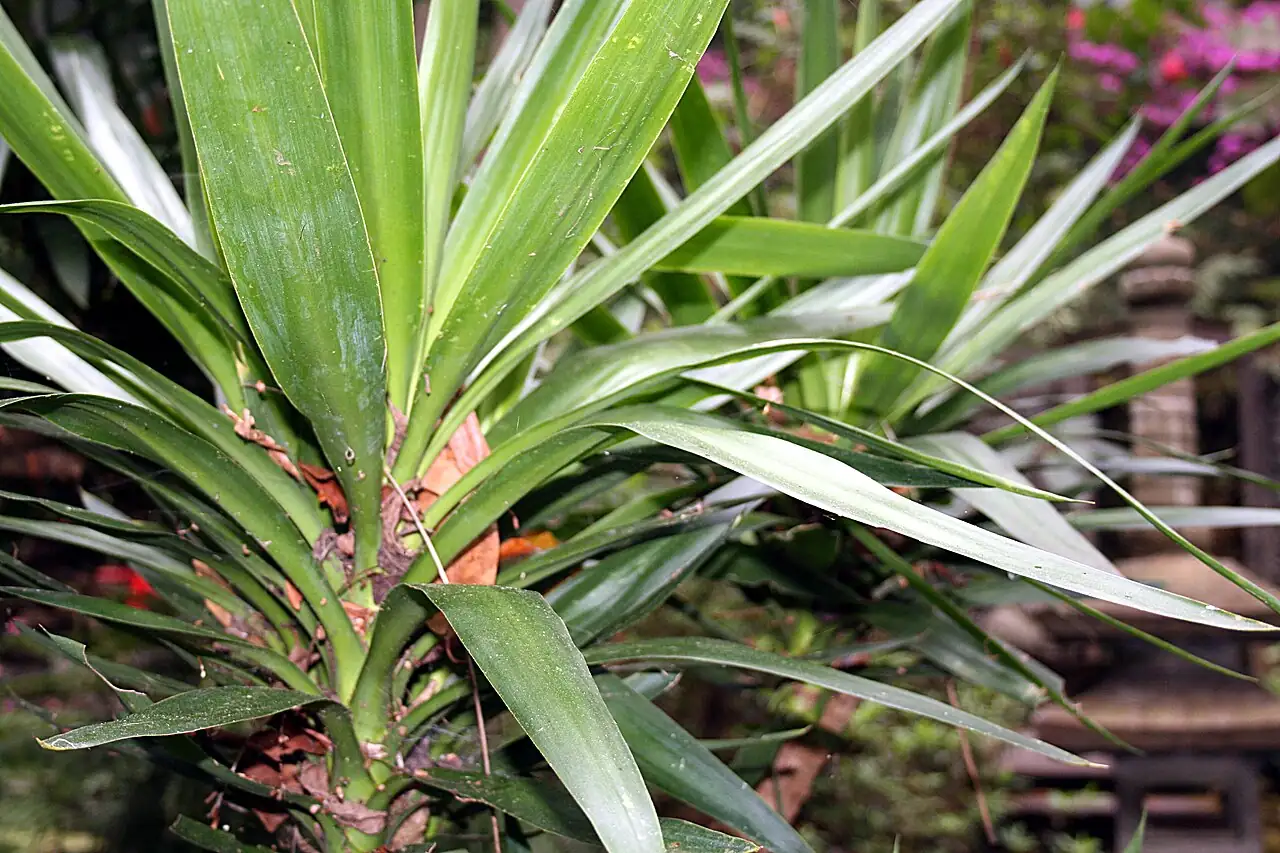
Plant Features
- Size: Typically 1.5–3 m (5–10 ft) tall, sometimes up to about 5 m (16 ft); spread about 1–2 m (3–6.5 ft), depending on age and branching.
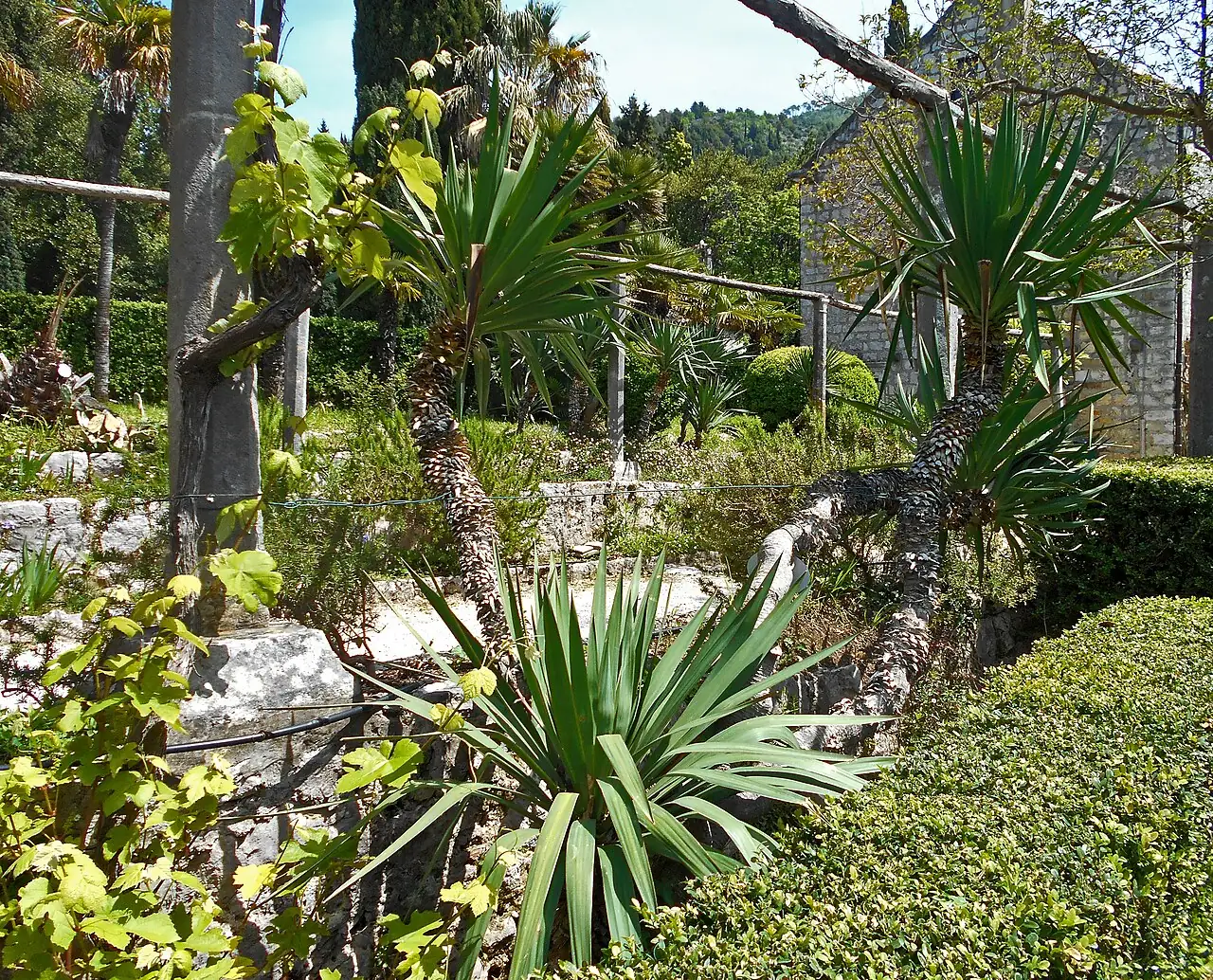
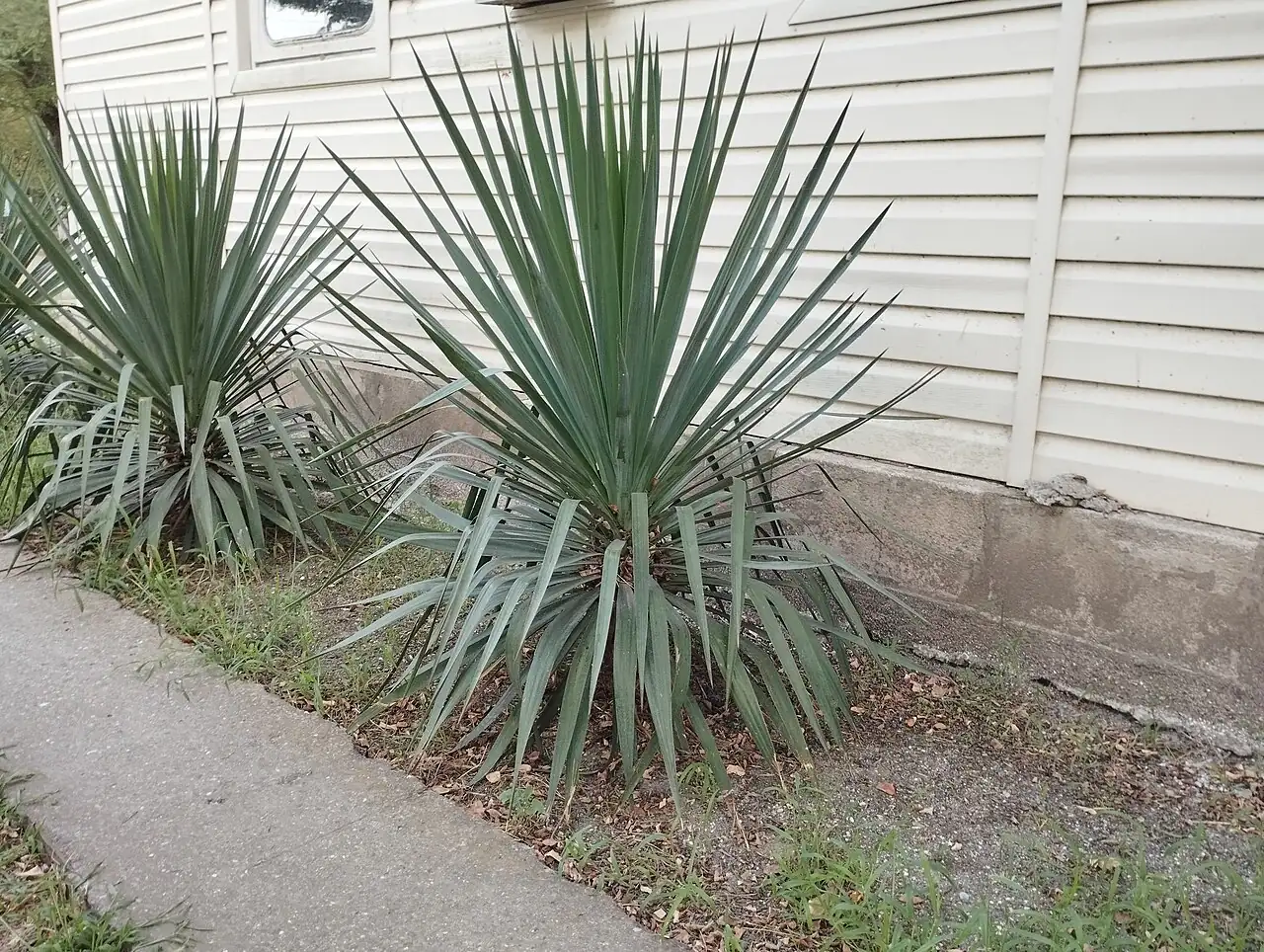
- Foliage: Rigid, upright, sword-shaped leaves with smooth margins; about 40–80 cm (16–31 in) long and 4–6 cm (1.6–2.4 in) wide. Leaves form dense rosettes on short trunks or branched stems, creating a strong, spiky outline.
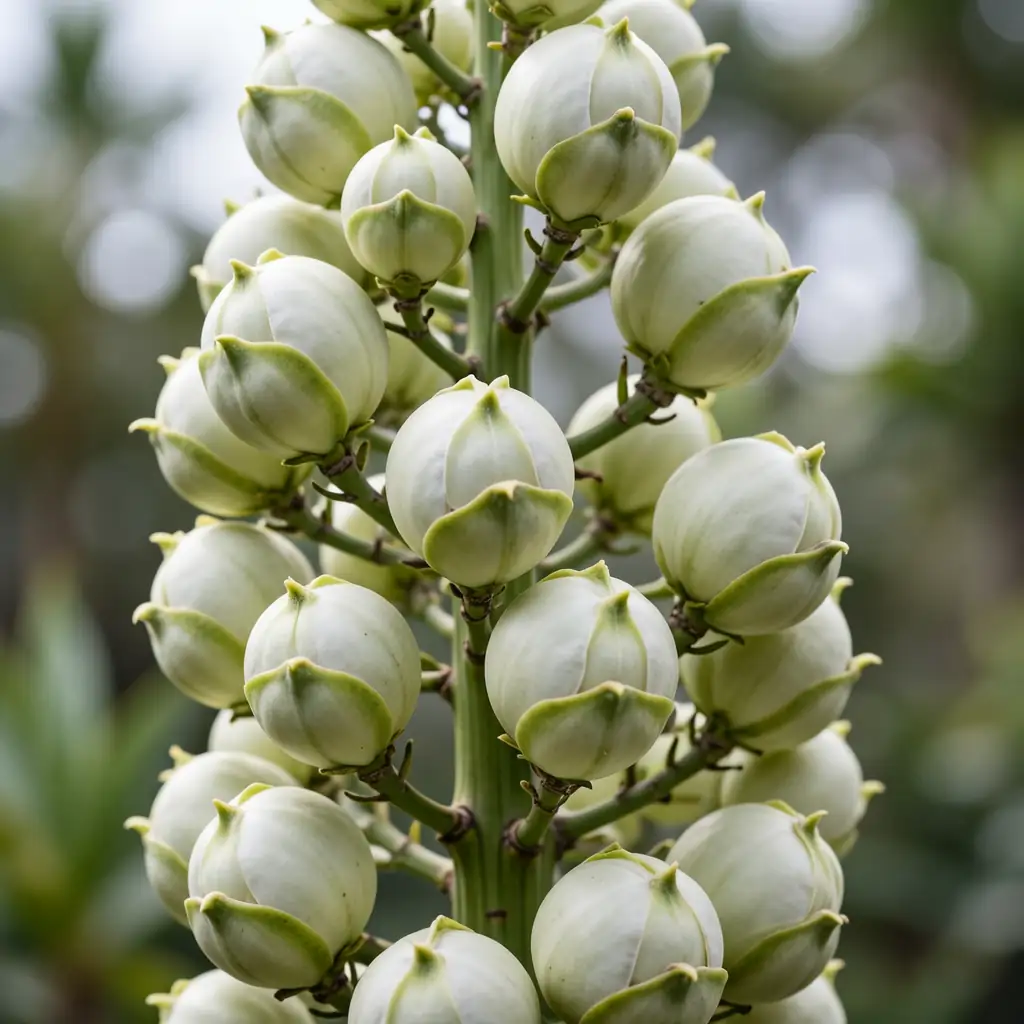
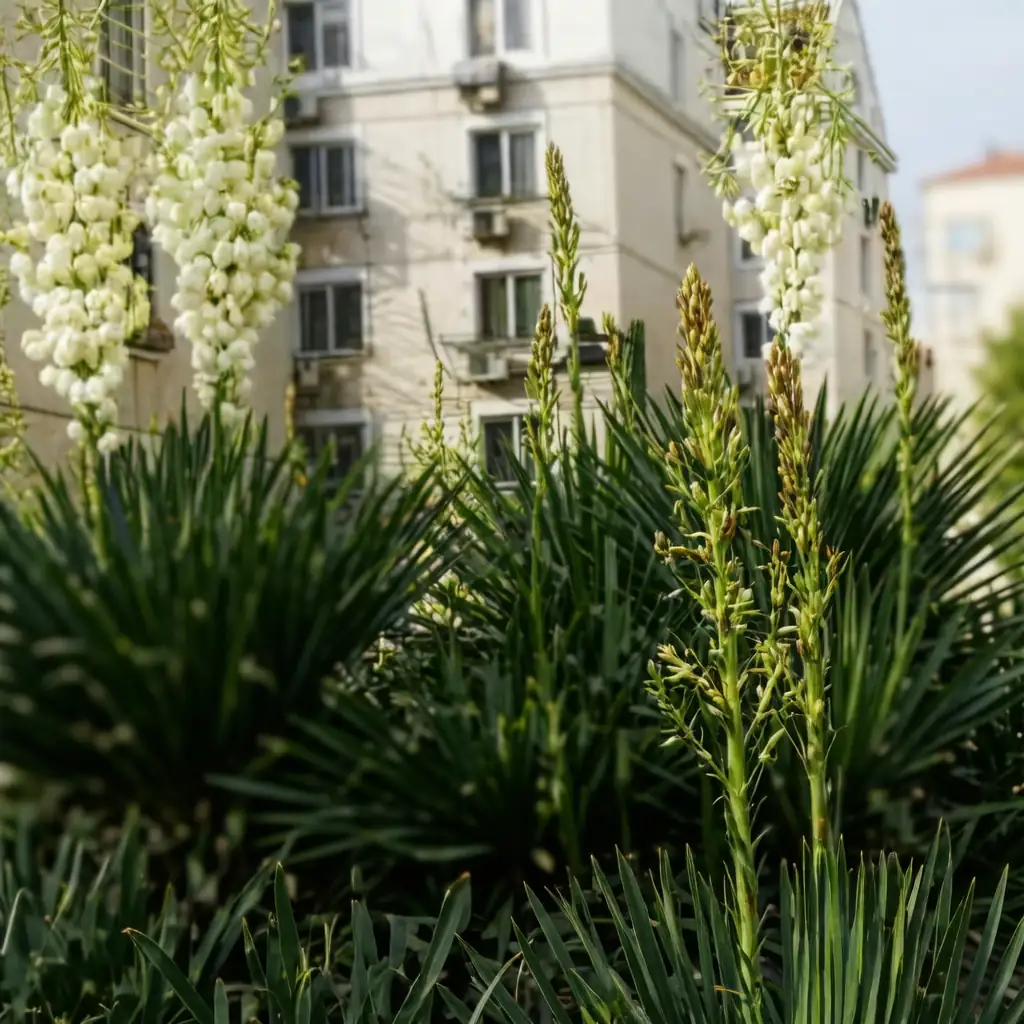
- Flower: Large, upright panicles packed with pendulous, bell-shaped flowers. Blooms are typically white to creamy white (sometimes slightly yellowish) and look especially showy above the dark green foliage.
- Flowering Season: Mid to late summer: July–September (Jul–Sep).
- Growth Habit: Evergreen, clump-forming shrub that may branch with age; tough, adaptable, and distinctly spiky/architectural.
Environment
Sunlight
Full sun for best growth and flowering; tolerates light shade. Aim for 6+ hours of direct sun daily.
Temperature
Best growth in about 15–30°C (59–86°F). Established plants tolerate heat well; protect container plants from prolonged hard freezes.
Humidity
Adaptable; prefers average to dry air and does not require high humidity.
Soil
Very well-drained soil is essential (sandy or gritty mixes are ideal). Tolerates poor soils; avoid heavy, waterlogged clay.
Placement
Best in bright, open, sunny spots: as a focal point in beds or lawns, along driveways/paths (with clearance from foot traffic), in front of buildings, or planted in rows as a bold hedge/screen.
Hardiness
USDA Zone 7–11 (cold hardy once established; dislikes winter wet).
Care Guide
Difficulty
Easy overall and quite forgiving once established. The biggest mistake is overwatering or planting in poorly drained soil, which can lead to root or crown rot.
Buying Guide
Pick plants with firm, upright leaves and a solid, unsoftened crown. Avoid any with blackened bases, mushy stems, or sour-smelling soil (common rot clues). Also think ahead: this yucca gets big and stays spiky, so choose a plant size that matches your long-term space.
Watering
Water deeply after planting, then allow the soil to dry between waterings. Once established, water sparingly—more only during extreme heat and far less in cool seasons. In containers, water when the top 5–8 cm (2–3 in) is dry; never leave the pot sitting in water.
Fertilization
Light feeder. In spring, use a balanced slow-release fertilizer at label rates or top-dress with compost. Avoid high-nitrogen feeding, which can reduce flowering and make growth softer and less sturdy.
Pruning
Remove spent flower stalks after blooming. Trim dead/damaged lower leaves as needed (wear gloves and use caution around sharp leaf tips). If it outgrows its spot, it can be cut back; new shoots may develop from the base or along the stem.
Propagation
Most commonly by offsets (pups) or division in warm weather. Stem cuttings can also root in a very free-draining medium. Seed propagation is possible but slow and less common for home gardeners.
Repotting
Repot every 2–3 years, or when rootbound. Use a heavy pot for stability and a fast-draining cactus/succulent mix. Move up only one pot size to avoid excess wet soil staying around the roots.
📅 Seasonal Care Calendar
Spring: refresh soil/mulch, feed lightly, plant or divide/propagate. Summer: minimal watering once established; remove spent blooms. Autumn: reduce watering and make sure drainage is excellent before winter. Winter: keep on the dry side (especially in pots) and protect from prolonged freezing and winter wet.
Pests, Diseases & Safety
Common Pests & Diseases
Usually trouble-free. Watch for scale insects, mealybugs, and spider mites (more likely indoors or in containers). The main disease risk is root/crown rot from wet soil; leaf spotting can appear in persistently damp conditions. Improve airflow, avoid frequent overhead watering, and prioritize fast-draining soil.
Toxicity
Mildly toxic if eaten due to saponins; may cause gastrointestinal upset (vomiting/drooling) in pets and people. The sharp leaf tips can also puncture skin—site it away from play areas and narrow walkways.
Culture & Symbolism
Symbolism: Often linked with resilience, protection, and endurance—fitting for a plant that stays handsome through sun, wind, and dry spells.
History & Legends: A long-loved ornamental from the southeastern United States, widely planted for its dramatic evergreen form and towering summer flower spikes, especially in warm-temperate and coastal-style landscapes.
Uses: Primarily ornamental. Excellent as a specimen accent, for bold foundation planting, along roadsides and paths (with safe spacing), and as a strong-textured hedge or screen.
FAQ
Why isn’t my Spanish dagger flowering?
Most often it’s getting too much shade, too much nitrogen fertilizer, or it’s still young/stressed. Move it to fuller sun, feed lightly (avoid high nitrogen), and make sure the soil drains very fast.
Can it handle drought?
Yes—once established it’s drought tolerant and prefers drying out between waterings. Regular watering is mainly important during the first growing season or in extreme heat.
Is it safe to plant near paths?
Use caution. The leaf tips are sharp, so give it plenty of clearance from foot traffic and places where kids or pets might brush against it.
Fun Facts
- It’s native to the eastern to southeastern United States and is also widely cultivated in China’s Yangtze River region.
- While many plants stay trunkless or short-stemmed, older specimens can occasionally develop stems up to about 5 m (16 ft).
- Leaves are famously stiff and sword-like, typically 40–80 cm (16–31 in) long.
- Flower spikes appear in summer (usually July–September), carrying nodding, bell-shaped white to creamy blooms.
- After flowering, it can form a dry capsule fruit; fruiting is often late summer to autumn, roughly August–October (Aug–Oct).


