

Plant Features
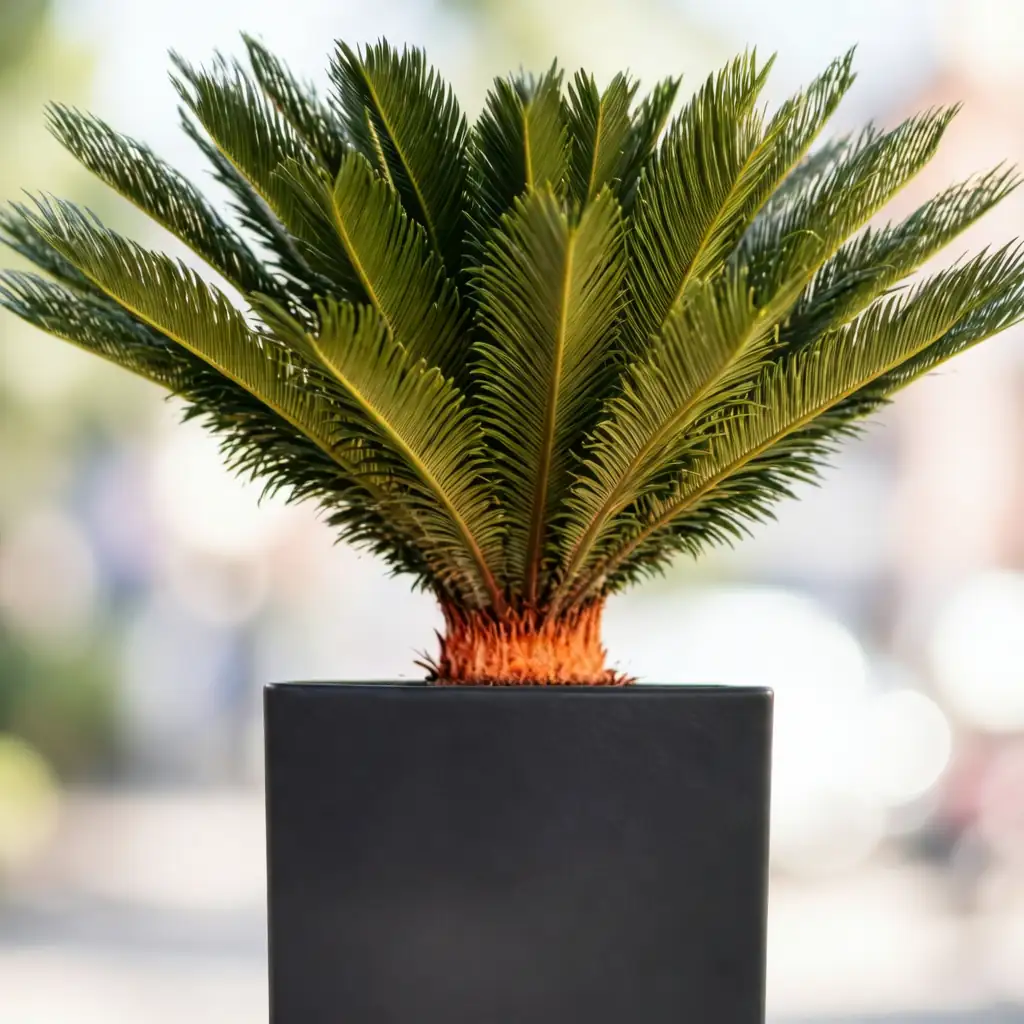
- Size: Typically about 60 × 60 cm (24 × 24 in) as a container plant; can become much larger with age in warm climates.
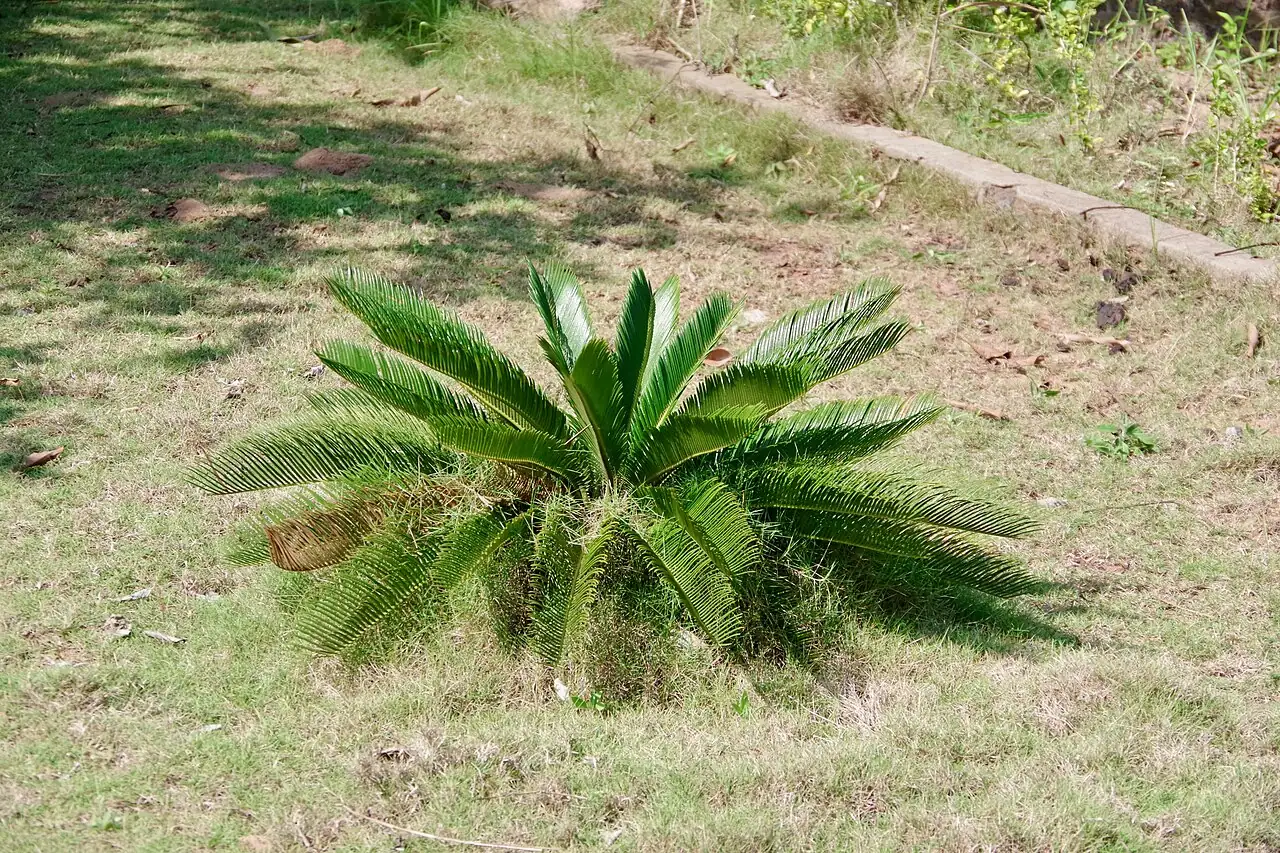
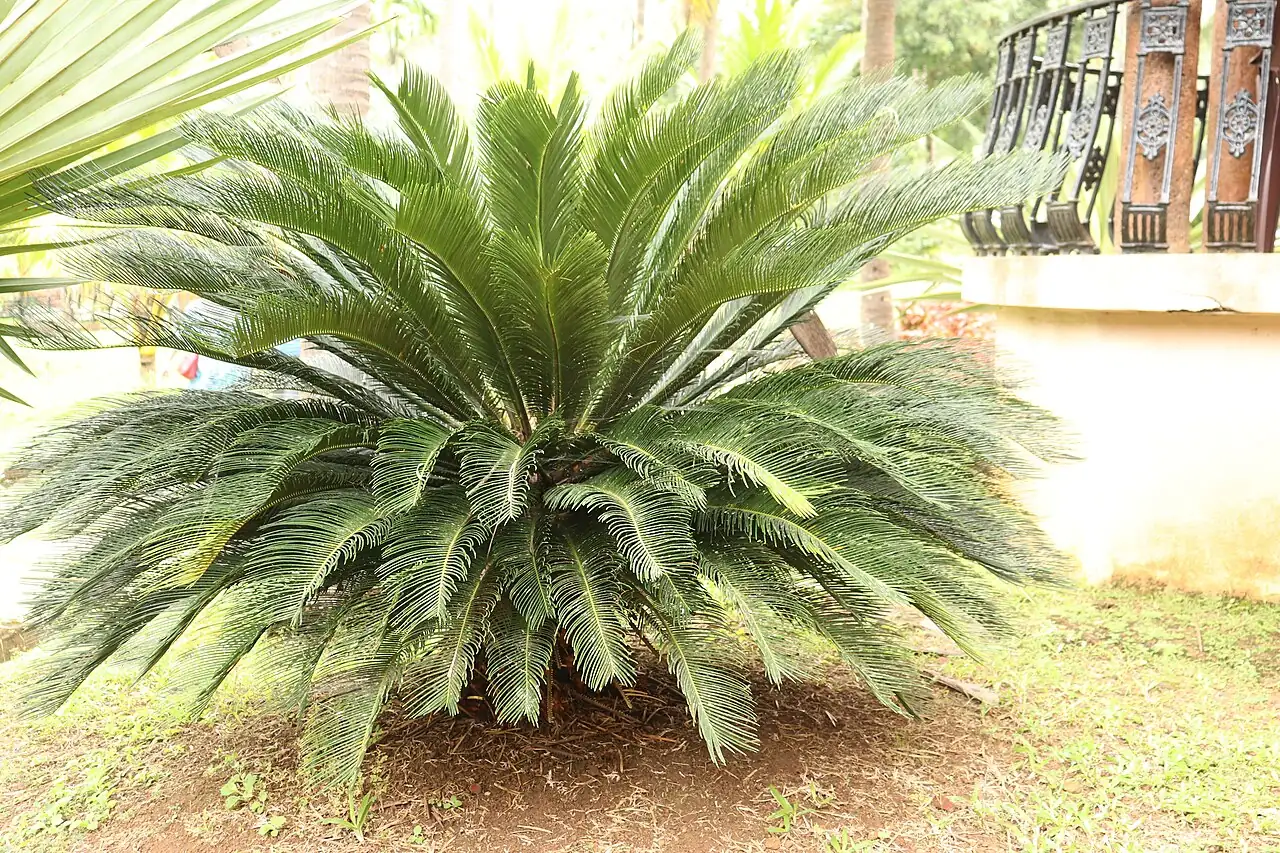
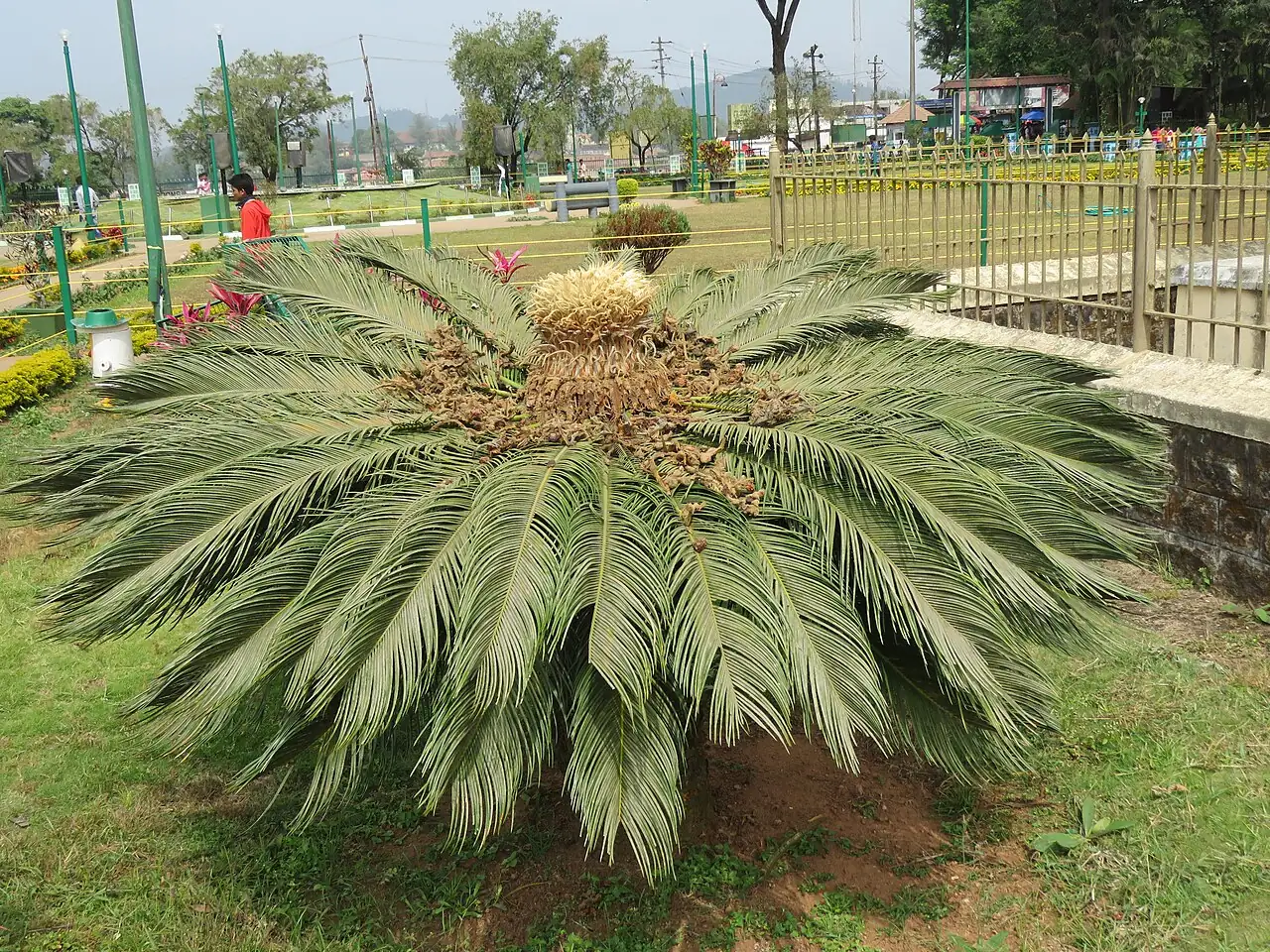
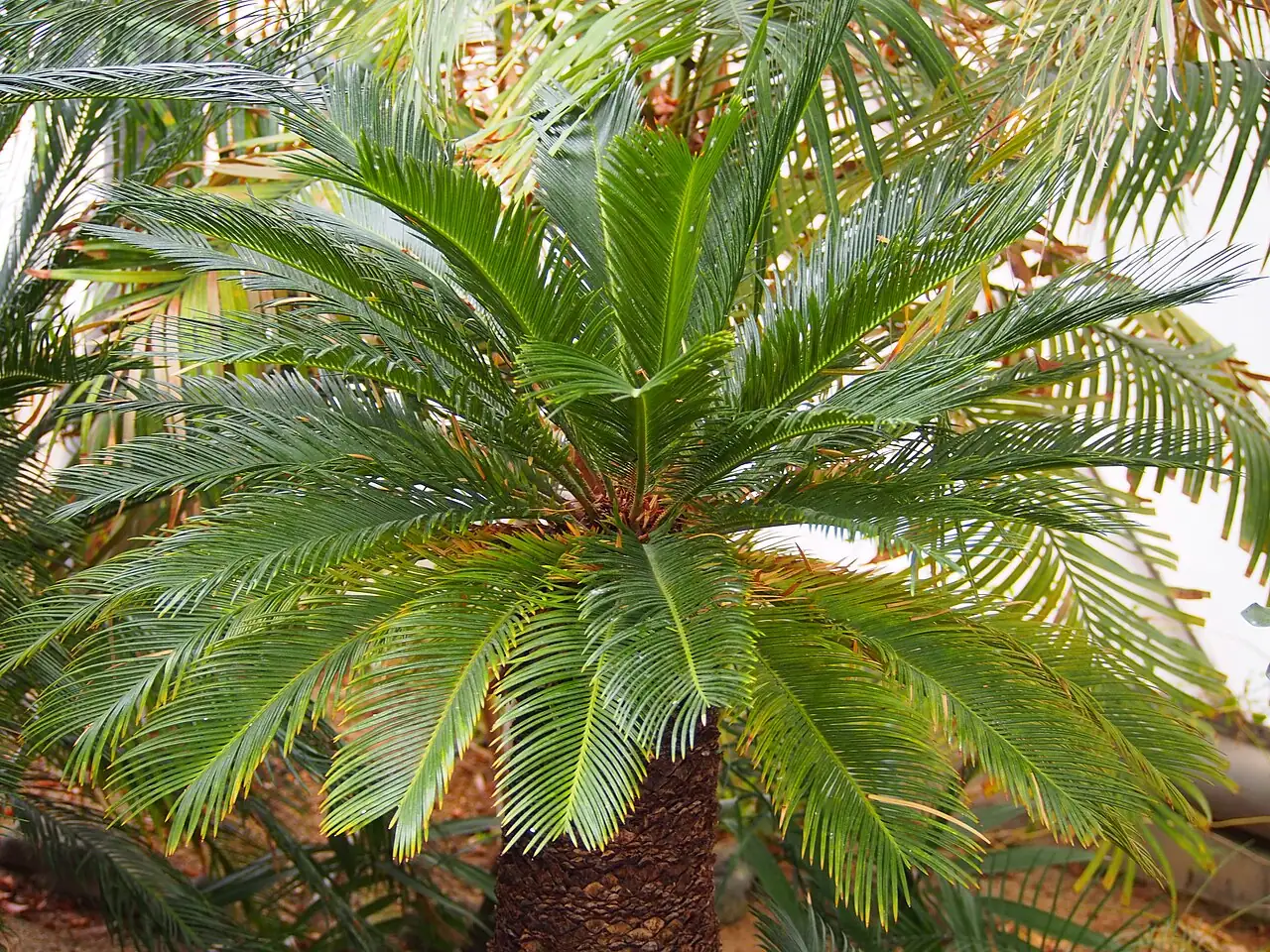
- Foliage: A crown of glossy, dark green, feather-like fronds rises from the top of the trunk. The narrow leaflets are rigid and needle-tipped—handsome, architectural, and prickly to handle.
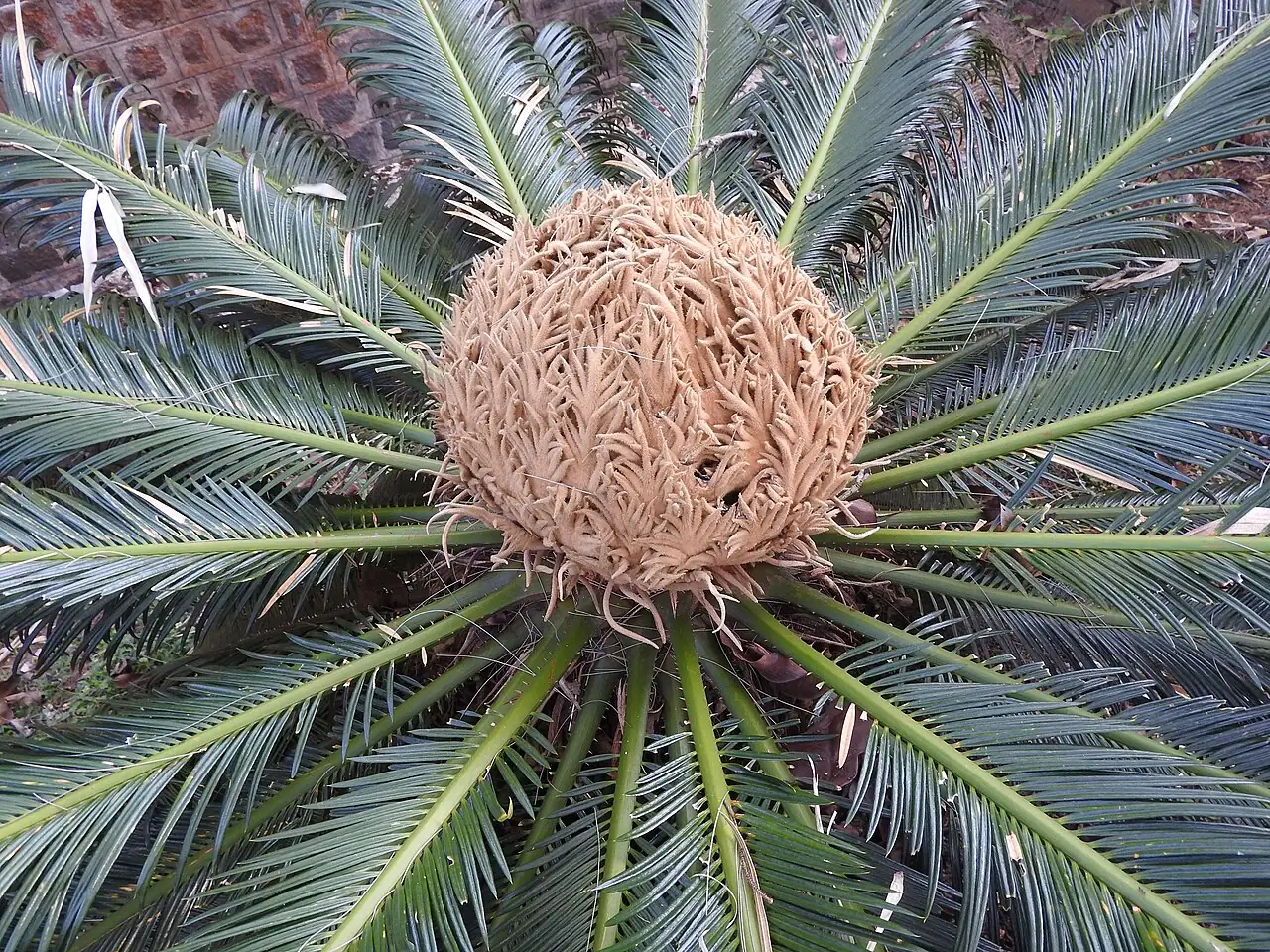
- Flower: Doesn’t make typical flowers. Mature plants produce reproductive structures: a large cone on male plants, and a woolly seed-bearing structure on female plants. Indoors this is uncommon and usually only happens on older, well-grown specimens.
- Flowering Season: Late spring to summer (mainly outdoors in suitable climates, and only when the plant is mature).
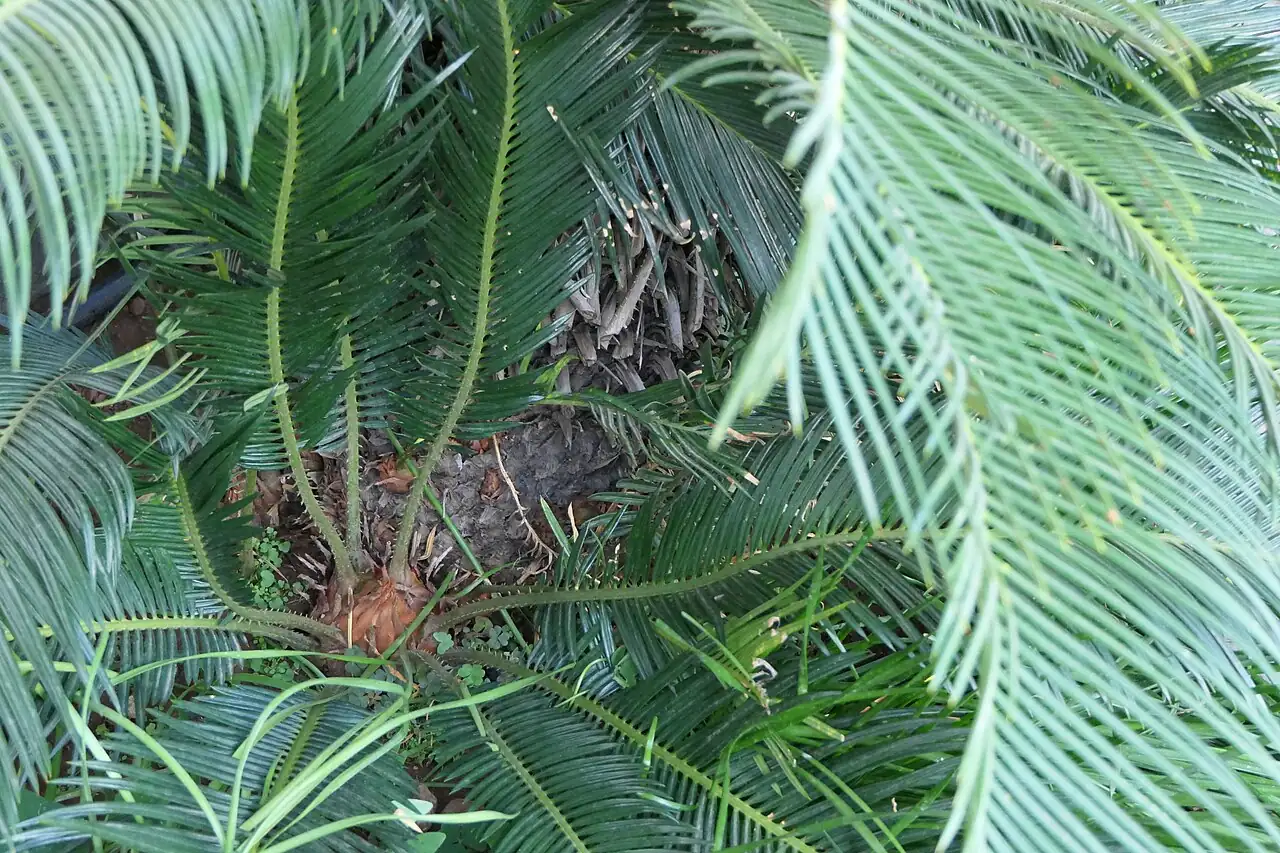
- Growth Habit: Very slow-growing, stout, palm-like cycad that forms a short trunk and a symmetrical rosette of fronds.
Environment
Sunlight
Bright light with protection from harsh midday sun. Tolerates partial sun/partial shade. Indoors, keep near a bright window with filtered light.
Temperature
13–24°C (55–75°F). Protect from frost and cold drafts.
Humidity
Average indoor humidity is usually fine; moderate humidity is preferred. In hot, dry spells, occasional misting can help the foliage look fresher.
Soil
Very free-draining mix is essential. A practical option is a 1:1 blend of a soil-based mix and a general-purpose potting mix, with extra grit/perlite if needed. For a plant around the stated size, a 20–30 cm (8–12 in) diameter pot is typically suitable.
Placement
A bright spot out of strong direct sun. In winter, keep away from heaters/radiators and reduce watering.
Hardiness
USDA Zone 9–11. Generally not frost hardy; protect below about -1 to 0°C (30–32°F).
Care Guide
Difficulty
Easy overall, as long as you avoid overwatering and use a fast-draining mix.
Buying Guide
Pick plants with a firm trunk/tuber, a clean, tidy crown, and deep green fronds. Avoid soft bases, sour-smelling soil, or yellowing combined with wet compost (often a rot warning). Check along leaf midribs for scale insects.
Watering
Spring through autumn: water when the top of the mix has dried slightly. Winter: keep the mix almost dry. Never pour water into the central crown where new fronds emerge—this can encourage crown rot. In summer, a light misting can be helpful if the air is very dry.
Fertilization
Spring through autumn: feed monthly with a balanced liquid fertilizer at half strength. Go easy—cycads are naturally slow growers and don’t appreciate heavy feeding.
Pruning
Only remove fully brown, dead fronds, cutting close to the trunk with clean tools. Avoid trimming green fronds, since they store energy for the plant.
Propagation
Most commonly by removing and rooting basal offsets (“pups”) when they appear. Seed propagation is possible but very slow and usually impractical indoors.
Repotting
Because growth is slow, repot about every 3 years (or sooner if root-bound). Move up to an appropriately sized pot (often 20–30 cm / 8–12 in for the described plant size), keep the mix fast-draining, and disturb the roots as little as possible.
📅 Seasonal Care Calendar
Spring–autumn: water after the surface dries slightly; feed monthly at half strength. Summer: mist occasionally if conditions are hot and dry. Winter: keep almost dry, reduce watering, and place away from heating sources.
Pests, Diseases & Safety
Common Pests & Diseases
Can attract scale insects, mealybugs, and spider mites (especially indoors). Overwatering is the biggest health risk and can lead to root or crown rot—use a gritty mix, provide airflow, and allow the potting mix to dry appropriately between waterings.
Toxicity
Highly toxic to humans and pets. All parts are poisonous, with seeds especially dangerous; ingestion can cause severe illness (notably in dogs and cats). Keep well out of reach.
Culture & Symbolism
Symbolism: Often linked with longevity and resilience—fitting for a plant from such an ancient lineage.
History & Legends: Cycads are widely referred to as “living fossils” because their ancestors date back to the dinosaur era. Today, Sago Palm is grown around the world as a statement ornamental in warm landscapes and containers.
Uses: Mainly used as an ornamental foliage plant for pots, patios, and warm-climate gardens. Not suitable for edible use due to toxicity.
FAQ
How should I schedule watering?
From spring to autumn, water when the surface of the potting mix has dried slightly. In winter, keep it almost dry. Avoid overwatering and never pour water into the central crown, which can cause rot. In summer, occasional misting can help if air is very dry.
How often and how much should I fertilize?
From spring to autumn, use a balanced liquid fertilizer once a month at half strength.
What pot size does it need?
For the typical container size described, a 20–30 cm (8–12 in) diameter pot works well, paired with a fast-draining mix (such as a 1:1 blend of soil-based and general-purpose mixes, with added grit/perlite).
How often should I repot?
Repot about every 3 years, or earlier if it becomes root-bound, keeping root disturbance minimal.
Is sago palm poisonous?
Yes—very. The entire plant is toxic, and the seeds are especially dangerous. Keep away from children and pets.
Fun Facts
- Despite the name, Sago Palm isn’t a palm at all—it’s a cycad.
- Cycads are among the oldest seed plants on Earth, often called “living fossils.”
- New fronds usually appear in a flush and unfurl from the center like a tight spiral.


